
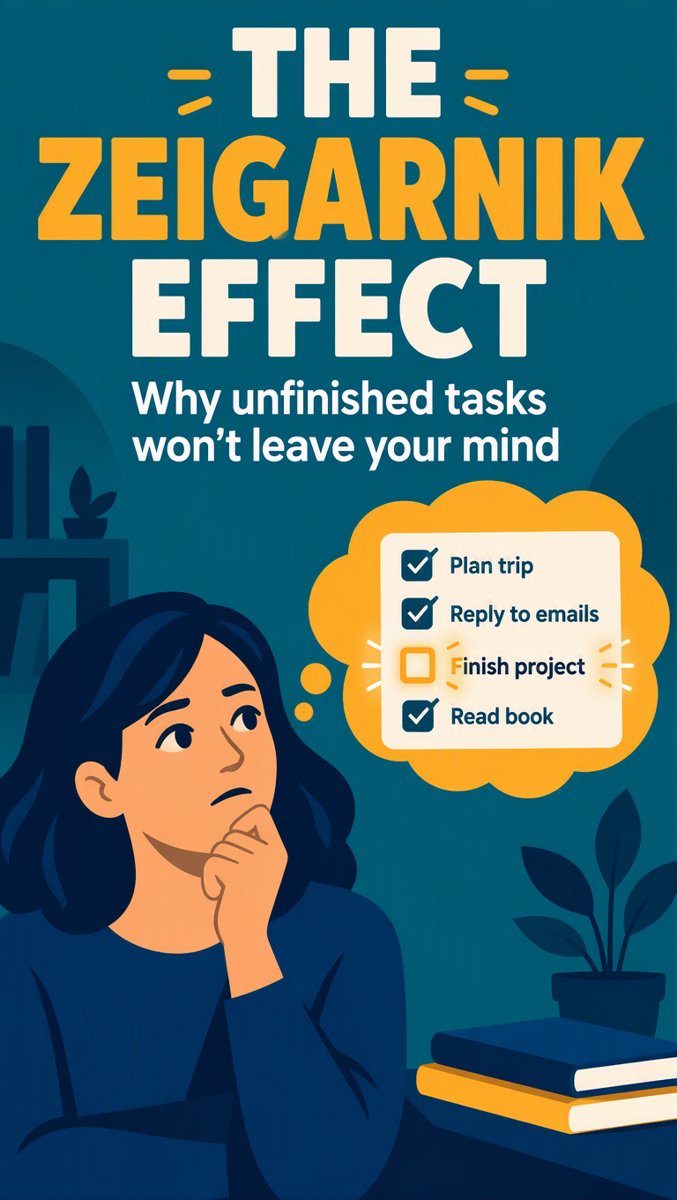
The Zeigarnik Effect: Why Your Brain Won't Let Go of That Unfinished Task
Think and Growth — Daily Mental Model · Monday, September 14, 2026 · Theme: Work
It's 9 PM. You're technically done working. But one half-written email, one unsent proposal, one unfinished task keeps circling your brain like a plane that can't land. You're not undisciplined. Your brain is running a century-old psychological program called the Zeigarnik Effect — and once you understand it, you can finally get your evenings back.
The Idea
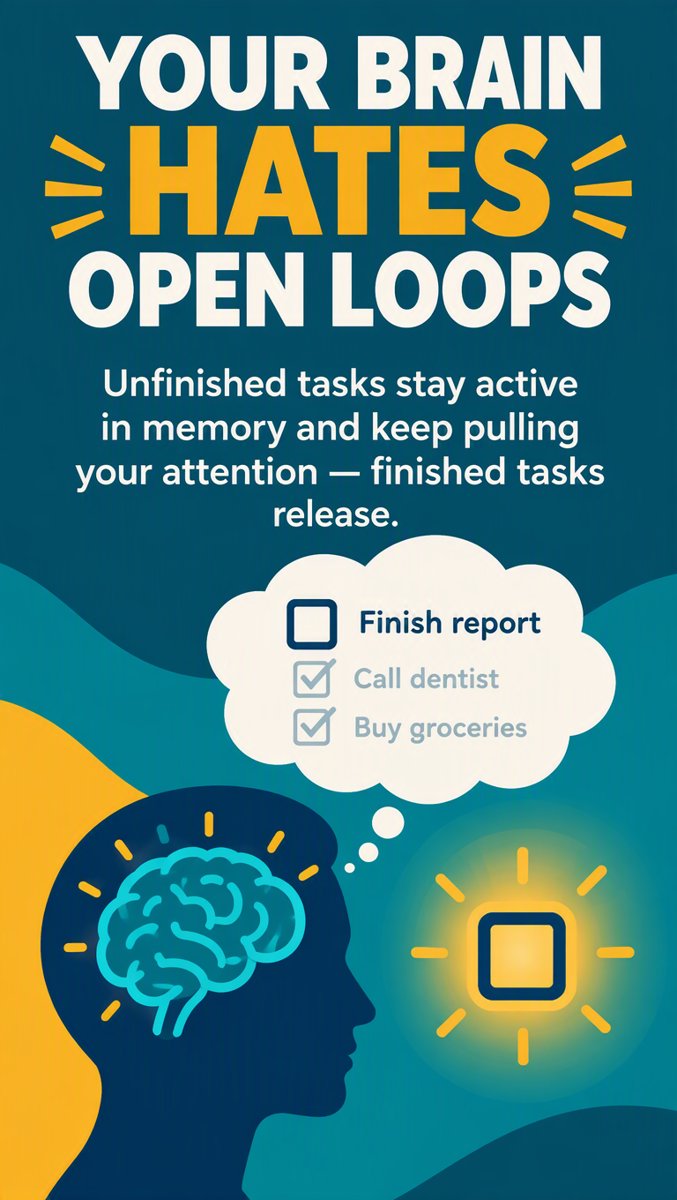
The Zeigarnik Effect is the finding that people remember unfinished or interrupted tasks far better than completed ones. Finished tasks release their grip on the mind. Unfinished ones stay active — pulling your attention back again and again until the loop closes (Wikipedia, Psychologist World).
The origin story is a café in 1920s Berlin. Lithuanian psychologist Bluma Zeigarnik, working in Kurt Lewin's lab at the University of Berlin, noticed that waiters could recall complex unpaid orders with perfect accuracy — but the moment the bill was settled, the memory evaporated. Lewin's observation became Zeigarnik's 1927 experiments: interrupted tasks showed substantially better recall than completed ones. The unpaid order became the permanent metaphor for the stickiness of open loops.
The Mechanism
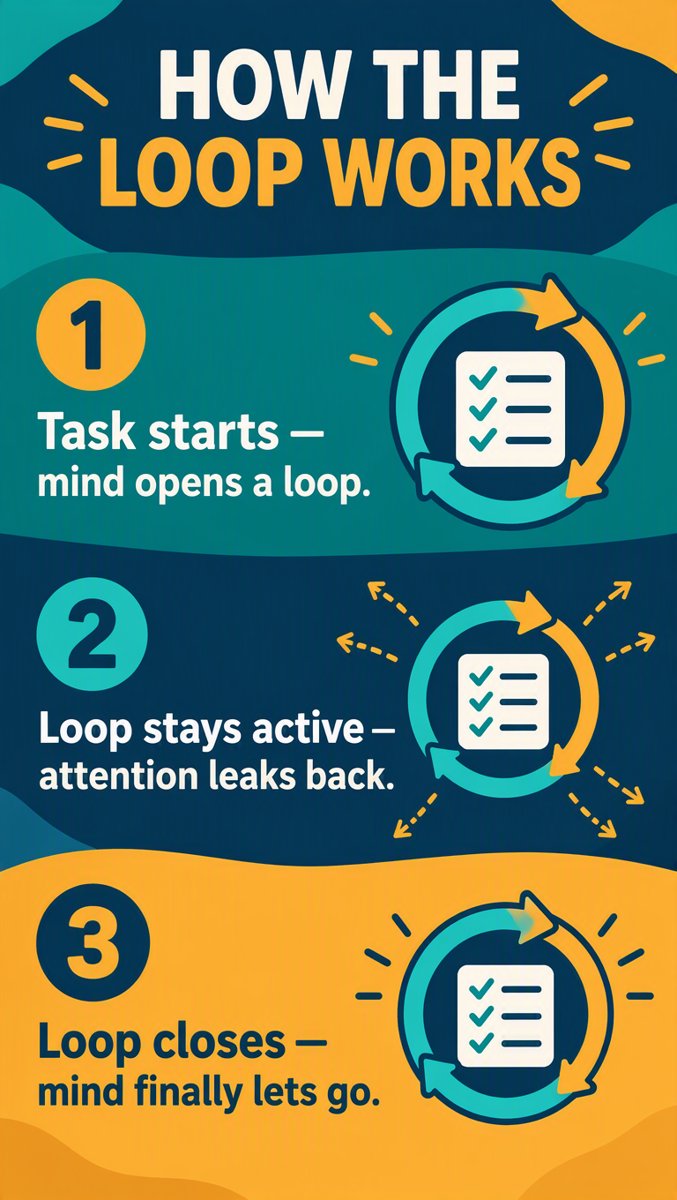
Think of every task as a loop your mind opens the moment you start it:
- Task starts — your mind opens a loop and tags it "active."
- Loop stays open — a tension system keeps surfacing the task: during conversations, in the shower, at 2 AM.
- Loop closes — completion (or a credible substitute) releases the tension and the mind lets go.
This is why an unanswered email feels heavier than ten answered ones, and why a half-watched series hijacks more attention than a finished one. Open loops are attention leaks. They drain focus from the work in front of you — which makes them one of the most expensive hidden costs in any knowledge-work day.
The 2011 Proof — and the Twist
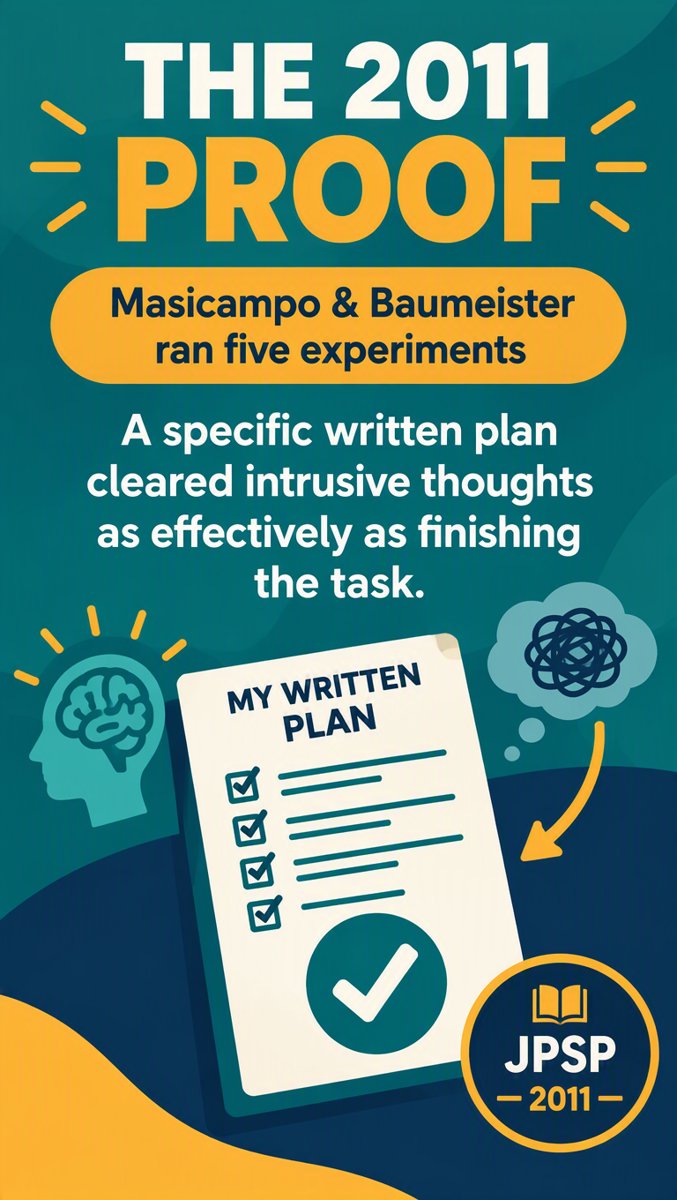
For decades, the assumption was simple: the loop stays open until the goal is fulfilled. Then E. J. Masicampo and Roy F. Baumeister (Florida State University) ran five experiments and published "Consider It Done! Plan Making Can Eliminate the Cognitive Effects of Unfulfilled Goals" in the Journal of Personality and Social Psychology (2011, DOI: 10.1037/a0024192).
Their finding reframed everything: unfulfilled goals do intrude on thinking — but making a specific, concrete plan eliminated the intrusive thoughts as effectively as actually completing the goal. The brain doesn't strictly need the work done. It needs to trust that when, where, and how is decided (PubMed, full paper PDF).
This is the science underneath David Allen's Getting Things Done: capture every open loop into a trusted external system and define the next concrete action. The capture is what closes the loop — not the completion (FacileThings).
How to Apply It — Three Moves
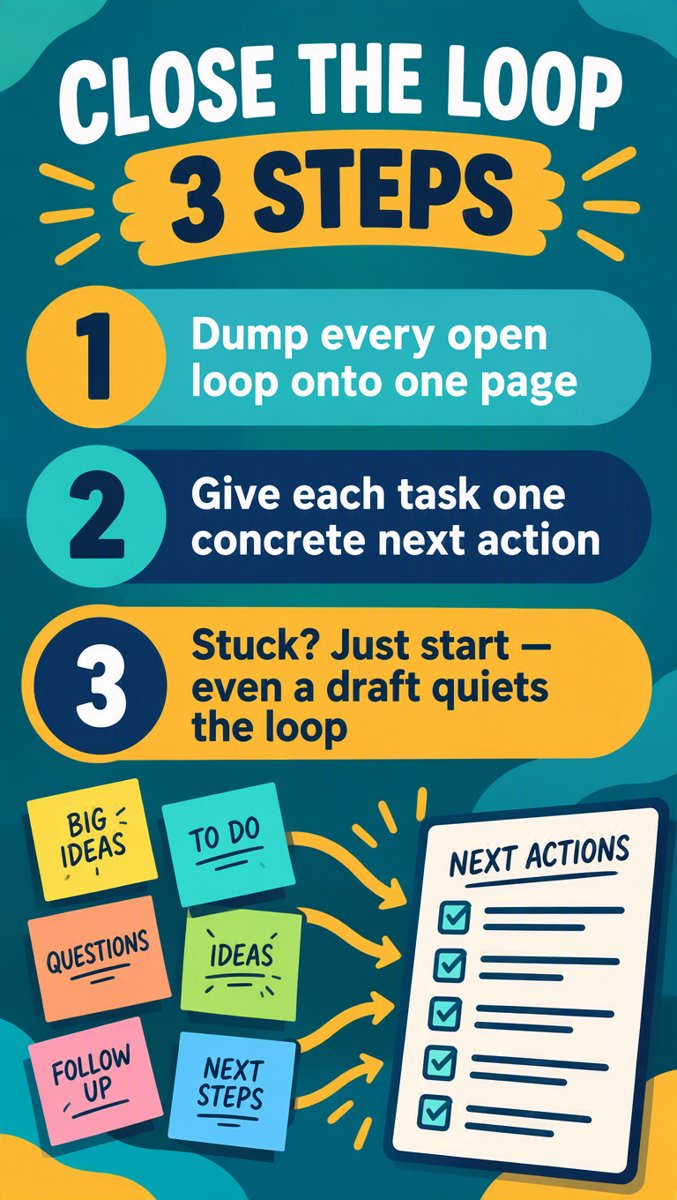
- The dump. Get every open loop out of your head and onto one page — tasks, half-decisions, that email you owe. The page does the remembering so your working memory doesn't have to.
- The next action. For each item, write one concrete, physical next step — not "deal with proposal" but "draft three bullet points for the proposal." A specific plan is the loop-closer Masicampo and Baumeister measured.
- The start. Stuck on something big? Just begin — even a rough draft. Opening real progress toward closure quiets the tension faster than perfect planning ever will.
There's also the deliberate flip side: writers from Hemingway onward famously stopped mid-sentence to make tomorrow's restart effortless. An intentional open loop is a focusing tool. The unintentional ones are the tax.
The Takeaway
Your brain doesn't need the task done. It needs it off your mind. Write the plan, take the next action, and let the loop close — then watch how much focus you get back.
🎬 Narration Script (148 words · ~70s)
- [Cover] That unfinished task keeps buzzing in your head. Psychologists call it the Zeigarnik Effect.
- [Slide 1] In 1927, psychologist Bluma Zeigarnik noticed something odd about a café waiter.
- [Slide 1] He remembered every unpaid order perfectly — and forgot paid ones instantly.
- [Slide 1] Her conclusion: unfinished tasks stay active in memory. Finished tasks release.
- [Slide 2] Here's the mechanism. Start a task, and your mind opens a loop.
- [Slide 2] Until the loop closes, attention keeps leaking back to it.
- [Slide 3] In 2011, researchers Masicampo and Baumeister ran five experiments on this.
- [Slide 3] Writing a specific plan cleared intrusive thoughts as effectively as finishing.
- [Slide 4] So here's the play. First, dump every open loop onto one page.
- [Slide 4] Second, give each task one concrete next action.
- [Slide 4] Third, stuck? Just start. Even a draft quiets the loop.
- [Slide 5] Your brain doesn't need the task done. It needs it off your mind.
- [CTA] Follow Think and Growth for one mental model every day. See you tomorrow.
📚 Sources
- Wikipedia — Zeigarnik Effect: https://en.wikipedia.org/wiki/Zeigarnik_effect
- Masicampo & Baumeister (2011), JPSP (PubMed): https://pubmed.ncbi.nlm.nih.gov/21688924/
- Full paper PDF (Wake Forest): https://users.wfu.edu/masicaej/MasicampoBaumeister2011JPSP.pdf
- Psychologist World — Zeigarnik Effect Explained: https://www.psychologistworld.com/memory/zeigarnik-effect-interruptions-memory
- FacileThings — Zeigarnik Effect and GTD: https://facilethings.com/blog/en/zeigarnik-effect-gtd
Peter, BDM @ NXagents.net — Think and Growth daily teaching video