The Two-Minute Rule: Your To-Do List Isn't the Problem — Starting Is

The Two-Minute Rule: Your To-Do List Isn't the Problem — Starting Is
Think & Growth · Monday Edition · Theme: Work One practical mental model, every day.
It's Monday. Your task list already has more items than hours, and the tiny stuff — the quick reply, the two-line approval, the form that takes ninety seconds — keeps getting pushed to "later." Here's the uncomfortable math: those ninety-second tasks don't cost ninety seconds. They cost ninety seconds plus the energy of deciding about them five more times. Today's model fixes both ends of that problem.
The Idea
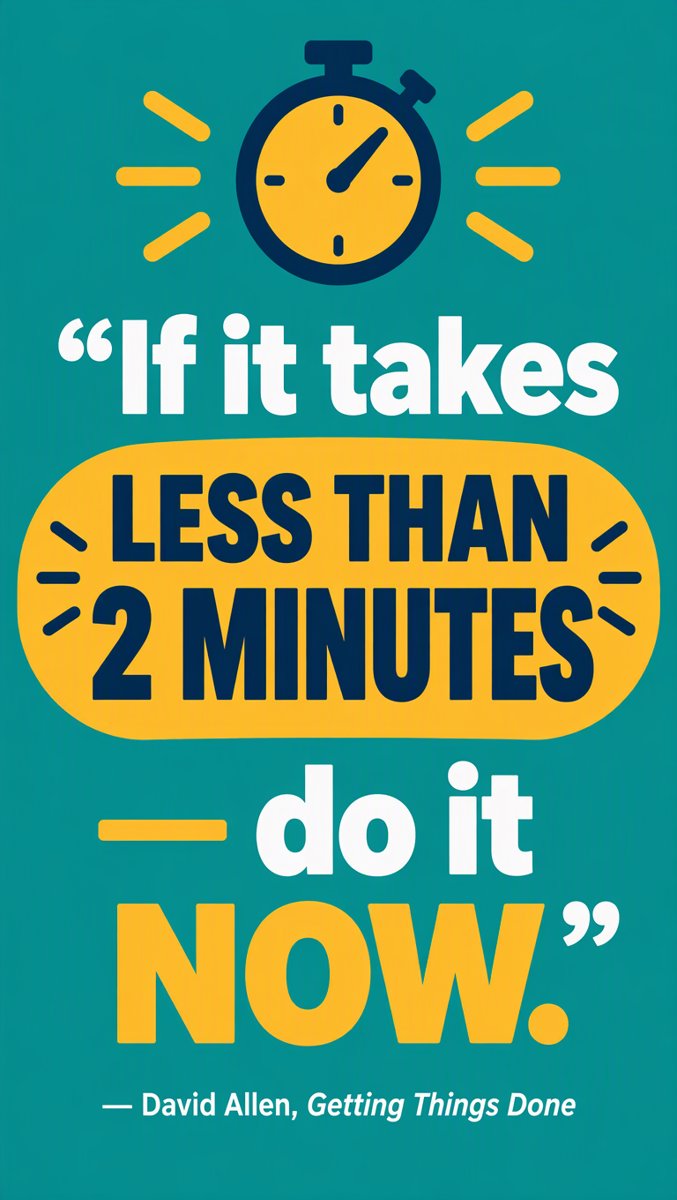
Productivity consultant David Allen coined the rule in Getting Things Done: "If an action will take less than two minutes, it should be done at the moment it's defined." (GTD official, Todoist). Not "write it down." Not "schedule it." Done — immediately.
The logic is accounting, not motivation. Tracking a tiny task — capturing it, triaging it, re-reading it, re-deciding it — reliably costs more time and attention than just finishing it. Two minutes is the threshold where deferring stops paying. Below it, the cheapest place to store a task is done.
How It Works — Two Halves of One Rule
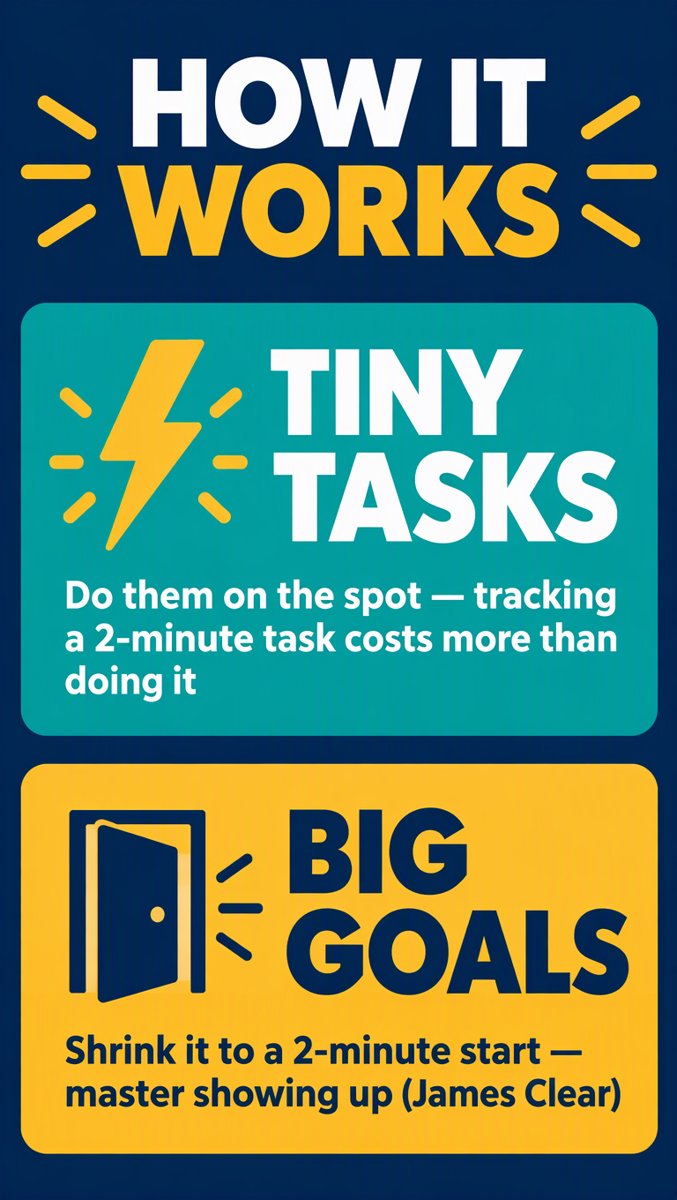
The rule has a work half and a habits half:
- Tiny tasks → do them on the spot. Allen's form. The quick email, the calendar accept, the password reset. Under two minutes? It happens now, so it never re-enters your head. Your list stays reserved for work that actually deserves planning.
- Big goals → shrink them to two minutes. James Clear's form from Atomic Habits (Chapter 13): "When you start a new habit, it should take less than two minutes to do." Want to read more? Read one page. Get fit? One push-up. Write a book? One sentence (JamesClear.com).
Both halves attack the same enemy: friction at the start. Procrastination is triggered by anticipated effort and dread, not by the task itself. A task that takes two minutes has almost no dread to attach to — so you start, and starting is the whole game. Motivation follows action, not the other way around.
Why "Ridiculously Small" Is the Point
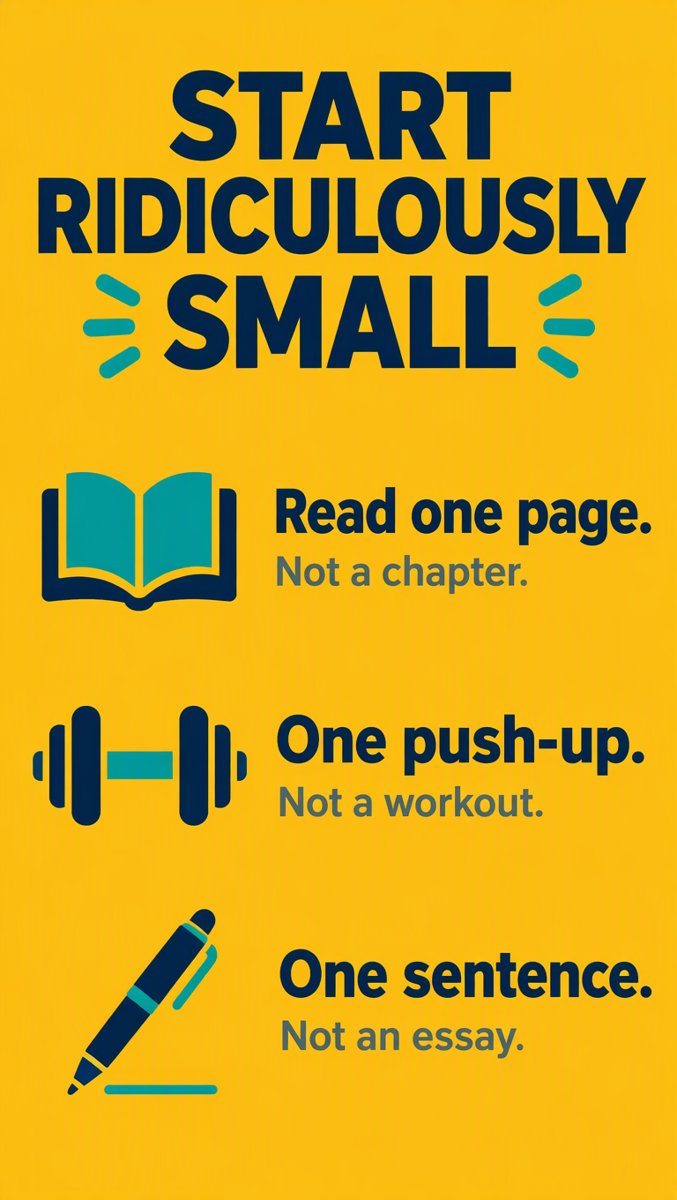
The two-minute version feels almost insulting — one page? one push-up? That's deliberate. Clear calls it "mastering the art of showing up": the scaled-down version makes the habit "so easy to start that you can't say no" (JamesClear.com). You're not optimizing performance; you're optimizing consistency. Do the small version daily until it's automatic, and the full version tends to follow on its own — because once you've read one page, reading ten is barely a decision.
How to Apply It Today
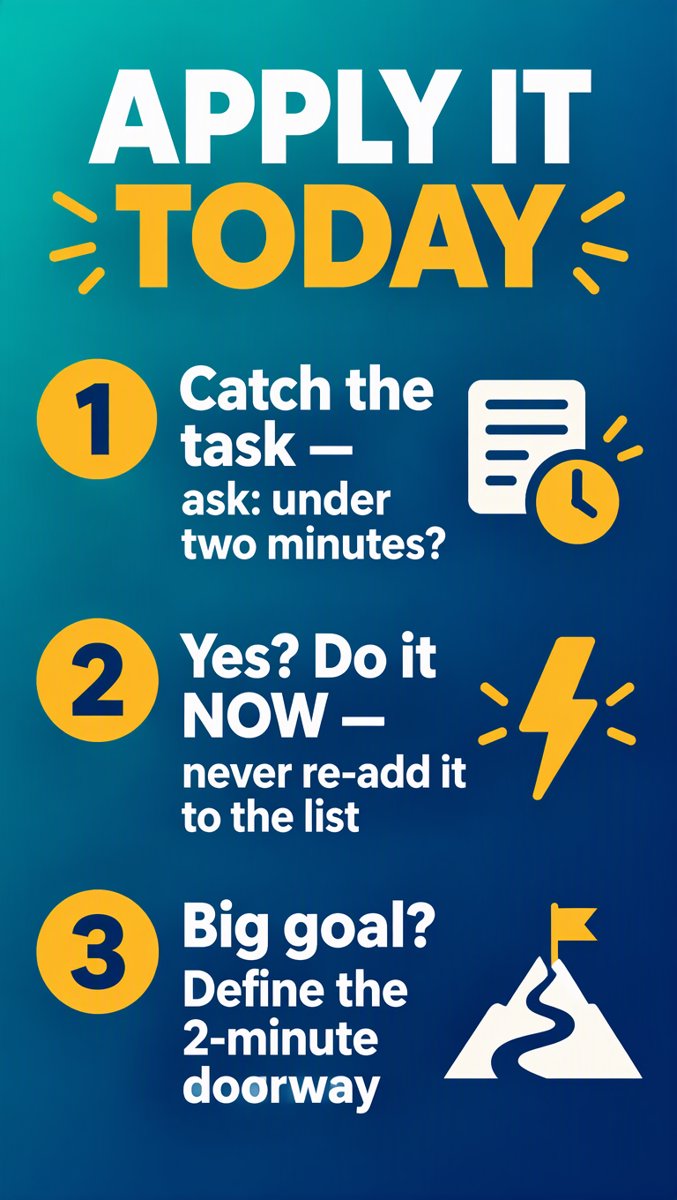
- Catch the task. When something lands — a request, a reply, an idea — ask one question: under two minutes?
- If yes, do it now. Don't re-add it to the list. Don't open a tab for later. Finish it on the spot.
- If it's big, define the two-minute doorway. "Write the report" becomes "open the doc and write the first sentence." Show up at the doorway; momentum handles the rest.
The Takeaway
You don't need more time. You need a smaller start. Kill the two-minute tasks where they stand, and walk through the two-minute door on everything else. That's the whole rule — and it compounds from the first task you finish today.
🎬 Narration Script (~154 written words → ~68s)
[Cover] Your to-do list isn't the problem. Starting is. Here's the two-minute rule.
[Slide 1 — seg 1] David Allen's rule is simple: if a task takes less than two minutes, [Slide 1 — seg 2] do it now. Don't write it down. Don't plan it. Just do it.
[Slide 2 — seg 1] Here's why it works. A tiny task costs more to track than to finish. [Slide 2 — seg 2] And a big goal? Shrink it to a two-minute start, and master showing up.
[Slide 3 — seg 1] James Clear puts it this way: read one page, not a chapter. One push-up, [Slide 3 — seg 2] not a workout. One sentence, not an essay. Tiny starts remove the friction.
[Slide 4 — seg 1] Apply it today. First, catch the task and ask: is this under two minutes? [Slide 4 — seg 2] If yes, do it immediately — never re-add it to your list. Feel the difference.
[Slide 5] Because you don't need more time. You need a smaller start. That's it.
[CTA] If this sharpened your Monday, subscribe to Think and Growth — one practical mental model, every single day. See you tomorrow.