The Progress Principle: Your Best Workday Had One Thing in Common — And It Wasn't Praise

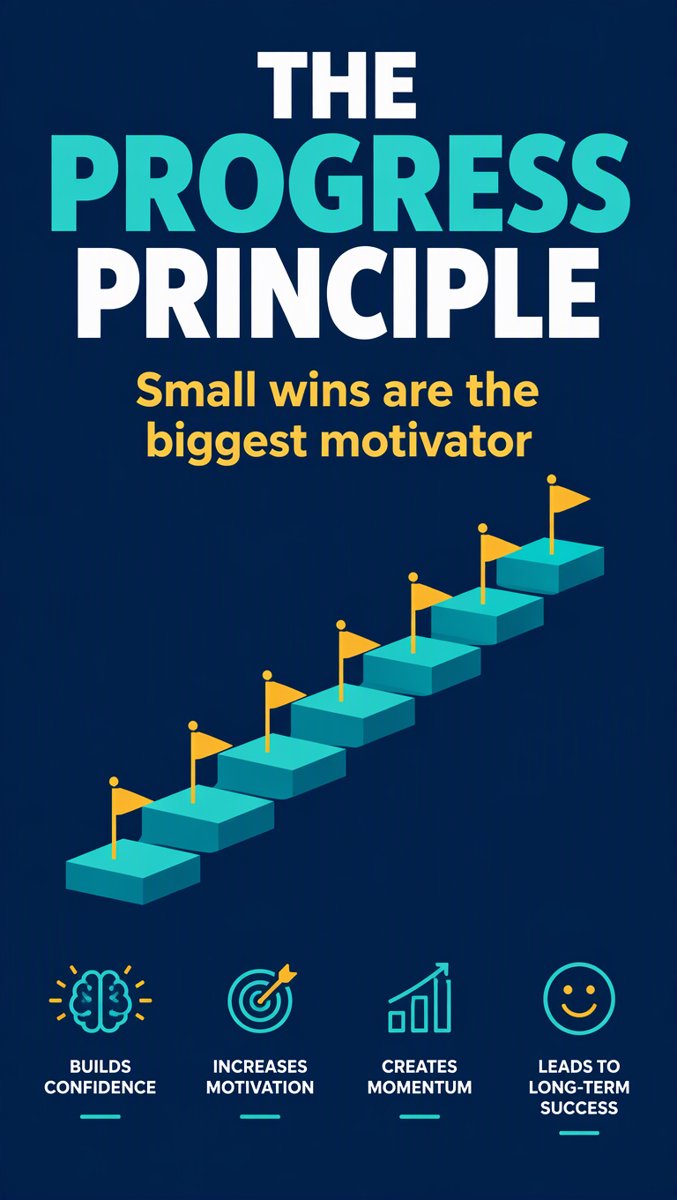
The Progress Principle: Your Best Workday Had One Thing in Common — And It Wasn't Praise
Think and Growth · Monday, October 5, 2026 · Theme: Work
Ask any manager what motivates people at work and you'll get the same shortlist: bonuses, recognition, maybe a clear title ladder. It sounds obvious. It's also wrong — and Harvard Business School proved it with a diary study big enough to end the argument.
The Idea
Professor Teresa Amabile and psychologist Steven Kramer ran one of the most ambitious studies of everyday work life ever attempted. They collected nearly 12,000 daily diary entries from 238 professionals working on 26 project teams across seven companies — people documenting, day by day, what happened at work and how they felt about it.
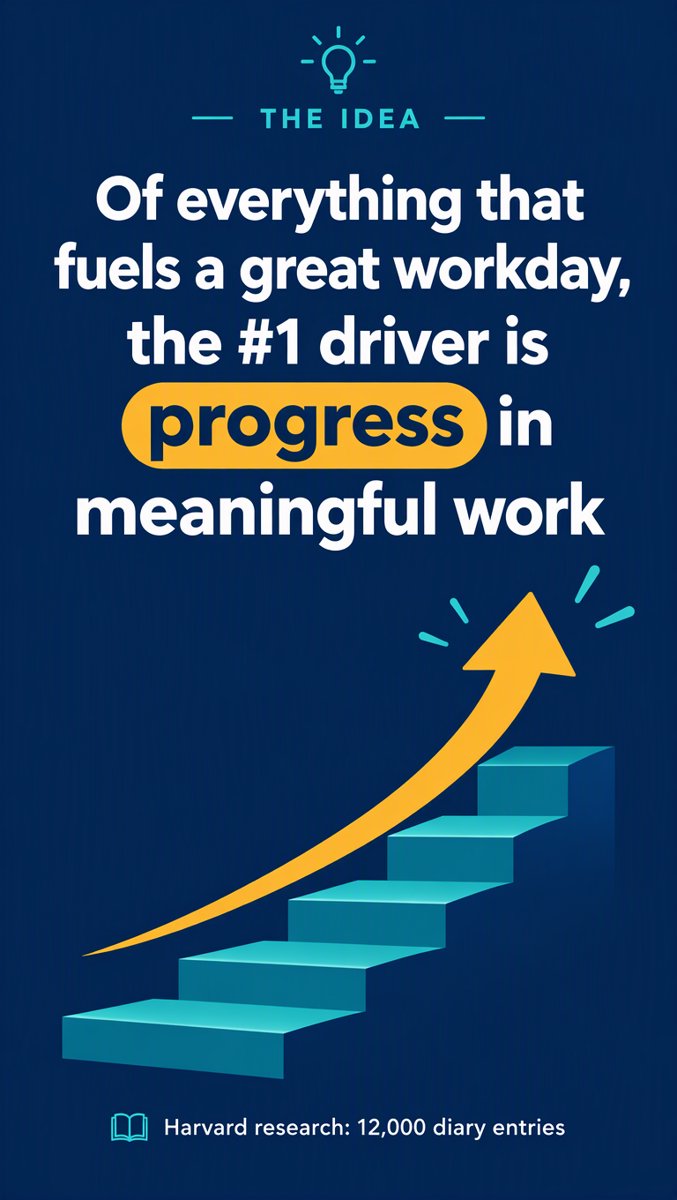
When they crunched the data, one factor dominated everything else. Of all the things that can boost emotions, motivation, and perception during a workday, the single most important is making progress in meaningful work. Not the bonus. Not the employee-of-the-month plaque. The quiet, private sense that you moved the work forward today — even a little. They called it the Progress Principle.
How It Works
The mechanism is a flywheel, and it compounds:
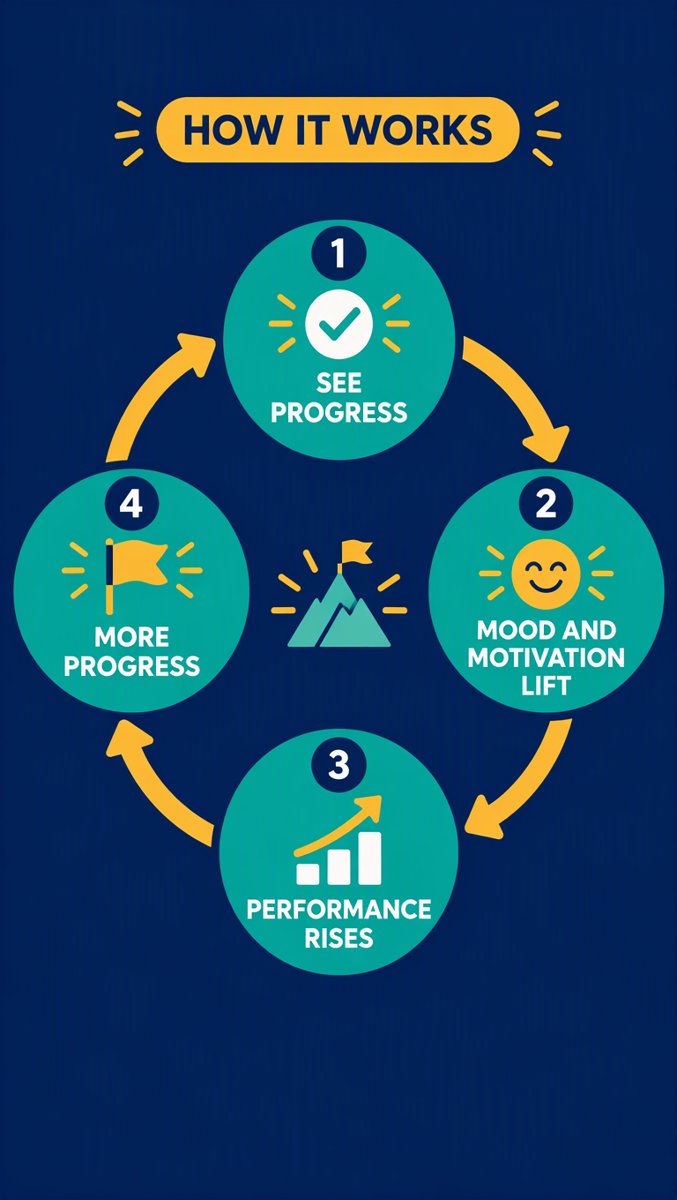
- You see progress — a bug fixed, a draft finished, a deal one step closer.
- Inner work life lifts — mood, motivation, and perception all tick up.
- Performance rises — Amabile's data showed people think more creatively and do better work on progress days.
- Better performance creates more progress — and the loop feeds itself.
Two leadership levers drive the flywheel, and neither is a carrot. Catalysts are events that directly enable progress: clear goals, autonomy, adequate resources, timely help. Nourishers are events that support the person: respect, encouragement, recognition for genuine wins. Managers default to generic incentives; the diaries say catalysts and nourishers are what actually move inner work life.
There's an asymmetry that matters just as much, documented in the pair's 2011 Harvard Business Review article "The Power of Small Wins": setbacks drag inner work life down with more than twice the force that progress lifts it up. Clearing obstacles isn't housekeeping. It's motivation engineering.
The Evidence
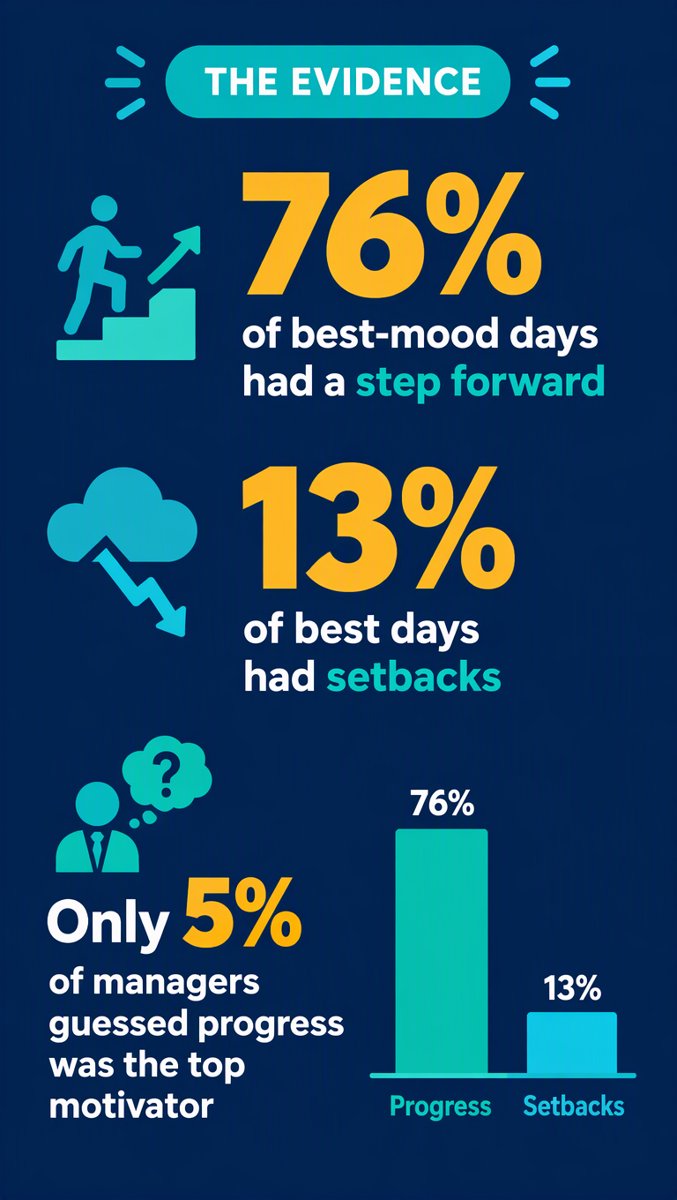
The numbers are stark. On 76% of people's best-mood days, they had made a step forward on the work. Setbacks showed up on just 13% of those days.
And here's the twist that should humble every leader: Amabile and Kramer also surveyed 669 managers, asking them to rank five motivators — recognition, incentives, clear goals, interpersonal support, and progress. Only 5% — 35 of the 669 — ranked progress first. Most ranked it dead last. Nine hundred and fifty-something educated guesses, and conventional wisdom lost to the diaries in a landslide.
The most common event on people's very best days? "Any progress in the work by the individual or the team." That's it. Small wins — not breakthroughs — carried the biggest emotional load.
How to Apply It
You don't need a management title to run this loop. Three moves, starting today:
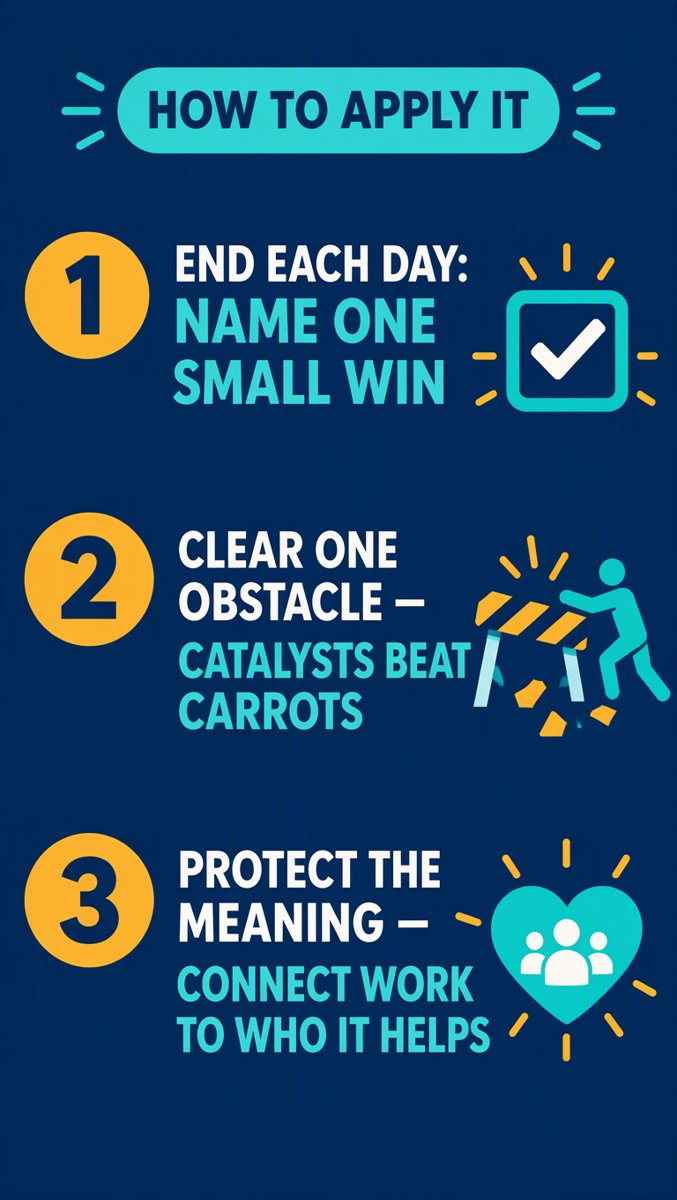
- End each day by naming one small win, in writing. One line is enough. This is the diary effect on an individual scale — you're making your own progress visible to the one person whose motivation you control.
- Clear one obstacle tomorrow. Look at your own or your team's path and remove a single blocker: the approval that's stuck, the meeting that shouldn't exist, the missing resource. Catalysts beat carrots — and because setbacks hit twice as hard, obstacle removal is the highest-leverage motivational move on the board.
- Protect the meaning of the work. Connect the task to who it helps. Progress motivates only when the work is meaningful; a spreadsheet for its own sake moves nothing. One sentence about the beneficiary resets the purpose.
If you manage people, add a fourth: stop leading with incentives you'd want and start asking the one question the diaries answered — did my people see progress this week, and did I help or hinder it?
The Takeaway
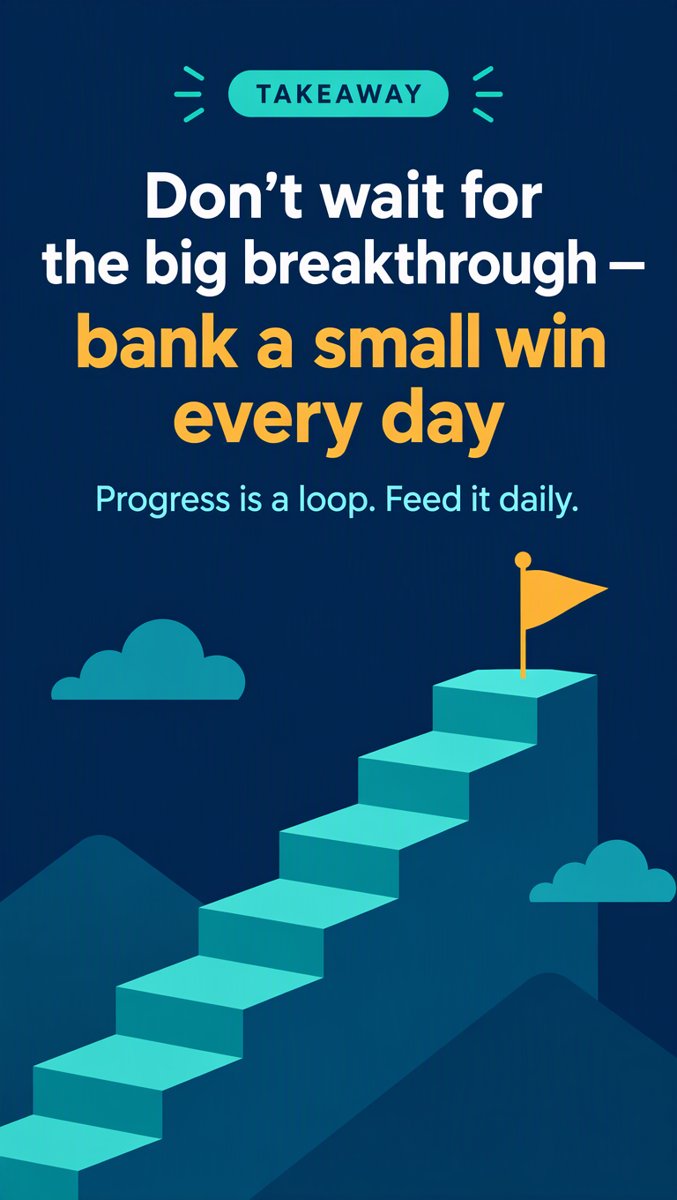
Don't wait for the big breakthrough. Bank a small win every day. Progress is a loop — and once you can see it, you can feed it.
Sources
- Harvard Business School — The Progress Principle (book page): https://www.hbs.edu/faculty/Pages/item.aspx?num=40692
- progressprinciple.com — Amabile & Kramer on the psychology of everyday work life (669-manager survey): https://progressprinciple.com/portfolio-items/the-progress-principle-and-the-psychology-of-everyday-work-life/
- MindTools — Amabile and Kramer's Progress Theory (238 people, 26 teams, 7 organizations): https://www.mindtools.com/arzm8fy/amabile-and-kramers-progress-theory/
- HBS Working Knowledge — How Small Wins Unleash Creativity: https://www.library.hbs.edu/working-knowledge/how-small-wins-unleash-creativity
- Harvard Business Review — The Power of Small Wins (May 2011): https://hbr.org/2011/05/the-power-of-small-wins
- Talks at Google — Teresa Amabile, The Progress Principle: https://www.youtube.com/watch?v=f_KxrFGhV5E
Narration Script (video version, 184 words → ~75s)
[Cover / Hook] Here's what Harvard learned from twelve thousand work diaries: motivation has a trigger.
[Slide 1 — The Idea] Harvard's Teresa Amabile and Steven Kramer analyzed nearly twelve thousand diaries from working professionals. Their finding: the single biggest driver of a great workday is progress in meaningful work.
[Slide 2 — How It Works] It works like a flywheel. You see a small step forward. That win lifts your mood and motivation, so performance rises. Better output creates more progress — and clear obstacles early, because setbacks hit twice as hard.
[Slide 3 — The Evidence] The evidence is striking: on seventy-six percent of people's best days, they had stepped forward. Setbacks appeared on only thirteen percent. And when managers ranked five motivators, ninety-five percent missed the answer — progress finished dead last.
[Slide 4 — How to Apply It] So run the loop yourself. End each day by writing down one small win. Tomorrow morning, clear one obstacle in your team's path. Catalysts beat carrots. And protect the meaning of the work — remind people who it helps.
[Slide 5 — Takeaway] Don't wait for the big breakthrough. Bank a small win every single day.
[CTA] Follow Think and Growth for one mental model every day. Make progress visible, and momentum takes care of itself.