The Michelangelo Phenomenon: The People Closest to You Are Sculpting Who You Become

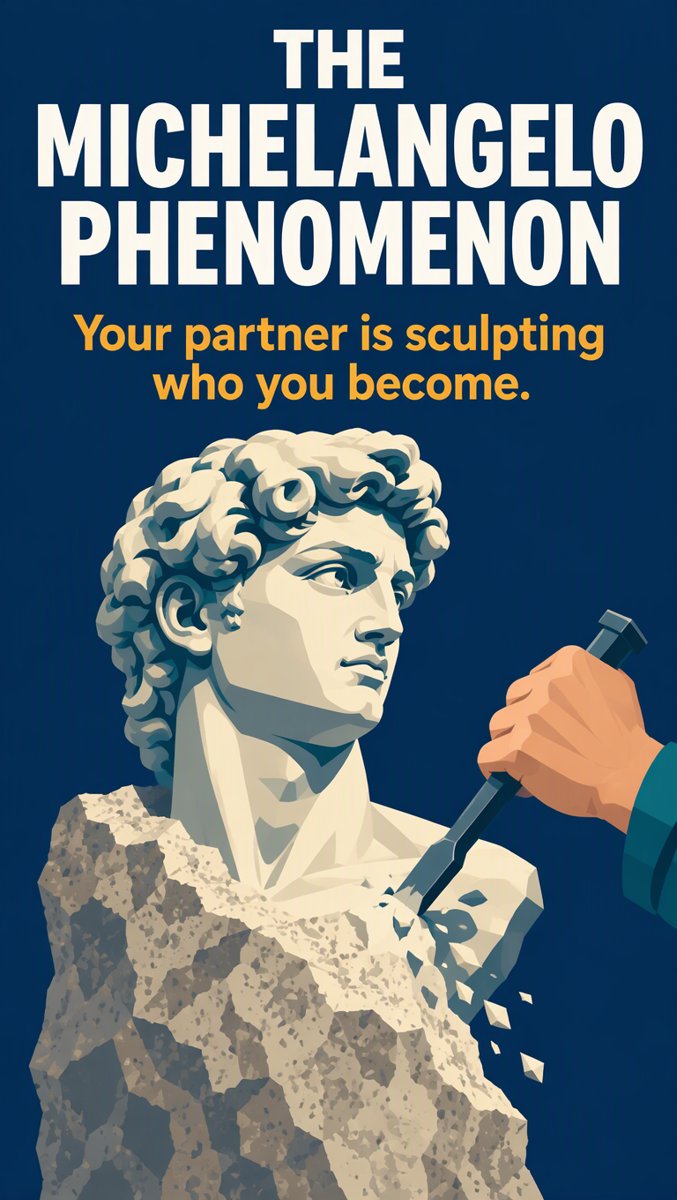
The Michelangelo Phenomenon: The People Closest to You Are Sculpting Who You Become
Think and Growth — Wednesday, October 21, 2026 · Theme: Family (relationships, communication)
In 1999, a team of psychologists led by Stephen Drigotas and Caryl Rusbult published a finding that should change how you think about every close relationship you have. They called it the Michelangelo phenomenon, and the claim is bold: your partner is not a spectator to your personal growth. They are the sculptor.
Michelangelo famously said the statue was already inside the marble — his job was simply to chip away everything that wasn't. The psychologists borrowed the metaphor: the ideal self — the person you genuinely aspire to become — already exists inside you. And the people closest to you, through hundreds of tiny daily interactions, are either revealing it or burying it.
What it is
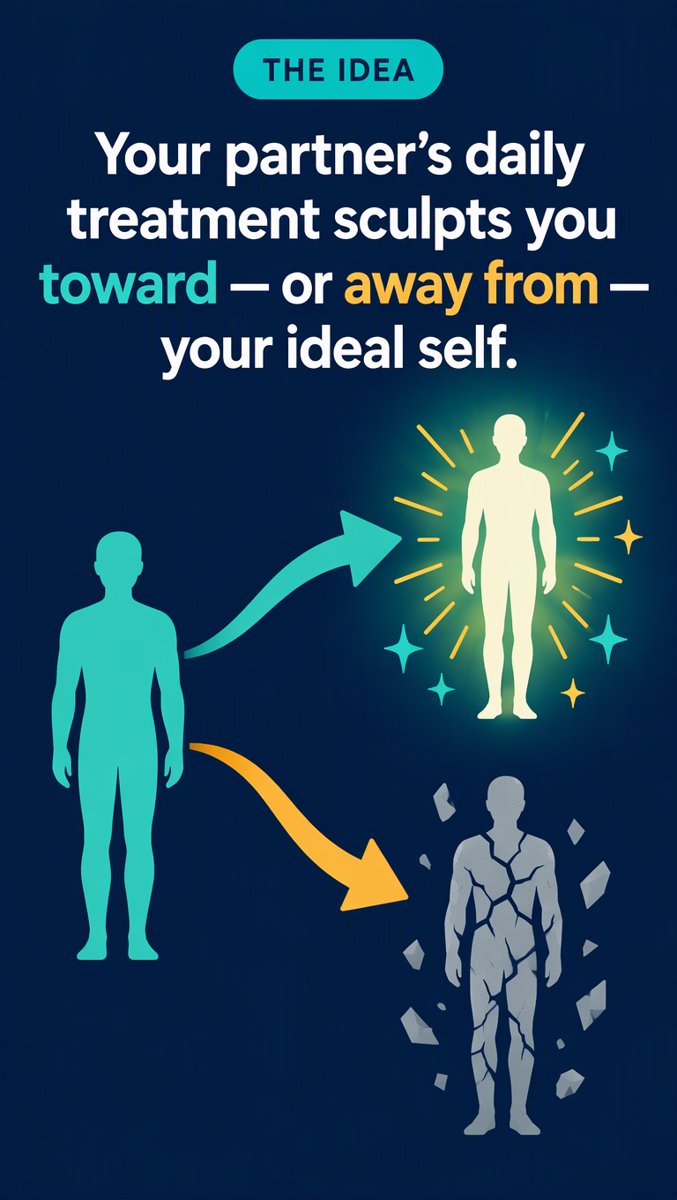
The Michelangelo phenomenon describes a well-documented interpersonal process: a close partner's affirmation gradually sculpts you toward your ideal self — or, when that affirmation is absent, carves you away from it.
The "ideal self" isn't fantasy. In the research it's the person you believe you can and want to become: more patient, braver, funnier, a real writer, a better leader. And there are two distinct ways a partner either affirms or disaffirms it.
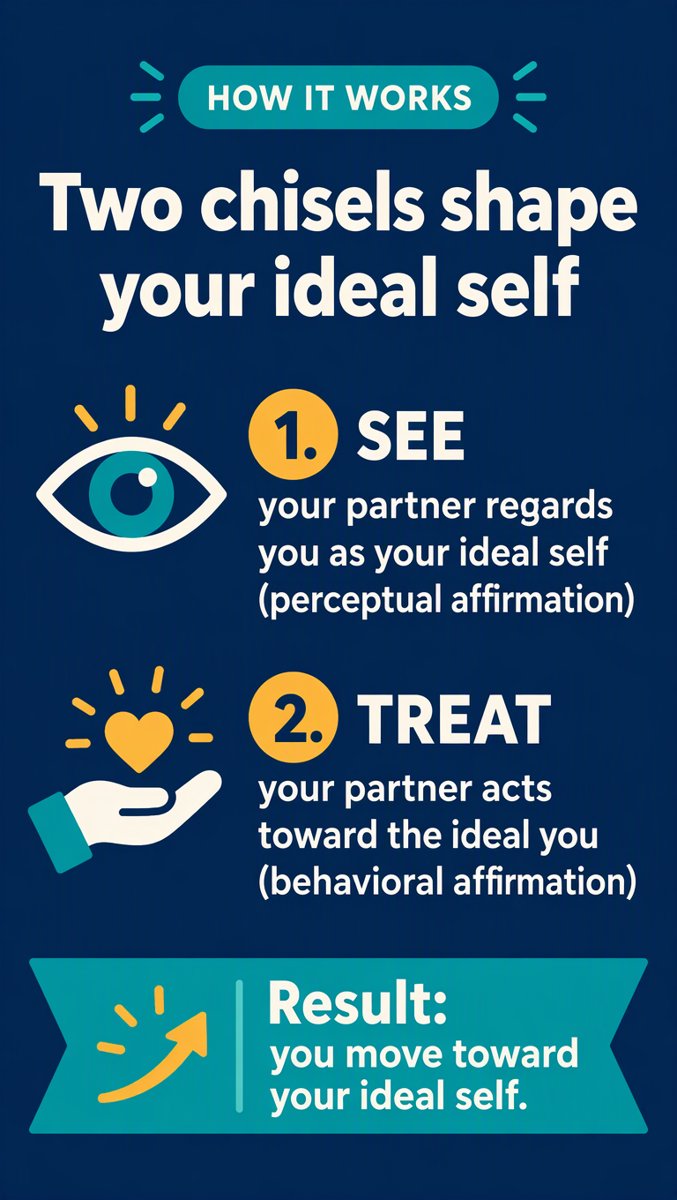
How it works: two chisels
The research distinguishes two channels of partner affirmation:
- Perceptual affirmation — your partner sees you as the person you ideally want to be. When you describe your ambition, they take it seriously. Their mental image of "who you are" matches "who you're becoming."
- Behavioral affirmation — your partner treats you as your ideal self. They act, day after day, in ways congruent with that person: guarding the writing hour, handing you the mic at dinner, expecting the patient version of you.
Both channels produce what researchers call movement toward the ideal self — and that movement is the engine of the effect's payoff.
The evidence: sculpting is measurable
Drigotas, Rusbult, Wieselquist and Whitton (1999) tested this in romantic couples and found support for what they called the couple well-being hypothesis: the more a partner affirmed the other's ideal self, the more that person moved toward their ideals — and the greater the couple's satisfaction, functioning, and likelihood of staying together.
Rusbult, Finkel and Kumashiro's later review (2009) extended the picture: targets of affirming partners enjoy greater life satisfaction and psychological health, while disaffirming partners produce movement toward the mere actual self — or worse, away from the ideal. The chisel cuts both ways. A follow-up line of dyadic research (2020) keeps confirming the core loop: supportive partners affirm the ideal self, movement follows, and both personal and relational outcomes improve.
This is why the model belongs in the Family theme: the effect is strongest exactly where the stakes are highest — the person who watches you brush your teeth.
Real life: same dream, two sculptures
Picture a partner who wants to become a writer.
In one home, the spouse guards the early writing hour, tells friends "my partner's working on a book," and treats the drafts as real work. That's behavioral affirmation. Research predicts the writer moves closer to their ideal self — and the couple moves closer too.
In another home, the same ambition gets an eye-roll: "You never finish anything you start." Nothing about the dream changed. The sculpting did.

How to use it tonight
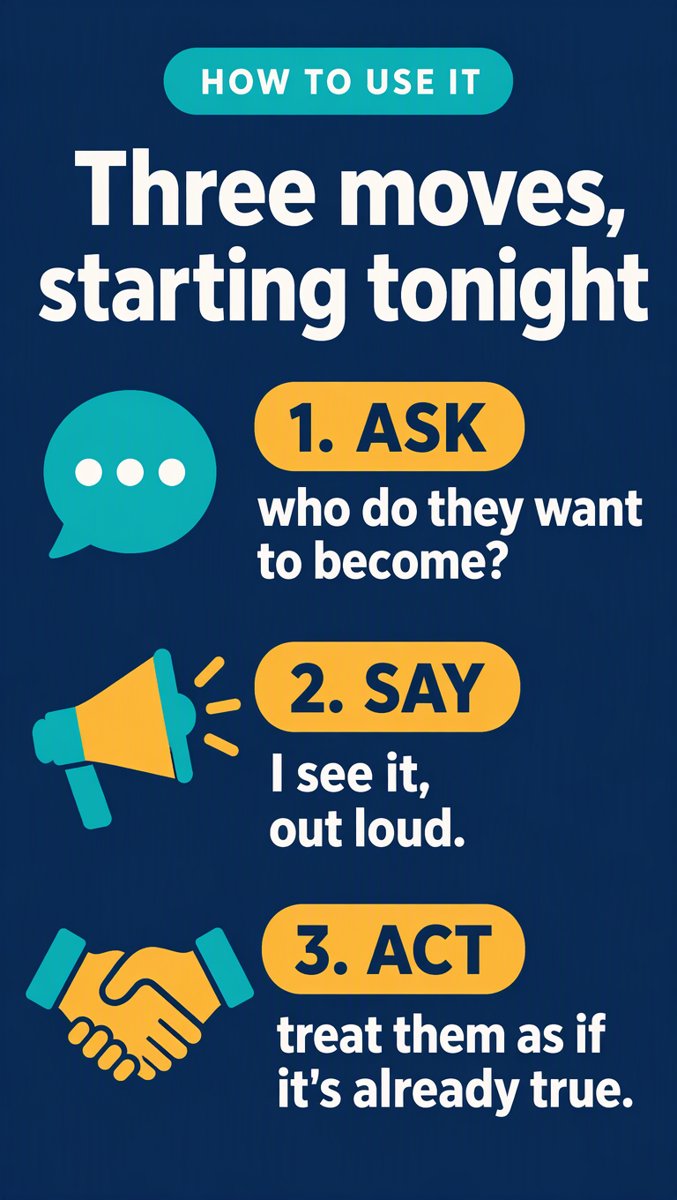
- Ask. Sit down with the person you love most and ask a question most couples never ask: who do you want to become? Get specific. "Healthier" isn't an ideal self; "someone who runs a 10K" is.
- Say. Tell them you see that person — out loud, in words. Perceptual affirmation costs nothing. It's the cheapest, most underused relationship tool in the literature.
- Act. Treat them as if the ideal is already true. Clear the hour. Hand them the pen. Expect the best version in small, boring, daily ways.
And audit the reverse: if you're the sculptor, what have your last ten interactions carved? Encouragement is a chisel. Sarcasm is too.
The takeaway

Michelangelo didn't create his Davids. He revealed them. That's the quiet, extraordinary job of the people we love most: not to remake us, but to see what's already inside and refuse to stop treating it as real.
The statue is already in the marble. The closest people hold the chisel. Choose your strokes carefully.
🎬 Narration script (video version, ~176 words ≈ 70s at TTS pacing)
[Hook] The people closest to you are quietly carving who you become. Here's the science.
[The Idea 1] Psychologists call it the Michelangelo phenomenon. A close partner's everyday treatment sculpts you toward your ideal self — or away from it.
[The Idea 2] Named in 1999, confirmed in couples research ever since.
[Mechanism 1] It works through two channels. First, they see you as your ideal self — that's perceptual affirmation.
[Mechanism 2] Second, they treat you that way — behavioral affirmation. Together they move you toward your ideals.
[Mechanism 3] And the reverse is just as real.
[Example 1] Say your partner dreams of becoming a writer.
[Example 2] Guard the writing hour. Call it their real work. That's affirmation.
[Example 3] Mock it instead — the dream chips away. Same relationship, opposite chisel.
[Apply 1] Tonight, try three moves. Ask the person you love: who do you want to become?
[Apply 2] Then say you see it — out loud. And treat them as if it's already true.
[Takeaway] The statue is already in the marble. The closest people hold the chisel. Choose your strokes carefully.
[CTA] Follow Think and Growth for one mental model every morning — and start sculpting the people you love toward their best.
📋 Per-segment ↔ clip mapping
| # | Slide | Segment | Words |
|---|---|---|---|
| 1 | cover | Hook | 14 |
| 2 | slide-1 | Idea seg 1 | 21 |
| 3 | slide-1 | Idea seg 2 | 9 |
| 4 | slide-2 | Mechanism seg 1 | 17 |
| 5 | slide-2 | Mechanism seg 2 | 16 |
| 6 | slide-2 | Mechanism seg 3 | 7 |
| 7 | slide-3 | Example seg 1 | 8 |
| 8 | slide-3 | Example seg 2 | 12 |
| 9 | slide-3 | Example seg 3 | 13 |
| 10 | slide-4 | Apply seg 1 | 16 |
| 11 | slide-4 | Apply seg 2 | 16 |
| 12 | slide-5 | Takeaway | 18 |
| 13 | cta (fade_out) | CTA | 22 |
All clips: motion: "none" (content) / fade_out (CTA only) · all subtitle: "none".
Sources
- Drigotas, Rusbult, Wieselquist & Whitton (1999), "Close partner as sculptor of the ideal self: Behavioral affirmation and the Michelangelo phenomenon," Journal of Personality and Social Psychology — https://pubmed.ncbi.nlm.nih.gov/10474210/
- Wikipedia — Michelangelo phenomenon (term origin, couple well-being hypothesis) — https://en.wikipedia.org/wiki/Michelangelo_phenomenon
- Rusbult, Finkel & Kumashiro (2009), "The Michelangelo Phenomenon," Current Directions in Psychological Science (Northwestern) — https://faculty.wcas.northwestern.edu/eli-finkel/documents/47_RusbultFinkelKumashiro2009_CDir.pdf
- Hoppmann & Gerstorf / dyadic personality perspective (2020), Journal of Research in Personality — https://www.sciencedirect.com/science/article/abs/pii/S0092656620300313