The Let Them Theory by Mel Robbins: Honest Review, Rating & Who Should Read It — Verdict 7.5/10

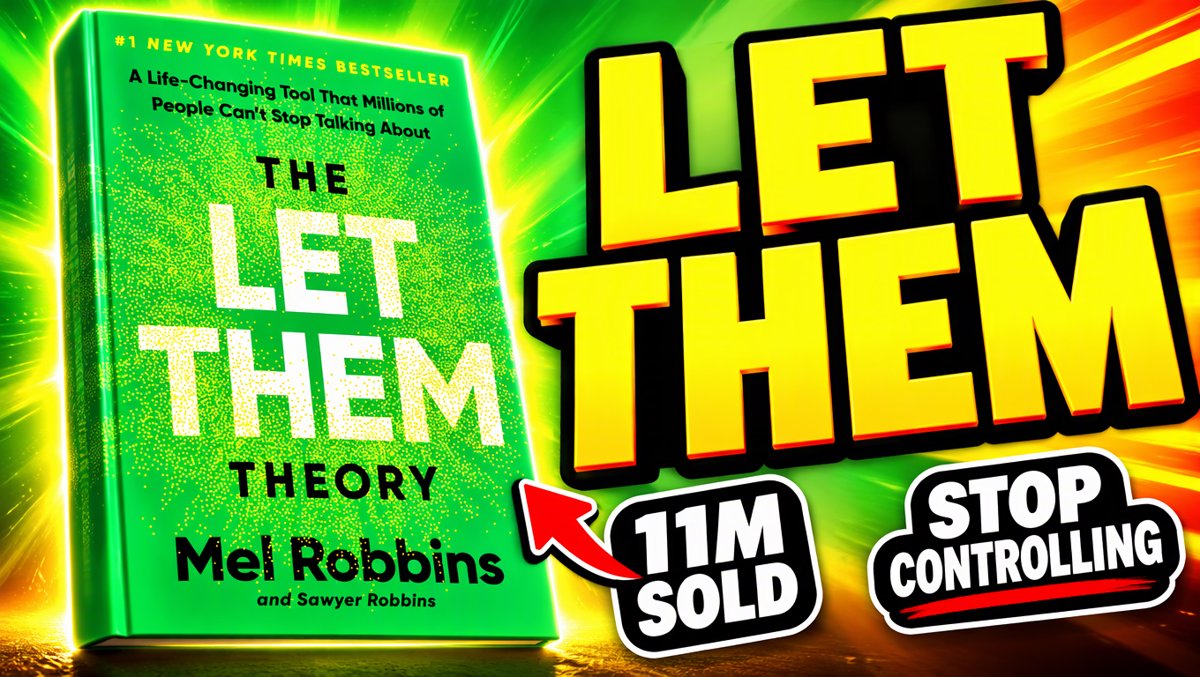
11 million copies. 66 languages. 49,999 Amazon ratings averaging 4.6 stars. And one very sharp British column arguing it's "non-fiction with no facts." The Let Them Theory by Mel Robbins (with daughter Sawyer Robbins) is the #1 most-sold book of 2025 — and the most argued-about self-help book of the decade. Two words, "Let Them," have become a tattoo, a tour, and a TikTok personality test. Is it the liberation Oprah promised, or a sticky note stretched to 336 pages? Our verdict after the receipts: 7.5/10 — a genuinely useful mantra wearing a lab coat it didn't earn.
The book at a glance
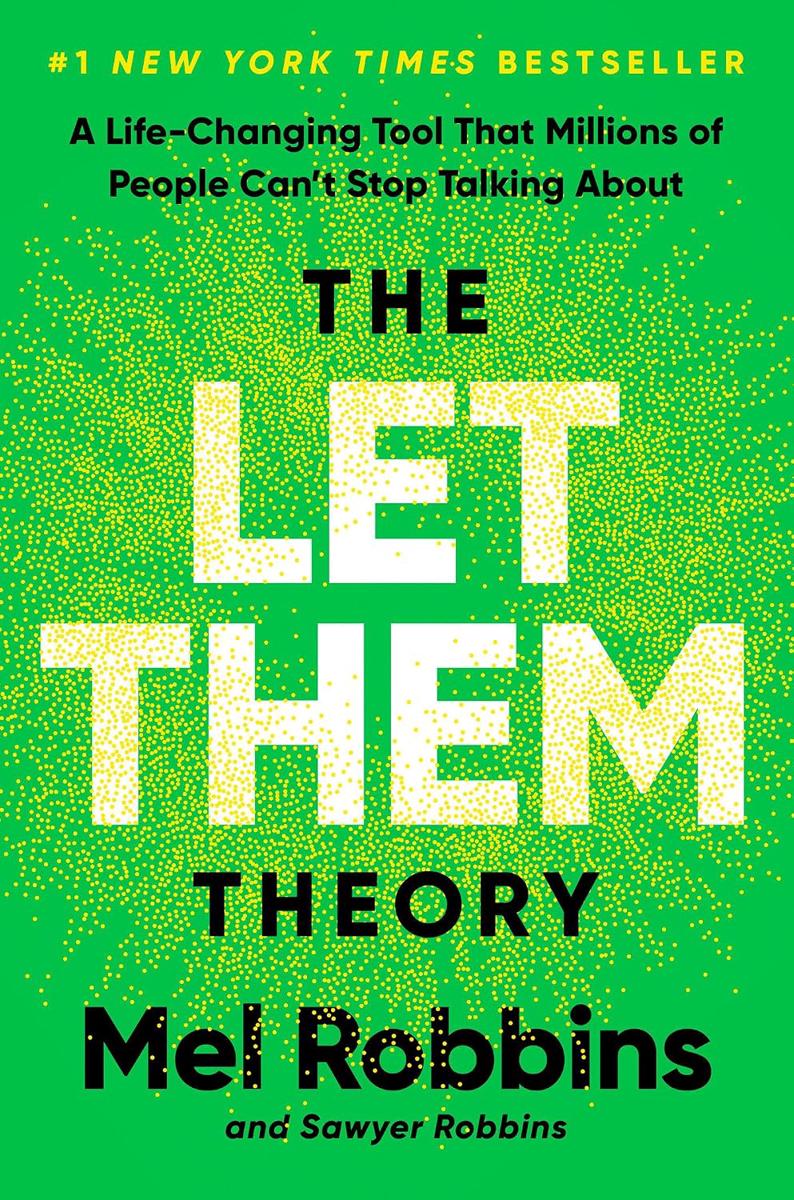
| Title | The Let Them Theory: A Life-Changing Tool That Millions of People Can't Stop Talking About |
| Authors | Mel Robbins & Sawyer Robbins |
| Published | December 24, 2024 (Hay House) |
| Pages | 336 |
| ISBN-13 | 978-1401971366 |
| Price | $29.99 list · $17.05 on Amazon (checked Nov 22, 2026) |
| Amazon rating | 4.6/5 (49,999 ratings; 75% five-star) |
| Status | #1 most-sold book of 2025; ~99 weeks on the NYT list; 11M+ copies; 66 languages |
The 3-second version
- What it is: a two-word mindset tool — "Let Them" (stop managing other people) plus "Let Me" (focus on what you control) — applied across eight life areas, from friendships to dating.
- Who wrote it: Mel Robbins, ex-criminal-defense lawyer turned podcast host; her daughter Sawyer co-authored.
- Why it matters: it's the defining self-help phenomenon of the 2020s — 11 million copies, a 120,000-person live tour, and a cultural phrase people actually tattoo on themselves.
- The verdict: 7.5/10 — brilliant as a daily cue, overstated as a science-backed "theory," and honestly repetitive in the middle.
What the book actually is
The premise fits on a sticky note — and Robbins knows it. "Let Them" means: accept that other people will think, say, and do what they will. Stop spending your life managing their opinions, drama, and judgments. "Let Me" is the half most people skip: now take responsibility for your own response, your goals, your next action. As the publisher copy puts it, "the problem isn't you. The problem is the power you give to other people."
The 336 pages walk that pair through eight territories: stress, fear of others' opinions, negative reactions, comparison, adult friendships, influencing others to change, helping someone who's struggling, and dating. Real stories carry each chapter — the airplane passenger coughing without covering his mouth gets Robbins' scarf and headphones instead of a scene ("Problem solved," she writes). Bonus chapters (leadership and a 13-page parenting guide with Harvard's Dr. Stuart Ablon) come as downloads.
Two things deserve credit upfront. First, Robbins explicitly warns against using "Let Them" as an excuse to disappear from relationships — the book's influence chapters ("the ABC Loop": apologize and ask, back off and observe, celebrate progress while modeling change) are about staying engaged, smarter. Second, the friendship material is genuinely practical: stop interpreting a slow reply as a verdict, and start creating the contact you want instead of waiting for it. That's not mysticism; that's Tuesday-afternoon usable.
The author's story
Mel Robbins — born Melanie Lee Robbins in Kansas City in 1968, Dartmouth and Boston College Law graduate, former public defender — reinvented herself after The 5 Second Rule (2017), a self-published hit that sold millions and put her on every conference stage in America. She's now host of one of the world's most-followed podcasts, a TIME 100 Creator, and, per the Wall Street Journal, a "billion-view podcaster." Sawyer Robbins, her daughter, is co-author here and runs brand marketing at Mel Robbins Media Group; they co-headlined the Let Them Tour (120,000+ attendees, 27 cities).
Her earlier books, all on Amazon:
| Title | Year | Pitch | Link |
|---|---|---|---|
| The 5 Second Rule | 2017 | The 5-4-3-2-1 countdown that breaks procrastination and builds courage — the book that made her famous (4.5★, 15,151 ratings) | Amazon |
| The High 5 Habit | 2021 | One daily habit for building self-belief (4.7★, 8,593 ratings) | Amazon |
| Stop Saying You're Fine | 2011 | Her first book — humor as a tool for bouncing back | Amazon |
| The Let Them Theory | 2024 | Two words, eight life areas, 11 million copies (4.6★, 49,999 ratings) | Amazon |
Strengths
- The cue works. Amazon's review-mining data is striking: "Readability" drew 1,090 positive mentions against 48 negative; "Life-changing," 389 to 6. Review after review describes the same moment — reading Let Them/Let Me mid-argument and feeling the shoulders drop. A mantra you actually use beats a framework you merely underline.
- "Let Me" saves it from passivity. The book's best section, per the most-helpful Amazon review (298 people), is the influence material: don't cut people off, don't chase them either — apologize, ask, back off, model change. In a polarized decade, "bringing people together" is a real contribution.
- Friendship advice you can try tonight. Stop waiting for invitations; initiate, host, join. Concrete, unglamorous, effective — the least "guru" chapter in the book.
- It's short chapters, big type, fast reads. Readers finish it in days; the audiobook is a commuter staple.
Weaknesses
- Repetition is the tax you pay in the middle. The commonest Amazon complaint — and it shows up even in five-star reviews ("Empowering Concept, Practical—but a Bit Repetitive," Canada, Feb 2026) — is chapters circling the same point. Reviewers joke the whole idea fits on a sticky note. Fans reply that repetition is the point. Both are right; the middle third will bore fast readers regardless.
- The science costume doesn't fit. The Behavioral Scientist's critical review scored the book's Scientific Accuracy at 42%: acceptance-therapy research (a 39-trial, 1,821-patient ACT meta-analysis) validates therapy, not a two-word phrase; the neuroscience passages (the brain "stops listening" to bad news) contradict the actual threat-processing literature. Cute stories are not RCTs, and the book sometimes writes as if they are.
- One rule reaches too far. The blanket advice that withdrawing financial support is "the only thing that will work" for struggling adults — extended even to rent and groceries — overreaches the evidence by a wide margin. Boundaries are fine; universal prescriptions for addiction and dependency are not.
- "Value for money" is the only mixed Amazon aspect (151 positive vs 65 negative mentions). At $29.99 list for 336 pages of a sticky-note idea, some readers feel the size more than the content.
Reception scoreboard
| Source | Verdict |
|---|---|
| Kirkus Reviews | Positive: "A truly helpful treatise on seeing others as they are, and letting that be." |
| Amazon (49,999 ratings) | 4.6/5 — 75% five-star, 15% four-star, 7% three-star, 2% two-star, 1% one-star |
| Goodreads | ~4.08 average (3,431 ratings) — cooler than Amazon's fanbase-skewed pool; top critical strand: "simplistic and occasionally insensitive" for readers with complex trauma or systemic constraints |
| The Behavioral Scientist | Scientific Accuracy 42% — "use the phrase as a reminder, not as a general theory of people or a treatment guide" |
| The Observer (UK) | Hostile: "non-fiction with no facts"; worst kind of advice for young women |
| The Cut | Mainstream-skeptical: a modernized He's Just Not That Into You for the TikTok generation |
| Amazon review aspects | Content POSITIVE (1,551/1,730); Readability POSITIVE (1,090/1,138); Life-changing POSITIVE (389/395); Value for money MIXED (151/216) |
Where critics disagree: fans see permission to stop auditioning for other people's approval; skeptics see a permission slip that conveniently never requires the hard part — negotiating, apologizing, or staying. The book itself lands between them (the ABC Loop is the hard part), which is exactly why the argument won't die.
Similar books
| Book | Rating | Why compare |
|---|---|---|
| Atomic Habits — James Clear | 4.8★ (150,572 ratings) | The other mandatory modern classic: systems over goals. Read this if you want mechanics, not mindset. |
| The 5 Second Rule — Mel Robbins | 4.5★ (15,151 ratings) | Same author, different problem: starting things versus releasing people. Best read as a pair. |
| The High 5 Habit — Mel Robbins | 4.7★ (8,593 ratings) | Her self-belief habit book; gentler, more practice-heavy. |
| The 7 Habits of Highly Effective People — Stephen R. Covey | 4.8★ (17,389 ratings) | The original "focus on what you can control" playbook — Let Me has a 1989 ancestor. |
| The Psychology of Money — Morgan Housel | ~4.6★ | Different shelf, same viral energy: short, humane, endlessly giftable. |
Why this book is good for you if…
- You replays conversations at 2 a.m. and "fix" people's feelings for a living. The Let Them half gives you a 5-second exit from the rumination loop, and the Let Me half redirects that energy to something you own. Readers who describe themselves as people-pleasers are the book's beating heart.
- You're burned out on hustle-culture self-help but still want a tool, not a lecture. This is the anti-grind book: its core move is stopping — which, for exhausted perfectionists, turns out to be the hardest instruction in the genre.
- You want one phrase your whole family will actually remember. One Amazon reviewer reports saying "let them" through the holidays until everyone was sick of hearing it — "to that I say: let them." As giftable, tattooable, group-chat-ready self-help, nothing else on this year's list comes close.
The fine print
Skip it if you've read a dozen self-help books and can already quote the serenity prayer — you'll cycle through familiar furniture. Readers with complex trauma histories or real structural constraints (money, caregiving, safety) should treat the book as a starting cue, not a complete map; the Goodreads critical strand and The Behavioral Scientist both flag the oversimplification honestly. And if "Let Me" rubs your faith the wrong way (one Amazon reviewer just swapped in "Let God"), that's a feature of the format: the phrase is a vessel, fill it with your own content.
Read instead: Atomic Habits for systems, The 5 Second Rule for courage, Dale Carnegie when you want the 1936 original of most of this — as one Oct 2026 reviewer put it, several chapters "appear pulled from those books."
Verdict
| Score | |
|---|---|
| Idea (mantra quality) | 8.5/10 |
| Writing & stories | 7.5/10 |
| Evidence & honesty | 5.5/10 |
| Payoff per hour | 7.5/10 |
| Overall | 7.5/10 |
It's not a theory; it's a slogan that happens to work — and a slogan that works is worth more than most theories that don't. The Let Them Theory won't cure your hardest problems, and its science cosplay deserves every kick it got. But as a daily two-word reset for the people-pleasing, opinion-managing, control-hoarding majority, it's the most useful 336 pages in self-help right now. The strongest line in the book remains the one on the cover of a million screenshots: you can't control them — so let them, and let me.
Frequently asked questions
Is The Let Them Theory worth reading? Yes, especially if you're new to self-help or people-pleasing runs in your family. Verdict: 7.5/10 — a genuinely useful daily mantra wrapped in some overstated science and repetitive middle chapters.
What is The Let Them Theory by Mel Robbins about without spoilers? Two words: "Let Them" (stop trying to control other people's opinions, drama, and choices) paired with "Let Me" (focus on your own reactions, goals, and priorities). Robbins applies the pair across eight life areas including friendships, dating, work, and helping struggling loved ones.
How long is The Let Them Theory? 336 pages (hardcover, Hay House, December 24, 2024). Most readers finish in a few days; the audiobook narrated by Robbins is equally popular.
How many copies has The Let Them Theory sold? Over 11 million copies worldwide, translated into 66 languages. It was the #1 most-sold book of 2025 and spent roughly 99 weeks on the New York Times bestseller list.
Who is Mel Robbins? A former criminal defense lawyer (Dartmouth, Boston College Law) turned motivational speaker, author, and host of one of the world's most-followed podcasts. Her earlier books are The 5 Second Rule (2017) and The High 5 Habit (2021).
Is The Let Them Theory backed by science? Partially. Acceptance-based psychology research supports the general direction, but no clinical trial has tested "Let Them/Let Me" as a branded method; one critical review scored the book's Scientific Accuracy at 42%. Treat it as a mental cue, not a treatment.
What should I read after The Let Them Theory? Atomic Habits by James Clear (4.8★, 150,572 ratings) for habit systems, or Robbins' own The 5 Second Rule (4.5★) for courage and starting things. Both are linked above.