
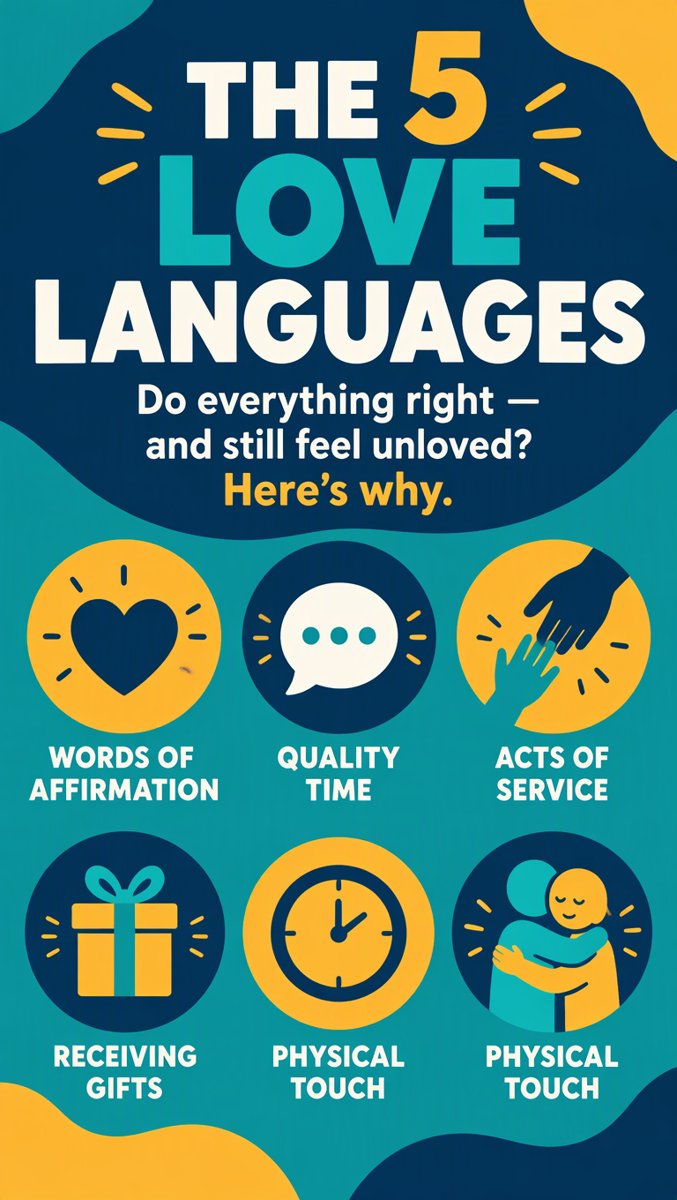
The Five Love Languages: Speak Their Language, Not Just Yours
By Peter — Think and Growth · November 18, 2026
You can do everything right in a relationship — cook the dinners, fix the sink, show up every day — and still watch the person you love feel empty. Not because they don't notice. Because love you give in the wrong language doesn't always land.
That's the idea behind one of the most famous relationship frameworks of the last thirty years — and today's mental model, The Five Love Languages.
The Idea
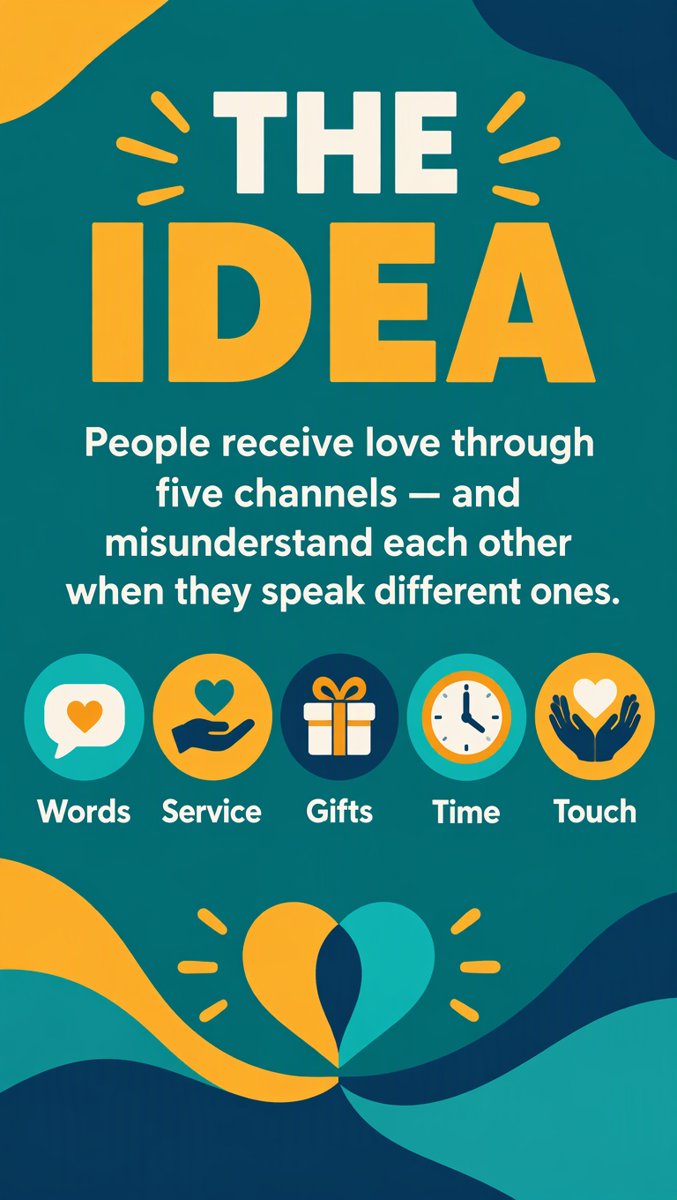
In 1992, Dr. Gary Chapman — a pastor and counselor who had spent decades coaching couples — published The Five Love Languages. His core observation from the counseling room was simple: many couples weren't failing because they didn't care. They were failing because they were speaking different emotional languages.
Chapman's five channels:
- Words of Affirmation — spoken compliments, appreciation, encouragement.
- Acts of Service — helpful actions: chores, favors, practical backup.
- Receiving Gifts — a thoughtful token; the thought matters more than the price tag.
- Quality Time — undivided attention: real conversation, shared experiences, phone away.
- Physical Touch — a hug, a hand on the shoulder, holding hands.
The principle: each person has a primary language — the channel through which they most feel loved. When your partner's love arrives in a channel you barely register, you can be genuinely cared for and still feel unloved. That's not ingratitude. That's a translation problem.
How It Works
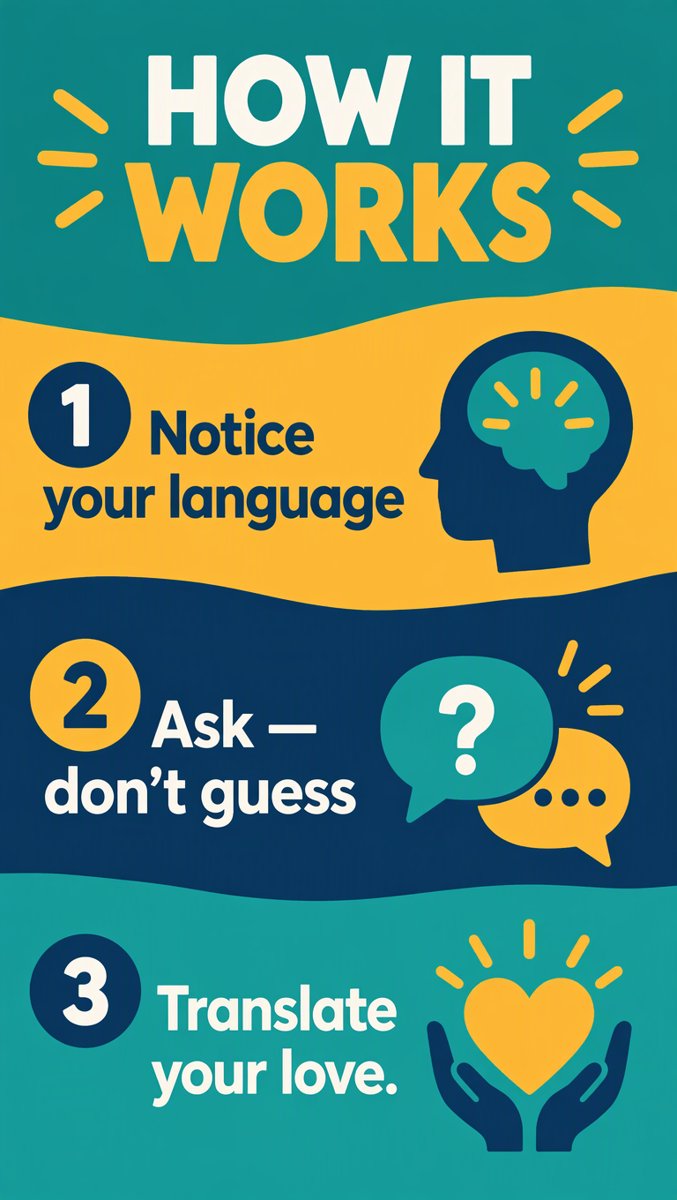
The mechanism is a three-step loop:
Step 1 — Notice your language. Which expressions actually fill your tank? If a quiet "thank you" makes your whole day, Words outrank chores for you. If nothing lands like an hour of full attention, Quality Time is your signal.
Step 2 — Ask, don't guess. This is the step most people skip. We assume our partner feels loved the way we do — so we keep giving them our language, louder and louder. The framework's sharpest insight: find out their language directly. One honest conversation beats a year of mind-reading.
Step 3 — Translate your love. Once you know their language, you don't have to become a different person — you just route the same care through a different channel. The gift-buyer writes a note. The fixer makes eye contact and asks one real question. Same love, new delivery.
A Real-World Example
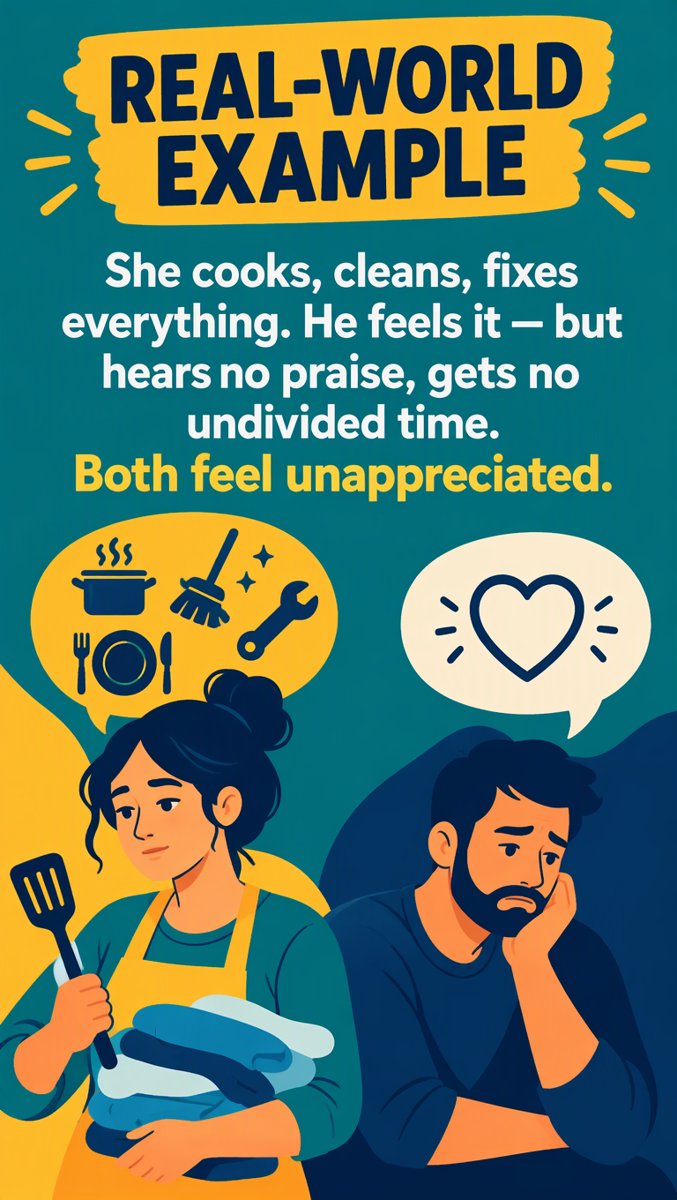
Picture the classic clinical pattern Chapman kept seeing: She cooks, cleans, and fixes everything — Acts of Service, pouring her love into the household. He feels the effort — but hears no praise and gets no undivided time. Words and Quality Time are his channels, and they're running on empty.
So: she feels invisible despite working herself to the bone. He feels distant despite being genuinely grateful. Both are sincere. Both are exhausted. And the whole argument was never really about the dishes.
The fix wasn't a bigger effort. It was a ten-minute conversation: What actually makes you feel loved? She learned he needed to hear it and sit with him. He learned a load of laundry said more to her than his words ever had. Same couple, same effort — translated.
The Honest Evidence Check
Here's where I earn your trust: the science behind the Five Love Languages is genuinely mixed. A 2024 review by Impett, Park & Muise in Current Directions in Psychological Science found little evidence that people have one stable primary love language, that the five categories are cleanly distinct, or that "matching" languages reliably predicts relationship outcomes. None of the ten studies reviewed supported Chapman's main matching claim. (Greater Good Science Center, UC Berkeley)
What does hold up, modestly: partners who perceive they're expressing love in the way the other prefers tend to report slightly better outcomes. But that's a weaker claim than the book's full theory.
So treat the model the way you'd treat any good lens: useful for starting the conversation, not a diagnosis. The framework's real product isn't a score on a quiz — it's the moment two people stop arguing about effort and start asking about reception.
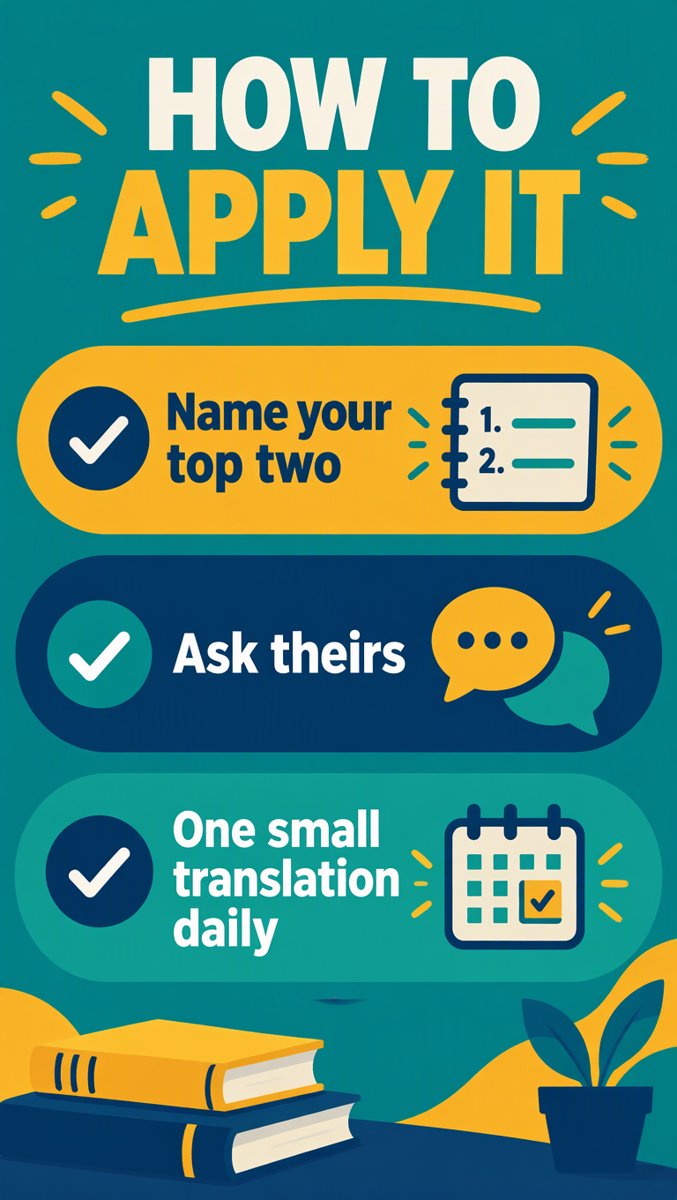
How to Apply It — Today
- Name your top two. Not a quiz — just notice. What do you light up about? What do you miss when it's gone?
- Ask theirs — out loud. "When do you feel most loved by me?" Wait for an actual answer. Don't argue with it.
- One small translation, daily. Swap one expression this week into their channel. A note instead of a chore. Dinner with phones away instead of dinner with phones. Small, consistent, translated.
The Takeaway
Love isn't just what you give. It's what they can receive. Stop performing generosity in your own dialect. Learn theirs — and watch the same effort suddenly count double.
Think and Growth — Episode #37 · Theme: Family Sources: Greater Good Science Center (UC Berkeley), "Is There Science Behind the Five Love Languages?"; Wikipedia, "The Five Love Languages"; iPsychology review; Abby Medcalf; Psychology Today (2024).
🎙️ Narration Script (~148 words, ~70s)
Hook (cover, 12w): "You can do everything right — and still feel unloved. Here's why." Idea (slide 1, 31w): "Chapman's Five Love Languages says people receive love through five channels: words, service, gifts, time, and touch. Speak the wrong one, and care doesn't land." Mechanism (slide 2, 30w): "It works in three steps. Notice your own language. Ask your partner theirs — don't guess. Then translate your love into their channel." Example (slide 3, 33w): "She does every chore. He feels it — but hears no praise and gets no real time. Both feel unappreciated. The fix? One honest conversation, not more effort." Apply (slide 4, 26w): "Today: name your top two. Ask theirs, out loud. Then make one small translation — daily." Takeaway (slide 5, 15w): "Love isn't just what you give. It's what they can receive."
Total: ~147 words → ~70s measured (target ≤ 200 written words; platform cap 150s)
🎞️ Segments (per-clip, all motion "none" except CTA fade_out, all subtitle "none")
| # | Image | tts_text |
|---|---|---|
| 1 | cover | You can do everything right — and still feel unloved. Here's why. |
| 2 | slide-1 | Chapman's Five Love Languages says people receive love through five channels: |
| 3 | slide-1 | words, service, gifts, time, and touch. Speak the wrong one, and care doesn't land. |
| 4 | slide-2 | It works in three steps. Notice your own language. Ask your partner theirs — don't guess. |
| 5 | slide-2 | Then translate your love into their channel. |
| 6 | slide-3 | She does every chore. He feels it — but hears no praise and gets no real time. |
| 7 | slide-3 | Both feel unappreciated. The fix? One honest conversation, not more effort. |
| 8 | slide-4 | Today: name your top two. Ask theirs, out loud. |
| 9 | slide-4 | Then make one small translation — daily. |
| 10 | slide-5 | Love isn't just what you give. It's what they can receive. |
| 11 | cta | Subscribe to Think and Growth — one mental model, every day, to help you think sharper and love better. |