The Emotional Bank Account: Trust Compounds in Small Moments — Not Big Ones

The Emotional Bank Account: Trust Compounds in Small Moments — Not Big Ones
Think and Growth — Episode #36 · Theme: Family · November 11, 2026
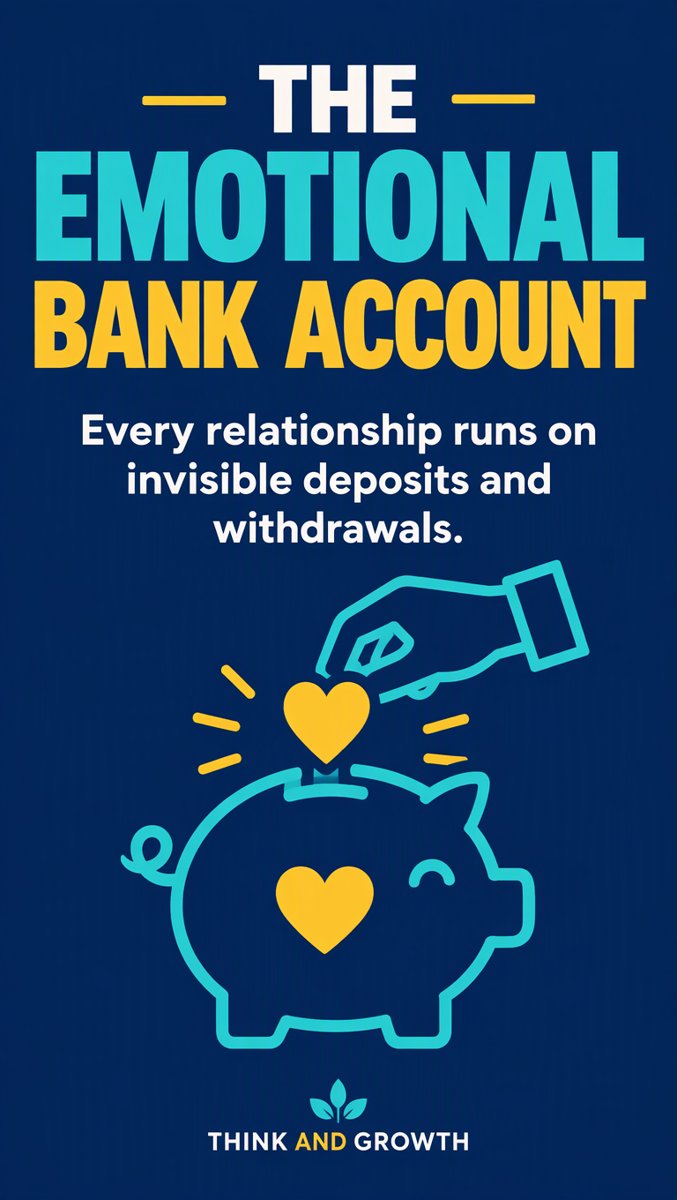
There's an invisible ledger behind every relationship you care about. It has no app, no statement, no notification when the balance runs low. Stephen Covey called it the Emotional Bank Account, and once you see it, you can't unsee it — in your marriage, your kids, your parents, your closest friendships.
The Idea
In The 7 Habits of Highly Effective People, Covey argued that trust between two people works exactly like money in a bank account. Deposits — listening fully, keeping small promises, simple kindness and appreciation — raise the balance. Withdrawals — broken commitments, dismissed feelings, sharp words — drain it.
The balance isn't decorative. It determines how your next interaction lands. A high balance absorbs mistakes: you snap once at someone you've invested in for years, and they shrug it off — the trust covers you. A low balance makes small frictions explosive: the same snap lands as confirmation that "you always do this." Same words, different account.
The Evidence: Gottman Put Numbers On It
This isn't just a nice metaphor. Dr. John Gottman's relationship lab spent decades observing thousands of couples — some who stayed happily married, some who divorced — and effectively measured deposits and withdrawals in real time.
1. The 86% / 33% finding. Couples constantly make what Gottman calls "bids" for connection: "look at that dog," "you won't believe this email," a sigh, a touch on the shoulder. Each bid answered is a micro-deposit. In Gottman's research, partners in couples who stayed together turned toward each other's bids 86% of the time. Partners in couples who divorced managed only 33%. (Gottman Institute, Simply Psychology)
2. The 5:1 magic ratio. During conflict, stable and happy couples maintain roughly five positive interactions for every negative one. Negatives — criticism, contempt, defensiveness — hit harder than positives heal, which is why the ratio has to stay heavily positive. Gottman's longitudinal studies followed couples for years and paired observation with physiological measurement — heart rate, skin conductance — tracking what actually happens when couples fight. (Gottman Institute)
The takeaway from the data is blunt: relationships aren't decided by grand gestures or dramatic blowups. They're decided by the accumulation of ten-second moments.
Why Withdrawals Cost More
There's an asymmetry baked into human psychology: we remember being dismissed far longer than we remember being appreciated. That's why one broken promise can wipe out a week of good behavior. Covey's practical implication — treat keeping small commitments as sacred. "I'll call you at 6" followed by a call at 6 is a real deposit, precisely because it proves the ledger is being watched.
And when you do make a withdrawal — and you will — the fastest repair is a specific, sincere apology delivered early. A fast repair is itself a deposit; it signals that the account is monitored.
How to Apply It Tonight
You don't need a weekend retreat. You need three moves:
- Catch one bid. Sometime today, someone you love will toss you a small bid for attention. Notice it, and respond fully — put the phone down, look up, engage for ten seconds. That single moment is the difference between the 86% group and the 33% group.
- Make one specific deposit. Not "I appreciate you" — too vague to bank. A small kept promise, a specific thank-you, a genuine question about something they care about.
- Repair fast. If you snap or dismiss, close the withdrawal the same day. Name it, own it, apologize without a "but."
The Takeaway
Trust compounds in small moments, not big ones. The Emotional Bank Account is the quiet math running underneath every relationship you have — and tonight, you control the next transaction.
Narration Script (video, ~126 words / ~55-70s)
[Cover] There's an invisible bank account running every relationship you have.
[The Idea] Stephen Covey called it the Emotional Bank Account. Deposits build trust. Withdrawals drain it — broken promises, dismissed feelings, sharp words.
[How It Works] The balance decides how conflict lands. A rich account absorbs mistakes. An empty one makes small frictions explode.
[The Evidence] The research is striking. Gottman's lab tracked thousands of couples. Happy couples answered their partner's small bids 86 percent of the time. Unhappy ones: 33. Stable pairs keep a five-to-one ratio — five positives for every negative.
[How to Apply] Tonight, apply it in three moves. Notice one bid for attention and respond fully. Make one specific deposit — a small kept promise. And when you withdraw, repair fast.
[Takeaway] Trust compounds in small moments, not big ones.
[CTA] Make your deposits daily. Follow Think and Growth — and I'll see you tomorrow.
Sources
- Covey, The 7 Habits of Highly Effective People (Emotional Bank Account): https://getlighthouse.com/blog/stephen-covey-emotional-bank-account/ · https://wellwithtlc.com/the-emotional-bank-account-in-relationships/
- Gottman — Bids & Turning Toward (86% vs 33%): https://www.gottman.com/blog/turn-toward-instead-of-away/ · https://www.simplypsychology.com/articles/bids-for-connection-gottman
- Gottman — The Magic Relationship Ratio (5:1): https://www.gottman.com/blog/the-magic-relationship-ratio-according-science/