The Cornell Method: Turn One Page Into a Study Guide

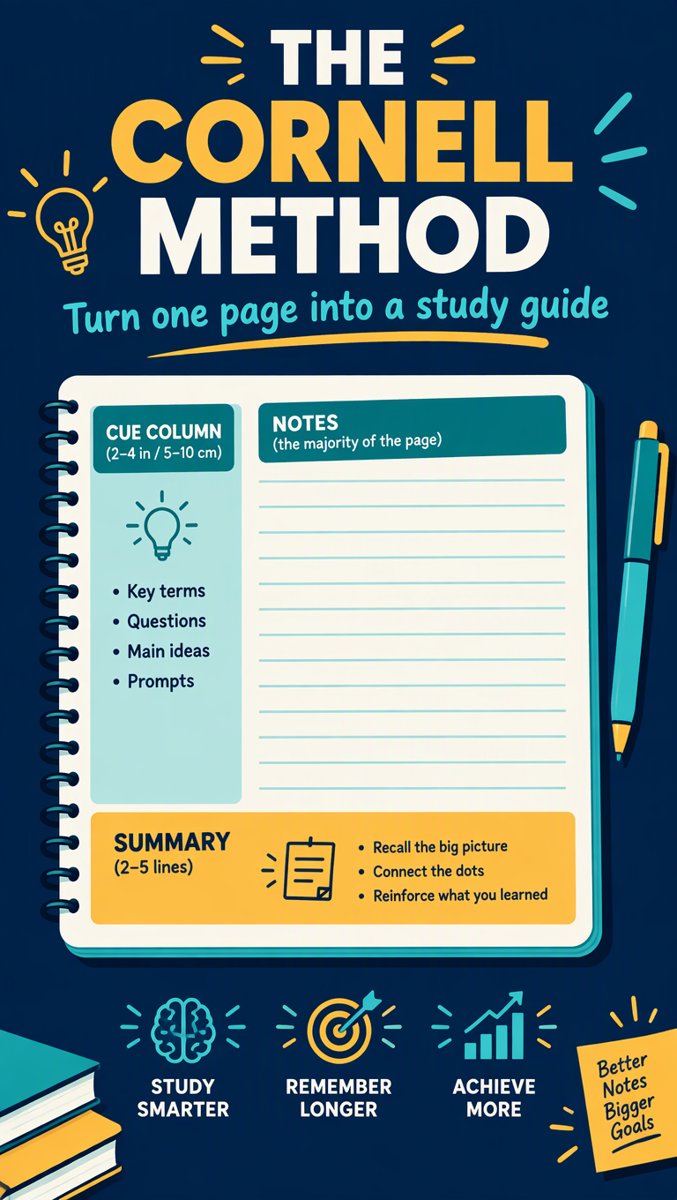
The Cornell Method: Turn One Page Into a Study Guide
Think and Growth — Episode #43 (published 2026-11-24) · Theme: School — learning fast, study systems
Your notebook fills up in lecture. Then exam week comes, and you reread ten pages of your own handwriting and remember almost nothing. The Cornell Method fixes the format itself: one page, built to be quizzed.
The idea
Developed by Walter Pauk at Cornell University and described in How to Study in College, the system divides a single page into three sections. The right two-thirds is your notes area — key ideas recorded during the lecture. The left third is a cue column — questions, keywords, phrases reduced from your notes afterward. The bottom band is a summary — two or three sentences in your own words.
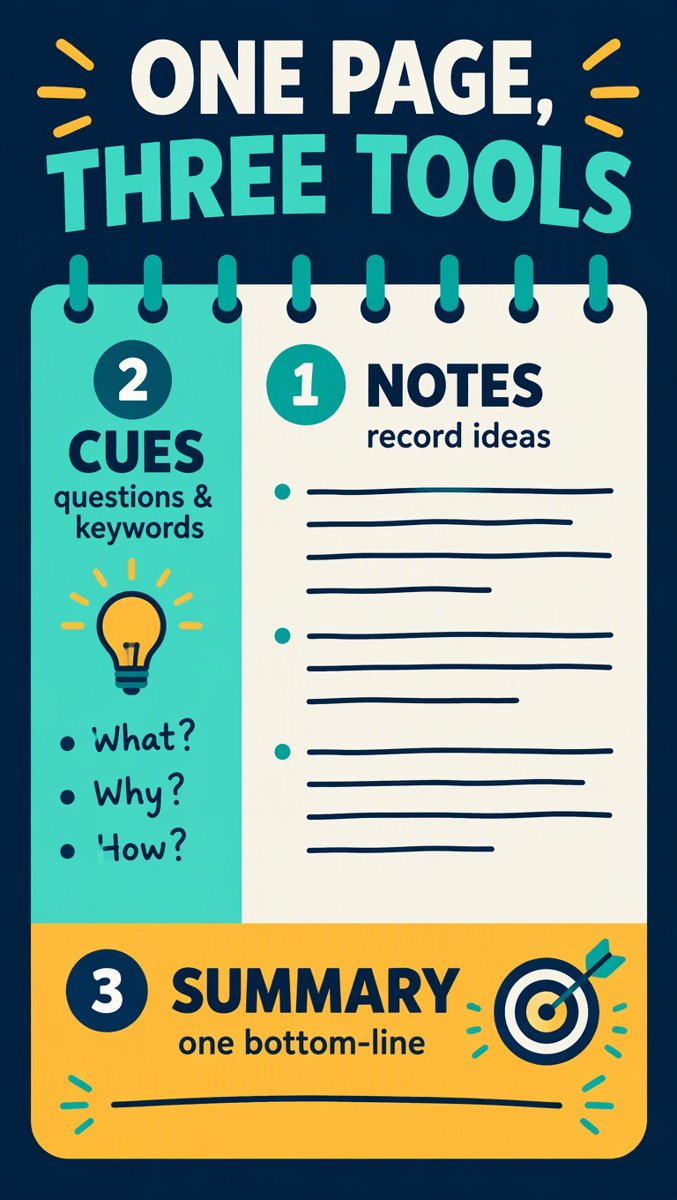
The summary is the quiet genius of the design. Writing it forces synthesis: if you cannot say what the page means in three sentences, you do not understand it yet. And the cue column turns the page into a self-quiz — cover the notes side with a sheet of paper, read only the cues, say your answer aloud, then check.
How it works
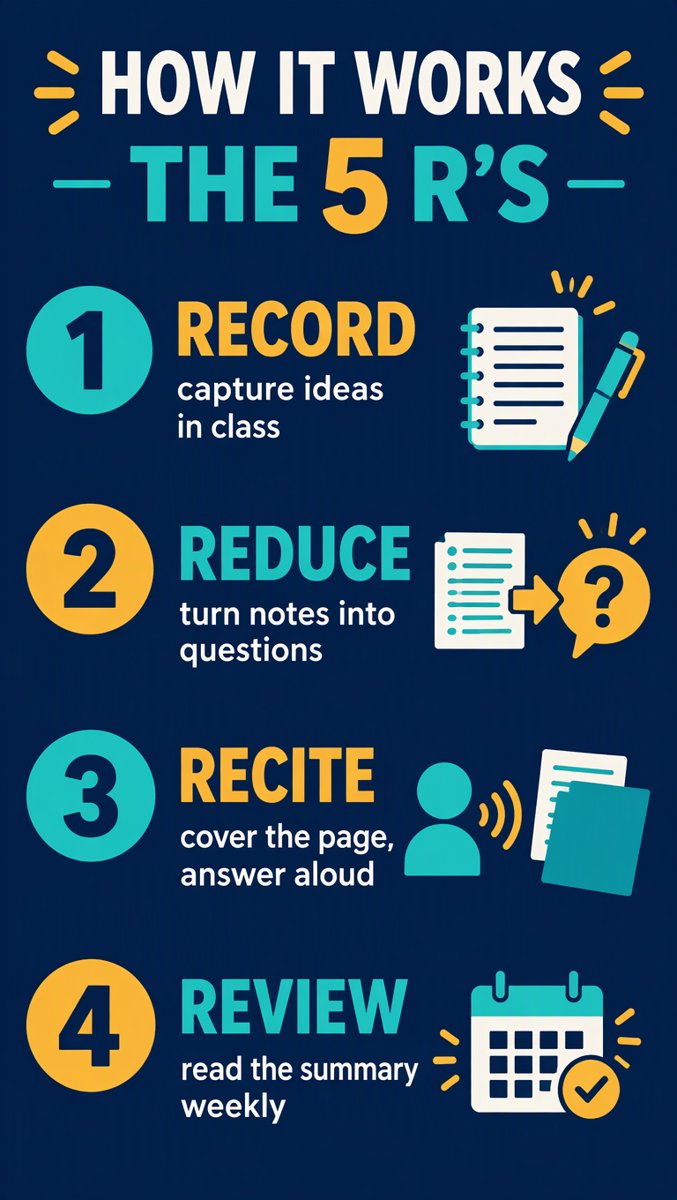
Pauk's workflow is five steps: Record, Reduce, Recite, Reflect, Review. Record the ideas in class (no verbatim transcription — capture the structure). Reduce afterward: turn each chunk of notes into a question or keyword in the cue column. Recite: cover the notes, read the cue, answer aloud from memory. Reflect: connect the page to the bigger picture — where does this idea show up elsewhere? Review: reread the summary line on a spaced schedule.
The Recite step is where the learning actually happens. Researchers call it retrieval practice: every time you pull an answer out of memory, the memory gets stronger. The page is simply a machine for scheduling those retrievals.
A real example

History lecture: your notes say "Alliances and militarism spread WWI across Europe." The cue column does not copy that sentence — it asks: "WHY did alliances make a regional war more likely?" The summary band reads: "Alliances turned a regional clash into a system-wide war." At review time, you cover the page, read the question, and explain the mechanism out loud. That is a thirty-second study session that beats rereading the paragraph five times.
The same shape works anywhere. Biology: notes "mitochondria produce ATP via cellular respiration"; cue "What does the mitochondria do, and how?"; summary "Energy conversion in one organelle." A work meeting: decisions on the right, one-line "why" on the left, bottom line "decision, owner, date."
How to apply it
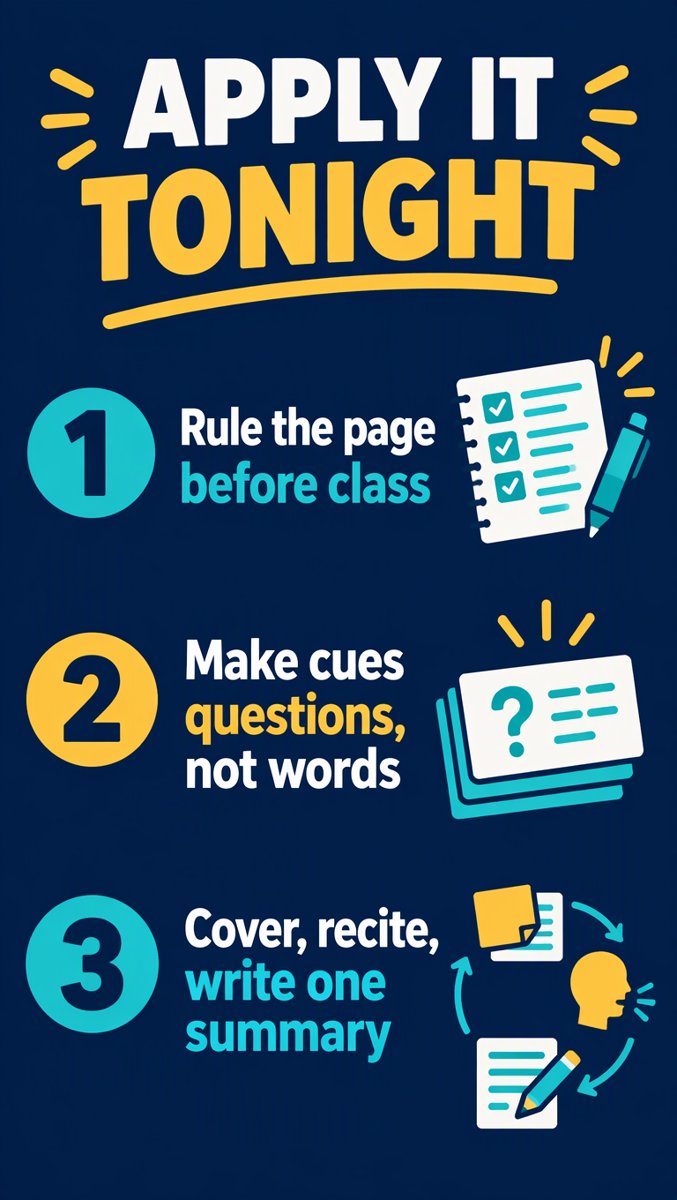
Step 1 — Rule the page before class. Draw the cue column and summary band on a fresh sheet (or use a template). A notebook pre-formatted this way walks into every lecture ready.
Step 2 — Make cues questions, not words. "Mitochondria" is a label; "What does the mitochondria do, and how?" is a quiz. Questions force retrieval; labels invite rereading.
Step 3 — Cover, recite, write one summary. Within a day of the lecture, cover the notes and answer each cue aloud. Then write the three-sentence summary and date it. On Sundays, read only the summaries — five minutes of spaced review.
An honest caveat
The research on Cornell Notes is mixed on direct test-score effects; some studies find little measurable difference versus other note formats. The defensible claim is behavioral: this format makes retrieval practice and spaced review easy to do consistently. The method wins through the habits it schedules, not through the lines on the page. Teach it that way and it holds up.
The takeaway
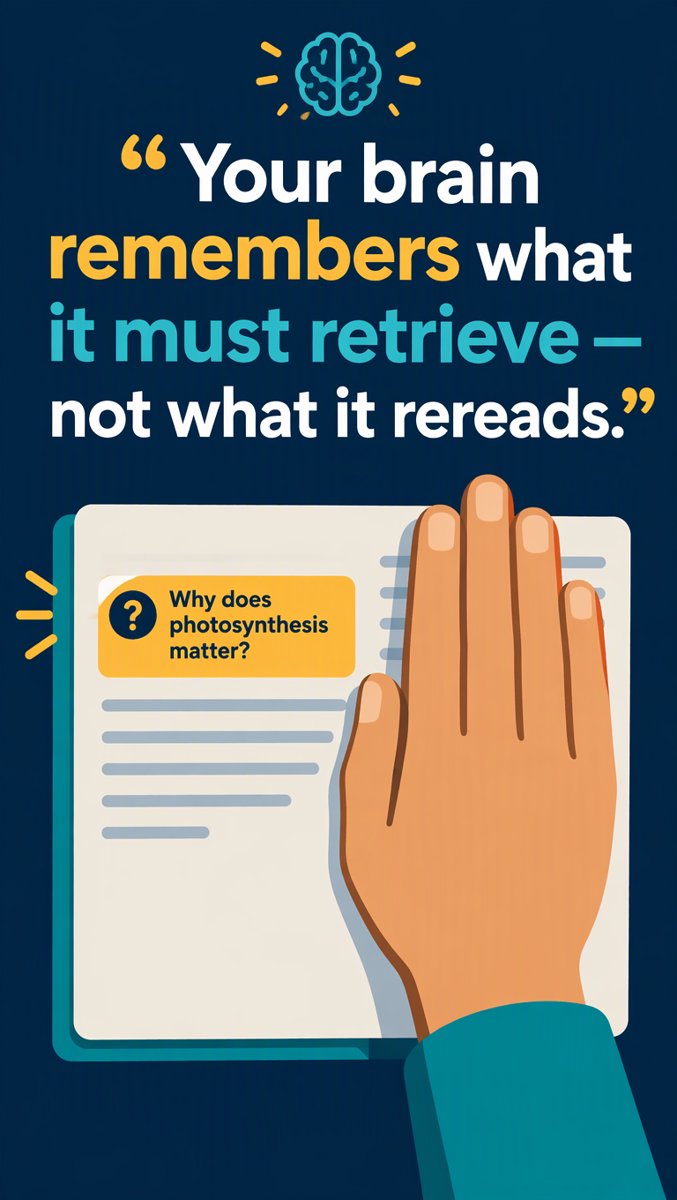
Your brain remembers what it must retrieve, not what it rereads. One page, three tools: ask on the left, capture on the right, conclude at the bottom.
Narration script (~70s, Charon)
Your notebook is full. Exam week is here. And you remember nothing. Here's the fix: the Cornell Method, one page that studies you back. Divide the page three ways — notes on the right, a question column on the left, and a summary at the bottom. In class, record the ideas. After class, reduce each idea to a question. Then cover the page, read the question, and answer out loud. That's the engine — retrieval practice, built into the paper. Example: notes say alliances spread World War One. Your cue asks: why? Your summary: alliances turned a regional clash into a system-wide war. Tonight: rule the page before class, make cues questions, and cover, recite, summarize. Your brain remembers what it must retrieve — not what it rereads. Study like you must teach. One mental model a day — subscribe, and think and grow with me. I'm Peter. See you tomorrow.
Per-segment text (video_workflow timeline)
- Cover: "Your notebook is full. Exam week is here. And you remember nothing."
- Cover: "Here's the fix: the Cornell Method, one page that studies you back."
- Slide 1: "Divide the page three ways — notes on the right, a question column on the left, and a summary at the bottom."
- Slide 2: "In class, record the ideas. After class, reduce each idea to a question."
- Slide 2: "Then cover the page, read the question, and answer out loud. That's the engine — retrieval practice, built into the paper."
- Slide 3: "Example: notes say alliances spread World War One."
- Slide 3: "Your cue asks: why? Your summary: alliances turned a regional clash into a system-wide war."
- Slide 4: "Tonight: rule the page before class, make cues questions, and cover, recite, summarize."
- Slide 5: "Your brain remembers what it must retrieve — not what it rereads."
- CTA: "Study like you must teach. One mental model a day — subscribe, and think and grow with me. I'm Peter. See you tomorrow."
Sources
- Cornell University Learning Strategies Center, "The Cornell Note Taking System" — https://lsc.cornell.edu/how-to-study/taking-notes/cornell-note-taking-system/
- Wikipedia, "Cornell Notes" — https://en.wikipedia.org/wiki/Cornell_Notes
- University of York Subject Guides, "Cornell method" — https://subjectguides.york.ac.uk/note-taking/cornell
- Saran, Gober & McCarty (2022), "An introduction to the Cornell Note system", SAGE — https://journals.sagepub.com/doi/10.1177/01455613221146457