The 2-2-2 Rule: Don't Hope for Time — Schedule It


The 2-2-2 Rule: Don't Hope for Time — Schedule It
Think and Growth — Wednesday · Family theme · 2026-11-25 · Peter, BDM @ NXagents.net
The Problem Nobody Schedules
Most couples don't break up because of one big fight. They drift. Work. Errands. Kids. Screens.
And then one night they realize they haven't actually been together in months — not side by side on a couch, but together. Present. Undistracted. Talking.
Certified Gottman therapist Laura Silverstein, LCSW, puts it bluntly in Woman's World: the foundation of long-lasting love is built on shared memories and deep connection — not on how well you solve conflict.
The 2-2-2 Rule is a brutally simple fix for drift: you make connection a calendar event, not a hope.
The Idea

Every 2 weeks: a date night. Every 2 months: a weekend away. Every 2 years: a week-long trip together.
Three intervals. Easy to remember. Hard to argue with.
One Reddit user on r/Marriage told his wife at the start of their marriage: 2 x 2 x 2 — two dates, two weekends, two week-long trips — and the post took off. It wasn't invented by a psychologist. It was invented by a husband who refused to let his marriage go on autopilot.
That's important to say out loud: this is a folk rule, not a lab finding. But as Lumen Health's therapist guide notes, its logic lines up with some of the most established research in relationship science — attachment security, the Gottman Institute's rituals of connection, and the novelty effect.
How It Works
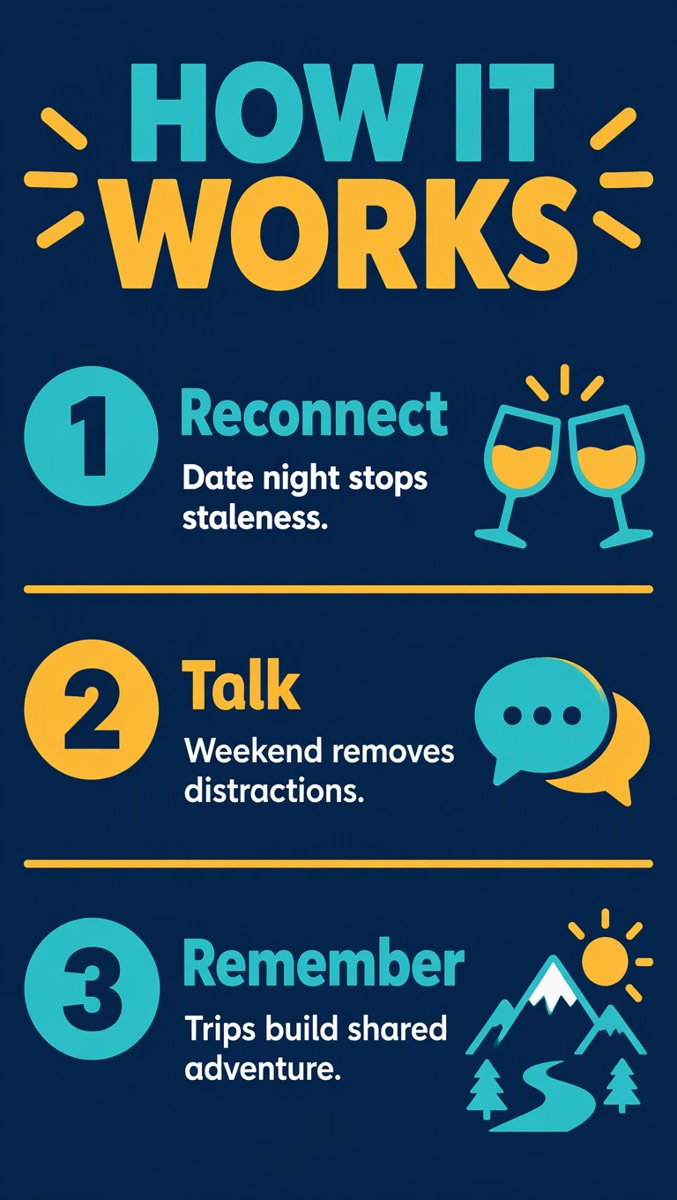
Each layer does a different job:
1. Reconnect (every 2 weeks — date night). This is the foundation. It doesn't need to be expensive or elaborate. A walk without phones. A home-cooked dinner after the kids are asleep. A shared hobby. The requirement is full attention, not a fancy venue. Date nights stop the week-to-week staleness before it compounds.
2. Talk (every 2 months — weekend away). A night or two outside the usual environment removes the daily distractions — chores, errands, screens. Couples consistently report that a change of scenery makes it easier to talk about the things that never fit into a two-hour dinner.
3. Remember (every 2 years — week-long trip). This layer is about shared adventure, not routine maintenance. New experiences together are strongly linked to relationship satisfaction because they create fresh, positive memories tied specifically to the relationship. And here's the bonus: anticipation boosts satisfaction even before the trip happens. A scheduled trip gives you both something to look forward to for months.
Why It Works — The Evidence

A 2016 study in The Journal of Marriage & Family found couples are twice as happy when they're with their spouse versus when they're alone.
Read that again. Twice as happy. Not 20% happier. Twice.
Underneath the 2-2-2 schedule sit three established ideas:
- Attachment security. Predictable, responsive time together builds a secure base. Partners who can count on regular connection feel safer expressing needs and resolving conflict.
- Rituals of connection. The Gottman Institute has written extensively about small, repeated rituals as one of the strongest predictors of long-term relationship stability. The 2-2-2 rule is exactly that — a ritual with a built-in schedule.
- Novelty and dopamine. Trying new activities together activates the brain's reward system in a way routine activities don't. That's why getaways reignite excitement more than the same weekly dinner spot.
How to Apply It
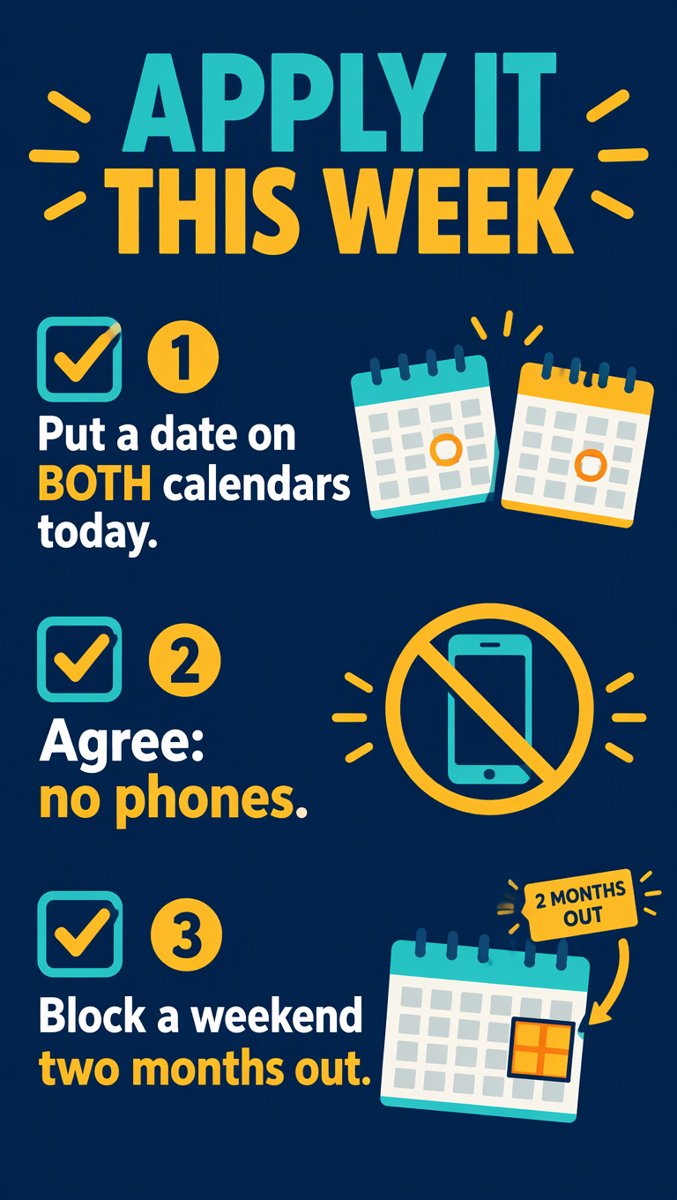
Start this week. All of it fits in one conversation.
Step 1: Put a date on BOTH calendars today. Not "when things calm down" — today. Pick a recurring day, block it like a work meeting. That one act is the whole rule.
Step 2: Agree on one ground rule: no phones. The time has to be actually distraction-free. A date night with both of you scrolling is just cohabitation with better lighting.
Step 3: Block a weekend two months out — even before details are planned. And set a modest savings goal for a trip two years from now so it feels achievable. Then check in briefly after each date: what worked, what do we change?
Flex the numbers to your life. One therapist profiled in Woman's World follows a "1-1-1" variant instead: a date night weekly, a weekend monthly, a week-long vacation yearly. Parents of infants shorten the date gap to one week and do staycations at home — board games in bed, cook together, stay up talking. Long-distance couples swap in a standing video call every two weeks and treat visits as the getaway. The principle stays the same: protected, undistracted time on a predictable rhythm. What matters is the habit, not hitting the exact numbers.
The Honest Limits
The 2-2-2 rule is maintenance, not treatment. Like regular exercise for physical health, it supports a relationship that is fundamentally stable. It will not repair trust after infidelity, resolve chronic conflict patterns, or address contempt, stonewalling, or unresolved trauma. If your relationship involves any of those, a schedule can't fix it — reach for professional support alongside the habit, not instead of it.
The Takeaway

Don't hope for time. Schedule it.
Love doesn't die from a lack of feeling. It dies from a lack of protected time. Put the date on the calendar this week — and you'll remember why you fell in love in the first place.
Narration Script (TTS — 187 words)
Most couples don't break up from one big fight. They drift. Work, errands, screens. Then one night they realize they haven't actually been together in months. The 2-2-2 Rule fixes that. Every two weeks: a date night. Every two months: a weekend away. Every two years: a week-long trip. Three intervals. Each layer does a different job: date nights stop staleness, weekends make real talk possible, trips build shared adventure and memories. A 2016 Journal of Marriage and Family study found couples are twice as happy with their spouse versus alone. Twice as happy. Start this week. Put a date on both calendars today. Agree: no phones. Block a weekend two months out. Don't hope for time — schedule it. Follow Think and Growth for the next model.
Per-Slide Segments
- Cover (clip 1): "Most couples don't break up from one big fight. They drift. Work, errands, screens."
- Slide 1a: "The 2-2-2 Rule fixes that. Every two weeks: a date night."
- Slide 1b: "Every two months: a weekend away. Every two years: a week-long trip."
- Slide 2a: "Three intervals. Each layer does a different job."
- Slide 2b: "Date nights stop staleness. Weekends make real talk possible."
- Slide 2c: "Trips build shared adventure, memories, and something to look forward to."
- Slide 3a: "A 2016 Journal of Marriage and Family study found couples are twice as happy with their spouse."
- Slide 3b: "Versus alone. Twice as happy. It aligns with Gottman's rituals of connection."
- Slide 4a: "Start this week. Put a date on both calendars today."
- Slide 4b: "Agree: no phones. Block a weekend two months out."
- Slide 5 (clip 11): "Don't hope for time — schedule it."
- CTA (clip 12): "Follow Think and Growth for the next model. Small habits, compounding every week."
Sources
- Woman's World — "What Is the 2-2-2 Rule and How Can It Benefit Your Relationship?" — Laura Silverstein (Gottman therapist), 2016 Journal of Marriage & Family finding. https://www.womansworld.com/life/relationships/2-2-2-rule-for-relationships
- Lumen Health Services — "A Therapist's Guide to the 2-2-2 Rule for Couples." https://lumenhealthservices.com/2-2-2-rule-for-couples/
- YouTube context — Ryan Cole, "The 777 Rule Could Save Your Marriage." https://www.youtube.com/watch?v=kT1qqpJtRGY