Protocols by Andrew Huberman: Honest Review, Rating & Who Should Read It — Verdict 7.5/10

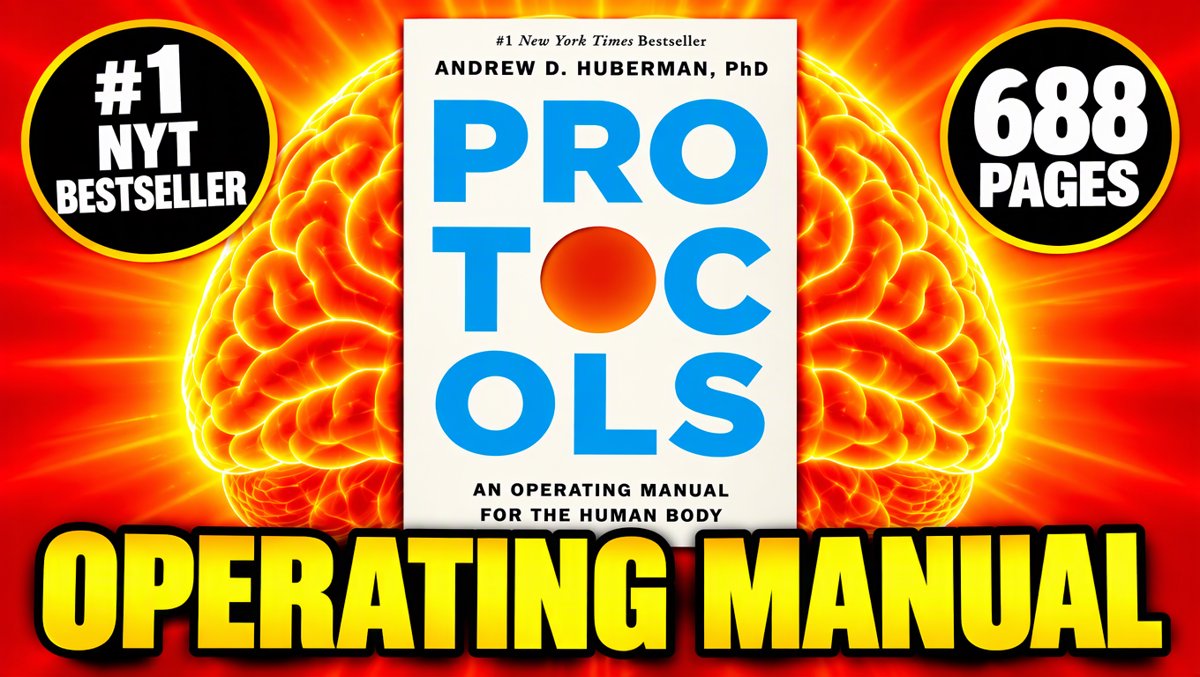
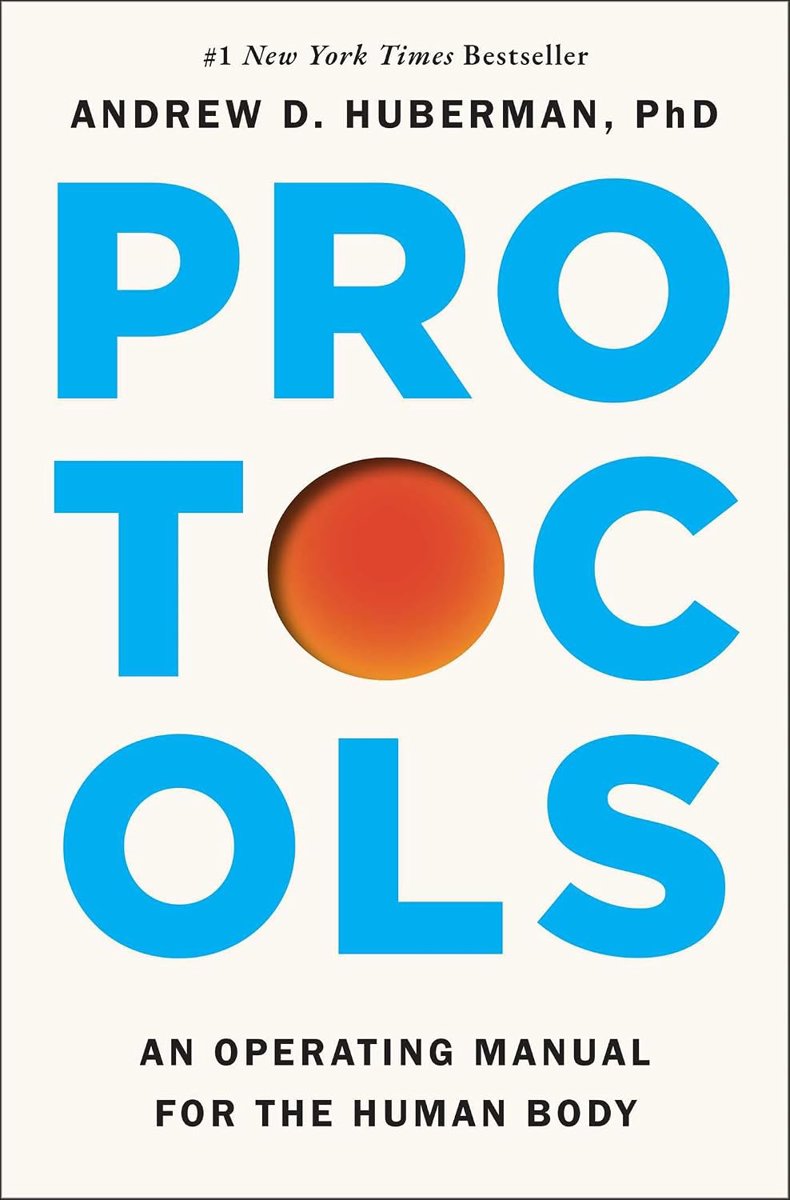
688 pages, #1 New York Times bestseller, by the world's most-listened-to neuroscientist. Protocols: An Operating Manual for the Human Body (September 15, 2026) is Andrew Huberman's first book, and as of today it sits at #5 on Amazon's Self-Help list behind The Let Them Theory, Atomic Habits, and The Steps. Half the internet treats it as a bible; the other half treats it as a 688-page advertisement. The truth is in the middle, and my verdict is 7.5/10.
The 3-Second Version
- What it is: Huberman's whole podcast distilled into one reference manual — sleep, exercise, stress, nutrition, light, focus, and personal growth, each as a set of science-backed "protocols" with 100+ pages of citations.
- Who wrote it: Andrew Huberman, Stanford neurobiology professor and host of the Huberman Lab podcast (global top 10, routinely #1 in Science, Education, and Health & Fitness). This is his first book.
- Why it matters: #1 NYT bestseller, #1 on Amazon in Aging & Longevity, Sleep Disorders, and Biology; a bestseller-list fixture two months after launch.
- The catch: It's a reference, not a system. If you already live on the podcast, much of it is repeat listening; if you want an implementation plan, the data is here but the step-by-step isn't.
- Verdict: 7.5/10 — the strongest single-volume science reference in the self-optimization category, let down by length, dry stretches, and Huberman's undisclosed-at-a-glance commercial pipeline.
Book Data Card
| Detail | Value |
|---|---|
| Title | Protocols: An Operating Manual for the Human Body |
| Author | Andrew D. Huberman Ph.D. (with Jessica Wapner, per NYT list) |
| Publisher | S&S / Simon Element (Simon & Schuster) — publisher page · official Huberman page |
| Published | September 15, 2026 |
| Pages | 688 (hardcover) |
| ISBN-13 | 9781668032145 |
| List price | $35.00 hardcover |
| Amazon price (Nov 25, 2026) | $21.00 (40% off) — Amazon listing |
| Amazon rating | 4.6 ★ (927 ratings) |
| Goodreads rating | 4.13 ★ (2,104 ratings; 5★ 36%, 4★ 41%, 3★ 16%, 2★ 3%, 1★ 1%) |
| Bestseller status | #1 New York Times bestseller; Amazon #135 in Books, #1 Aging & Longevity, #1 Sleep Disorders, #1 Biology; #5 Amazon Self-Help (Nov 25, 2026) |
All figures checked November 25, 2026.
What Is Protocols by Andrew Huberman About?
Protocols is structured in two complementary layers. First, foundational behaviors — core practices that substantially improve your day-to-day mental and physical state. Second, specific science-based tools for common challenges or higher levels of performance. Both layers are delivered as "protocols": Huberman defines the word as an established formula to overcome obstacles or improve mental and physical state, designed for maximum results in minimum time.
The seven chapters run in order of leverage:
| # | Chapter | The core idea |
|---|---|---|
| 1 | Sleep | Morning light and circadian anchoring are the engine everything else runs on |
| 2 | Exercise | Zone 2 cardio + resistance training, tied to BDNF and neuroplasticity |
| 3 | Stress Control | Physiological sigh and NSDR (non-sleep deep rest) as in-the-moment tools |
| 4 | Nutrition | Protein, meal timing, and metabolic health without overclaiming |
| 5 | Light | Light as the master clock — morning exposure, evening wind-down |
| 6 | Focus, Motivation, and Learning | Dopamine dynamics and neuroplasticity for faster learning |
| 7 | Personal Growth | Mindset reframing: transmuting bad feelings into useful action |
The voice is the podcast's, in prose: explain the mechanism first, then the application. Each chapter stands alone, and the book is explicitly designed to be used as a reference — HubermanLab's own FAQ says it is "less a companion to the podcast than a resource readers can return to again and again." The single biggest upgrade over the podcast is traceability: over 100 pages of citations run through the back of the book, so claims can actually be checked.
The Author's Story: Best Books by Andrew Huberman
Andrew David Huberman (born September 26, 1975) is a neuroscientist and tenured professor of neurobiology and ophthalmology at Stanford School of Medicine, where his lab studies brain development, visual perception and repair from blinding diseases, stress and resilience, and neural plasticity. He has published 75+ peer-reviewed papers in Nature, Cell, Science, and Neuron, earned his PhD in neuroscience from UC Davis in 2004, and has won the Cogan Award (2017), the McKnight Scholar Award (2013), and the Pew Biomedical Scholar Award (2013). In 2021 he launched the Huberman Lab podcast, which now ranks in the global top 10 and regularly hits #1 in Science, Education, and Health & Fitness.
| Book | Year | One-Line Pitch | Link |
|---|---|---|---|
| Protocols: An Operating Manual for the Human Body | 2026 | His first book: the whole podcast distilled into 7 domains with 100+ pages of citations | Amazon · Simon & Schuster · HubermanLab |
| Huberman Lab podcast | 2021– | His top-ranked work by reach: long-form science interviews + solo protocol episodes (this book's raw material) | HubermanLab.com |
| Daily Blueprint | — | His free daily routine sheet (morning/daytime/evening/night protocols) — the 15-minute version of this book | HubermanLab.com |
His recommendation canon is itself a reading list: Outlive by Peter Attia, Dopamine Nation by Anna Lembke, Deep Work by Cal Newport, The Creative Act by Rick Rubin, and Good Energy by Casey Means.
Strengths and Weaknesses
Strengths
- The science is real and checkable. Performance Protocol's evidence-focused review scores the book 9/10 for evidence quality: "The citations are real — this is not a book built on cherry-picked studies and anecdote," and Huberman communicates the difference between mechanistic evidence, observational data, and randomized trials in a way most popular health books don't bother to do.
- Mechanisms make it adaptable. Neuroscience-trained reviewer Ethan Janney (PhD) sorts the strongest material into tier-1: morning light and circadian anchoring, sleep as the foundation of regulation, cold exposure's acute alertness effect, and exercise's effect on BDNF. If you understand why morning light works, you can adapt it to travel, night shifts, or a north-facing apartment — the book teaches you to think, not just obey.
- The unglamorous stuff gets the depth. Sleep, exercise, light, and nutrition — the four interventions with overwhelmingly stronger evidence than supplements — are treated first and deepest. The supplement chapters come late and heavily caveated.
- Structure is genuinely usable. Amazon's most-helpful verified reviews praise exactly this: pick the chapter you need, each protocol explained in its own section. One reader calls it a "staple" to revisit; a human-performance specialist uses it daily with clients.
Weaknesses
- It is a firehose, not a system. Slate's reviewer, who read all 540 pages of body text, lists 15 new habits to track and none of them cover nutrition or exercise; the verdict: "It can provoke a frenzied feeling of insufficiency... I panicked and blamed myself." Performance Protocol lands in the same place: "There is no prioritisation framework for when the recommendations conflict... no structure for the person who cannot do everything in the book and needs to pick a starting point."
- The commercial pipeline is real. Slate and Scott Carney's audit (Derek Beres, Oct 10, 2026) both flag it: Eight Sleep, AG1 (he helped design the AGZ packet), Mateina, Carbon, ROKA ($125 wind-down glasses vs $20 Amazon blue blockers), plus adviser roles at AG1, Eight Sleep, Function Health, ROKA, and Whoop disclosed in front matter. Carney counts 11 direct financial relationships and 25 products in the text. You don't have to dislike the book to notice it reads, in stretches, like a catalogue.
- Evidence stretches happen. Both audits point at the same pattern: a real narrow finding (tart cherry juice, 10 people, 7 days) becomes a confident prescription ("larger and longer-term studies are needed" — try it anyway). Carney also caught a plain factual error: the Gila monster placed in South America (it's from the American Southwest). In a book selling scientific authority, small errors are costly.
- Repetitive for podcast listeners, dry for everyone. A Goodreads reviewer who has followed Huberman since early episodes calls it repetitive and "scattered" when read straight through. Amazon's own review-aspect data flags writing quality as MIXED; a 4-star Kindle review notes sections "can get a little dry and technical."
Reception Scoreboard: What Do Critics and Readers Say?
| Source | Verdict | What They Said |
|---|---|---|
| Performance Protocol (evidence-focused) | Overall 8/10 | Evidence 9/10, clarity 8/10, depth 8/10 — "best single-volume reference for the evidence base behind mainstream performance optimisation"; implementation support 4/10 |
| NeuroGenerative Dynamics (Ethan Janney, PhD) | Tiered positive | Tier-1 protocols genuinely strong; specific numbered protocols sometimes extrapolated past the data; read as a menu of hypotheses, not a prescription |
| Slate (Sep 18, 2026) | Harsh | "I wish now I had never read Protocols." Helpful for tinkerers; anxiety-inducing for the desperate; sponsorships and cherry-picked evidence |
| Derek Beres / Scott Carney (Oct 10, 2026) | Harsh | Ghostwritten podcast notes; mechanistic reductivism; 11 financial relationships, 25 products; Gila monster error; "a 500- to 600-page advertisement for his commercial pipeline" |
| Amazon readers | 4.6 ★ / 927 ratings | Informative, readable, practical, good value (aspect analysis); writing quality MIXED |
| Goodreads readers | 4.13 ★ / 2,104 ratings | 5★ 36%, 4★ 41%, 3★ 16%, 2★ 3%, 1★ 1% — praise for approachable science; pan for overload and repetition |
Where they disagree: Everyone agrees on the tier-1 core — morning light, sleep, exercise, NSDR. The split is over the packaging: fans and the evidence reviewer say the citations and structure make this the best reference in the category; the critics say confident tone + product pipeline + impossible-to-follow volume turn a reference into an anxiety machine. The reader split mirrors the critic split exactly: 77% rate it 4 stars or better, and the 1-star reviews are not about science — they're about feeling like a failure by page 200.
Similar Books: Read This If You Liked That
| Book | By | Rating | Read This If You Liked That, Because… |
|---|---|---|---|
| Outlive | Peter Attia (2023) | Amazon 4.6 ★ (21,523) | You want the longevity-medicine frame — deeper on cardiovascular disease, cancer, and cognitive decline; Protocols is the day-to-day performance frame |
| Why We Sleep | Matthew Walker (2018) | Amazon 4.7 ★ (34,713) | You want sleep science in full depth — Walker explains why sleep matters; Huberman tells you what to do about it |
| Good Energy | Casey Means (2024) | Amazon 4.6 ★ (5,736) | You want the metabolic/glucose angle Huberman himself recommends — metabolism as the steering wheel for everything else |
| Atomic Habits | James Clear (2018) | Amazon 4.8 ★ (150,598) | You want what Protocols lacks: the behaviour-change system. Protocols decides what to do; Clear explains how to make it stick |
Why This Book Is Good for You If…
This book is for you if you want the science behind your habits, not just the habit list. The payoff: morning light, NSDR, the physiological sigh, and Zone 2 explained well enough that you can adapt them to your own life — travel, shift work, a rainy Toronto November — instead of following rules blindly.
This book is for you if you're burned out on wellness influencers but still want receipts. The payoff: 100+ pages of citations you can actually check, honest caveats in the supplement chapters, and a tier-1 core that a neuroscience PhD signs off on.
This book is for you if you train people — coaching, personal training, performance work, nursing, teaching. The payoff: a single reference that puts sleep, stress, exercise, and focus in one place with usable explanation, instead of a podcast queue.
The Fine Print: Who Should Skip This Book
Skip it if you're a religious podcast listener — you already know most of this, and reading it straight through feels like a reunion tour. Skip it if you're looking for a week-by-week plan; there isn't one, and the book won't stop you from making a 15-item checklist and burning out by February (Slate's reviewer tried). Skip it if product recommendations make you itch — this book names names, prices, and his own affiliations, and you should read with that filter on.
What to read instead: Outlive for longevity medicine, Why We Sleep for sleep in depth, Atomic Habits for the implementation system.
Verdict: Protocols by Andrew Huberman — 7.5/10
| Category | Score | Why |
|---|---|---|
| Story / Idea | 8.5/10 | Seven domains, physiology-first, with a genuine reference design — the whole podcast finally under one roof |
| Writing | 7.0/10 | Clear and enthusiastic in patches, dry and podcast-notes-like in others; Amazon's own data says writing quality is mixed |
| Payoff | 7.5/10 | For newcomers, a goldmine of tier-1 tools; for listeners, repeat content; nobody gets an implementation plan |
| Value | 8.0/10 | 688 pages with 100+ pages of citations at $21.00 (list $35) — cheap for what it is |
Overall: 7.5/10. The strongest quote in the book is its engine and its trap in one sentence: "Winners however take whatever they feel — even it if sucks — and they transmute those feelings into actions that are good for themselves and for the world." That's a genuinely useful reframe — and a sentence that can also make a sleep-deprived reader feel like a loser at 3 a.m. The book is at its best when it hands you the tool and the reason; it's weakest when it makes not-doing-everything feel like not-trying. Read it as a menu. Test against your own data. Keep the light in the morning, and leave the glasses in the cart.
Frequently Asked Questions About Protocols by Andrew Huberman
Is Protocols by Andrew Huberman worth reading? Yes, if you want one science-based reference for sleep, exercise, stress, nutrition, light, and focus — its evidence quality is its strongest feature, and it holds 4.6 stars on Amazon (927 ratings) and 4.13 on Goodreads (2,104 ratings). If you already listen to the Huberman Lab podcast religiously, much of it will feel familiar.
How long is Protocols? The hardcover is 688 pages (S&S / Simon Element, published September 15, 2026). It is designed as a reference you dip into by chapter, not a book you read cover to cover in one sitting.
What is Protocols about without spoilers? It distils Huberman's podcast and research into seven areas — sleep, exercise, stress control, nutrition, light, focus and learning, and personal growth — explaining the science behind each tool, such as morning sunlight, the physiological sigh, NSDR, and Zone 2 cardio.
Is Protocols a first book or a podcast companion? It is Huberman's first book. His official page describes it as a distillation of years of research and podcast conversations that works independently — "less a companion to the podcast than a resource readers can return to again and again."
What are the criticisms of Protocols? Critics (Slate; Scott Carney's audit) argue the book over-promotes products Huberman has financial ties to (AG1, Eight Sleep, ROKA, Mateina, Carbon), sometimes stretches thin evidence into confident prescriptions, and sets an impossible standard of 15+ daily habits. Defenders (Performance Protocol, 8/10) argue the citations are real and the tier-1 advice is solid.
Where can I buy Protocols by Andrew Huberman? Hardcover at Amazon (from $21.00, list $35.00), Kindle ($16.99), audiobook narrated by Huberman, and the publisher (Simon & Schuster / S&S Simon Element). ISBN-13: 9781668032145.