Never Split the Difference by Chris Voss: Honest Review, Rating & Who Should Read It — Verdict 9/10

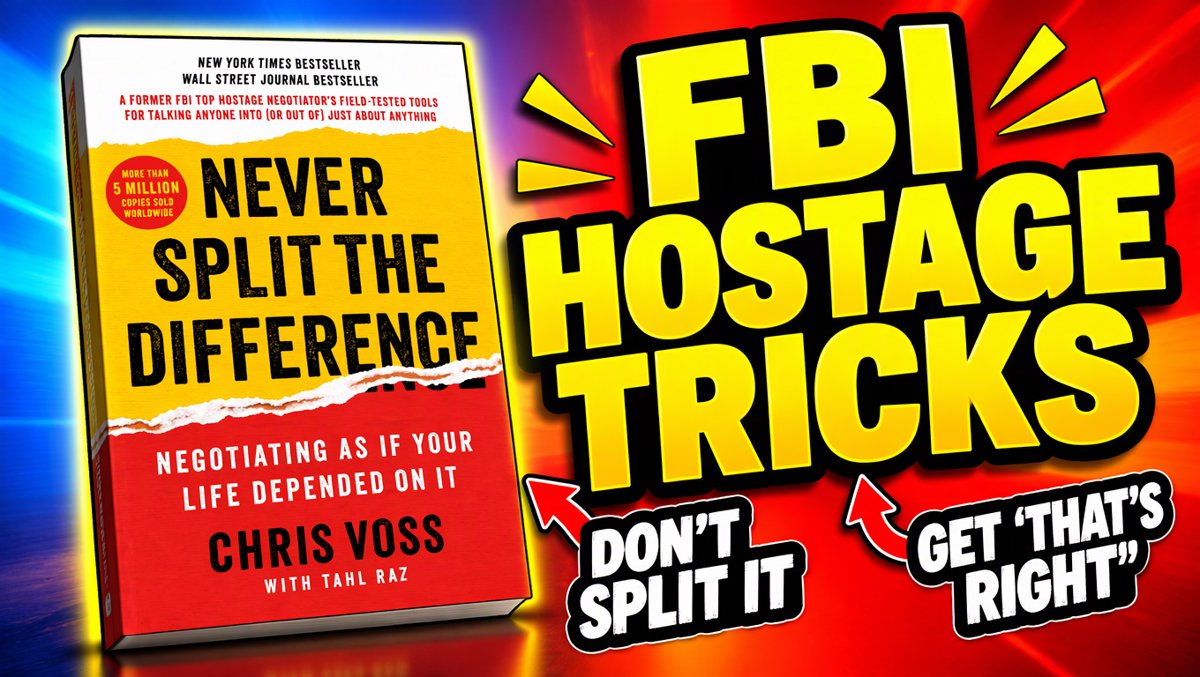
Never Split the Difference by Chris Voss: Honest Review, Rating & Who Should Read It — Verdict 9/10
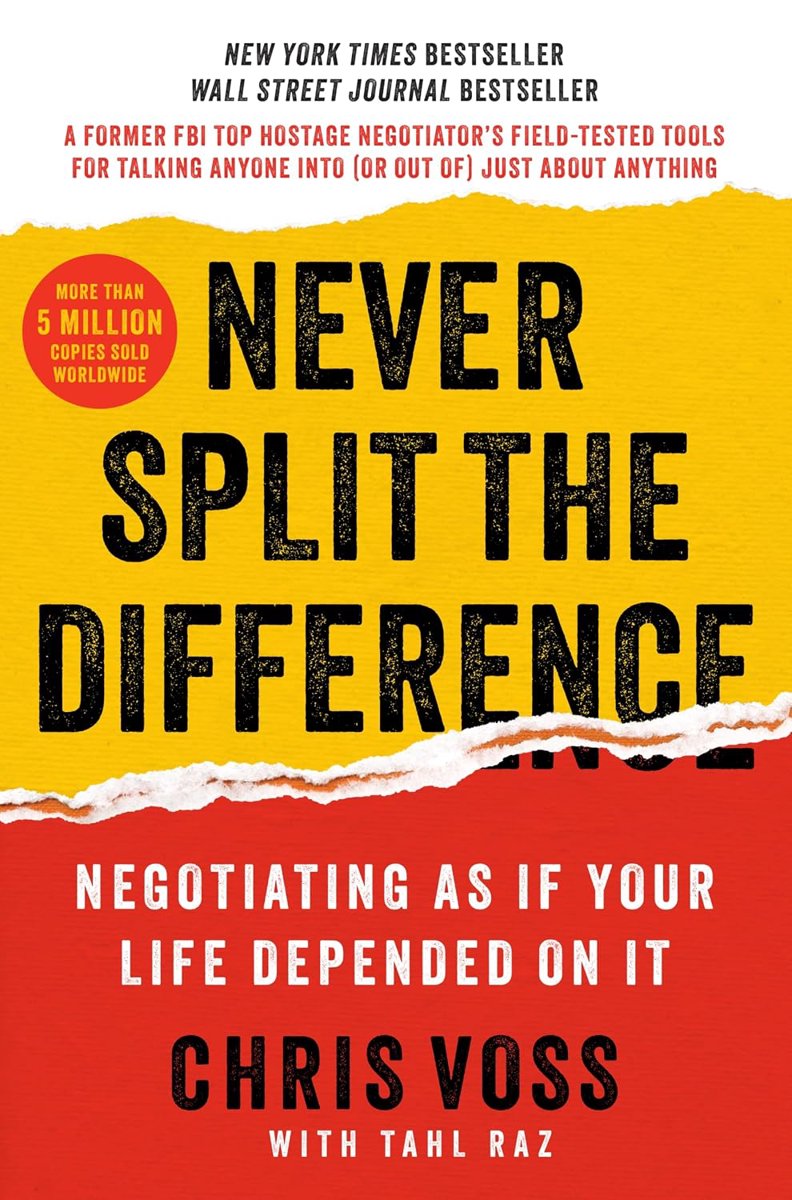
My pick for today: Never Split the Difference by Chris Voss (with Tahl Raz)
Why this one? It was Kindle Self-Help's #1 bestseller on Amazon's list when I checked today (Nov 27, 2026), it's holding #1 in three Amazon categories at once, and it's a perfect think-and-growth fit: the FBI's former lead international kidnapping negotiator turning hostage-room tactics into everyday persuasion, with 5 million+ copies sold. The ledger check confirmed it's not a repeat.
The 3-second version
- What it is: a tactical negotiation playbook — tactical empathy, mirroring, labeling, calibrated questions — built from 24 years of FBI hostage cases.
- Who wrote it: Chris Voss, FBI lead international kidnapping negotiator, now CEO of The Black Swan Group; taught at Harvard, Georgetown, USC.
- Why it matters: every chapter pairs a gripping case story with a technique you can run the same afternoon.
- Verdict: 9/10 — immediately usable and fun to read; one point off because the evidence leans on case stories rather than cited research.
Book data card — Never Split the Difference: Negotiating As If Your Life Depended On It, Harper Business, 1st edition, May 17, 2016, 288 pages, ISBN 978-0062407801. Amazon hardcover checked Nov 27, 2026: $16.51 (list $35.00); Kindle $1.99. Amazon: 4.7/5 from 52,115 ratings. Goodreads: 4.3 from 232,891 ratings. Ranked #800 in Books and #1 in Communication Skills, #1 in Management Science, and #1 in Popular Psychology Reference on Amazon (checked Nov 27, 2026).
What the book actually is
Voss's core argument: rational bargaining is a fantasy. In real negotiations nobody is a dispassionate robot doing math — people are emotional, and in a hostage crisis, splitting the difference can get people killed. So negotiation, as he teaches it, is "communication with results": primarily active listening that makes the other side feel understood ("tactical empathy"), and only then persuasion.
The structure is 10 chapters, each built around one FBI technique, each anchored by a real case — from bank robberies to terrorists to kidnappers Voss personally talked down. The famous tools:
- Mirroring — repeat the last one to three words the other party said, as a question, and they'll elaborate (and reveal more).
- Labeling — name the emotion: "It seems like…", "It sounds like…" Labels defuse negatives without you agreeing with them.
- The late-night FM DJ voice — calm, low, non-threatening; pairs with silence, which makes the other side fill the gap.
- "No"-oriented questions — instead of chasing yes, ask questions designed to be answered "no" ("Have you given up on…?"), which gives the counterpart the feeling of control.
- Calibrated questions — "How am I supposed to do that?" and "What would you need?" force the other side to solve your problem, or negotiate against themselves.
- The Ackerman Method — for price fights: anchor low, concede in 65% / 85% / 95% steps, and close with the calibrated question.
- "That's right" — the winning trigger. If they say "You're right," they're fobbing you off. If they say "That's right," you've summed up their world so accurately that they're now on your side.
Spoiler-light note: there are no plot spoilers — the "twists" are negotiation outcomes, and the book explains each one as it goes.
The author's story: who is Chris Voss?
Christopher Voss (born Nov 28, 1957, Mount Pleasant, Iowa) spent 24 years with the FBI, rising to become the Bureau's lead international kidnapping negotiator after leading crisis negotiation for its New York City division. After retiring, he founded The Black Swan Group, the negotiation training and consulting firm that advises Fortune 500 companies, and became a sought-after lecturer — adjunct professor at Harvard Law School and Georgetown's McDonough School of Business, and a lecturer at USC's Marshall School of Business. He also studied at the Harvard Kennedy School and created and narrated the MasterClass The Art of Negotiation.
His co-author, Tahl Raz, is a journalist and storytelling specialist (he co-wrote the runaway business book Never Eat Alone with Keith Ferrazzi) — the combination of a practitioner and a professional storyteller is exactly why the book reads like a thriller instead of a textbook.
Chris Voss's best-known work:
| Title | Year | One-line pitch | Link |
|---|---|---|---|
| Never Split the Difference | 2016 | The tactical-empathy negotiation playbook — this review | Amazon |
| The Art of Negotiation (MasterClass) | 2019 | Voss's on-camera negotiation course, taught by and narrated by Voss | Goodreads |
Voss's author reputation is essentially a single-title empire — Never Split the Difference is the flagship (5M+ copies, NYT and Wall Street Journal bestseller) and everything since is training, consulting and teaching built on it. That concentration is a strength here (deep, field-tested material) and a limitation worth knowing (the worldview is one man's hard-won method).
Strengths / weaknesses — the honest scoreboard
Strengths
- Every tactic ships with a story you can't forget. The mirroring chapter isn't abstract — it's Voss narrating a real kidnapping negotiation. You remember the technique because you remember the stakes.
- Immediately usable in mundane life. Salary talks, car purchases, rent renegotiations, family standoffs. Readers report running the labeling and calibrated-question moves the same week they read them.
- It flips the conventional wisdom with evidence from life-or-death rooms. "Start with no," "never split the difference," "That's right beats You're right" — counterintuitive, but Voss shows the mechanism each time.
- Tactical empathy is the opposite of manipul-manipulation. The method only works if you genuinely understand the other side's world — that keeps the book on the right side of the ethics line most "persuasion" books cross.
Weaknesses
- The evidence base is mostly Voss's own cases. Reviewers across the genre note he rarely engages the academic negotiation literature — no controlled studies, no counter-case analysis, no signal about when a tactic fails.
- The hostage context doesn't always transfer cleanly. Extreme anchors and hardball moves can damage long-term relationships, repeat business, or friendships if applied without the empathy half of the method.
- Co-authorship gloss. Tahl Raz's storytelling gift makes it read beautifully, but it also smooths every rough edge — real negotiations are messier than the clean chapter arcs suggest.
Reception: what critics loved, what critics panned
| Source | Verdict |
|---|---|
| Amazon reviewers (52,115 ratings, checked Nov 27, 2026) | 4.7/5 — "transformative," "changed my approach," praises readability and practicality; recurring caveat that techniques can feel intense for casual use |
| Goodreads (232,891 ratings, checked Nov 27, 2026) | 4.3 — 52% five-star, 32% four-star, 11% three-star, 2% two-star, 1% one-star |
| Goodreads critics strand | "Never split the difference is an impressive book, filled with practical knowledge" |
| Business-press critical summaries | Praised as a readable, entertaining handbook; criticized for relying on anecdote over negotiation research and for a win-lose framing in parts |
Where books disagree: practitioners (salespeople, mediators, attorneys, founders) rate this near the top of the genre; negotiation academics tend to be cooler, because the book rarely cites their literature and the stakes of a hostage room are not the stakes of a quarterly planning meeting. That disagreement is the most honest summary there is.
Similar books — read this next if you liked that
| Book | Rating | Read this if you liked that, because… |
|---|---|---|
| Getting to Yes — Fisher & Ury (1981) | Goodreads 3.93 from ~90,330 ratings | …you want the rational-framework classic Voss is arguing with — principled negotiation, "separate the people from the problem." Amazon |
| Influence — Robert B. Cialdini | Goodreads 4.2 from ~187,290 ratings; 5M+ copies | …you want the psychology-of-persuasion origin story (reciprocity, social proof, scarcity) behind Voss's moves. Amazon |
| Start with No — Jim Camp | Goodreads 4.1 from 2,782 ratings | …you want the other great contrarian system — emotional control and decision-based negotiation, less FBI, more boardroom. Amazon |
This book is for you if…
- You negotiate money — salary, contracts, house or car prices — and keep "splitting the difference." The Ackerman Method alone can return the book's price many times over in a single negotiation, and it's explained step-by-step.
- You sell, manage or mediate and you're burned out on hype. These are field-tested moves with stories attached: what Voss said, what the other side replied, what happened next. No guru fluff.
- You like negotiation but hate manipulative win-lose advice. The whole system is empathy-first: you only get to "That's right" by genuinely understanding the other person's world. It's persuasion with a conscience.
The fine print — who should skip it
- Skip it if you want an academic text with citations, effect sizes and failure analysis. This is a practitioner's field manual, and it doesn't pretend to be a meta-analysis.
- Skip the hardball moves (extreme anchors, strategic mislabeling) if your priority is a long-term relationship with the counterpart — or read it and apply only the empathy-and-listening chapters, which work everywhere.
- The FBI anecdotes are gripping but intense; if you're looking for a gentle read, the middle chapters' case stories will test you. They're also the reason the lessons stick.
Verdict: 9/10
| Dimension | Score |
|---|---|
| Story / idea | 9.5 |
| Writing | 9 |
| Payoff | 9 |
| Value | 9.5 |
9/10. Never Split the Difference is the rare business book that's both a thriller and a toolkit — 5 million readers can't all be wrong, and neither is the "it's mostly anecdotes" critique. Read it for the tactics, keep the empathy, and you'll negotiate differently the same week. The single best moment: the "That's right" test — the instant your counterpart says it, you know you're inside their head and the deal has become theirs to solve.
FAQ
Is Never Split the Difference worth reading? Yes. Amazon rates it 4.7/5 from 52,115 ratings (checked Nov 27, 2026), Goodreads 4.3 from 232,891 ratings, and it has sold more than 5 million copies — with tactics readers report using the same day they finish it.
How long is Never Split the Difference? 288 pages across 10 chapters, each chapter built around one FBI hostage-negotiation technique, illustrated with real cases.
What is Never Split the Difference about without spoilers? It has no plot to spoil: a former FBI lead international kidnapping negotiator turns field-tested hostage-negotiation tactics — tactical empathy, mirroring, labeling, calibrated questions — into a playbook for business deals, salary talks and everyday conflicts.
Who is Chris Voss? A 24-year FBI veteran who became the Bureau's lead international kidnapping negotiator, founder of The Black Swan Group, and a negotiation lecturer at Harvard Law School, Georgetown University and USC Marshall. Co-author Tahl Raz is the journalist-storyteller who shapes the book.
What is the Ackerman Method? Voss's step-by-step bargaining formula for offers and price fights: anchor low, concede in calculated 65% / 85% / 95% increments, and close with the calibrated question "How am I supposed to do that?"
Is it better than Getting to Yes? Different philosophies. Fisher & Ury's Getting to Yes (Goodreads 3.93 from ~90,330 ratings) is the rational, principled-negotiation classic; Voss's competitor (Goodreads 4.3) is built on emotional intelligence and tactical empathy. Many serious negotiators read both and use them together.