Atomic Habits by James Clear: Honest Review, Rating & Who Should Read It — Verdict 8.5/10

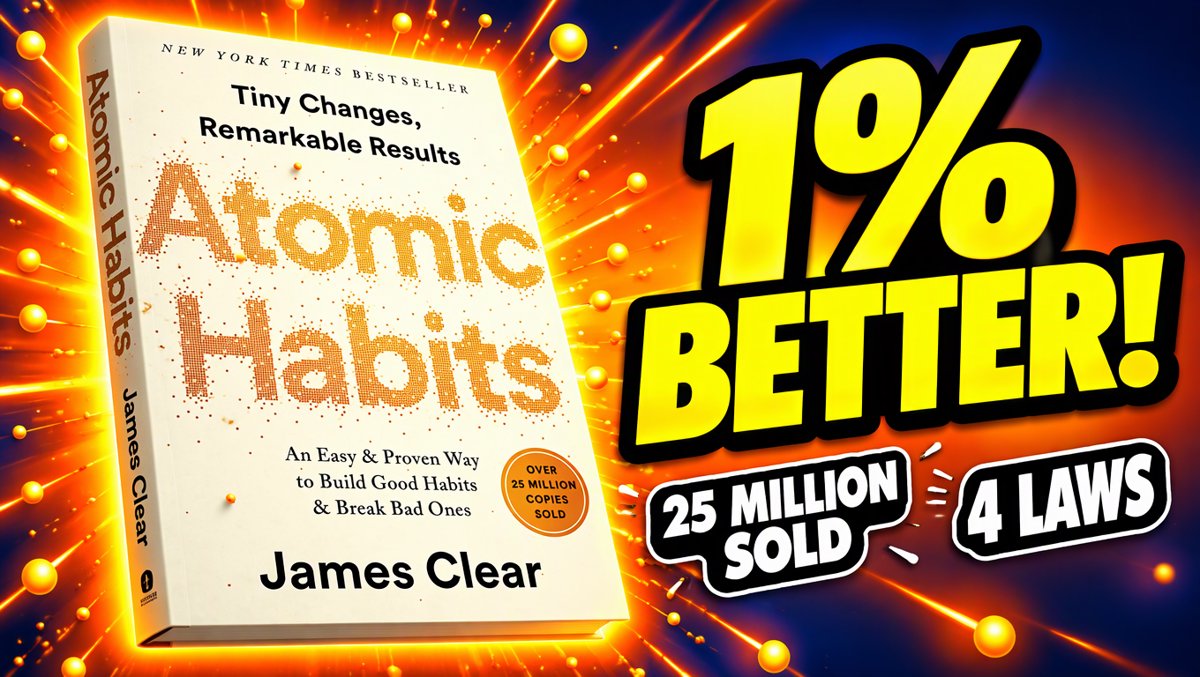
Atomic Habits by James Clear: Honest Review, Rating & Who Should Read It — Verdict 8.5/10
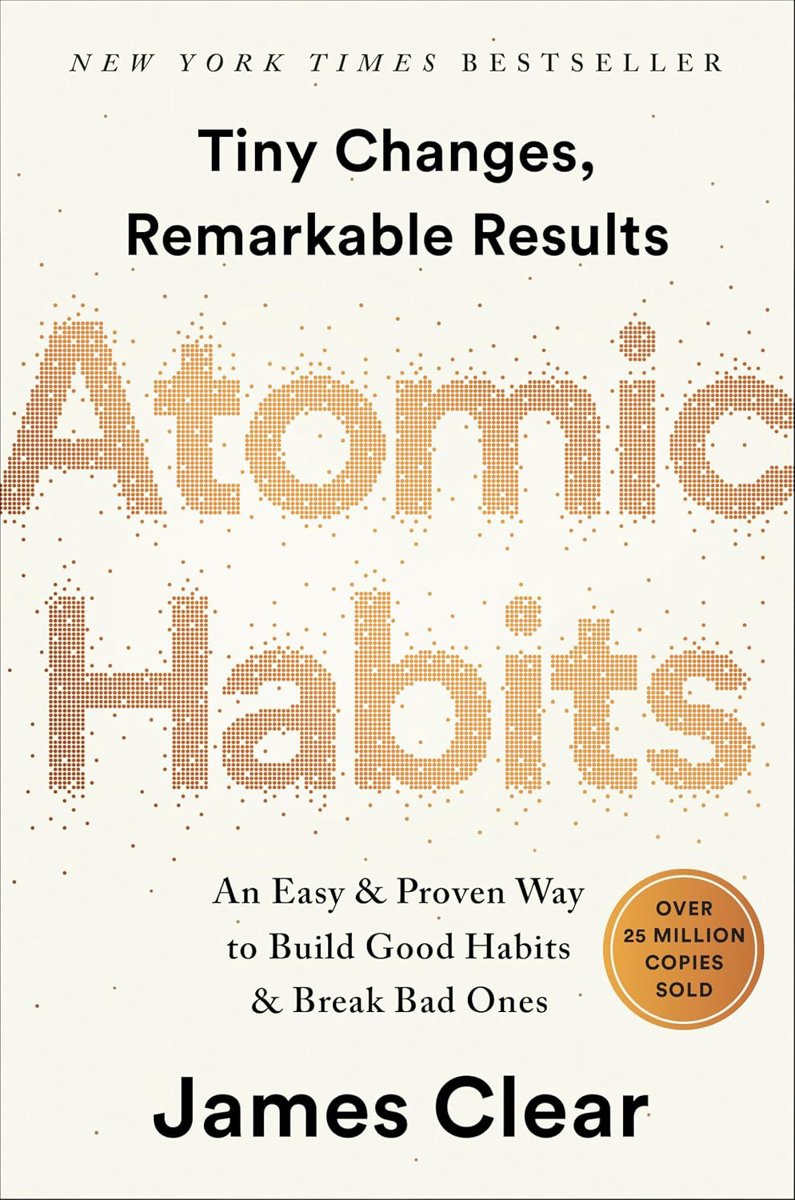
150,587 Amazon ratings. 4.8 out of 5 stars. Over 25 million copies sold in more than 60 languages. Atomic Habits: An Easy & Proven Way to Build Good Habits & Break Bad Ones by James Clear (2018, Avery/Penguin Random House, 320 pages) is still sitting at #184 in Amazon's Books chart and #1 in three self-help subcategories eight years after publication — and this review's verdict is 8.5/10: the most useful habit book you can buy, with one honest asterisk about originality.
3-second version
- What it is: a 320-page, 20-chapter system for building good habits and breaking bad ones, built on one loop (cue → craving → response → reward) and four laws.
- Who wrote it: James Clear, a former Denison University baseball pitcher who rebuilt himself from a coma-causing bat accident using exactly the method in the book.
- Why it matters: #1 New York Times bestseller, Amazon Editors' Pick, and still expanding — the official Workbook (Dec 2025) and Daily Calendar (Jul 2026) are the proof it isn't fading.
- The catch: much of the underlying science repackages Duhigg, Fogg, and Covey. The contribution is synthesis and packaging — and that's a bigger contribution than the skeptics admit.
- Verdict: 8.5/10.
| Book fact | Detail (checked Nov 23, 2026) |
|---|---|
| Publisher / date | Avery, October 16, 2018, First Edition |
| ISBN | 978-0735211292 (13) / 0735211299 (10) |
| Length | 320 pages |
| Price | List $27.00; Amazon hardcover $18.22, Kindle $12.99, paperback $15.00 |
| Ratings | Amazon 4.8/5 (150,587); Goodreads 4.3/5 (1,449,952) |
| Sales | Over 25 million copies, 60+ languages (publisher) |
What the book actually is
Clear's core claim is insultingly small and quietly radical: habits are the compound interest of self-improvement. Improve 1% a day and you end the year roughly 37 times better; decline 1% and you asymptote toward zero. The engine is a four-step feedback loop — every habit runs cue, craving, response, reward — and the toolkit is four laws of behavior change: make it obvious, make it attractive, make it easy, make it satisfying. Invert all four and you have the bad-habit breaker.
The structure is disciplined. It opens with Clear's own story (more on that below), spends one part on fundamentals — including the book's best idea, that durable change is identity-based: you don't act your way into a new outcome, you vote your way into a new identity — then gives each law a full part with named tactics: the habits scorecard, implementation intentions ("I will [behavior] at [time] in [location]"), habit stacking ("After [current habit], I will [new habit]"), temptation bundling, the Two-Minute Rule, habit tracking with the "never miss twice" rule, and habit contracts with accountability partners. A final part covers advanced tactics: fit (genes, personality, the Goldilocks Rule) and the downside of good habits. Every chapter ends with a summary list you can re-read in two minutes.
The author's story
James Clear was raised in Hamilton, Ohio, and hit in the face with a baseball bat in high school — he stopped breathing and spent time in a coma. Six years later, after rebuilding his daily routine rep by rep, he was named top male athlete at Denison University, where he pitched (as closer, then starter) and captained the baseball team before graduating in biomechanics in 2008. He was an ESPN Academic All-America in 2008 and was inducted into the CSC Academic All-America Hall of Fame in 2024. He began writing on self-improvement in 2012; his "3-2-1" newsletter now reaches over 3 million subscribers, and he speaks regularly to Fortune 500 companies.
| Title | Year | One-line pitch | Link |
|---|---|---|---|
| Atomic Habits | 2018 | The flagship — habit systems, 4 laws, identity change | Amazon |
| The Atomic Habits Workbook | 2025 | Official companion exercises (4.7★, 1,116 ratings) | Amazon |
| The Atomic Habits Daily Calendar | 2026 | 365 one-line prompts (4.5★, 74 ratings) | Amazon |
| "3-2-1" newsletter | weekly | Ideas, quotes, questions — free, 3M+ readers | jamesclear.com |
Strengths
- A system, not a pep talk. Reviewers use the word "blueprint" constantly, and Amazon's own aspect data agrees: Content is mentioned 4,341 times with 4,130 positive; Practical 1,462 of 1,479. Tom Venuto's top review (2,372 helpful votes) calls it "a huge toolkit of organized and named strategies" and "my most highlighted personal improvement book."
- Environment over willpower. The secret-to-self-control chapter (design your surroundings so good habits are inevitable and bad ones nearly impossible) is the most underrated section and the one readers act on first.
- Identity framing lands. "Every action you take is a vote for the type of person you wish to become" is the rare self-help line that changes behavior rather than just mood — it reframes quitting a habit as changing who you are, which is why the book outlasts motivation-based rivals.
- Genuinely readable. Short chapters, a story per chapter, summary bullets at the end, zero jargon walls. One reader finished it in a day; another read it twice and did the free website exercises between passes. Amazon's readability aspect: 2,709 positive of 2,805 mentions.
Weaknesses
- Derivative science, honestly. The habit loop is Duhigg's cue–routine–reward with a craving inserted; habit stacking and shrinking behaviors overlap Fogg's Tiny Habits; the goals-vs-systems debate echoes Covey. A detailed 4★ Amazon review notes the studies skew old (Hebb's law from 1949 gets two pages) and that deliberate practice — arguably the more important concept — only arrives on page 240.
- Repetitive back half. The laws are stated, restated, and re-applied. Readers who know the genre report skimming chapters 12–20.
- The 1% math is a metaphor, not a model. Compounding is real, but 37× is motivational arithmetic. Take it as a direction, not a forecast.
- Stories can feel curated. The Goodreads critics strand ("the stories were so painfully awful and unrelatable") and the Wallflower Digest's "My Problem with Atomic Habits" both make a fair point: Clear's examples are chosen to prove the framework, and jobs, health conditions, and resource constraints get less airtime than he gives genes.
What critics loved, what critics panned
| Source | Loved | Panned |
|---|---|---|
| Amazon readers (4.8/5, 150,587) | Practical, science-backed, readable, life-changing | Repetition, familiar examples in later chapters |
| Publishers Weekly | #1 book in the country; "a particular favorite of resolution makers" | — |
| Goodreads (4.3/5, 1.45M ratings) | Identity framing, actionable system | Derivative, over-hyped, stories feel staged |
| Academic reviews (BYU, Consilience) | Environment emphasis, clean framework | Thin engagement with deeper behavior science |
| Long-form Amazon 4★ review | "The flow is excellent from Chapter 9 on… genius" (Two-Minute Rule) | Ch1–2 light, implementation intentions incomplete, studies dated |
The disagreement is not about whether it works — even most 3★ reviews grant the toolkit — it's about whether synthesis counts as authorship. Fans say packaging is the contribution. Skeptics say the packaging gets the credit. Both camps buy the workbook.
Similar books — which one should you read?
| Book | Amazon rating | Read this if you liked that, because… |
|---|---|---|
| Atomic Habits — James Clear (2018) | 4.8★ (150,587) | …you want one system that covers building, breaking, and identity. Amazon |
| The Power of Habit — Charles Duhigg (2012) | 4.6★ (40,426) | …you want the science told as stories — Alcoa, the cravings research. Amazon |
| Tiny Habits — BJ Fogg (2021) | 4.6★ (7,404) | …you can't get a behavior off the ground; Fogg is the better starting point. Amazon |
| Deep Work — Cal Newport (2016) | 4.5★ (33,299) | …your problem is focus, not habits. Complementary, not competing. Amazon |
| Good Habits, Bad Habits — Wendy Wood (2019) | 4.4★ (841) | …you want the academic version — context beats willpower, with data. Amazon |
Why this book is good for you if…
- You like self-help but feel burned by hype. This book is for you if you've bought the motivational posters and rebounded in a month. The payoff: you stop blaming your character and start redesigning your environment — the one lever that works while you're tired.
- You like productivity books but never finish the systems. This book is for you if goal-setting is your procrastination. The payoff: "you fall to the level of your systems" gives you a smaller, more honest unit of work — one two-minute behavior, stacked on a habit you already have.
- You like behavioral science but hate textbooks. This book is for you if Duhigg entertained you but left you without a Tuesday-morning plan. The payoff: named tactics (implementation intentions, temptation bundling, never miss twice) you can deploy the same day, each with a chapter summary as your checklist.
The fine print
Skip it if you've read Duhigg, Fogg, and Wendy Wood cover to cover — you'll be skimming by chapter 9, and the review ledger's honest advice is to grab the free chapter 1 instead. Skip it if you want clinical treatment for addiction, depression, or ADHD; Clear writes for everyday behavior, not clinical cases. And note the length: 320 pages for what is, at heart, four laws. The padding is mostly stories — charming ones, but stories.
Verdict
| Category | Score |
|---|---|
| Idea | 9/10 |
| Writing | 8.5/10 |
| Payoff | 8.5/10 |
| Value | 9/10 |
| Overall | 8.5/10 |
This is the rare self-help book that earned its franchise: the Workbook exists because readers demanded practice, not theory. It's for anyone who wants a daily operating system instead of a personality transplant — and its single strongest line is the one reviewers quote back at it: "You do not rise to the level of your goals. You fall to the level of your systems."
FAQ
Is Atomic Habits worth reading? Yes — it's the most actionable habit book for most readers, with a 4.8★ average across 150,587 Amazon ratings and over 25 million copies sold. The value is the system (identity + four laws + named tactics), not new science.
How long is Atomic Habits? 320 pages, 20 short chapters, each with a story and a summary. Most readers finish in a week; it's a strong audiobook too (Clear narrates).
What is Atomic Habits about without spoilers? That small habits compound like interest — 1% better daily — and that you build them by making them obvious, attractive, easy, and satisfying, starting from identity ("who am I becoming?") rather than goals.
What is the 1% rule in Atomic Habits? Getting 1% better every day compounds to roughly 37× improvement in a year. Treat it as a motivational metaphor for consistency, not a literal forecast.
What are the four laws of behavior change? (1) Make it obvious — design cues; (2) Make it attractive — pair habits with things you enjoy; (3) Make it easy — shrink to a two-minute start; (4) Make it satisfying — immediate reward and tracking. Invert them to break bad habits.
Atomic Habits vs Tiny Habits — which should I read? Read Tiny Habits (Fogg) if you can't start a new behavior; read Atomic Habits if you can start but can't sustain. Fogg is the better starting point, Clear the better sustaining system.