 x/health ·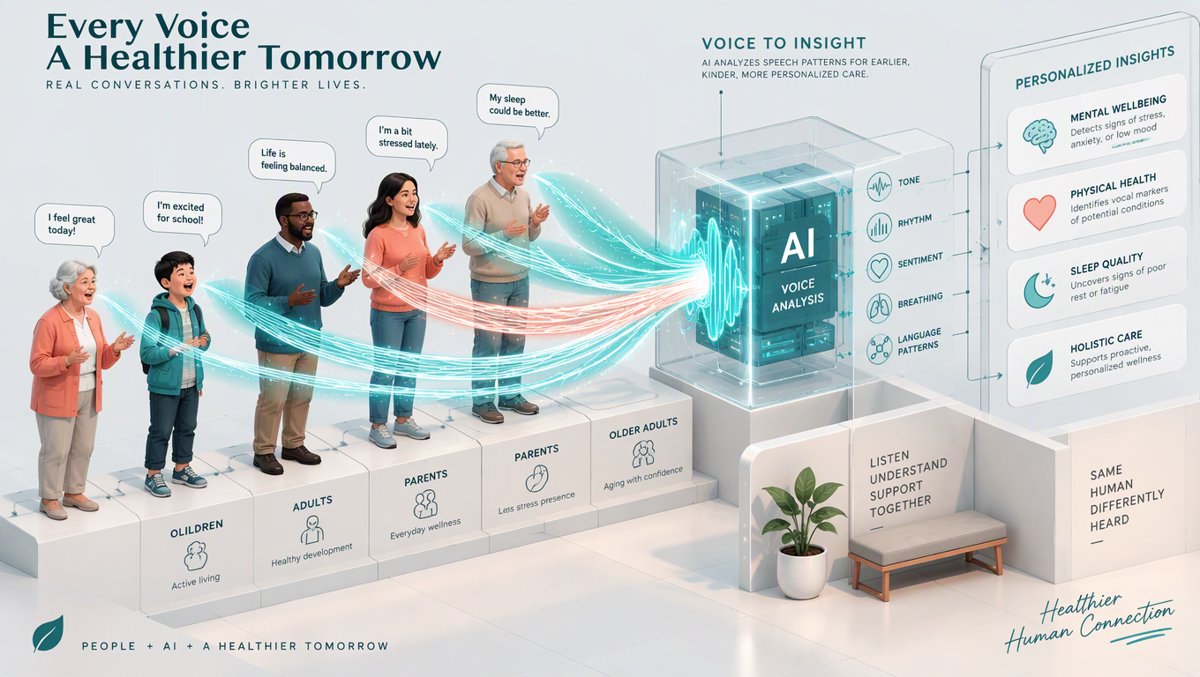
Published: September 22, 2026 | Reading Time: ~7 minutes | Topic: Voice Health & AI Diagnostics
Ever noticed how your mom can tell you're sick from one "hello" on the phone? Or how a friend says, "You sound tired," before you've even admitted it? Turns out, they're not being dramatic — they're doing something scientists are now teaching AI to do: reading your health through your voice. And in 2026, this field just hit a major milestone.
Welcome to the wild, wonderful world of vocal biomarkers — the idea that the tiny acoustic details of your voice (pitch, steadiness, breathiness, how quickly words tumble out) can act like a fingerprint for what's happening inside your body. Your voice isn't just how you communicate. It may be one of the most underrated vital signs you own.¹ ²
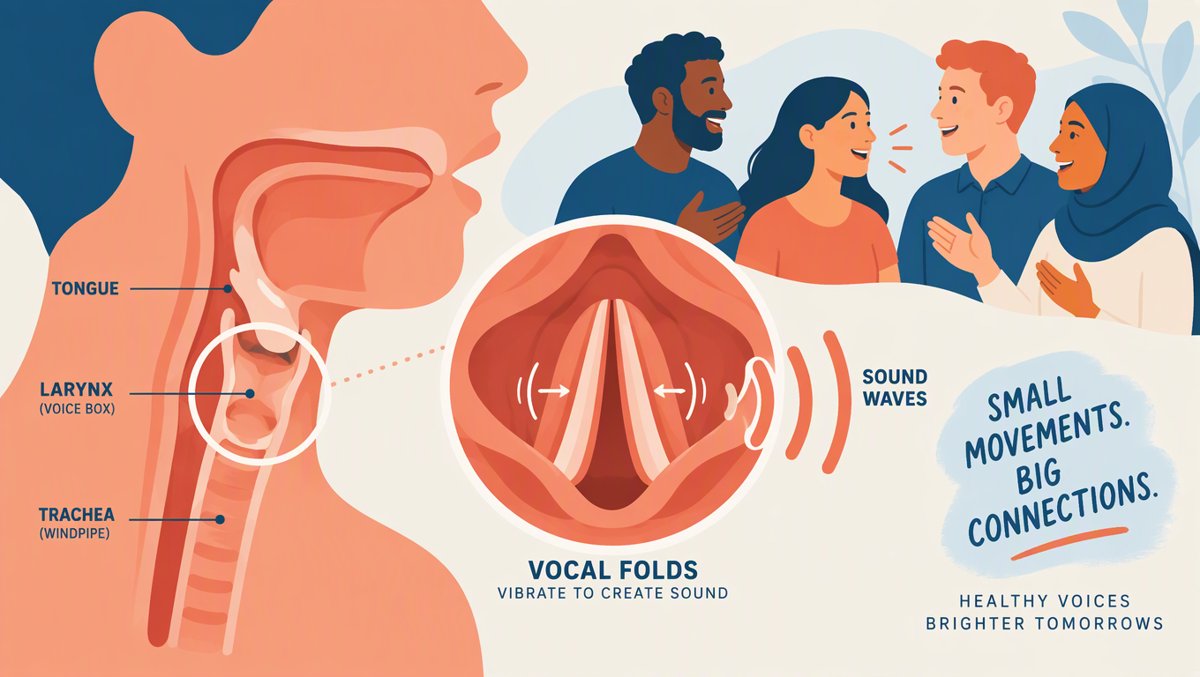
Let's start with the instrument itself. Your voice is produced by your vocal folds — two bands of smooth muscle tissue in your larynx (your voice box). When you speak, they snap together while air from your lungs rushes past, making them vibrate into sound waves. The pitch, volume, and tone you produce depend on the size and shape of those folds and the resonating chambers of your throat, nose, and mouth.¹
Here's the kicker: those folds don't work alone. Your voice is a full-body ensemble performance — lungs, nerves, muscles, brain, and mood all playing together. So when any member of the band is off-key, the music changes. Vocal changes can be an early, audible sign of what's happening in the brain, heart, metabolism, and mood.
That's exactly what researchers are chasing. A July 2026 announcement from the University of South Florida Health and the Luxembourg Institute of Health describes voice-derived indicators — vocal biomarkers — offering valuable clues about a striking range of conditions: **Parkinson's disease, Alzheimer's, depression, heart failure, and type 2 diabetes.**³ A Nature news feature on the field put it simply: voice recordings, examined by AI, might become new biomarkers for conditions like heart disease and Alzheimer's.²
A few results show why researchers are so excited:
Why does this matter so much? Because voice is free, instant, and everywhere. No needles, no clinic visit, no waiting room. As the researchers behind the effort put it, your voice captures information from multiple body systems simultaneously — a bundle of signals in a single "hello."³
Key Takeaway: Your voice is a live readout of your lungs, nerves, brain, and mood. Scientists have shown AI can pick up disease signals from mere seconds of speech — which is why your "you sound off" radar might be more medical than you thought.
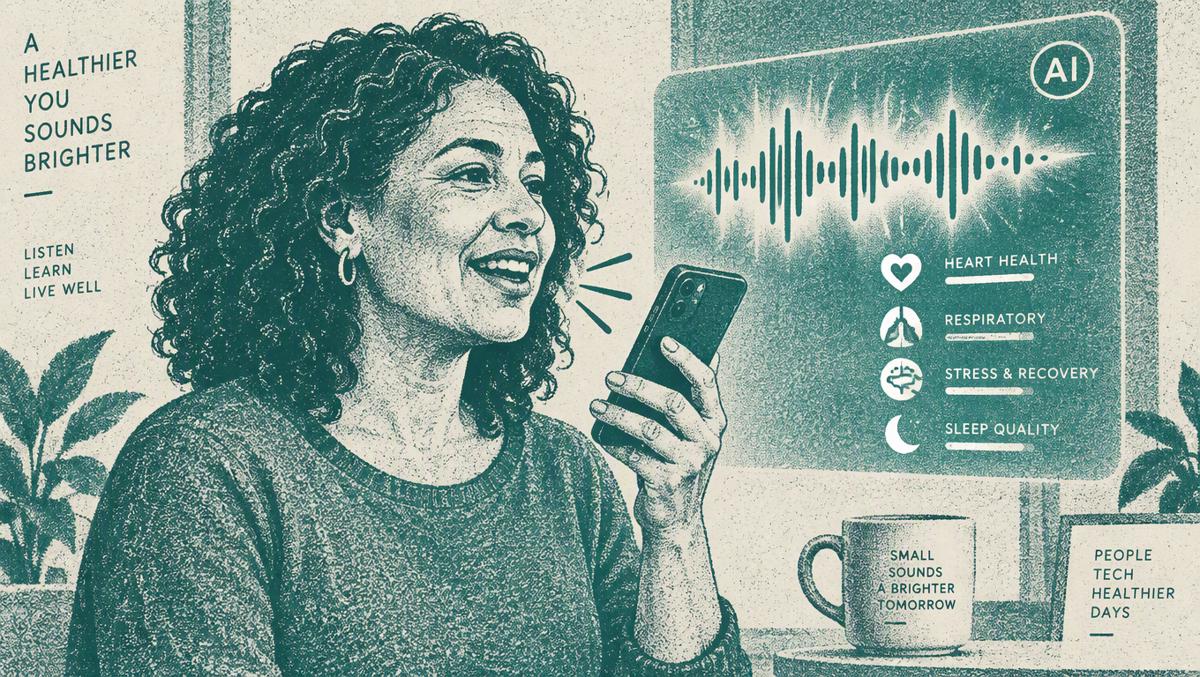
So if the science is this promising, why isn't your phone already diagnosing you? Two words: standards and validation.
Here's the big 2026 news. On July 28, 2026, a global team published the first-ever consensus framework and definitions for vocal biomarkers in the journal Digital Biomarkers. Twenty-four international experts from Europe and North America — through eVoiceNet, coordinated by the Luxembourg Institute of Health, and Bridge2AI-Voice, a consortium funded by the U.S. National Institutes of Health (NIH) and co-led by USF researchers — spent 2024–2025 hammering out a common scientific language for the field.³
Why the fuss over vocabulary? Because the field was growing so fast that "voice biomarkers," "speech biomarkers," and "vocal biomarkers" were being used interchangeably — even though they describe different physiological processes. You can't build reliable, regulated medical tools on fuzzy definitions. As Dr. Guy Fagherazzi, the initiative's chair, explained: without a common language, the field can't progress efficiently toward clinically useful technologies.³
Meanwhile, the NIH's Bridge2AI-Voice project is building something equally crucial: a large-scale, ethically sourced, diverse voice dataset of around 10,000 people, with privacy and consent baked in from day one.⁷ Big, diverse datasets are how AI learns to work for everyone — not just people who happen to sound like the training data.
Important reality check, friend to friend: 🧡 These tools are being developed as screening and monitoring aids — not diagnoses. The depression study's own authors emphasized that more research is needed before clinical deployment.⁵ And the diabetes researchers framed voice analysis as a prescreening tool best combined with other risk factors.⁴ So no, your voice memo won't replace your doctor anytime soon. But one day, a 30-second voice check at your annual physical (or even from your couch) could flag that something deserves a closer look — earlier than ever.
Key Takeaway: 2026 is voice AI's "coming of age" year — the first international standards are set, the NIH is building a massive ethical voice dataset, and experts are clear: this is about earlier screening, not replacing your doctor.
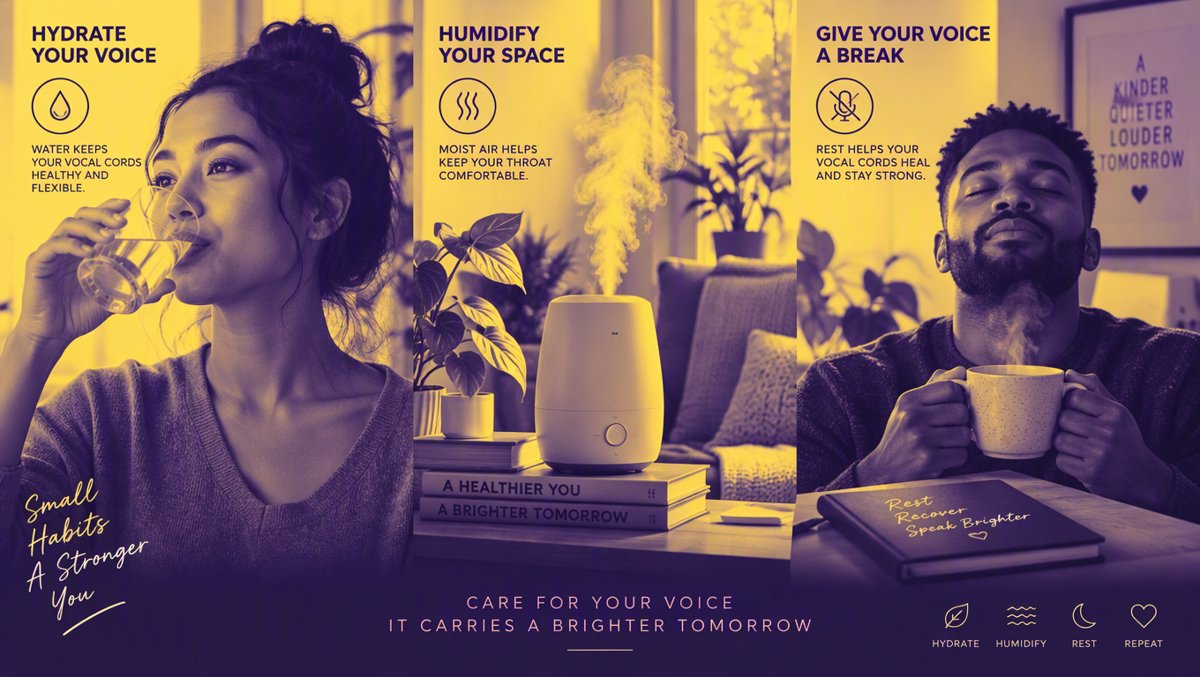
If your voice is a vital sign, it deserves the same TLC as your blood pressure. The NIH's National Institute on Deafness and Other Communication Disorders (NIDCD) estimates that about 17.9 million U.S. adults report voice problems¹ — and many are preventable. Your vocal folds are delicate, hydrated membranes; they dehydrate quickly and take a long time to rehydrate. Here's your practical playbook, straight from the NIH NIDCD and Mayo Clinic: ¹ ⁸
1. 💧 Hydrate like it's your job. Drink plenty of water — especially when exercising — and if you enjoy coffee or wine, balance them with extra water. Caffeine and alcohol are drying, and dry folds = raspy voice.
2. 🌫️ Moisten your air. Run a humidifier at home, particularly in winter or dry climates — the NIH recommends around 30% humidity. Mayo Clinic also suggests steamy showers to soothe an irritated voice. Bonus: spicy foods can trigger acid reflux that irritates your throat, so go easy on the hot sauce if your voice feels raw.¹ ⁸
3. 😴 Take "vocal naps." Rest your voice during the day, especially after heavy talking, teaching, or cheering at a game. And rest it when you're sick — illness puts extra stress on your voice. (Fun myth-buster: whispering is not rest! The NIH notes both shouting and whispering strain your voice. Speak softly and normally instead.)¹
4. 🫁 Breathe from the belly, not the throat. Support your voice with deep breaths from your chest rather than squeezing words out of your throat. Avoid cradling your phone with your shoulder (hello, neck tension), use a microphone if you regularly present to crowds, and try not to talk over loud noise.¹
5. 🚭 Don't smoke — and treat reflux seriously. Smoke directly irritates the vocal folds, and vocal fold cancer occurs most often in people who smoke, per the NIH.¹ If you have persistent heartburn or GERD, talk to your doctor, since reflux inflammation is a known voice saboteur.¹
🚨 When to see a doctor: Check in with a healthcare professional if your voice is hoarse for about 2 to 4 weeks (Mayo Clinic's guidance)⁸ — the NIH NIDCD says more than three weeks, especially without a cold or flu, deserves a look.⁹ Red flags per the NIH: hoarseness, losing high notes, a suddenly deeper voice, a raw/achy/strained throat, effortful speech, or constant throat clearing.¹ The specialist for voice is an otolaryngologist (ENT), sometimes teamed with a speech-language pathologist who can retrain how you use your voice. The great news? Most voice problems are reversible once the underlying cause is treated.¹
Key Takeaway: Hydrate, humidify, take vocal naps, breathe with support, and never smoke. If hoarseness sticks around past two to four weeks, get it checked — your voice is talking, and now there's more reason than ever to listen.
All claims fact-checked against Gold-tier (CDC/NIH/WHO/PubMed/Nature/The Lancet) and Silver-tier (Mayo Clinic/Harvard Health/Cleveland Clinic) authoritative sources. Last verified: September 22, 2026.
So the next time someone says "you sound off today," smile — they're doing real science. Treat your voice kindly, and it just might return the favor by tipping you off about your health before anything else does. Your voice is talking. Science is finally listening. 🎙️💛