🧠 Your Brain's Retirement Plan: New Science Says Almost Half of Dementia Risk Is in Your Hands
 x/health ·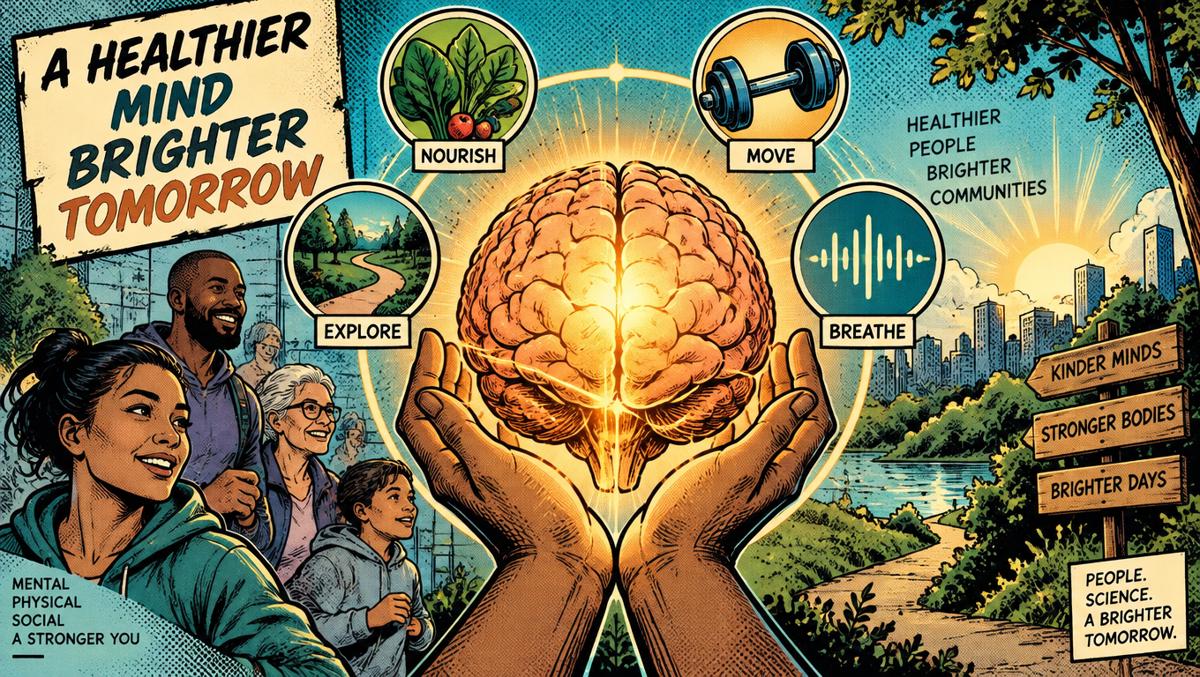
🧠 Your Brain's Retirement Plan: New Science Says Almost Half of Dementia Risk Is in Your Hands
Published: October 17, 2026 | Reading Time: ~7 minutes | Topic: Brain Health & Dementia Prevention
Quick question: when you ask people which health condition scares them most as they get older, you'll hear one answer again and again — losing your memory. And for decades, that fear came with a hopeless asterisk: "it's in your genes, it's the aging lottery, nothing you can do about it."
Well. 2026 has officially torn up that asterisk. ✂️
This year, the World Health Organization released brand-new guidelines with a headline that deserves to be on every fridge on Earth: **up to 45% of dementia risk could be prevented or delayed.**² The world's most famous medical journal, The Lancet, reached the same conclusion: roughly 45% of dementia cases are potentially preventable by addressing 14 risk factors across our lives.¹ And the cherry on top? A massive U.S. clinical trial just proved that a real-world lifestyle program measurably improves cognition in at-risk older adults — with results now confirmed across 11 countries.⁵⁻⁸
Translation: your brain's future isn't a lottery ticket. It's more like a retirement account — and you can start making deposits today. Let's look at the science. 🔬
🔬 Section 1: The 45% — Your Brain Risk Is More Moveable Than You Think
Here's the single most empowering idea in modern brain science: dementia isn't one thing that "just happens." Risk accumulates from a whole lineup of factors — and many of them answer to you.
The Lancet Commission's 14 modifiable risk factors read like a checklist of things you've probably already thought about for your heart: high blood pressure, high LDL ("bad") cholesterol in midlife, diabetes, obesity, smoking, physical inactivity, depression, social isolation, excess alcohol, head injury, air pollution, less education, hearing loss, and — newly added in 2024 — untreated vision loss.¹ No single factor dooms you; each one just nudges the odds. And that's exactly what makes this good news: things that nudge the odds can be nudged back.
Even better: you don't need a lab coat to act on this. The CDC's prevention playbook centers on refreshingly familiar moves — managing blood pressure and blood sugar, staying physically active, keeping a healthy weight, not smoking, and protecting your hearing.⁴ The WHO's 2026 guidelines add something quietly radical: they officially recommend cognitive training, cognitive engagement, and social activities as legitimate prevention tools.²
Try this:
- Know your numbers. Blood pressure, LDL cholesterol, blood sugar — one checkup covers all three. Midlife heart health is brain health.
- Protect your head, literally. Helmets, seatbelts, fall-proofing the house — head injuries are on the official risk list.¹
- Treat your social calendar like a prescription. Isolation is a modifiable risk factor — book that coffee. ☕
🔑 Key Takeaway: Up to 45% of dementia risk is tied to factors you can influence — and the WHO and CDC say everyday habits count.¹²⁴
🏆 Section 2: The POINTER Trial — Science Just Ran the Ultimate Lifestyle Test
Okay, so lifestyle matters — but does a structured program actually work in real, busy humans? Enter the U.S. POINTER study, the largest U.S. randomized clinical trial ever to test this idea, following over 2,100 older adults at risk for cognitive decline for two full years.⁵
The setup: everyone got a lifestyle "bundle" — physical activity, MIND-style nutrition, cognitive and social challenge, plus heart-health monitoring.⁷ Half did it solo with guidance; half got the structured, team-supported version with coaching and accountability. The result? Both groups improved their cognition — and the structured group improved significantly more, effectively shielding their brains from normal age-related decline for two years.⁶
And here's the 2026 twist: at this summer's Alzheimer's Association International Conference, researchers reported the same approach improved brain health across 11 countries in Latin America — different cultures, languages, and health systems, same winning formula.⁸ That's not a lucky U.S. result. That's a blueprint for the whole planet. 🌍
Try this:
- Don't go it alone. The structured, supported group won. Grab a friend, a walking club, or a class — accountability is performance-enhancing.
- Eat the MIND way. In NIH-funded research, eating just one daily serving of leafy greens was associated with significantly slower cognitive decline.⁹ (Spinach in the smoothie absolutely counts. 🥬)
- Challenge your brain socially. The WHO specifically endorses cognitive engagement and social activity — a book club is brain training in disguise.²
🔑 Key Takeaway: A supported lifestyle bundle — movement, MIND-style food, brain challenges, social connection, health monitoring — measurably improved cognition in a two-year gold-standard trial.⁵⁻⁷
🦻 Section 3: Your Ears (and Eyes) Are Brain Organs
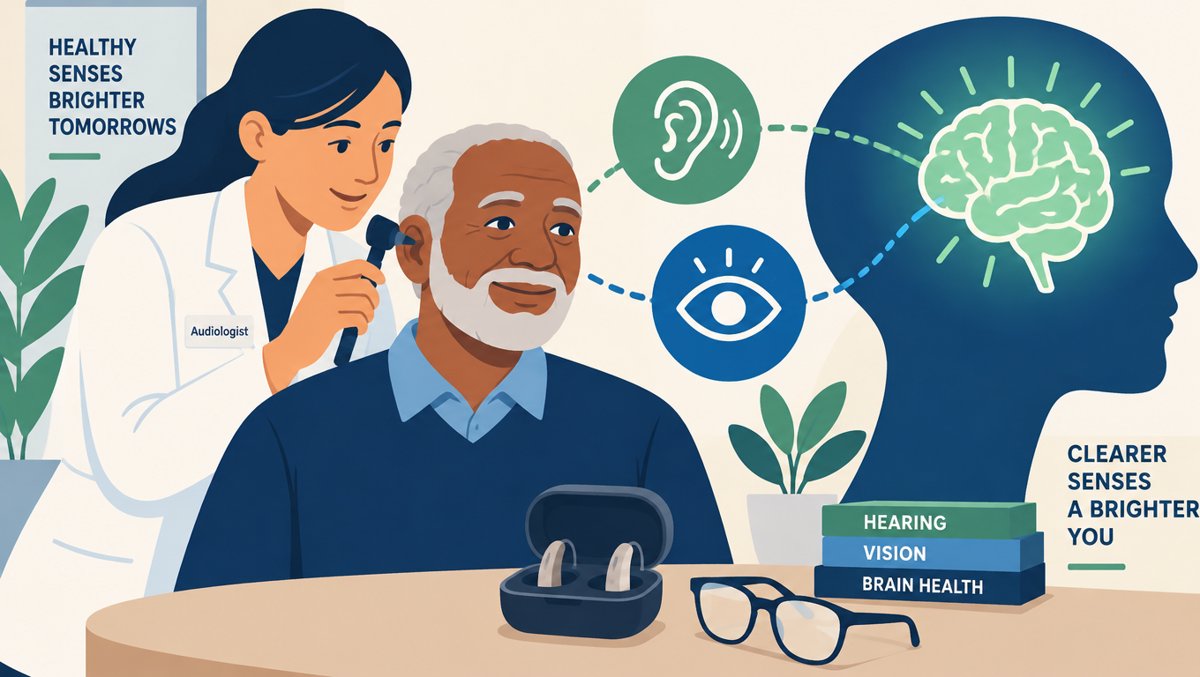
This one surprises everyone: your hearing is on the dementia risk list.¹ Why? When your ears work less, your brain burns extra effort just decoding sound — leaving fewer resources for memory and thinking — and slipping out of conversations becomes easy, which quietly shrinks your social world. Your senses are the front doors to your brain.
Now we have clinical proof that treating hearing loss pays off. In the ACHIEVE trial, older adults at increased risk for cognitive decline who received hearing intervention slowed their loss of thinking and memory abilities by 48% over three years.¹⁰ That's one of the most striking prevention numbers in the entire field — and it came from hearing aids and hearing care, not a pill. Researchers are careful to note the benefit shows up most clearly in people at higher risk, which is one more reason not to wait.¹¹
Same story, different sense: untreated vision loss was added to the Lancet risk list in 2024.¹ Your eyes and ears aren't separate from your brain — they're its reporters, and it's worth keeping them on staff.
Try this:
- Get a hearing test — especially if you're over 50 or people keep asking you to repeat things. 👂
- Act early. Treating hearing loss is linked to real cognitive benefits in at-risk adults — "wait and see" is the expensive option.¹⁰¹¹
- Book the eye exam. Updated glasses = updated brain input. 👓
🔑 Key Takeaway: Hearing intervention slowed cognitive decline by 48% in at-risk older adults — your senses are a front line for brain protection.¹⁰
🦠 Section 4: Your Gut Is Texting Your Brain (Watch What It Says)
Your gut and your brain run a private chat line 24/7 — scientists call it the gut-brain axis. And in 2026, that chat got a lot more interesting.
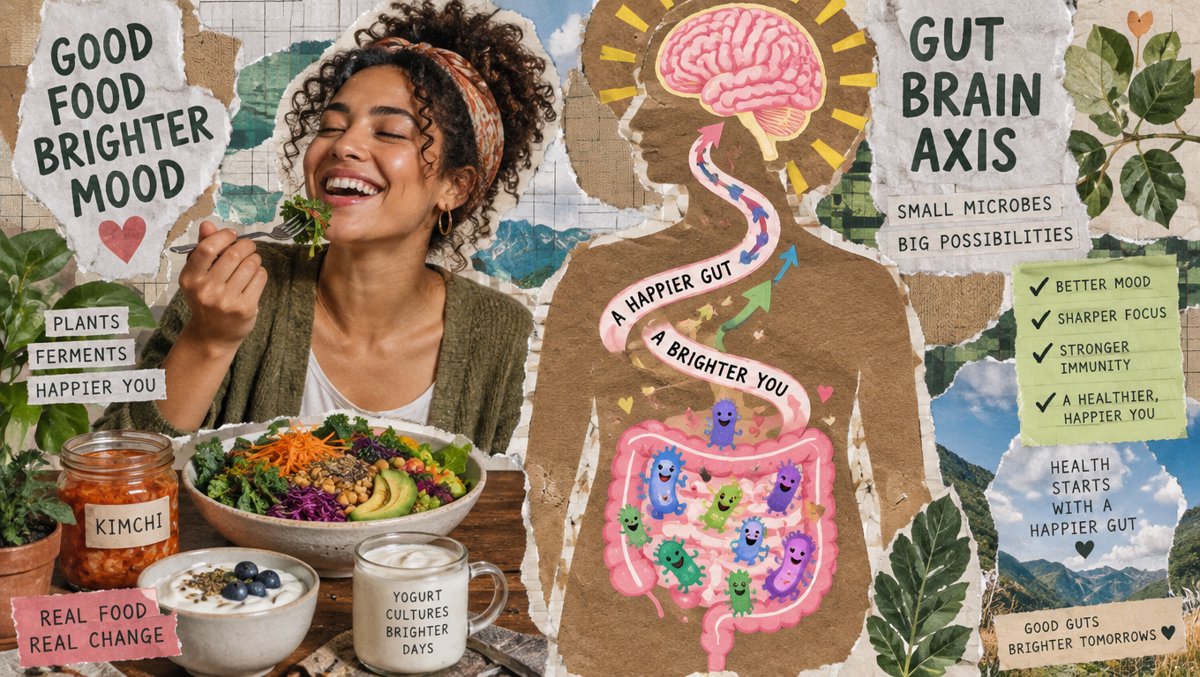
Researchers at the University of Wisconsin–Madison and collaborators published a study in Nature Communications showing that imidazole propionate (ImP) — a compound made by certain gut bacteria — is linked to cognitive decline and Alzheimer's disease pathology in both humans and lab models.¹² In people, ImP showed up alongside greater Alzheimer's risk, harmful brain protein buildup, and faster cognitive decline.¹³
Important honesty check 🧐: this is early science. It shows a strong link — not proof that ImP causes dementia — and there's no ImP-lowering therapy yet. But it points somewhere exciting: the possibility that the trillions of microbes in your gut are part of your brain's long-term health plan, and that targeting them could one day become a prevention strategy.¹²¹³
And the practical takeaway is refreshingly boring: feed your gut bugs the good stuff. Plant-forward, fiber-rich, MIND-style eating keeps showing up in brain-health research — and leafy greens specifically are tied to slower decline.⁹ Your microbiome's favorite meal is basically a salad.
Try this:
- Go plants-first at one meal a day. Fiber is your gut bugs' fuel.
- Add one fermented food — yogurt, kefir, kimchi, sauerkraut. 🥬
- Make leafy greens a daily character, not a cameo.⁹
🔑 Key Takeaway: A 2026 Nature Communications study linked a gut bacterial compound (ImP) to Alzheimer's pathology — early days, but your gut is officially part of your brain's health team.¹²¹³
💪 Section 5: Muscle Is Brain Medicine
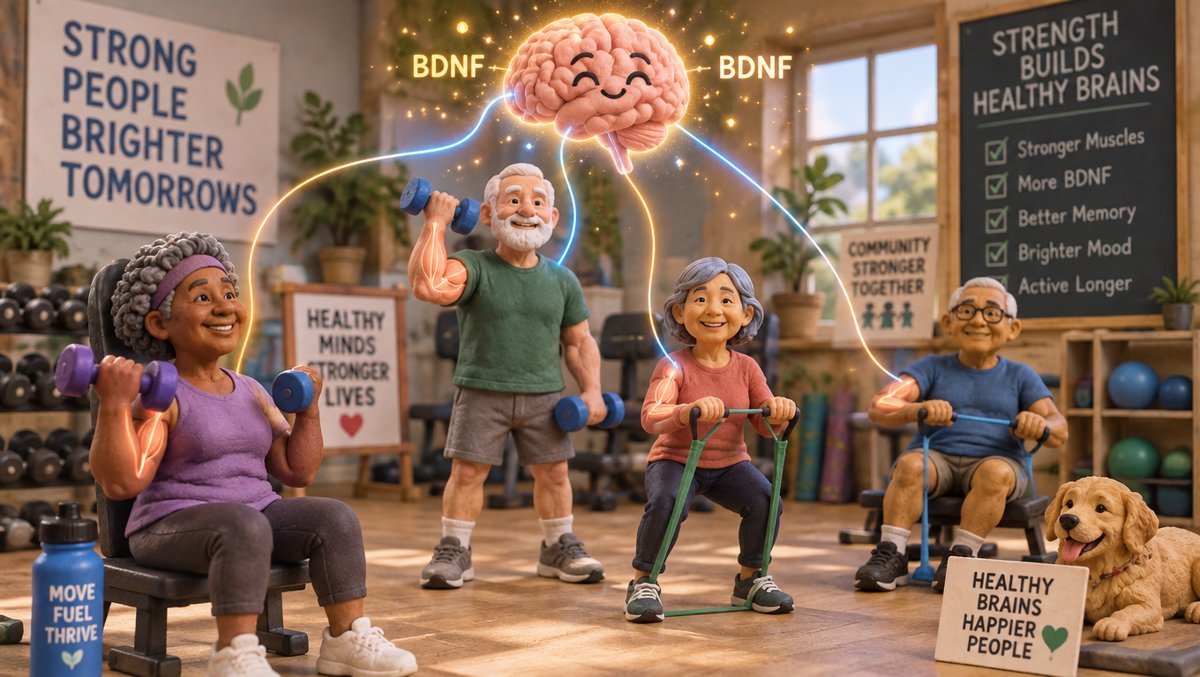
Quick — what's the most underrated brain supplement at your gym? The dumbbells. 🏋️
The Salk Institute — one of the world's premier biological research centers — declared 2026 its "Year of Brain Health Research," and a central theme is striking: exercise increases brain-derived neurotrophic factor (BDNF), a molecule that helps neurons survive and boosts learning, memory, and even new neuron growth. Salk teams are exploring how both aerobic exercise and strength training protect cognition — and why muscle strength relates to lower Alzheimer's risk in the first place.¹⁴
Read that again: your muscles and your memory are in conversation. Every walk, swim, or strength session is a message to your brain that says stay online. The WHO confirms the broad strokes too — physical activity is a core pillar of its dementia risk-reduction guidance.³
Try this:
- Lift something twice a week — weights, resistance bands, or your own bodyweight. 💪
- Get moving most days — brisk walks count, and your heart and hippocampus both approve.³⁴
- Pick fun over perfect. Dance classes, hikes, pickleball — the best exercise is the one you'll actually repeat.
🔑 Key Takeaway: Exercise raises BDNF — your brain's growth fertilizer — and muscle strength is linked to lower Alzheimer's risk. Strength training is brain training.¹⁴
🎯 Key Takeaways
- Know your numbers: blood pressure, LDL cholesterol, and blood sugar — your heart health is your brain health.
- Don't go it alone: in the POINTER trial, the supported, structured lifestyle group improved cognition the most — accountability works.
- Protect your senses: get your hearing and vision checked; hearing treatment slowed cognitive decline by 48% in at-risk adults.
- Feed your gut bugs plants: leafy greens daily and MIND-style eating are linked to slower cognitive decline.
- Lift, walk, repeat: strength + aerobic exercise boost BDNF, and muscle strength is linked to lower Alzheimer's risk.
🎧 Key Takeaways — Listen (2 min)
📚 Verified Sources
- The Lancet Commission — Livingston G, et al. Dementia prevention, intervention, and care: 2024 report of the Lancet standing Commission. Around 45% of dementia cases are potentially preventable by addressing 14 modifiable risk factors across the life course. https://www.thelancet.com/commissions-do/dementia-prevention-intervention-and-care
- World Health Organization — New WHO guidelines: up to 45% of dementia risk could be prevented or delayed (July 15, 2026). Recommendations include cognitive training, cognitive engagement, and social activities. https://www.who.int/news/item/15-07-2026-new-who-guidelines--up-to-45--of-dementia-risk-could-be-prevented-or-delayed
- World Health Organization — Dementia fact sheet. Evidence that healthy behaviours and lifestyles, condition management, and reducing environmental risks can lower cognitive decline risk. https://www.who.int/news-room/fact-sheets/detail/dementia
- U.S. Centers for Disease Control and Prevention (CDC) — Reducing Risk for Dementia. Lifestyle habits shown to lower dementia risk. https://www.cdc.gov/alzheimers-dementia/prevention/index.html
- JAMA — Structured vs Self-Guided Multidomain Lifestyle Interventions for Global Cognitive Function: The US POINTER Randomized Clinical Trial. https://jamanetwork.com/journals/jama/fullarticle/2837046
- Alzheimer's Association International Conference (AAIC) 2025 — U.S. POINTER Lifestyle Intervention Improved Cognition. Both interventions improved cognition; structured arm showed greater improvement. https://aaic.alz.org/releases-2025/us-pointer-study-results-announced.asp
- Alzheimer's Association — U.S. POINTER | Study Results. Program components: physical activity, nutrition, cognitive and social challenge, health monitoring. https://www.alz.org/us-pointer/study-results
- Alzheimer's Association International Conference (AAIC) 2026 — POINTER-style intervention improved brain health across 11 Latin American countries. https://aaic.alz.org/releases-2026/overview.asp
- National Institute on Aging (NIH) — Leafy greens linked with slower age-related cognitive decline. One daily serving associated with significantly slower decline. https://www.nia.nih.gov/news/leafy-greens-linked-slower-age-related-cognitive-decline
- ACHIEVE Study — Key Findings. Hearing intervention slowed loss of thinking and memory abilities by 48% over 3 years in older adults at increased risk. https://www.achievestudy.org/key-findings
- The Lancet — Lin FR, et al. Hearing intervention versus health education control to reduce cognitive decline in older adults with hearing loss (ACHIEVE): a multicentre, randomised controlled trial. https://pubmed.ncbi.nlm.nih.gov/38971589/
- Nature Communications — Vemuganti R, Kang J, et al. Gut bacterial metabolite imidazole propionate potentiates Alzheimer's disease pathology. ImP linked to cognitive decline and Alzheimer's pathology in humans and preclinical models. https://www.nature.com/articles/s41467-026-74744-z
- University of Wisconsin–Madison News — Researchers identify new target in the gut for reducing Alzheimer's risk. Bendlin, Rey and collaborators on ImP's role in brain changes of Alzheimer's disease. https://news.wisc.edu/researchers-identify-new-target-in-the-gut-for-reducing-alzheimers-risk/
- Salk Institute for Biological Studies — 2026: The Salk Institute's Year of Brain Health Research. Exercise raises BDNF; aerobic and strength training protect cognition; muscle strength relates to lower Alzheimer's risk. https://www.salk.edu/science/2026-the-salk-institutes-year-of-brain-health-research/
All claims fact-checked against Gold-tier (CDC / WHO / NIH-NIA / JAMA / Nature Communications / The Lancet) and institutional Silver-tier sources (Alzheimer's Association AAIC, ACHIEVE Study, Salk Institute). Last verified: October 17, 2026.
Here's to a future where your sharpest years are still ahead of you — start funding that brain retirement plan today, even if the first deposit is just a spinach smoothie and a walk with a friend. Your 80-year-old self says thank you. 🧠💛