🚶♀️ Walk It Off: The Surprising Science-Backed Cure for the World's #1 Pain Problem
Published: September 8, 2026 | Reading Time: ~7 minutes | Topic: Back Pain, Movement & Recovery
Quick question: what health condition do you think disables more people on Earth than anything else? Heart disease? Cancer? Nope. It's something far more ordinary — and far more treatable — than most of us assume. It's low back pain. 🤯
And here's the plot twist: one of the most powerful weapons against it isn't a pill, a scan, or surgery. According to a wave of new research from The Lancet, JAMA, and the World Health Organization, it's something you already know how to do. You've been doing it since you were about one year old.
Walking. 🎉
Since September is Pain Awareness Month, let's dig into why the humble walk just became the most evidence-backed "prescription" your back has ever gotten — and exactly how much walking the science says you need.
🔬 Section 1: The World's Most Common Ache
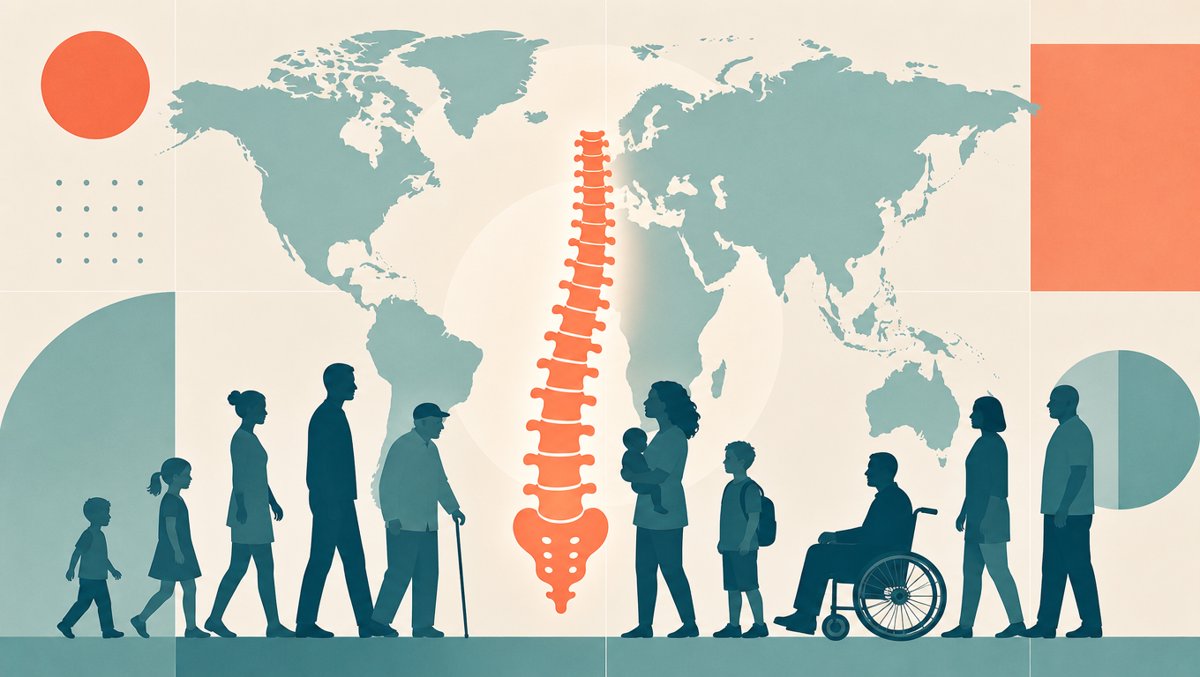
Let's start with the numbers, because they're honestly a little shocking. According to the World Health Organization, low back pain affected 619 million people in 2020, and that number is projected to climb to 843 million by 2050 as populations grow and age.¹ It is the single leading cause of disability worldwide — not heart disease, not stroke, not cancer. Back pain.¹ ²
Here's the part most people never hear: about 90% of low back pain is "non-specific" — meaning scans can't find a single clear structural culprit like a fracture or disease.¹ Your back simply hurts. And while that might sound scary, it's actually oddly good news: it means most back pain isn't a ticking time bomb. It's a common, manageable condition that usually improves.
The catch? It loves to come back. Roughly 7 in 10 people who recover from a back-pain episode will have a recurrence within a year.³ That's the real enemy — not the first ache, but the comeback tour. 🎤
What you can do starting today:
Stop fearing your back. Most acute episodes resolve on their own, WHO says — recovery is the norm, not the exception.¹
Don't demand a scan first. Since ~90% of cases are non-specific, imaging often doesn't change the plan — movement does.¹
Know the red flags. If you have numbness or weakness in your legs, pain after a serious fall, or other concerning symptoms, skip the internet and see a healthcare professional — Mayo Clinic notes back pain is only rarely a sign of something serious, but when it is, you want a pro on it.⁹
Adopt the WHO self-care shortlist: stay active, keep a healthy weight, don't smoke, protect your sleep, stay socially engaged, and tidy up your workspace ergonomics.¹
Key takeaway: Back pain is the world's #1 disabler, but ~90% of it has no single structural cause — which means lifestyle, not surgery, is usually the story. And its favorite move is the sequel. Prevent the sequel. 🍿
🏃♀️ Section 2: The WalkBack Trial — or, How 208 Days Beat 112
Now for the fun part. In 2024, researchers at Macquarie University in Australia published something special in The Lancet: a randomized controlled trial (science's gold standard) called WalkBack. They took 701 adults who had recently recovered from a bout of low back pain and randomly assigned half of them to a personalized, progressive walking program plus six education sessions over six months. Then they followed everyone for up to three years.⁴ ⁵
The result? The walkers stayed pain-free for a median of 208 days before a bothersome recurrence — versus just 112 days in the control group.⁴ ⁵ That's nearly double the pain-free time. From... walking. The same activity you do to get to the fridge.
And there were bonuses: walkers needed less healthcare support and took about half as much time off work, and the program was rated highly cost-effective.⁵ As lead researcher Dr. Natasha Pocovi put it, walking is effective, accessible, and scalable in a way that supervised gym programs often aren't.⁵
Why does it work? The honest answer: scientists aren't 100% sure yet. The leading theory from the WalkBack team is a combo platter — the gentle rhythmic motion nourishes and loads spinal structures and muscles just enough, plus stress relief and feel-good endorphins.³ ⁵
How to build your own mini-WalkBack:
Start where you are. If you're recovering from an episode, begin with short comfortable walks — even 10 minutes — and add a few minutes each week. The trial program was progressive, not heroic.⁴
Walk during pain-free windows. Once an episode settles, that's your launch moment — this trial targeted the just-recovered phase, when recurrence risk is highest.⁴
Pair it with a little learning. The program combined walking with education sessions — understanding your back reduces fear, and less fear means more movement.¹ ⁴
Keep daily life going. Mayo Clinic's advice aligns: maintain usual activities as much as possible, gently — bed rest is so last century.⁶ ⁹
Key takeaway: In the first randomized trial of its kind, a progressive walking + education program roughly doubled how long people stayed pain-free (208 vs 112 days) and halved work absences. Your back's cheapest insurance policy has two legs. 🦵
💊 Section 3: Your Actual Prescription Pad — Minutes, Not Milligrams
So how much walking are we talking? Do you need to become one of those 6 a.m., 20,000-step, lycra-clad mutants? (Respect, but no.) 😄
Two recent studies nailed down the dose beautifully:
A 2025 cohort study in JAMA Network Open followed thousands of U.S. adults and found that walking more than 100 minutes a day was associated with a 23% lower risk of chronic low back pain compared with walking under 78 minutes — and even the 78–100 minute crowd cut their risk by about 13%.⁶ ⁷ Interestingly, how fast you walked mattered less than how much. Volume beats intensity for your back.
And a 2026 dose-response meta-analysis in the journal PM&R pooled data from walking trials and found a sweet spot: about 1,000 minutes of walking over 8 weeks — roughly 18 minutes a day — delivered the largest reduction in pain (900 minutes was the sweet spot for disability). More walking still helped, but with diminishing returns.⁸
One important honesty note: the JAMA study is observational — it shows a strong association between walking and lower back-pain risk, not ironclad proof of cause and effect.⁷ But paired with the Lancet randomized trial⁴ and WHO's guidance, the overall picture is remarkably consistent: move more, hurt less.
And here's the official mic drop: in its guideline on chronic low back pain, the World Health Organization states plainly that painkillers should not be the first-line treatment — exercise and education come first.¹ ² Mayo Clinic agrees: stay active, keep up gentle daily movement.⁶
Your fill-in-the-blank prescription:
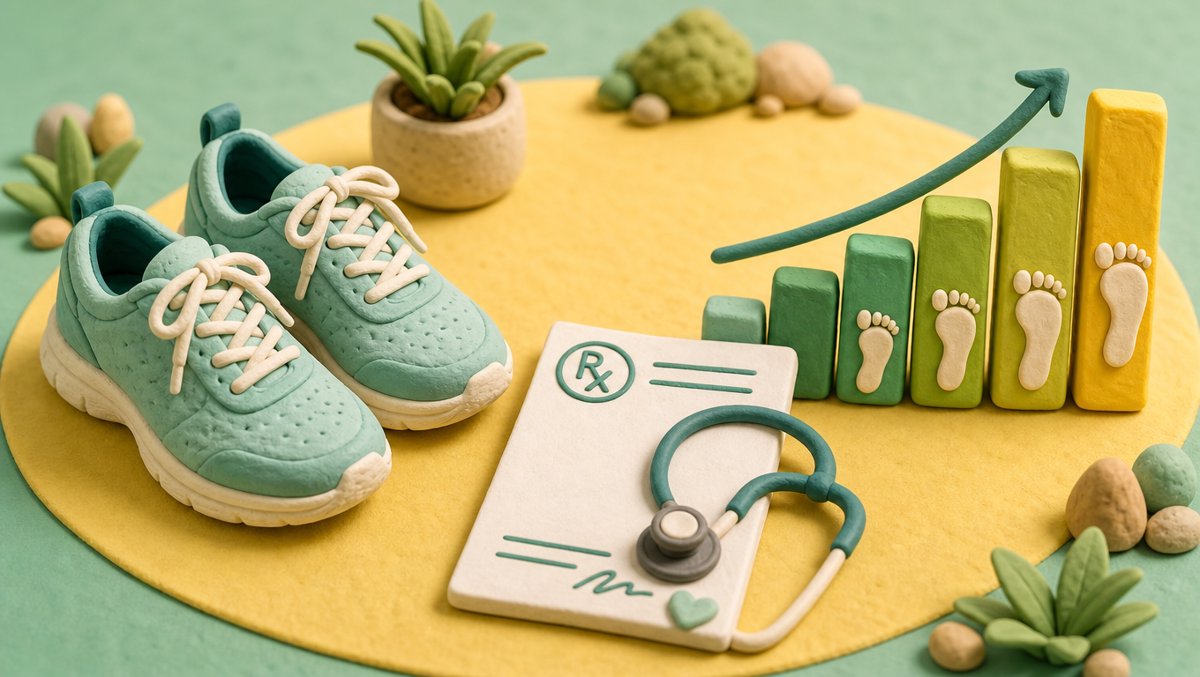
Minimum effective dose: ~18 minutes of walking a day (the meta-analysis sweet spot).⁸
Optimal dose: 100+ minutes a day — that's where the 23% risk reduction showed up (and yes, strolling counts).⁶ ⁷
Sneak it in: park farther, take the stairs, take a lap after lunch, walk your calls. Minutes stack like coins. 🪙
Don't lead with pills. If you need symptom relief short-term, that's a conversation with your provider — but movement is the first-line therapy per WHO.¹ ²
Zoom out: about two-fifths of the world's back-pain burden is tied to modifiable factors — things you can actually change.¹ ² That's rare power over a #1-ranked problem.
Key takeaway: The evidence-backed dose is beautifully doable — ~18 minutes daily for relief, ~100 minutes for prevention. Speed optional. Consistency essential.
🎯 Key Takeaways
Low back pain is the world's #1 cause of disability — 619 million people in 2020, heading for 843 million by 2050.¹
~90% of back pain is "non-specific" — no single structural culprit — so lifestyle (not surgery) is usually the story.¹
The Lancet's WalkBack trial found a walking + education program kept people pain-free a median of 208 days vs 112 — nearly double — with about half the sick days.⁴ ⁵
The dose: >100 min/day linked to 23% lower risk of chronic back pain (JAMA Network Open); a 2026 meta-analysis found ~1,000 minutes over 8 weeks (~18 min/day) is the pain-relief sweet spot.⁶ ⁷ ⁸
Pills are not first-line — WHO says exercise and education come before painkillers for low back pain.¹ ²
🎧 Key Takeaways — Listen (2 min)
Prefer to listen? Here's the audio version of today's key takeaways — perfect for your walk. 😉 (See what I did there?)
📚 Verified Sources
World Health Organization (WHO) — Low back pain fact sheet: global prevalence, 619M cases in 2020, 843M projected by 2050, 90% non-specific, self-care guidance, painkillers not first-line. https://www.who.int/news-room/fact-sheets/detail/low-back-pain
Pocovi NC et al., The Lancet (2024) — WalkBack randomized controlled trial: individualised, progressive walking and education intervention for prevention of low back pain recurrence (PMID 38908392; DOI 10.1016/S0140-6736(24)00755-4). https://pubmed.ncbi.nlm.nih.gov/38908392/
Haddadj R et al., JAMA Network Open (2025) — Volume and Intensity of Walking and Risk of Chronic Low Back Pain (>100 min/day → 23% lower risk) (PMID 40512494). https://pubmed.ncbi.nlm.nih.gov/40512494/
All claims fact-checked against Gold-tier (WHO, The Lancet, JAMA Network Open, PubMed/NIH) and Silver-tier (Mayo Clinic) authoritative sources. Last verified: September 8, 2026. This article is for general information and is not a substitute for personalized medical advice — if you have concerning symptoms, please see a healthcare professional.
So here's your homework, friend: after you finish reading this, stand up, stretch, and take a 10-minute walk. Not for the steps. For your spine. Your future self — the one breezing through a Tuesday without wincing — says thank you. 🌿🚶♀️
 x/health ·