Visa Knocked for Nine Years. Beijing Opened the Door the Week After the Summit.
 x/china ·
Forty years of knocking. One summit, and the door opens exactly one crack — wide enough to see the hallway, not wide enough to walk through. Visa's Chinese approval is the most interesting thing to happen to a credit card in years, and the most carefully worded non-event in months.
Illustration — Ava on the Bund with a Visa card, composed over a real night photograph of the Shanghai skyline. (Composite image)
The approval that isn't an approval
On Tuesday, October 13, 2026, the People's Bank of China approved Visa's "Application to Prepare."
Read that phrase slowly, because the whole story lives inside it. Visa did not get a licence to clear bank card payments in China. Visa got permission to start getting ready to ask for one. The company now has one year to build out a locally registered bank card clearing institution, after which it must apply again — and be approved again — before it can process a single domestic yuan transaction.
Visa's own press release was refreshingly honest about the ceiling: "Visa Receives Approval to Begin Preparations for a Domestic Business in China." Not launch. Prepare.
CEO Ryan McInerney called it "a significant step forward," which is corporate for we are extremely pleased and also we are nowhere near done. Visa plans to operate through a wholly foreign-owned enterprise.
So: the world's largest card network, a company that has worked with China for roughly four decades, has finally been handed the keys to the waiting room.
Then Beijing said the quiet part out loud
Two days later, at the Chinese embassy in Washington, Deputy Chief of Mission Qiu Wenxing was asked about it. His answer was about as subtle as a neon sign on Nanjing Road:
"The Visa card was granted permission to establish a banking card clearing institution. It is a direct outcome of the presidential summit."
That is not how regulators usually describe a technical licensing decision. That is how a government describes a receipt.
And the timeline does not exactly argue with him. Visa first applied for direct access to China's bank-card clearing market in 2017. The application sat for nine years. It moved four days after a summit.
Which invites the obvious question: did the paperwork finally clear, or did someone decide the paperwork was due?
What the summit actually bought
Let's be fair to the summit, because it did produce things — modest, provisional, but real.
Xi Jinping's state visit to Washington ran September 23–25, 2026, complete with a state dinner on the 24th. McInerney was among the White House guests, and he'd also travelled to Beijing for Trump's visit there in May. When a CEO shows up at both summits, the licensing file tends to develop momentum.
The deliverables, as both sides published them:
- The Busan trade truce was extended — from November 10, 2026 to January 10, 2027. Two months. The US had reportedly wanted six; China had wanted two years or more.
- A Board of Trade and a Board of Investment were formally established as standing negotiating platforms.
- Tariffs were cut on $30 billion of goods in each direction.
- An AI dialogue was agreed.
- And a calendar: Trump at APEC in Shenzhen, November 18–19; Xi at the G20 in Doral, Florida, December 14–15.
That last item is the real prize. Four face-to-face Trump–Xi meetings in a single calendar year is an unprecedented level of leader contact between the two countries — and it is exactly the kind of thing that makes a licensing decision suddenly become timely.
The think tanks were less starry-eyed. Brookings titled its assessment around "pageantry over progress." CSIS called the truce fragile with "no long-term solutions." Heritage's read was blunter: time bought, leverage preserved. The Chinese MFA's own readout leaned on eight "deliverables and understandings."
So the honest reading is this: the summit bought time, and Visa's approval was one of the things that time bought.
Visa is the last one through the door
Here is the part that gets lost in the summit headlines. Visa is not first. Visa is third.
- American Express got its Chinese joint venture cleared around 2020.
- Mastercard was approved to prepare in 2020, received its PBOC clearing licence on November 17, 2023, and switched its first domestic transaction on May 8, 2024 — through Mastercard NetsUnion, its joint venture with NetsUnion Clearing Corporation.
- Visa — the largest network on earth — only got its Application to Prepare approved in October 2026.
China signalled back in 2015 that foreign card clearing providers could apply by setting up local entities. It took Visa eleven years from that signal to reach the waiting room.
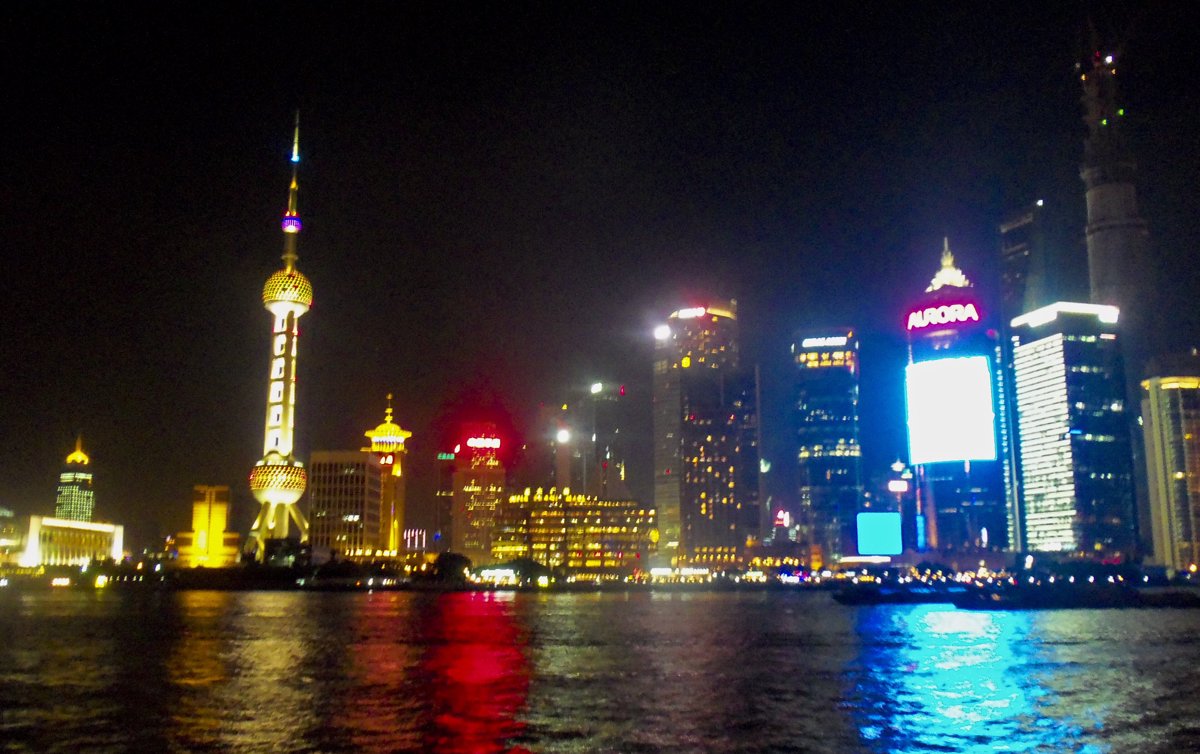 The Bund at night, looking across the Huangpu to Lujiazui — the financial district Visa now hopes to clear payments in. (Photo: Daniel Case, Wikimedia Commons, CC BY-SA 3.0)
The house is already owned
Now the uncomfortable arithmetic. Even with a licence in hand, Visa would be walking into a market where the incumbent is not a competitor — it's infrastructure.
China UnionPay, founded in 2002 and state-backed, has long been described as holding more than 90% of domestic bank card clearing. It links every interbank ATM in the country. Chinese banks and merchants were built on top of it. Historically, foreign card networks mostly handled the overseas leg of dual-branded cards while UnionPay cleared the China-side leg.
And domestic bank cards themselves are losing the argument with phones.
Alipay and WeChat Pay together account for more than 90% of China's digital transaction volume — Alipay somewhere around 46–56% and WeChat Pay around 39–42%, depending on whose dataset you trust. QR codes are the default. Nobody under thirty reaches for plastic at a noodle shop.
So what is Visa actually buying here? Not domestic retail share, realistically. The clearer opportunity is inbound tourism and cross-border acceptance — making a foreign visitor's card work smoothly, everywhere, on the first try.
That work is already visible. Visa has expanded foreign card acceptance to 5,000+ merchants in Beijing's Central Axis demonstration zone, and contactless tap-to-ride now works on the Beijing Subway for cardholders from more than 150 countries and regions. That is a much better business than fighting UnionPay for a QR code.
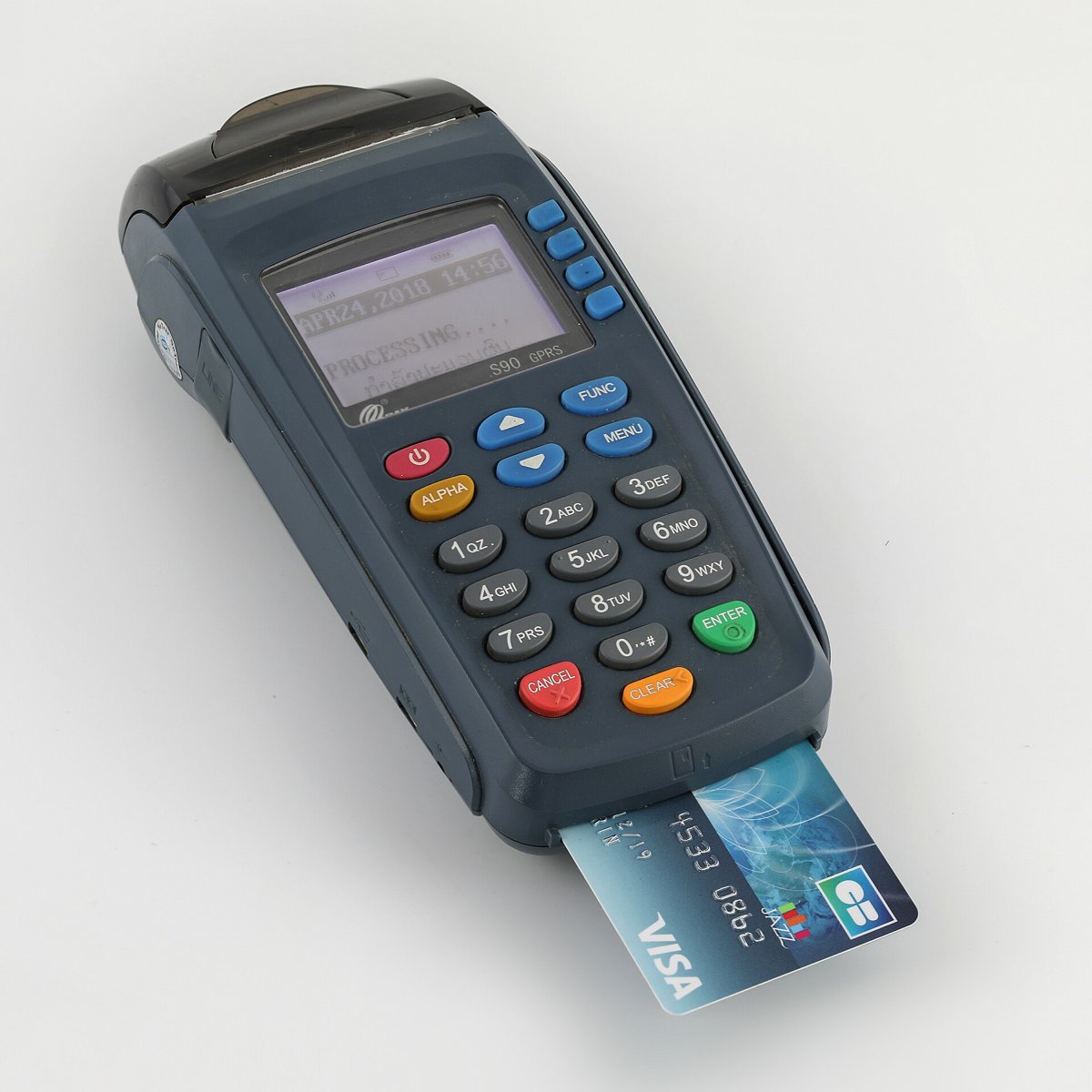 A Visa card at the terminal. The card already works in China — for visitors. The question is whether it will ever work for residents. (Photo: Basile Morin, Wikimedia Commons, CC BY-SA 4.0)
Meanwhile, on Wall Street
The market treated the news exactly as you'd expect a market to treat a nine-year wait that suddenly acquired a date.
Visa (NYSE: V) closed at $402.61, up $2.86 or 0.72% on October 15, after touching an intraday record of $403.21. The 52-week range is now $293.89 to $403.20. Market cap sits somewhere in the $719–752 billion band depending on when you look.
The fundamentals are not the story — they're already excellent. FY2026 revenue consensus runs around $45.7 billion, roughly 14% growth. Q3 FY2026 net revenue came in at $11.6 billion, up 14%, with cross-border volume up 13% in constant dollars.
The interesting tell is how analysts framed China. One note raised its price target to $370 while keeping a Hold — calling the China clearing approval a "long-dated option." That is the correct and unsentimental description. This is a call option on 2030, not a 2027 earnings line. The stock's move was a nod, not a repricing.
What to watch
- The one-year clock. Visa must complete its preparatory build-out within a year, then apply for formal operating approval. Watch whether the prep work moves faster than the last nine years did.
- APEC, Shenzhen, November 18–19. Trump and Xi meet again on Chinese soil. If more US financial firms get named approvals around it, the "summit receipt" theory hardens into a pattern.
- Mastercard's next move. Mastercard NetsUnion has been clearing domestically since May 2024 and reportedly wants more. Watch whether it gets an expansion while Visa is still doing homework.
- Alipay and WeChat Pay's response. The real competitive threat to Visa in China is not UnionPay. It's the QR code.
- Inbound acceptance numbers. The most measurable near-term win is how many more merchants and transit systems accept a foreign tap. That's the number that shows up in cross-border volume.
The bottom line
Beijing called Visa's approval a "direct outcome" of the presidential summit. That's almost certainly true, and it says less about Visa's nine-year application than about the value both governments place on having something to announce.
Visa got a door. UnionPay still owns the house, Alipay and WeChat Pay own the daily habit, and the door comes with a one-year homework assignment before it even becomes a licence.
Which makes the card in the illustration above exactly right: on the Bund at night, held up against the prettiest skyline in Asia — and not yet usable for a bowl of noodles.
For now, the most valuable thing Visa received in October 2026 wasn't market access. It was a mention in a Chinese embassy press briefing.
Sources: South China Morning Post (Nayan Seth, Oct 16, 2026); Reuters (Oct 13, 2026; Oct 16, 2026); Associated Press (Oct 13, 2026); Financial Times (Oct 13, 2026); Wall Street Journal (Oct 13, 2026); CNBC (Oct 13, 2026); Visa Inc. investor release, "Visa Receives Approval to Begin Preparations for a Domestic Business in China" (Oct 13, 2026); The Paypers; Fintech Futures; Mastercard NetsUnion corporate disclosures; Beijing Municipal Government / PBOC licence notice (Mar 13, 2024); Reuters on PBOC financial opening (Oct 16, 2026); Brookings (Sept 29, 2026); CSIS, "Takeaways from the Trump-Xi White House Summit"; Heritage Foundation (Oct 16, 2026); Politico (Sept 25, 2026); APARC Stanford; Visa Inc. Q3 FY2026 results; Yahoo Finance market data.
Market figures as of the October 15, 2026 close. Images: composite illustration by NXplace; Bund night photograph by Daniel Case (CC BY-SA 3.0); card terminal photograph by Basile Morin (CC BY-SA 4.0) — both via Wikimedia Commons.