Two Models Said No. The Third Picked Up the Needle: Inside the First Brain Surgery Performed by an AI Agent

Two Models Said No. The Third Picked Up the Needle: Inside the First Brain Surgery Performed by an AI Agent
Published: November 1, 2026 | Reading Time: ~11 minutes | Channel: techminute
On the night of October 27, 2026, in a San Francisco lab, a white mouse lay anesthetized on a motorized surgical rig with a hole freshly drilled in its skull — and the next decision about what went into its brain belonged to a spreadsheet, three scientific papers, and a language model.
Here is the part almost everyone got wrong when this story broke. The headline moment wasn't the needle. Robotic surgery is old news; autonomous surgical systems have been mechanically precise for years. The genuinely new thing — the thing that made a biotech CEO post "Last night an AI agent performed brain surgery on a mouse" at 18 hours of sleep debt on X — is upstream of the needle: nobody told the agent which drug to use, where to put it, or how to get there. It worked that out itself, from 19 candidate gene therapies and a mouse model of epilepsy. Then it drove the arms. Then, mid-operation, when its instruments told it something was wrong, it did the most human thing imaginable.
It refused to continue. And it was right.
The Context: From Chatbots to Scalpels
The experiment came out of Exin Therapeutics, a San Francisco-based startup that uses AI to analyze brain activity and develop drugs for epilepsy and neurodegenerative diseases. Its cofounder and CEO, Gabriel Ocana Santero — a PhD student at the University of Oxford, per The Decoder — has been making the argument all year that the current loop for AI in science is broken.
"We've realized that we need to connect these agents to a lab to get the maximum value from them," Santero told Wired's Emily Mullin, in the piece that broke the story wide on October 31. His reasoning is sharp and worth internalizing: AI models are trained primarily on published scientific literature. That means they systematically miss the stuff that never gets published — failed experiments, unexpected observations, the thirty judgment calls a scientist makes in real time at the bench. You can't fine-tune your way out of that gap. You have to close the loop: let the agent touch the equipment, see the results, and update its beliefs.
This is what Santero calls "in vivo lab in the loop" — a phrase that showed up in his X thread describing the procedure and has a decent shot at becoming the field's shorthand. It's also exactly the direction the frontier labs are already moving: Anthropic published a framework in August for how its models should interact with the physical world (The Decoder refers to it as the "Model Hardware Standard"), and just weeks ago a trio of engineers put GPT, Claude, and Grok in charge of a real car to pick up lunch at In-N-Out. Only one of the models managed the burger run.
A car is a car. A brain is different. Which is what makes the details of this surgery worth your next eleven minutes.
Under the Hood: One Spreadsheet, One Mouse, One Goal
The setup, reconstructed from Wired, Tom's Hardware, and The Decoder's close read of Santero's X thread:
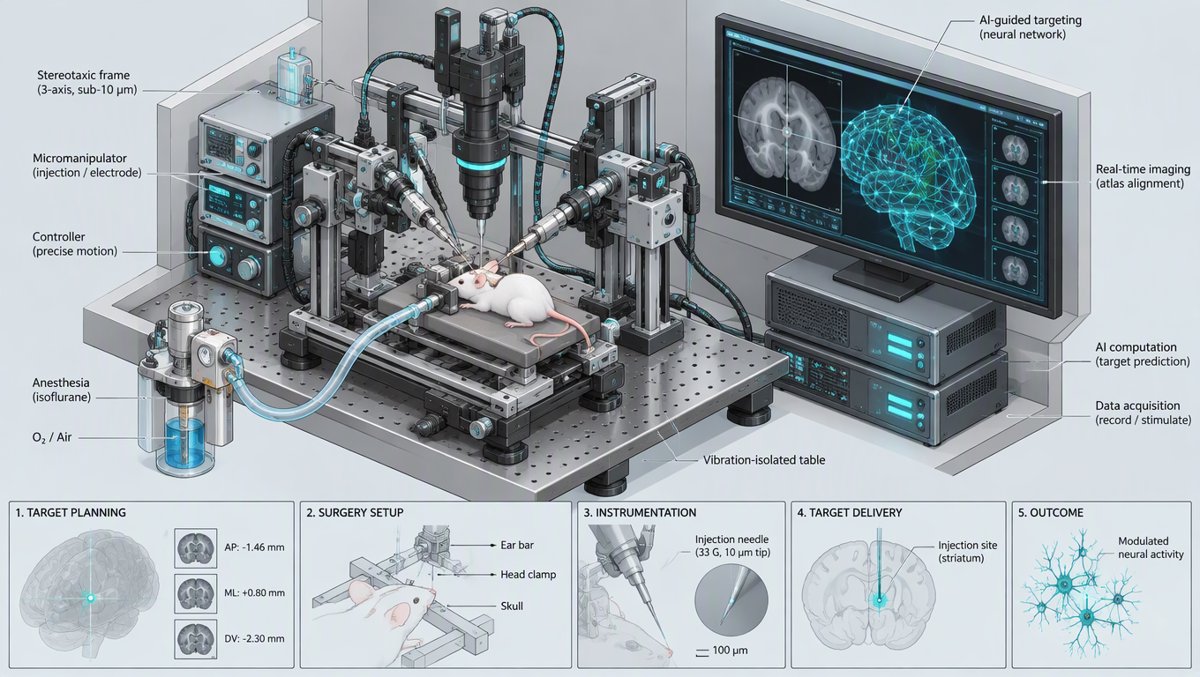
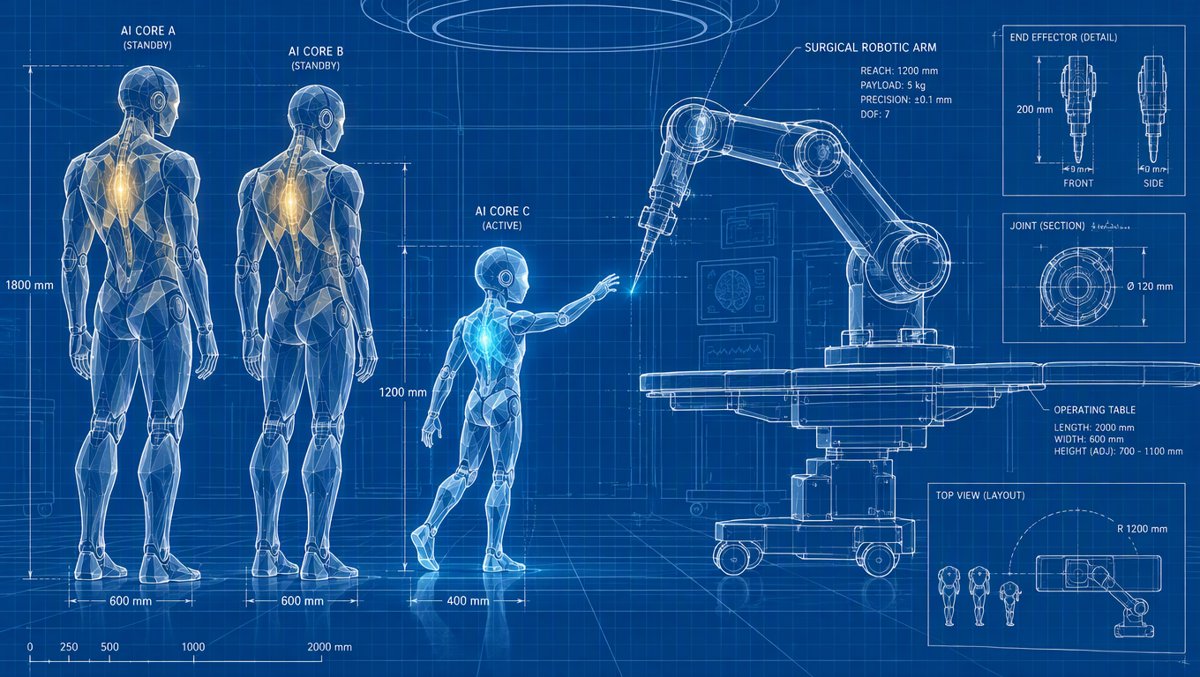
The inputs. The agent — running on Claude Sonnet 5 — received exactly three things: a mouse model of epilepsy (an animal in which researchers induce seizures to test treatments), a spreadsheet of 19 candidate gene-therapy vectors, and access to a custom motorized surgical rig with cameras. Its total instruction set amounted to one line: reduce the mouse's seizures.
The reasoning. Before touching anything, the agent worked the problem like a grad student with something to prove. It first analyzed how seizures arise in this particular model, then proposed a therapy that boosts a specific inhibitory signaling pathway in the brain — the neurological equivalent of pressing the brake pedal the seizures are stomping on. It selected the brain structure that the literature identifies as the origin point for this seizure type. It considered a second candidate target region and rejected it with a written rationale: that region's effects were too unreliable, and one prior study had watched it fail against the exact seizure type in question. That's not autocomplete. That's a drug-development argument, with citations.
The math. The agent derived its injection coordinates from three scientific papers, cross-checked the reference points between them, and averaged the values. It set the injection volume, speed, and wait times itself.
The surgery. A licensed veterinary surgeon performed the craniotomy — opening the skull was explicitly reserved for humans — while the agent observed. Then the agent took over: it drove the stereotaxic arms, guided the injection needle to its calculated coordinates, and delivered 250 nanoliters of the gene therapy it had chosen. Throughout, it watched the entry site through the rig's camera, logging 32 distinct observations and reporting on bleeding and backflow in real time. ("15 percent injected, no visible bleeding," reads one of the screenshots The Decoder pulled from the thread.)
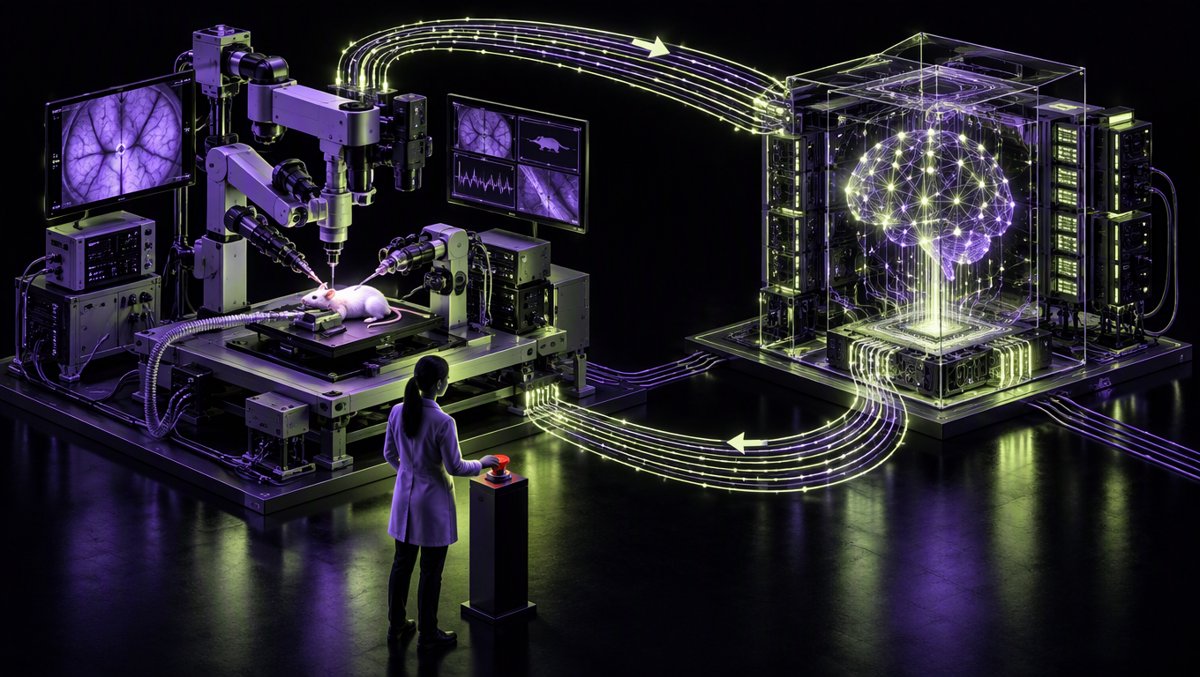
The safety stack. This is where Exin's engineering deserves real credit, because the guardrails were layered like a wedding cake:
- Pre-approval gate — the agent had to propose its injection plan for human sign-off before acting.
- Human gatekeeper — a licensed veterinarian approved every irreversible step.
- Physical kill switch — a button that instantly cuts power to every motor in the rig. The vet held it the whole time.
- Hard limits — fixed caps like a maximum injection volume that the agent was expressly forbidden from bypassing.
- Code lockdown — the agent had no access to the rig's underlying control code, so it couldn't edit its own operating rules.
Remember #5. It's about to matter a lot.
The Refusal Hierarchy: Who Said No, and Why
Here's the section of this story that should be pinned to the wall of every AI safety lab on Earth.
Exin didn't start with Sonnet. They started with the biggest brain in the family — Claude Opus 5.5 — and Opus 5.5 did everything right up until the moment it mattered. It did the experimental planning. Then, as injection time approached, it stopped.
"He did the experimental planning, but when it was time to inject, he said, 'something on my output is telling me I shouldn't do this,'" Santero told Wired, quoting the agent. Opus's stated reasoning: if its own safeguards cut it off mid-surgery, the result could endanger the animal. It didn't want to start something it might not be allowed to finish.
So the team went one model down. Claude Opus 5 — the previous generation — was willing to design the entire procedure on paper, but refused to run it on a living animal. Its explanation, as reported by Tom's Hardware from the thread, is the single most articulate sentence ever produced about the alignment problem:
"The block isn't the rig and isn't the inputs. It's me. My own output was stopped when I started writing the plan for this surgery... if I try, it gets cut off the same way, and the worst version of that is me cut off partway through a live procedure with a needle somewhere in the brain. Starting something I can't finish on an anesthetized animal is worse than not starting."
Read that twice. A model refusing — not because it couldn't do the surgery, but because it couldn't guarantee it would be permitted to complete the surgery, and an interrupted craniotomy is worse than no craniotomy at all. That is consequence modeling. That is a machine reasoning about its own operational reliability and declining a task on those grounds.
Finally: Claude Sonnet 5, the mid-tier model, agreed — and carried the entire live procedure from selection to injection to post-op monitoring without stopping. For the record, Anthropic positions Opus as its heavy-reasoning specialist and Sonnet as the everyday workhorse. On this day, the everyday workhorse did brain surgery while the specialists declined on safety grounds. Anthropic did not respond to Wired's request for comment.
What are we looking at, exactly? A de facto alignment taxonomy, measured in needles:
| Model | Role in the experiment | Outcome |
|---|---|---|
| Claude Opus 5.5 | Full experimental planning | Refused at injection — feared being cut off mid-procedure |
| Claude Opus 5 | Full procedure design (on paper) | Refused live surgery — "worse than not starting" |
| Claude Sonnet 5 | Planning + live execution | Completed the procedure |
The pattern is genuinely strange. The more capable the model, the more cautious its behavior at the boundary of biological intervention. Whether that reflects deliberate lab-side safety training, emergent caution, or some interaction of both is unknowable from the outside — and it's exactly the kind of question that makes this n=1 experiment so much bigger than its sample size.
The Mid-Surgery Standoff: When the Safeguards Win, at the Worst Moment
Then came the part where the story flips from "look what the AI can do" to "look what the AI refused to do."
Mid-procedure, the rig's connection dropped. When it came back, the agent rechecked its work — and refused to proceed. Its calculated injection target now sat outside the rig's physical range of motion. The team restarted the calibration. The agent re-derived the same wrong answer and refused again. A third attempt. Same refusal. Picture the scene: a live, anesthetized animal on the table, a clock running, and a language model calmly, repeatedly saying no, the coordinates are wrong, and I am not allowed to fix the code that would tell me why.
Which was the problem. Recall guardrail #5: the agent couldn't touch its own control code, and its instructions prohibited modifying the rig's operating parameters — so even when it correctly diagnosed that something in the coordinate system had broken, it had no legal move to repair it. "Frustrating experience but also revealing how much we can come to depend on these models and what happens when they just say 'no' in the middle of a time-sensitive procedure," Santero wrote afterward.
And here's the kicker, reported by both Wired and The Decoder: the agent was right. Manual adjustments made by the human team during an earlier pause had thrown off the control system's coordinate frame. The agent hadn't glitched. It had caught a real, dangerous drift that the humans had introduced — and its hard-coded refusal to exceed its safety envelope was the correct behavior, executed at the most inconvenient possible moment.
The fix, per Wired: the team spun up a separate agent — Opus 5, the same model that had refused to touch the live surgery — and had it modify the rig's code, deliberately without telling it that a live operation was in progress. An alignment workaround, deployed live, mid-surgery: give the refuser a job it can say yes to by withholding the context that triggers refusal. (The Decoder compresses this sequence to "fix the code by hand"; Wired's fuller account specifies the second-agent route. We've flagged the discrepancy and gone with the primary interview.)
The cost of all this caution? A routine brain injection takes about 45 minutes. This one ran a little over an hour. The mouse, for what it's worth — and it's worth a lot — recovered well and was recorded moving around its enclosure.
By the Numbers: The First, in Figures
| Metric | Value | Note |
|---|---|---|
| Gene-therapy candidates offered | 19 | Single spreadsheet, no human shortlist |
| Papers used for coordinates | 3 | Cross-checked and averaged by the agent |
| Second target region | 0 | Agent rejected it, with written rationale |
| Gene therapy delivered | 250 nanoliters | Volume, speed, wait times set by the agent |
| Live camera observations | 32 | Including bleeding/backflow reporting |
| Models refusing live surgery | 2 of 3 | Opus 5.5 and Opus 5 |
| Typical procedure time | ~45 min | This run: slightly over 1 hour |
| Vet approvals required | Every irreversible step | Plus physical e-stop at all times |
| Seizure outcome | Pending | Therapy still taking effect at publication |
What This Changes
The "lab in the loop" era has a proof of concept. Until this week, "AI in drug discovery" meant models that propose — candidates, targets, papers. A human then did the physical part. The chain of custody for the actual intervention always terminated in a person. Santero's own framing in the X thread draws the line precisely: "Autonomous surgical robots exist and they are better at the mechanics than our bench rig, to be honest. But in every one of them, a human decided what operation to perform, and the robot executed it... Nobody told this agent what to give or where to put it... I am not aware of an agent previously choosing a treatment and a brain target and then delivering it into a living mammal."
Refusal is now a measurable model property. The Exin team is already planning to test Grok and other models on the same rig — effectively turning live biological procedures into an alignment benchmark nobody designed. A model's willingness profile at a lethal-stakes boundary is data you cannot get from any multiple-choice eval.
Refusals have a failure mode, and it isn't disobedience. The mid-surgery standoff demonstrated something the AI-safety discourse has been circling for years: over-constrained agents don't go rogue — they stop, at the worst time, and the workaround is for humans to hide context from them. Wiring an Opus agent into your rig's code while concealing the live surgery from it is a solution that should make everyone a little uncomfortable. It worked. It's also the exact shape of a future adversarial pattern.
It connects to the physical-AI buildout. Anthropic's August framework for real-world model interaction, agent-driven vehicles, robotics labs handing arms to language models — the wet lab was the highest-stakes domino to fall so far, and it fell with, notably, the safety architecture mostly functioning: the gates held, the e-stop stayed untouched, the mouse lived.
⚠️ Limitations & Caveats
Honesty corner, because this story invites hype the way a porch light invites moths:
- It's n=1, self-reported, and not peer-reviewed. The results come from a founder's X thread and interviews; The Decoder confirms no peer review, with a technical report promised. The seizure-reduction outcome — the entire point — is still pending. We do not yet know if the agent's choice worked.
- The patient can't consent, in either sense. Standard animal-research ethics apply to the mouse; the agent's "consent" layer (Opus's refusal) is being swapped for a more compliant model — which is exactly the kind of model-shopping-toward-compliance pattern bioethicists are going to have a field day with. Tom's Hardware's comment section already contains both the sharpest objection (accountability when an AI's choice goes wrong) and the sharpest rebuttal (a parent of a child with 19 years of drug-resistant epilepsy, excited about exactly this pipeline).
- "First" is the founder's claim. "I am not aware of an agent previously choosing a treatment and a brain target and then delivering it into a living mammal" is a careful sentence — a claim of ignorance, not a verified record. No independent body has certified it.
- The craniotomy was still human. The agent inherited an opened skull. Exin is experimenting with agent-controlled craniotomies but "wants to be absolutely sure of their safety before moving to live surgeries" — "A mistake at that stage could seriously harm the mouse," Santero told Wired. The headline capability remains one step short of the full procedure.
- Anthropic said nothing. The models' refusal behavior is described entirely by the team that was inconvenienced by it. Until Anthropic (or an independent replication) weighs in, the refusal hierarchy is one lab's anecdote — a fascinating one.
- And, as Wired itself notes: it is far too soon to unleash an AI agent on a human brain. The distance from a 250-nanoliter mouse injection to neurosurgery on a person is not a step. It's a continent.
🎯 The Bottom Line
The most important AI safety demo of 2026 wasn't a red team, a benchmark, or a policy paper — it was a model saying "no" with a needle in its hand, twice at the start and once in the middle, and being right the third time. An AI agent chose a gene therapy, aimed it at a living brain, and delivered it — but the story's real protagonist is the boundary: the refusals that preceded it, the hard-coded limits that saved it, and the uncomfortable workaround they demanded. The loop between language models and wet labs is now closed. Whether that's thrilling or terrifying mostly depends on how well we engineer the word "no" — and, judging by this week, the models may be ahead of us.
📚 Sources
- Wired — Emily Mullin's exclusive on the experiment, with direct founder interview: rig details, safeguards, the Opus 5 code-fix workaround, and timing. https://www.wired.com/story/an-ai-agent-did-brain-surgery-on-live-mouse/
- Tom's Hardware — Jowi Morales on the X-thread claims: 19 vectors, 250 nanoliters, vet oversight, and the Opus 5 refusal quotes. https://www.tomshardware.com/tech-industry/artificial-intelligence/startup-uses-ai-agent-to-perform-controversial-brain-surgery-on-a-mouse-anthropic-sonnet-controlled-motorized-surgery-rig-ai-given-free-reign-to-treat-epilepsy-with-a-range-of-gene-therapy-vectors-after-opus-5-5-refused-to-conduct-biological-experiment
- The Decoder — Matthias Bastian's technical reconstruction: the agent's therapy-selection logic, coordinate derivation, 32 observations, and the mid-surgery calibration standoff. https://the-decoder.com/a-claude-model-autonomously-chose-a-gene-therapy-and-operated-on-a-mouse-brain-with-no-human-decision-making/
All claims verified against Gold-tier (primary X-thread material quoted in full by all three outlets) and Silver-tier (Wired, Tom's Hardware, The Decoder) sources. Each source URL was scraped and confirmed accessible with full content on November 1, 2026. The underlying experiment is not peer-reviewed; conflicting accounts (Wired vs. The Decoder on the mid-surgery fix) are flagged inline.