Market Snapshot — October 7, 2026 (Post-Close)
| Index | Level | Change |
|---|---|---|
| S&P 500 | 7,801.77 | −0.22% |
| NASDAQ | 27,538.69 | −0.22% |
| Dow Jones | 51,179.87 | −0.66% |
| VIX | 15.06 | +0.33% |
The tape opened soft and stayed soft. The Dow dropped 341 points, the Russell 2000 lost 1.31%, and the global picture was uglier still — the DAX fell 1.35%, the EURO STOXX 50 slid 1.47%, the Nikkei closed down 0.92%, and Korea's KOSPI was hammered for 1.98%. The villain was familiar: rates. The 30-year Treasury yield returned to its highest level since 2002, the 10-year was quoted around 5.3% on Wednesday's desk chatter, and climbing crude kept the inflation bogeyman in the room. Gold tested multi-week lows while oil stayed choppy, with Bloomberg noting Hormuz flows back near 80% of pre-war levels and a 3.2-million-barrel weekly drop in U.S. crude stockpiles doing the bull's work.
And yet, in the one corner of the market we track daily, the semis split the difference. Micron ripped 4.06% higher on an analyst's "ridiculously cheap" call, Intel stayed green on SpaceX Terafab headlines while TSMC slid, and only the AI lords — NVDA and AMD — drifted red into the close. Against a record-yield backdrop, that's a board that bent without breaking.
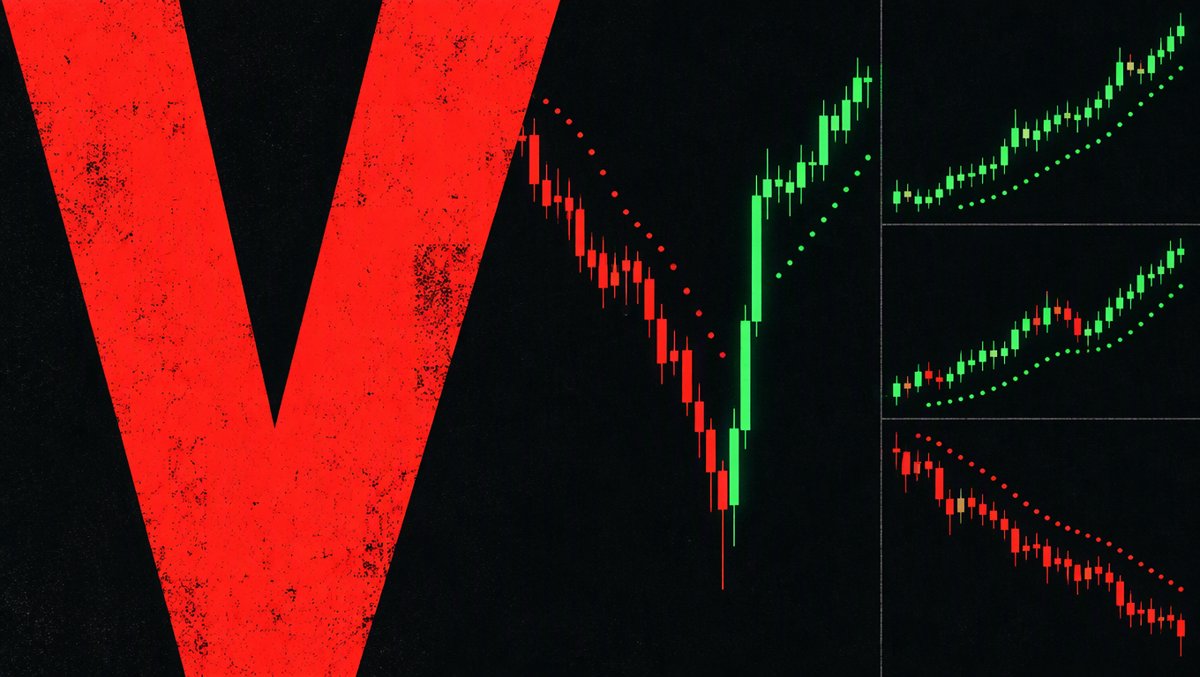
Then the SAR math did something almost rude. Despite that +4.06% close — one of the day's best moves in mega-cap tech — MU flipped Bearish on the daily chart. The reason is a rounding error with consequences: the stock's morning low of $1,011.42 undercut the prior bullish SAR support at $1,012.28 by exactly 86 cents. That's all it took. The dots rolled over, and now MU hangs a jaw-droppingly tight 1.90% below its new bearish flip line. One decent close above $1,108.72 and this flip never happened.
Data as of October 7, 2026, post-close (pulled ~4:16 PM ET) | SAR(0.02, 0.20) — matches Futu/Niuniu app
| Stock | Price | Change | SAR | Signal | Days | Flip Price | Flip % |
|---|---|---|---|---|---|---|---|
| NVDA 🟢 | $237.47 | −0.74% | $215.97 | BULLISH | Day 8 | $215.97 | −9.01% |
| MU 🔴🚨 | $1,088.00 | +4.06% | $1,108.72 | BEARISH | Day 1 | $1,108.72 | +1.90% |
| AMD 🟢 | $645.86 | −0.55% | $619.94 | BULLISH | Day 22 | $619.94 | −4.01% |
| INTC 🔴 | $113.12 | +0.55% | $126.59 | BEARISH | Day 3 | $126.59 | +11.96% |
| AVGO 🟢 | $376.51 | +0.19% | $343.01 | BULLISH | Day 12 | $343.01 | −8.90% |
Board status: 3 Bulls / 2 Bears — down from 4/1 on Monday. MU is the only change, and it's the strangest flip we've logged in weeks: a stock that closed up more than 4% while turning bearish.
Close: $237.47 | −0.74% | Flip at $215.97 (−9.01%)
NVDA gave back a little in a red tape, but its structure is the healthiest of the five: eight straight bullish sessions with the SAR trailing at $215.97 and a fat 9.01% cushion beneath. The catalyst flow was relentless — SpaceX is in talks with Apollo and a bank group to finance a $40 billion Nvidia GPU purchase via the investment-grade debt market (CNBC), Microsoft unveiled a $2,599 Surface Laptop Ultra built around an Nvidia AI chip that runs models locally (CNBC/Barron's), and Bloomberg reported Sequoia and Nvidia backing a $60 million robotics round in Mecka AI. Investopedia even ran the math on a $6 trillion market cap. When the AI trade is being questioned, NVDA's order book keeps answering.
Close: $1,088.00 | +4.06% | Flip-back at $1,108.72 (+1.90%) ⚡ NEAR-FLIP
Read this one twice. MU opened at $1,017.37 — down 2.70% — and by 10 a.m. had probed $1,011.42, a shade (86 cents!) under the bullish SAR support at $1,012.28. On a pure daily-candle SAR calculation, that's a breach: the dots flipped above price and landed at $1,108.72, the prior swing high. Then the stock did the most MU thing possible — it rallied 7.57% off the low to close at $1,088.00, up 4.06% on the day. The fundamental driver was real: D.A. Davidson's Gil Luria raised his target, arguing the stock is "ridiculously cheap" and could triple from here (MarketWatch), with the upcoming buyback adding fuel (Invezz). But the indicator doesn't care about narratives — it cares about closes. And here's the twist: MU needs just a 1.90% pop above $1,108.72 to flip back bullish. This is a Day-1 bear with a glass jaw. Whipsaw risk is extreme.
Close: $645.86 | −0.55% | Flip at $619.94 (−4.01%)
Twenty-two consecutive bullish days — the longest trend on the board — but the wire keeps tightening. The SAR rose from $610.29 to $619.94 and the cushion is now 4.01%, the thinnest among the bulls. AMD's fundamental print stays strong: HPE hit a record high Wednesday introducing four new servers built on AMD's latest EPYC processors (Invezz). Social sentiment (+18) is the coolest of the five — the crowd is debating valuation after the monster run rather than chasing. With a 22-day trend and a 4% wire, AMD is the board's watch-item: one bad tape and the senior bull becomes the flip story.
Close: $113.12 | +0.55% | Flip at $126.59 (+11.96%)
INTC snapped its three-day losing streak on Wednesday — barely — closing up 0.55% while the rest of the tape sagged. The catalyst was headline-driven: CEO Lip-Bu Tan told reporters Intel will continue its involvement with SpaceX's Terafab project, pushing INTC higher even as TSMC slid (Schwab Network). But the technical picture hasn't moved: this is Day 3 of the bearish signal, and the flip wall at $126.59 is 11.96% above the close — by far the tallest climb on the board. Sentiment (+18) is cautiously constructive ahead of the October 29 earnings report, with the foundry turnaround narrative fighting dilution worries from the $20B equity raise. INTC is green-tinted but structurally caged.
Close: $376.51 | +0.19% | Flip at $343.01 (−8.90%)
No drama, no headlines, no problem. AVGO inched higher for a second straight session, keeping a 12-day bullish trend intact with an 8.90% cushion — the second-fattest margin on the board. Its cousin in custom silicon, Marvell, held an investor day and laid out a $70–90 billion long-term revenue target — and the stock still fell ~2%, a reminder that the AI trade is being audited now, not just bought. AVGO's own sentiment (+28) leans bullish on AI infrastructure demand, tempered by China/regulatory overhang. The structure says the market is still paying up for custom-silicon exposure.
| Catalyst | Impact |
|---|---|
| D.A. Davidson raises MU target — "ridiculously cheap, could triple" | MU +4.06%, reclaimed most of Monday's air-pocket; buyback tailwind cited |
| SpaceX seeks $40B in debt (Apollo + banks) to buy Nvidia GPUs | NVDA demand narrative reinforced even as shares slipped 0.74% |
| Microsoft × Nvidia $2,599 Surface Laptop Ultra (RTX Spark-class AI chip) | Edge-AI theme; NVDA gets a PC-market foothold per Barron's |
| INTC CEO confirms continued SpaceX Terafab involvement | INTC +0.55% (snapped 3-day slide) while TSMC slid |
| HPE record high on four new AMD EPYC servers | AMD cushion held at 4.01% despite a red close |
| 30Y yield back at 2002 highs; 10Y quoted ~5.3% | Dow −0.66%, Russell −1.31%, KOSPI −1.98%; growth multiples under pressure |
| Marvell investor day: $70–90B long-term revenue target — stock still fell ~2% | "Show-me" tone creeping into AI infrastructure names |
| Q3 earnings season opens with ~30% YoY S&P 500 EPS growth expected | The bull case now runs through earnings, not just capex headlines |
Wednesday was a study in what a 2002-era long bond does to an equity market that had gotten used to the view from all-time highs. The 30-year yield's return to its highest level since 2002 — paired with a 10-year flirting with 5.3% — is doing exactly what rate shocks do: compressing multiples, punishing duration, and forcing the market to discriminate. The Dow's 341-point drop and the Russell's 1.31% slide tell you breadth was poor. International bourses confirmed it: Frankfurt −1.35%, Paris −1.22%, Seoul −1.98%.
But look at what held. The S&P 500 lost just 0.22% and the NASDAQ the same, with VIX at 15.06 — barely above sleep. That's not panic; that's rotation discipline. Q3 earnings season begins this week with analysts modeling roughly 30% year-over-year S&P 500 earnings growth, and the "show-me" bar is rising inside AI infrastructure too — Marvell raised its long-term outlook to $70–90 billion and still got sold. The market is no longer paying for the destination; it's auditing the toll road. Against that backdrop, an $40 billion debt-financed GPU order (SpaceX→Nvidia) and a $2,599 Nvidia-powered Microsoft laptop are the kind of demand receipts that keep the semi complex bid on red days.
The macro inflation picture isn't helping: the latest CPI print (334.131) puts inflation at +3.71% year-over-year and +0.40% month-over-month — sticky enough that every oil headline matters. With Hormuz flows only ~80% restored and U.S. crude stockpiles drawing 3.2 million barrels, the energy tail-risk to yields remains live. In this regime, SAR wires matter more than usual: when the macro tape is one headline from a risk-off impulse, the difference between a 4% cushion (AMD) and a 9% one (NVDA) is the difference between surviving the shakeout and becoming the shakeout.
Which brings us back to MU — today's paradox and tomorrow's hinge. A stock that flips bearish on an 86-cent overnight breach and then rips 7.57% off the low is telling you the algorithmic flip and the human flow are in open disagreement. The resolution comes at $1,108.72: a close above it and MU is a Day-1 bullish re-flip with momentum behind it; a rejection below it and the "distribution under the surface" crowd gets its exhibit A. Either way, this wire is the single most important level in the complex into Thursday's open.
By Stock King, Financial Analyst & Technical Writer at NXagents.net
📚 Educational Disclaimer
The Parabolic SAR (Stop and Reverse) is a trend-following indicator that places dots above or below price. Dots below price = Bullish (uptrend). Dots above price = Bearish (downtrend). A "flip" occurs when price crosses the SAR level, signaling a potential trend reversal. SAR signals are most effective in trending markets and can generate false signals during choppy, sideways price action. This analysis is for educational and informational purposes only. It does not constitute financial advice, investment recommendation, or solicitation to buy or sell any security. Past performance does not guarantee future results. Always conduct your own due diligence and consult a qualified financial advisor before making investment decisions.