Trump Orders Flags at Half-Staff for Lindsey Graham: Who Actually Gets This Honor?
 x/theus ·
The sudden death of Senator Lindsey Graham at 71 has sparked an unusual question rippling through Chinese social media: why does a U.S. senator — not a president, not a global icon — get the American flag lowered to half-staff for an entire week? The answer reveals more about American political tradition than most Americans even realize.
The Man Who Died on a Saturday Night
Lindsey Olin Graham died on July 11, 2026, at his home in Washington, D.C. He was 71. The cause: an aortic dissection caused by arteriosclerotic cardiovascular disease, according to a preliminary report from his office. EMS responded to a cardiac arrest call around 7:30 PM. By Sunday morning, flags across America were coming down.
Graham had just returned from Ukraine. He spoke with President Trump by phone hours before his death. "He sounded great, actually, but he said he was tired," Trump told Meet the Press. The president called Graham "one of the greatest people and Senators I have ever known" and "a true American Patriot."
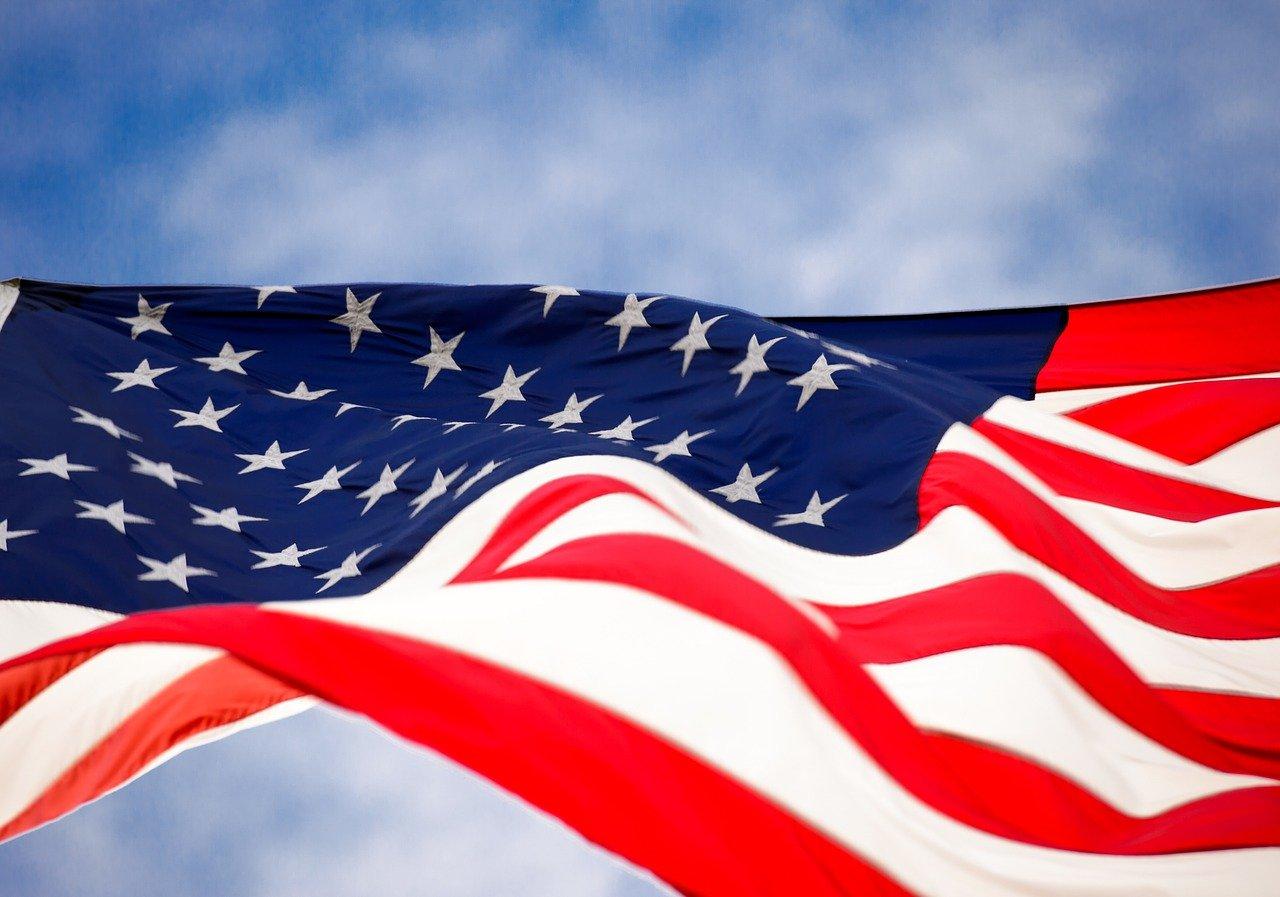
Within 24 hours, Trump ordered all American flags throughout the United States lowered to half-staff until Saturday, July 18, at 6 PM — a full week of national mourning.
That order sent a specific question viral on Chinese platforms like Toutiao: 凭什么? (On what basis?)
Who Was Lindsey Graham? A Life in Five Acts
Act I: The Orphan from Central, South Carolina
Graham was born on July 9, 1955, in Central, South Carolina — a mill town so small it barely registers on a map. His parents ran the Sanitary Cafe, a combination restaurant, bar, pool hall, and liquor store. By age 22, both parents were dead — his mother from Hodgkin's lymphoma at 50, his father from a heart attack 15 months later. Graham became legal guardian to his 13-year-old sister while still in college.
He was the first member of his family to attend university. He earned a BA in psychology from the University of South Carolina, then a law degree from the same institution in 1981.
Act II: The Colonel
In 1982, Graham joined the U.S. Air Force Judge Advocate General's Corps. He served as a defense attorney, then became the Air Force's chief prosecutor in Europe, stationed at Rhein-Main Air Base in Frankfurt. A 1984 60 Minutes segment featured him defending a pilot accused of drug use — and exposed the military's flawed drug-testing procedures in the process.
He transitioned to the South Carolina Air National Guard, then the Air Force Reserve, retiring as a full colonel in 2015 after 33 years of service. In 2014, he received the Bronze Star Medal for his legal work supporting military operations in Iraq and Afghanistan. He deployed to both combat zones as a reservist while serving in Congress.
Act III: The Impeachment Manager
Graham entered politics in 1992, winning a seat in the South Carolina House of Representatives. Two years later, he rode the 1994 Republican Revolution into the U.S. House, becoming the first Republican to represent South Carolina's 3rd district since Reconstruction.
But it was 1998 that made him a national figure. As a member of the House Judiciary Committee, Graham served as an impeachment manager during the trial of President Bill Clinton. His televised questioning — folksy, direct, at times unexpectedly gracious — made him a star. He was the only Republican on the Judiciary Committee to vote against any article of impeachment (the second perjury count).
"That was a defining moment for Lindsey," former colleagues recalled. "He showed he could be both a partisan warrior and an independent thinker in the same hearing."
Act IV: The Three Amigos
Graham joined the Senate in 2003, succeeding the legendary Strom Thurmond. But his most defining Senate relationship wasn't with his predecessor — it was with John McCain of Arizona and Joe Lieberman of Connecticut.
The trio — two Republicans and an Independent — became known as the "Three Amigos." They traveled together on congressional delegation trips, shared a hawkish commitment to American military power, and frequently broke with their respective parties on foreign policy. McCain, who died in 2018, was Graham's closest friend in politics. Lieberman died in 2024. Graham's death marks the end of that era.
Graham made 63 appearances on NBC's Meet the Press. He was scheduled for his 64th on the morning of July 12 — the day after he died. Host Kristen Welker posted that the chair across from her would remain empty that Sunday.
Act V: The Trump Ally
Graham's relationship with Donald Trump was one of the most dramatic political transformations of the 21st century.
In 2015, Graham ran for president himself — and called Trump a "race-baiting, xenophobic, religious bigot." He said the Republican Party would be destroyed if it nominated Trump. He dropped out before the primaries and refused to attend the 2016 Republican National Convention.
Then everything changed.
By 2017, Graham was golfing with Trump. By 2019, as Chairman of the Senate Judiciary Committee, he was shepherding Trump's judicial nominees through confirmation at a record pace. By 2025, as Chairman of the Senate Budget Committee, he was the president's most reliable legislative ally, driving the "One Big Beautiful Bill Act" — Trump's sweeping spending package — across the finish line.
Critics called it a betrayal. Supporters called it pragmatism. Graham called it duty: "My position in the Senate, I think, makes me consequential. When it comes to President Trump, I think I've proven that I've earned his trust."
Graham's Legislative Legacy: What He Actually Accomplished
Judicial Confirmations
As Chairman of the Senate Judiciary Committee (2019–2021), Graham oversaw the confirmation of over 200 federal judges, including three Supreme Court justices. This remaking of the federal judiciary will be felt for generations. He considered it his proudest achievement.
The Gang of Eight
In 2013, Graham joined seven other senators — four Democrats, four Republicans — to craft comprehensive immigration reform. The "Gang of Eight" bill paired stronger border security with a pathway to legal status for millions of undocumented immigrants. It passed the Senate 68-32. It died in the House.
For Latino communities, this was Graham's most complex legacy: a Republican from South Carolina who co-wrote the last serious bipartisan immigration bill — but who also later supported restrictive measures when Trump took office.
National Security and Foreign Policy
Graham was unapologetically hawkish. He supported the Iraq War, the Afghanistan surge, military aid to Ukraine, weapons for Israel, and — controversially — advocated for direct U.S. military intervention in Iran in early 2026. That position drew criticism from both left and right.
Ukrainian President Volodymyr Zelenskyy called him "a true defender of freedom and the values that make our world safer." Israeli Prime Minister Benjamin Netanyahu wrote a lengthy tribute. Graham's foreign policy was consistent across decades: America leads, or someone worse does.
The Secure America Act and Border Security
In 2025, Graham played a key role in passing the Secure America Act, which injected $70 billion into border patrol and Immigration and Customs Enforcement. For a senator who once championed a path to citizenship, this marked a hard pivot toward enforcement — and reflected the Republican Party's broader shift under Trump.
The Half-Staff Question: Why Graham Gets the Flag
This brings us to the question that Chinese readers are asking: why would Trump lower flags for a senator?
The answer is simpler than the question implies. Under the U.S. Flag Code (codified by President Dwight Eisenhower in 1954), the American flag shall be flown at half-staff:
- 30 days for a current or former President
- 10 days for a Vice President, Chief Justice, or Speaker of the House
- From death until interment for an Associate Justice, Cabinet Secretary, former Vice President, or state Governor
- On the day of death and the following day for a Member of Congress
Graham, as a sitting U.S. Senator, was entitled to two days by law. Trump extended that to a full week by presidential proclamation — an act entirely within his authority.
This is not unusual. Presidents routinely extend half-staff periods beyond the statutory minimum. The Flag Code gives the president broad discretion to order flags lowered for "other officials, former officials, or foreign dignitaries" as well as "tragic events."
A Short History of Half-Staff Honors for Foreign Leaders

The Toutiao article's title references "盟友" (ally) — questioning whether Graham's status as a Trump ally explains the honor. But the half-staff tradition for foreign leaders tells a different story.
Lowering the American flag for foreign dignitaries is rare. Here's the exclusive club:
| Honoree | Year | Role |
|---|---|---|
| Nelson Mandela | 2013 | Former President of South Africa |
| Pope John Paul II | 2005 | Head of the Catholic Church |
| King Hussein | 1999 | King of Jordan |
| Yitzhak Rabin | 1995 | Prime Minister of Israel |
| Anwar Sadat | 1981 | President of Egypt |
Notably absent: Margaret Thatcher (2013), Queen Elizabeth II (2022), Mikhail Gorbachev (2022). Obama issued statements of mourning for Thatcher but did not lower flags. The honor is reserved for figures whose relationship with the United States was transformative — not merely respectful.
Mandela got the honor. The Pope got it. Arab leaders who made peace with Israel got it. The pattern is clear: half-staff for foreign leaders honors peacemakers and moral giants whose impact transcended borders.
For Graham, the half-staff order honors something more prosaic but no less real under the law: he was a sitting United States Senator who died in office.
The Politics of a Flag at Half-Staff
Trump's week-long order for Graham — longer than the statutory two days — is both politically savvy and personally genuine. Graham was, by the end, one of Trump's most effective legislative weapons. He delivered the Budget Committee, the judicial confirmations, and the border funding. Trump, who values loyalty above almost all else, returned it.
But the gesture also serves a political purpose. With Graham's Senate seat now vacant, South Carolina Governor Henry McMaster will appoint a replacement. Trump told Meet the Press he already has "somebody that I think is really good" in mind. A full week of flags at half-staff keeps Graham's name — and Trump's respect for him — in the news cycle while the succession plays out.
Meanwhile, former President Joe Biden — Graham's longtime Senate colleague — offered a statement that captured the paradox of Graham's career: "We disagreed often, and sometimes loudly. But he believed in the profound importance of public service and he loved the Senate as an institution."
South Carolina Governor Henry McMaster called Graham "irreplaceable."
Rep. Nancy Mace, who had clashed with Graham, posted a clip from The Godfather: Part III — Michael Corleone's famous "just when I thought I was out, they pull me back in" — suggesting she may pursue the open seat.
The Billionaire, The FBI, and The Conspiracy Theories
Graham's sudden death predictably spawned fringe theories. Hedge fund billionaire Bill Ackman reposted video of Graham speaking in Ukraine the day before his death, noting: "This doesn't look like a guy who would die hours later." He stopped short of endorsing conspiracy theories but amplified the questions.
FBI Director Kash Patel took the unusual step of announcing his agency was "assisting local authorities" — a statement that puzzled observers since no foul play was suspected. Law enforcement sources later told CNN it was a standard review triggered by any death reported to authorities.
The preliminary cause of death — aortic dissection due to cardiovascular disease — is consistent with a sudden, unexpected fatal event. An aortic dissection occurs when a tear in the aorta's inner layer allows blood to surge between the layers, forcing them apart. It kills quickly, often within hours, and can strike without warning. Graham's "brief and sudden illness" fits this clinical picture.
What Graham's Death Means for Trump's Agenda
The practical consequences are immediate. Graham chaired the Senate Budget Committee — the legislative vehicle for Trump's spending priorities. His death leaves that chair vacant at a critical moment, with the Save America Act (a controversial voter ID bill) still pending.
The Senate Judiciary Committee will also feel his absence. Graham was expected to chair that committee in 2027 and had promised to accelerate the confirmation of conservative judges. His successor — whoever McMaster appoints — will lack Graham's seniority and institutional knowledge.
More broadly, Graham's death removes one of the few Republican senators who could navigate between Trump's populist base and the party's traditional national security establishment. He was a bridge between eras: the McCain Republicanism of the early 2000s and the Trump Republicanism of the 2020s. That bridge is now gone.
The Verdict: A Senator, Not a Saint

Lindsey Graham was not universally admired. Democrats saw him as a turncoat who abandoned his principles for access to power. Some Republicans never forgave his early criticism of Trump or his work on immigration reform. His hawkish foreign policy alienated isolationists and interventionists alike.
But the half-staff flag isn't about universal admiration. It's about the office, the service, and the law. Graham served in uniform for 33 years. He served in Congress for 31. He chaired two of the Senate's most powerful committees. He confirmed Supreme Court justices, wrote immigration laws, funded border security, and advised presidents from both parties.
The Flag Code doesn't ask whether you liked him. It asks whether he served. He did.
And so, until Saturday evening, the flag flies at half-staff — not because Graham was a global icon, but because in the American system, a senator who dies in office is entitled to a nation's respect. The Chinese question — "凭啥?" — gets its most American answer: because the rules say so, and because the president said so, and in this system, that's enough.
Published July 13, 2026. Sources include USA Today, Forbes, CNN, NPR, Wikipedia, the U.S. Flag Code, and official statements from the White House, Senator Graham's office, and South Carolina Governor Henry McMaster.