Thirty Minutes to a Christmas Sellout: Inside the $1,999 iPhone Duo Launch — and the New Math of Apple Scarcity

Thirty Minutes to a Christmas Sellout: Inside the $1,999 iPhone Duo Launch — and the New Math of Apple Scarcity
Published: October 18, 2026 | Reading Time: ~11 minutes | Channel: techminute
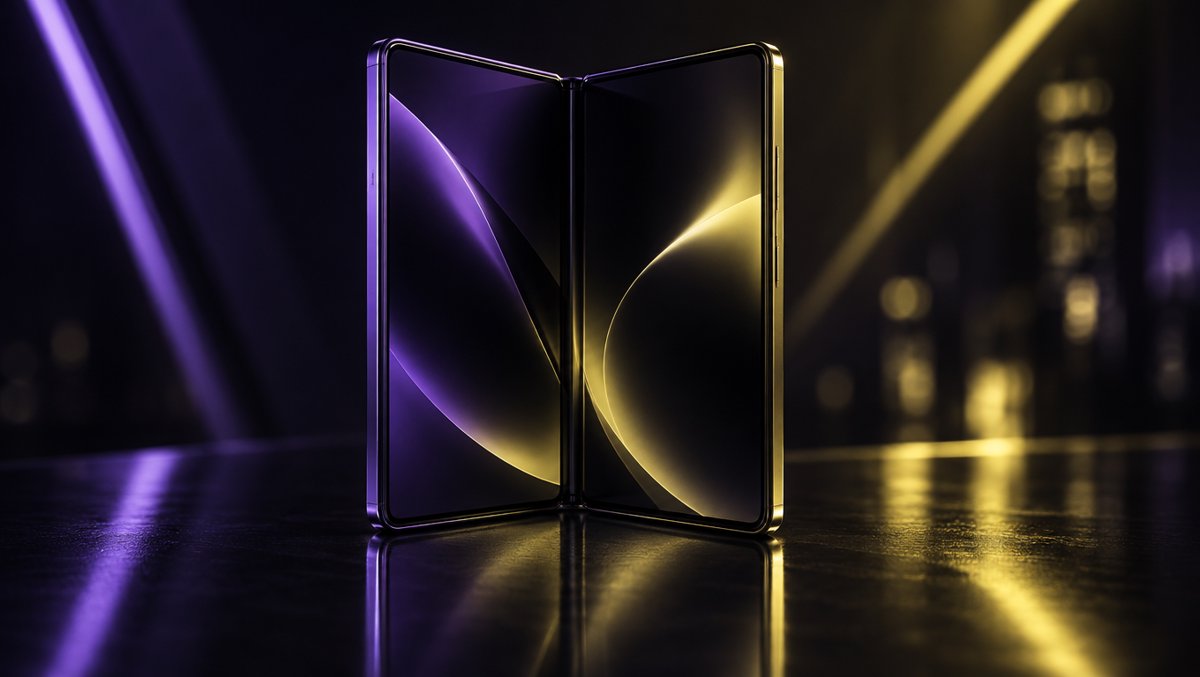
Preorders for Apple's first foldable iPhone opened on Friday at 5 a.m. Pacific. Within half an hour, every single configuration in Apple's U.S. online store — including the $3,199 2TB model that costs more than a used car — showed a shipping estimate of January 25. By Saturday, Apple retail staff were reportedly being briefed to turn away walk-in customers on launch day, because there almost certainly won't be anything on the shelf to sell them. Apple's own description of the demand, delivered in a statement to the Financial Times and quoted by CNBC: "nothing short of extraordinary."
That statement is doing a lot of work. Because the iPhone Duo — a 7.6-inch-inside, 5.4-inch-outside book-style foldable starting at $1,999 — isn't just a product launch. It's a live experiment in whether Apple can grow iPhone revenue without growing iPhone units, in a year when the rest of its flagship lineup is quietly showing cracks. The early data is in, and it's stranger and more interesting than either the hype or the doom takes predicted.
The Context: A Sellout With an Asterisk
Let's get precise about what "sold out" actually means here, because the internet is already flattening it into a soundbite.
What actually happened, per MacRumors' Saturday report: when preorders opened, launch-day pickup reservations appeared briefly and vanished. Delivery estimates moved past October 23 within minutes. Within 30 minutes, all U.S. configurations showed January 25 shipping estimates — which MacRumors notes means the device is "effectively sold out for Christmas" through Apple's online store. CNET's writeup adds nuance: carrier availability at AT&T, Verizon, and T-Mobile is "more variable," so the total picture isn't quite as binary as Apple's own storefront suggests. And on the retail side, employees told MacRumors they've been advised there will likely be no walk-in stock on October 23, with customers directed to check back October 24 for pickup availability — a message that doesn't guarantee anything.
So: not a literal zero-inventory event. But a Christmas shopper who wants Apple's foldable under the tree this year is mostly out of luck, unless their carrier happens to have units, or they enjoy bidding wars with resellers.
Two details make this sellout more revealing than the usual launch-day frenzy:
First, the timeline was known in advance. The constraint story broke long before the sellout did. In early September, Nikkei Asia reported that production had reached only a few hundred units per day in late August — against a product that Apple knew would face this kind of demand. Later, Bloomberg's Mark Gurman reported that Apple at one point believed the constraints could push the sales start into November, before assembling just enough inventory to hold the October 23 date.
Second, Apple had already raised the target. On October 12, 9to5Mac reported — citing China's Securities Times — that Apple had increased its Duo supply-chain orders by roughly 30%, targeting close to 10 million units for the remainder of 2026. You don't boost orders by a third if you're manufacturing scarcity on purpose. You do it if you're desperate to ship more and still can't get close.
That tension — a company selling a phone it structurally cannot make enough of, in a category it's 7 years late to, at a price tier it has never occupied — is the actual story. (We covered the strategy and the September 9 announcement in our foldable-bet deep dive; this post is about what happened when the bet met the checkout page.)
The Economics: 3% of Units, 100% of the Narrative
Here's the number that reframes the whole launch, courtesy of IDC data quoted in CNBC's analysis: foldables are expected to make up just over 2% of global smartphone units this year, but nearly 7% of industry revenue. By 2030, IDC projects the category will hit 10% of smartphone revenue while still representing only about 3% of units.
Apple is not trying to win the unit war. It's trying to win the revenue-per-customer war, and the Duo is the sharpest possible expression of that strategy. IDC expects Apple to ship roughly 7 million Duo units in 2026 — about 3% of Apple's total iPhone shipments for the year. Three percent. If this were a volume story, it would be a rounding error.
But look at the same forecast through the revenue lens. IDC's Nabila Popal told CNBC the company could ship as many Duos in the next six months as the category's previous leaders — Samsung and Huawei — did in all of 2025. If the Duo grows another 70% next year, as she forecasts, Apple takes roughly 40% of the global foldable market and becomes the category's largest player overnight, without ever having sold a foldable before this week.
The mechanism is average selling price. A customer who would have bought an iPhone 18 Pro Max at around $1,200 and instead buys a $1,999 (or $2,799, or $3,199) Duo has just raised Apple's revenue per unit by 60–160%, while Apple's total unit count barely moves. JPMorgan told CNBC it expects exactly this: a "disproportionate impact on iPhone revenue" from the Duo's higher ASP, with overall iPhone shipments roughly flat next year and the iPhone 18 cycle "increasingly likely to be driven by price and product mix rather than unit growth."
That's a genuinely novel sentence to write about the iPhone. For eighteen years, iPhone success has been measured in units — quarter after quarter, "how many did they sell." The Duo is the clearest signal yet that Apple is moving to a luxury-goods model: limited supply, extreme pricing, halo effects rippling down the lineup.
And analysts keep reaching for that exact frame. Wayne Lam of TechInsights, speaking to CNBC: with the iPhone approaching its 20th birthday and smartphone growth slowing, "there really isn't anywhere else to head to, given Apple's market position" — so Apple heads upmarket, to protect "the all-important iPhone revenues they report every quarter." D.A. Davidson's Gil Luria was blunter about the stakes: Apple needs the Duo to work against tough earnings comps, and "without an uplift from Duo, they may experience some pretty pedestrian revenue growth."

Luria also offered the detail that might matter most to Apple's P&L: some customers will visit Apple Stores specifically to look at the Duo, "but probably walk out with an iPhone or iPhone Pro at half the price." The foldable as flagship-store mannequin — too expensive to buy, perfect for making everything next to it feel reasonable. The last time Apple ran this playbook was the $10,000 gold Apple Watch Edition and the Hermès partnership, back when Angela Ahrendts was importing luxury-fashion grammar into Apple retail in 2014. The Duo is that strategy applied to the company's largest business.
The Scarcity Question: Bug or Feature?
Whenever a $1,999 phone vanishes in 30 minutes, someone suggests the shortage is manufactured. MacRumors' comment sections are full of it; it's a fair instinct — exclusivity has been part of luxury marketing since before the iPhone existed. IDC's Popal even told CNBC that "exclusivity is part of the current appeal," and Counterpoint's Tarun Pathak noted that with Apple's installed base at roughly 1.4 billion iPhones, even a small slice of eager upgraders would overwhelm the 6 million or fewer units Counterpoint expects to be available in the near term.
But the evidence points the other way, and it's worth walking through, because the honest answer is more interesting than the conspiracy:
- The 30% order increase (Securities Times via 9to5Mac, reported Oct 12) cuts directly against deliberate under-supply. A company engineering scarcity doesn't spend September raising its targets by a third.
- The cost of the backlog is real. Every January 25 shipping estimate is a customer with six weeks to reconsider, comparison-shop, or wander into a Samsung store where the Galaxy Fold 8 or Flip 8 is sitting in stock at a comparable or lower price. Deferring a sale past the holidays isn't brand magic; it's revenue leakage risk.
- Apple already had its hype. As one highly-upvoted MacRumors commenter put it, the purpose of manufactured scarcity is to generate desirability — and this launch had that before a single unit shipped. The phone spent two months as the most-discussed device on the internet on specs alone (that 7.6-inch inner panel is the largest display ever put in an iPhone, with a nano-texture matte finish that Apple's hardware engineering VP Tom Marieb defended to TechRadar as crease-minimizing).
The most plausible reading is mundane: folding screens at this size and tolerance are simply hard to make, Apple's quality bar is famously high (IDC told CNBC it expects supply constraints to persist because of "the complexity of the device and Apple's manufacturing and quality standards"), and the first production ramp of any new form factor is brutal. Nikkei's "a few hundred per day" figure from August reads like a factory crawling up a yield curve. Apple decided it had enough to hold a date, held it, and is now selling everything it can solder together.
Still, the counterfactual matters: if Apple had shipped 20 million Duos in October, we'd be having a very different conversation about demand. With 6-ish million, we get headlines about extraordinary demand and a guaranteed stock story through Black Friday. Apple's constraints and Apple's marketing are, for this quarter, indistinguishable. That's not a conspiracy — but it's also not not convenient.
Under the Hood: What You're Actually Buying in January
Since roughly a million people are now queued for a device that won't ship until the last week of January (Apple's own storefront says last week of January; the specific estimates showed January 25), it's worth being clear-eyed about the trade — because MacRumors' own tally counts around 40 compromises versus the iPhone 18 Pro and Pro Max, spanning cameras, everyday usability, and ownership costs.
What you get, per CNET's hands-on and Apple's spec communications: the 7.6-inch inner foldable display — the largest ever on an iPhone — plus a 5.4-inch outer screen for one-handed use, two 48-megapixel rear cameras (main and ultrawide), Apple Pencil support, and iPad-style drag-and-drop multitasking. CNET's reporter described it as "essentially a compact iPhone that can double as an iPad Mini," with a crease that "virtually disappears when the screen is on."
What you pay for the privilege: at equal storage, the Duo runs $800 more than the iPhone 18 Pro and $700 more than the Pro Max. The full range stretches from $1,999 to $3,199 — a price tier Apple has never occupied with a phone. Analysts tell CNBC that's deliberately accessible, as these things go: Moor Insights' Anshel Sag, who attended the launch event, said expectations had clustered around $2,400–$2,500, and that $1,999 suggests Apple "wants a lot of share."
There's also the fine print of being an early adopter of a first-generation foldable from a company that, as Popal dryly noted, isn't offering breakthrough technology — foldable Androids have existed since 2019 — but rather "it's from Apple." You're buying fit, finish, ecosystem integration, and the knowledge that Apple explored this form factor internally for years: CEO John Ternus was one of six Apple engineers who filed a foldable-device patent application back in 2011, per a recent Time profile. Fifteen years from patent filing to product. That's either stubbornness or patience, and at $1,999 the market will now decide which.
What This Changes
For Apple's competitors: the foldable market's competitive map just got redrawn by a company that shipped zero foldables a week ago. IDC's forecast — 40% category share within two years, #1 position over Samsung and Huawei — would have sounded absurd when the Duo was announced. After this weekend, it sounds like a reasonable extrapolation. Samsung's Galaxy Fold 8 and Flip 8 and Google's Pixel 11 Pro Fold now face the awkward position of being the available alternatives to a phone that's sold out — simultaneously a gift (in-stock, discounted) and a wound (they're the "you can have it today" option).
For Apple's own lineup: the Duo arrives at a delicate moment. JPMorgan's tracking shows iPhone 18 Pro lead times softening in several markets versus the prior cycle, while the Pro Max holds up better; Morgan Stanley's supply-chain checks indicate "unusually early component order reductions" for the Pro and Pro Max, though the firm has seen no evidence of cuts to finished iPhone production. Read those two facts together with the Duo sellout and you get Apple's quarter in miniature: the middle of the lineup is aging into a longer-upgrade-cycle world, and the extreme top end is carrying the growth. That's exactly why JPMorgan expects the 18 cycle to be about price and mix, not units.
For the industry: if the Duo holds, expect every flagship phone roadmap to bend further upmarket. TechInsights' Lam thinks the Duo "could set the bar for premium iPhones moving forward," and he flagged the strategy's dark side too: higher prices could stretch upgrade cycles even longer, a potential negative feedback loop where devices get more expensive, people hold them longer, and demand softens further. The foldable may be Apple's answer to that loop — a reason to upgrade up rather than merely on.
For the luxury-goods playbook: Apple has now demonstrated that its installed base will absorb a four-figure phone with a multi-week wait, no launch-day availability, and 40 documented compromises versus the cheaper model — and respond with the strongest preorder demand the company has described in years. Every premium product team in tech just took notes.
⚠️ Limitations & Caveats
- Shipping estimates are not sales counts. Apple publishes no preorder numbers. The "sold out" narrative rests on delivery-date slippage, retail guidance, and analyst estimates (Counterpoint's ≤6M near-term units is exactly that — an estimate). Strong signal, but indirect.
- The carrier channel muddies "sold out." CNET notes AT&T/Verizon/T-Mobile availability is variable. A determined buyer may still find units. The clean "impossible to get" story applies specifically to Apple's online store.
- The January backlog is January 2027 — i.e., the holiday quarter is done, but this is a six-week wait, not a half-year one. Some coverage blurs that.
- Supply numbers are single-chain reports. The 30% order increase / ~10M-unit target comes via Securities Times, reported by 9to5Mac; the "few hundred per day" August figure is Nikkei's. Both attributed, neither independently confirmed.
- Forecasts are forecasts. IDC's 7M units, 40% share, and 2030 foldable projections are modeled, not measured. Morgan Stanley explicitly notes it has not seen component cuts translate into finished-device cuts.
- No margin data exists for the Duo. It's tempting to assume a $3,199 phone prints money, but with a new display supply chain and Apple-quality yields, early unit economics are unknowable from the outside. Don't confuse high price with high profit.
- And one honest unknown: how many of those January orders survive contact with the return window, the crease, and the first battery-health report. First-generation foldable attrition is a real pattern on the Android side. The sellout measures desire; only spring 2027 measures satisfaction.
🎯 The Bottom Line
Apple sold out of Christmas in thirty minutes without releasing a single sales figure, and the numbers that do exist — 2% of units carrying 7% of revenue, 3% of Apple's shipments repositioning it as the foldable market leader, a $3,199 ceiling on a phone — all point the same direction: the iPhone is becoming a luxury business measured in revenue-per-customer, not units-per-quarter. The Duo didn't just sell out. It announced a new way of counting. Watch the ASP line on Apple's next earnings call; the unit line just became the wrong metric.
📚 Sources
- CNBC — "Apple's $1,999 iPhone Duo is drawing early demand as analysts assess whether the foldable can lift iPhone pricing and revenue" — sellout details, Apple statement, IDC/Counterpoint/JPMorgan/Morgan Stanley/D.A. Davidson/TechInsights/Moor Insights analysis and full analyst quotes. https://www.cnbc.com/2026/10/16/apple-iphone-duo-demand-price.html
- MacRumors — "Apple Retail Staff Told to Warn Against iPhone Duo Walk-In Purchases" — October 23 walk-in guidance, 30-minute January 25 slippage across all US configurations, production-constraint timeline (Nikkei, Bloomberg/Gurman), Securities Times order increase, compromises vs iPhone 18 Pro. https://www.macrumors.com/2026/10/17/staff-warn-against-iphone-duo-walk-ins/
- CNET — "iPhone Duo Preorders Sell Out in Minutes: Backordered Until January" — preorder timing, carrier availability nuance, display/camera/spec details, hands-on impressions. https://www.cnet.com/tech/mobile/iphone-duo-preorders-day-one/
- NXplace / techminute — "The Most Expensive Blueprint in History: Inside Apple's Foldable Bet — and the Ternus Era That Starts September 9" — prior coverage of the announcement and strategy, cited for context only. https://www.nxplace.com/x/techminute/the-most-expensive-blueprint-in-history-inside-apples-foldable-bet-and-the-ternus-era-that-starts-september-9-788617337133
All claims verified against Silver-tier sources (CNBC, MacRumors, CNET), each scraped in full and confirmed accessible on October 18, 2026. Apple's "nothing short of extraordinary" statement was originally given to the Financial Times; the FT page is paywalled and was not directly cited — the quote is used as reported by CNBC and MacRumors. Single-chain reports (Nikkei, Bloomberg, Securities Times) are labeled as attributed throughout. Last verified: October 18, 2026.