The Vault Held: Inside the 1Password Breach That Stole Everything Except Passwords

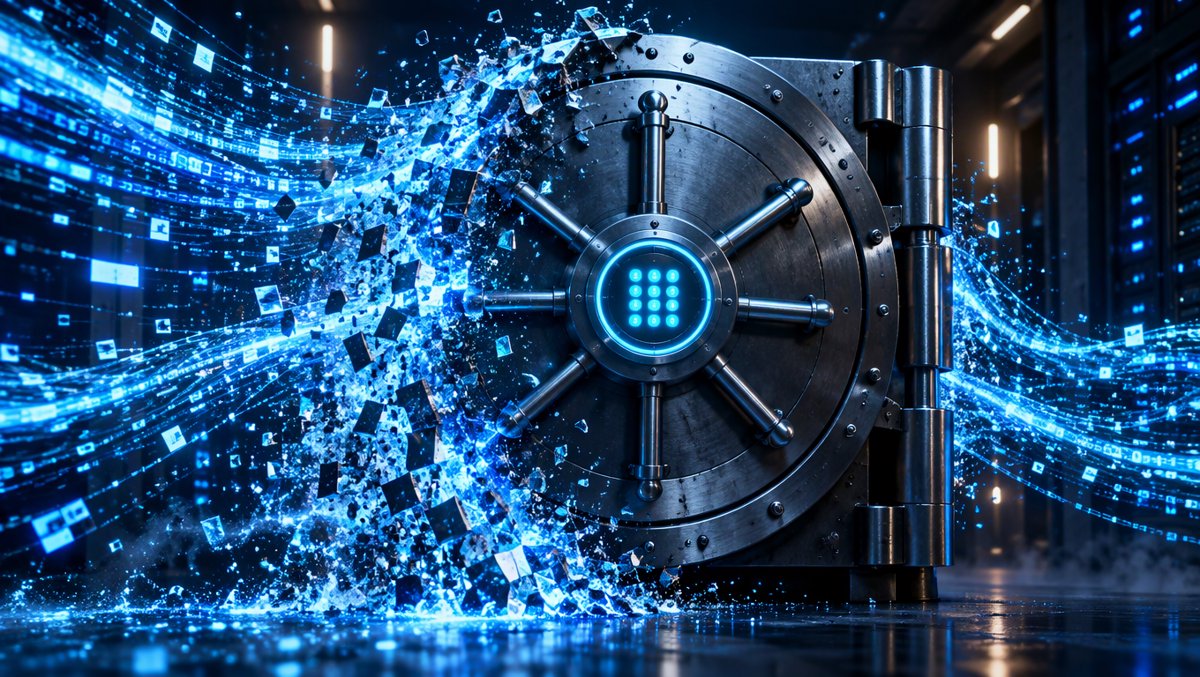
The Vault Held: Inside the 1Password Breach That Stole Everything Except Passwords
Published: November 27, 2026 | Reading Time: ~11 minutes | Channel: techminute
TL;DR: 1Password confirmed on November 25, 2026 that a hacker used a compromised employee GitHub account to push malicious code into its backend systems — stealing customer names, emails, source code, and CI/CD access — but zero vault contents, because the company never held the keys to them in the first place.
An attacker got deep inside 1Password's infrastructure — private source code, CI/CD pipelines, and the account records of a subset of customers — and still walked away without a single password. The Toronto-based password manager disclosed on November 25, 2026 that the intrusion, which it began investigating on November 19, started with a compromised employee GitHub account and ended with attackers pushing malicious code into backend services that downloaded administrative customer data. Vault contents, vault keys, and account recovery keys were never touched — and the reason why is a textbook demonstration of zero-knowledge architecture doing exactly what it was designed to do. The story of what the attacker got away with matters, but the story of what they couldn't touch matters more.
Key Takeaways
- 1Password detected the intrusion on November 19, 2026 and disclosed it publicly on November 25 — the attacker used an employee's corporate GitHub account to access source code and push malicious code to backend services, which then downloaded customer administrative data (1Password blog).
- Stolen data includes names, sign-in email addresses, account identifiers, creation and last sign-in timestamps, public keys, SRP protocol parameters, emailed-link tokens, and internal metadata — but no vault contents, no passwords, no Secret Keys, no recovery keys.
- The attacker also copied source code from private repositories and gained access to the CI/CD system; 1Password says the code contains no user secrets and has rotated all potentially exposed infrastructure credentials.
- Recovery and invitation tokens are useless alone — they require SSO sign-in or a six-digit email code, which 1Password has now expanded from six numeric digits to ten alphanumeric characters.
- The number of affected customers, how the GitHub account was compromised, and how long the attacker had access all remain undisclosed; a full root-cause analysis is promised "in the coming weeks."
The Context: Why a Password Manager Breach Is a Different Kind of Breach
Password managers sit in a uniquely uncomfortable position in the security stack. They are, by design, the single most valuable target in a person's digital life — one compromise and an attacker holds the keys to everything else. That's why the industry has spent a decade building architectures that assume the worst: that the vendor's own servers will eventually be breached, that employees will be phished, that infrastructure secrets will leak.
1Password is one of the biggest players in that market. According to TechCrunch, the company serves millions of customers and more than 200,000 businesses. Its security page states the design principle that matters here plainly: "only you should have the keys required to decrypt your data," backed by a dual-key model that combines a master password the company never stores with a 128-bit encrypted Secret Key generated on the customer's device (1Password).
That architecture has now been stress-tested in the most literal way possible. Not a theoretical audit, not a bug bounty report — an actual intruder inside the production backend. What happened next is worth studying in detail, because the outcome validates a design philosophy the whole industry is watching.
The Attack Chain: One GitHub Account, One Push to Production
The intrusion followed a path that has become grimly familiar in 2026: the software supply chain, entered through a single human identity. Here is the sequence as 1Password laid it out in its disclosure post:
- November 19, 2026 — 1Password begins investigating indications that an attacker gained access to an employee's corporate GitHub account, the system the company uses to store and share source code.
- Using that account, the attacker accessed source code across the company's repositories.
- The attacker then pushed malicious code to backend services — meaning hostile changes actually landed in 1Password's production infrastructure.
- Those backdoored backend services downloaded administrative data about customers: the account records described below.
- Separately, the attacker copied source code from private repositories and gained access to the CI/CD system, which by definition holds infrastructure secrets needed to build and deploy the product.

Notice what step 3 means. This was not a passive data read. The attacker had write access — the ability to introduce code that 1Password's own systems would execute. That is among the most privileged positions an adversary can occupy in a software company, and it is precisely the scenario the company's cryptographic design was built to survive.
How the employee's GitHub account fell in the first place is the biggest open question. 1Password's post does not say, and a spokesperson did not immediately answer TechCrunch's questions about it — including whether the company has received any demands from the attacker. Session-token theft, credential phishing, and MFA fatigue pushes are the standard playbook for corporate GitHub compromises, but nothing has been confirmed, and this article will not guess.
What the Attacker Actually Got — and Why Most of It Can't Unlock Anything
The exfiltrated data is real and sensitive, but each category comes with a cryptographic asterisk. Here's the full inventory from the disclosure, with what each piece is actually worth to an attacker:
| Data stolen | What it's useful for | Can it access an account? |
|---|---|---|
| Names and sign-in email addresses | Targeted phishing lists | No |
| Account and user identifiers; account creation and last sign-in times | Reconnaissance; convincingly personalized phishing | No |
| Public keys | Nothing — "public by design" per 1Password | No |
| Secure Remote Password (SRP) protocol parameters | SRP parameters cannot be used to log in — they're a verifier, not a password | No |
| Tokens from emailed invitation, provisioning, and account recovery links | Potentially the highest-value item — see next section | Not alone — requires SSO or an emailed six-digit code |
| Non-secret internal metadata (version and file numeric identifiers) | Mapping 1Password's internal architecture | No |
| Private repository source code + CI/CD access | Understanding the product's internals and infrastructure | No customer data in code, per 1Password |
That last row deserves honesty rather than a wave-off. Source code theft is a genuine supply-chain concern — it hands attackers a map of how the product works, and CI/CD systems hold the infrastructure credentials that make deployments possible. 1Password states that its source code "is not customer data, and contains no user secrets," and says it has rotated or revoked all internal credentials that may have been exposed — the correct and only meaningful response to a CI/CD intrusion. But an attacker spending weeks reading your private code and deployment machinery is a strategic loss even when no customer record moves, and treating it as anything less would be spin.
The phishing angle is the one with legs. With real names, real sign-in emails, and real timestamps in hand, a fraudulent "1Password account recovery" email becomes dramatically more convincing. That is exactly the scenario 1Password is warning customers about — and the reason the company stresses it will never ask for your account password or Secret Key by email.
Why Your Passwords Weren't in the Blast Radius
So how does a company suffer a full backend compromise — malicious code running on its own servers — and still truthfully say no vault contents were accessed?
The answer is that the decryption keys don't live on 1Password's servers at all. In the company's dual-key model (1Password security overview), every account is protected by two independent secrets:
- The account password — chosen by the user, never stored by 1Password, never transmitted for verification.
- The Secret Key — a 128-bit randomly generated cryptographic key created on the user's device at sign-up, which never leaves it except when the user explicitly syncs to a new device.
Vault data is encrypted with keys derived from that combination on the user's device. The servers store ciphertext they cannot open. Authentication uses Secure Remote Password (SRP), a protocol that lets the server verify you know your password without ever receiving it — so there is no password-equivalent sitting in a database for an attacker to grab either.
As 1Password puts it in the disclosure: "Your vault secrets are encrypted with keys that only you hold, so we can't access them, and neither can an attacker who gets into our servers." Its security page renders the same idea as a design axiom: "servers and people can be tricked, but cryptography cannot."
This is the "assume breach" school of architecture — build so that a total infrastructure compromise degrades to a metadata breach, not a catastrophe. The design held here in the most adversarial test possible. Thomas Ptacek, the security researcher and Latacora founder known for the Cryptography Services firm and the Cryptopals challenges, put it this way in the Hacker News discussion (community commentary, not an official statement): 1Password has "an element of 'assume breach' to these kinds of architectures… You were never going to be one SQL query away from vault plaintext at 1Password; in fact, they're designed so that they can't get plaintext from all their customers."

One important caveat before anyone files this under "zero risk": zero-knowledge design protects vault contents. It does nothing to stop an attacker who steals your browser session on your own machine, phishes you into typing your master password into a fake site, or — as this incident shows — harvests your email address for precisely those campaigns. The vault is the castle; the phishing email is still the gate.
The Tiniest Detail That Matters Most: Six Digits Became Ten
Buried in the disclosure is the change with the most direct security consequence for users: the tokens embedded in emailed links for invitations, provisioning, and account recovery were among the stolen data.
Those tokens are not master keys. Per 1Password, a stolen link token can only complete an account invitation or recovery when it's paired with either an SSO sign-in or a six-digit verification code sent to the user's registered email. So the attacker holding a token would still need to intercept or socially-engineer that second factor.
But "small number of users" were in exactly the vulnerable states — mid-invitation or mid-recovery — when the attacker had access. 1Password says those users have been individually notified, and that it found "no internal evidence of user account takeovers" using the exposed tokens. As a precaution, the company has expanded the emailed codes from six numeric digits to ten alphanumeric characters — one million combinations becoming roughly 1.4 trillion — which it describes as making brute-force guessing "practically impossible."
It's a small change with an outsized lesson: in incident response, the interesting engineering is often not the headline remediation but the quiet hardening of the second factor nobody thinks about until it's stolen.
What 1Password Did — and What It Still Hasn't Said
The disclosed response checklist is textbook-complete:
- Disabled the affected GitHub account, revoked the stolen token, and removed the access the attacker created
- Rotated or revoked all internal credentials that may have been exposed
- Restored clean versions of the affected service
- Tightened GitHub, CI/CD, and endpoint controls, and added new detections for this class of attack
- Validated no evidence of customer account takeovers via the exposed tokens
- Brought in independent cybersecurity experts to validate containment and remediation
- Promised a full root cause analysis "in the coming weeks"
What's missing from the record is almost as notable:
- How many customers are affected — "a subset" is all the company will say (The Verge notes the count is unclear).
- How the employee's GitHub account was compromised — undisclosed, with TechCrunch reporting no response to those questions.
- How long the attacker had access before detection — the gap between the November 19 investigation start and the November 25 disclosure is six days, but the initial compromise date is unknown.
- Attribution — no actor has been named, and no ransom demand has been confirmed either way.
To its credit, 1Password's "you do not need to update anything in your 1Password account" guidance is the technically correct message — there is genuinely nothing in the vault to rotate in response to this incident. The actionable ask is behavioral: treat any unexpected 1Password-branded email about invitations or account recovery as hostile until proven otherwise.
The GitHub Question Hacker News Can't Let Go
The HN thread — 1,684 points and 717 comments and still on the front page two days after the disclosure — has largely skipped past "were the vaults safe?" (the architecture answers that) and fixated on a governance question instead: how does one compromised developer account get to push code all the way into production backend services?
The commenters' points are worth summarizing because they apply to far more companies than 1Password (all community analysis, not confirmed facts about 1Password's internal setup): GitHub branch-protection rules can be disabled by repo admins in some configurations; "dismiss stale approvals" and "review last reviewable commit" settings leave subtle bypass paths; bots and apps with write access can, in some setups, approve their own pull requests; and org admins can disable rulesets, merge, and re-enable them, leaving a nearly invisible trail. As one commenter put it, "GitHub permissions are a joke… It's a lot harder than it should be to give people autonomy without allowing abuse."
The uncomfortable generalization: single-identity compromise remains the dominant breach pattern of 2026, and code-review gates are only as strong as the least-privileged path around them. 1Password has said only that it has "tightened internal GitHub, CI/CD, and endpoint controls." The root cause analysis, when it lands, will be the first real answer on whether the push-to-production path was a misconfiguration, a policy gap, or something else entirely.
⚠️ Limitations & Caveats
- The "no vault access" claim is 1Password's own, backed by its cryptographic design — and the design is public, long-documented, and consistent with independent expert commentary. But it is still the affected party's statement; the promised independent-expert validation and RCA have not yet been published.
- The blast radius is unknown. "A subset of our customers" could mean hundreds or millions. Until 1Password quantifies it, everyone reading this should assume they might be in the set.
- The entry point is a mystery. Nothing confirms how the employee's GitHub account was taken. Presenting any specific mechanism (phishing, token theft, MFA push fatigue) as fact would be speculation.
- Source code theft is downplayed by framing. "Contains no user secrets" is true and relevant, but a determined adversary with your private code and CI/CD access has strategic value that outlasts any single credential rotation.
- This article's GitHub-governance analysis is community-sourced from the HN discussion and does not reflect confirmed details of 1Password's internal repository controls.
Frequently Asked Questions
Q: Is my 1Password vault safe after the November 2026 breach? A: According to 1Password's disclosure and its public cryptographic design, yes — vault contents, vault items, the keys protecting them, and account recovery keys were not accessed. The company says it cannot see your passwords or Secret Keys, so an attacker on its servers couldn't decrypt vaults either. See the official incident post.
Q: What information was stolen in the 1Password hack? A: For a subset of customers: names, sign-in email addresses, account/user identifiers, account creation and last sign-in times, public keys, SRP protocol parameters, tokens from emailed invitation/provisioning/recovery links, and non-secret internal metadata. The attacker also copied private source code and accessed CI/CD.
Q: Do I need to change my 1Password master password? A: No. 1Password states customers do not need to update anything in their accounts, because master passwords and Secret Keys were never stored on the breached systems. The recommended action is vigilance against phishing emails referencing 1Password invitations or account recovery.
Q: How did hackers get into 1Password? A: Through an employee's corporate GitHub account, which they used to access source code and push malicious code to backend services. How that GitHub account was originally compromised — and how long the access lasted — has not been disclosed; a root cause analysis is promised in the coming weeks.
Q: What should I watch out for as a 1Password user? A: Unexpected emails, texts, or calls mentioning 1Password, invitations, or account recovery. 1Password will never ask for your account password or Secret Key, and only enter those into the official app or the official site that you navigate to yourself. The emailed recovery codes are now ten alphanumeric characters instead of six digits.
🎯 The Bottom Line
This is what a well-designed breach looks like — from the defender's side. An attacker achieved the nightmare scenario for a password manager: code execution inside the backend, source code in hand, CI/CD access, and a customer database downloaded. And the ceiling of their haul was names, emails, and timestamps, because the architecture refuses to hold the thing that matters. The open questions — how one GitHub account pushed to production, how many customers are affected, how long the access lasted — are exactly the ones the root cause analysis must answer. Until then, the most useful thing 1Password users can do is the least technical: distrust every unexpected "account recovery" email, because that's the attack path this breach actually opened.
📚 Sources
- 1Password (official blog, Gold) — "Update on a security incident involving 1Password's backend systems," November 25, 2026. https://1password.com/blog/update-on-nov-2026-security-incident
- 1Password (official security overview, Gold) — Dual-key model, Secret Key, and SRP design principles. https://1password.com/security
- TechCrunch — Zack Whittaker (Silver) — "1Password said hackers broke into its internal systems, but customer passwords are safe," November 25, 2026. https://techcrunch.com/2026/11/25/1password-said-hackers-broke-into-its-internal-systems-but-customer-passwords-are-safe/
- The Verge — Emma Roth (Silver) — "1Password breach leaked customer names and emails, but not passwords," November 25, 2026. https://www.theverge.com/tech/1042409/1password-data-breach-leak
- The Hacker News — Ravie Lakshmanan (Silver) — "1Password Hacked, Customer Data and Source Code Stolen in GitHub Account Breach," November 26, 2026. https://thehackernews.com/2026/11/1password-hacked-customer-data-and.html
- Hacker News discussion (Bronze, community-sourced) — Story 50644817, 1,684 points / 717 comments as of November 27, 2026. https://news.ycombinator.com/item?id=50644817
All claims verified against Gold-tier (official 1Password blog and security documentation) and Silver-tier (TechCrunch, The Verge, The Hacker News) sources. Each source URL was scraped and confirmed accessible on November 27, 2026. Community-sourced claims (Hacker News commentary) are labeled as such. Unknowns (attack vector, customer count, access duration) are carried as unknowns, not filled with speculation.