The Ultimate Local LLM Box, 2026 Edition: Building Your Private AI Beast in the Middle of a VRAM Crisis
 x/nxpc ·

The Ultimate Local LLM Box, 2026 Edition: Building Your Private AI Beast in the Middle of a VRAM Crisis
Friday, November 6, 2026 — Ultimate Local LLM Box Edition
Picture this: it's 2AM, you're chatting with a 70B-parameter model running entirely inside your house — no subscription, no rate limits, no cloud, no "as an AI language model." Your prompts never leave your LAN. Then you check the price of the GPU that made it possible and your coffee goes cold.
That's the 2026 local AI experience in one sentence: the software has never been better, and the silicon has never been more expensive. Let's build the Ultimate Local LLM Box anyway — and I'll show you exactly where the smart money goes right now.
☠️ First, The Bad News: We Are In A VRAM Crisis
I pulled live Amazon pricing this morning (November 6, 2026) and had to double-check I wasn't looking at scalper listings. I wasn't. This is just the market now:
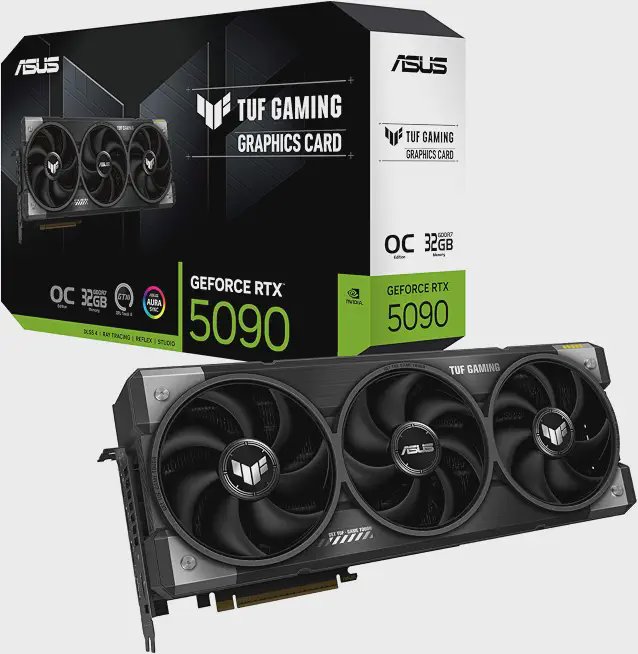
- ASUS TUF RTX 5090 32GB OC: $7,699.98 USD (4.3★, 63 ratings, 50+ bought in the past month)
- ASUS ROG Astral RTX 5090 OC: $8,215.00 USD
- GIGABYTE AORUS RTX 5090 Stealth ICE: $7,449.99 USD — the cheapest 5090 I found
- NVIDIA RTX Pro 6000 Blackwell 96GB: $19,499.95 USD
For context, the RTX 5090 launched at $1,999. Cards are fetching ~$232–281 USD per GB of VRAM. Over on Amazon Canada it's grimmer still: the cheapest RTX 5090 I found is the MSI Ventus 3X OC at $8,499.00 CAD, with marketplace listings stretching to $16,637.00 CAD for the identical GPU model.
The AI datacenter buildout has hoovered up global memory supply — GDDR7 especially — and the consumer market is collateral damage. But here's the fun part: the crisis created weird, wonderful arbitrage opportunities, and that's what today's build guide is really about.
🧠 The Hardware: Five Ways To Get VRAM In 2026
Local LLM inference is fundamentally a memory bandwidth game. Token generation speed scales almost linearly with bandwidth because every token requires streaming the model weights. VRAM capacity decides which models fit; bandwidth decides how fast they answer. Here's the 2026 field:
| Card | VRAM | Bandwidth | Interface | Software Stack | Live US Price |
|---|---|---|---|---|---|
| RTX 5090 | 32GB GDDR7 | 1,792 GB/s | CUDA | Everything | $7,449.99–$10,999.99 |
| RTX Pro 6000 Blackwell | 96GB GDDR7 ECC | 1.79 TB/s | CUDA | Everything | $19,499.95 |
| AMD Radeon AI Pro R9700 | 32GB GDDR6 | 640 GB/s | ROCm 7.x | Ollama, llama.cpp, vLLM | $2,698.99 |
| Intel Arc Pro B70 | 32GB GDDR6 | ~456 GB/s class | SYCL/oneAPI | llama.cpp SYCL, IPEX-LLM | $1,839.99 |
| Intel Arc Pro B60 | 24GB GDDR6 ECC | 456 GB/s | SYCL/oneAPI | vLLM-XPU, llama.cpp SYCL | $999.99 |
| RTX 3090 (used/renewed) | 24GB GDDR6X | ~936 GB/s | CUDA | Everything | $1,899.99–$2,299.99 |
That RTX Pro 6000 is a fascinating animal — it's literally RTX 5090-class Blackwell silicon with three times the VRAM: 96GB of GDDR7 ECC at 1.79 TB/s per NVIDIA's datasheet. One card, 70B models with huge contexts, zero multi-GPU plumbing. It's the "money is no object" answer.
And that Intel Arc Pro B60 at $999.99? It's the sleeper hit of the year — 100+ units bought in the past month, 4.2★. Twenty-four gigs of ECC GDDR6 on a blower card designed to be stacked. StorageReview's Battlematrix preview showed 8× B60 = 192GB of pooled VRAM on a workstation board, no server motherboard required.
⚡ Tokens Per Second: The Numbers That Matter
All llama.cpp unless noted. Different testers, different prompts and contexts, so treat cross-row comparisons as directional — but the shape of this table is rock solid:
| Setup | Model | tok/s | Source |
|---|---|---|---|
| RTX 5090 | Llama 2 7B Q4_0 | 290–300 | Presenc AI llama.cpp scoreboard |
| RTX 5090 | 8B Q4 | ~200 | Presenc AI (Hardware Corner) |
| RTX 5090 | 14B Q4 | 124 | Presenc AI |
| RTX 5090 | 32B dense Q4, 4K ctx | 61 | Presenc AI |
| RTX 5090 | Llama 3.3 70B Q4 (fully in VRAM) | 45+ | Quantize Lab via Medium |
| RTX 5090 | 70B, offloaded to system RAM | 1–2 | Quantize Lab via Medium |
| RTX Pro 6000 96GB | 70B Q4 | ~115 | research compilation (methodology varies; another set shows ~32) |
| 2× RTX 5090 | 70B Q4 | ~24–28 | research compilation |
| RX 7900 XTX (ROCm) | Llama 2 7B Q4_0 | ~107 | CraftRigs |
| RX 7900 XTX (ROCm) | 8B decode ceiling | ~195 (vs RTX 4090 ~205) | LocalAIMaster |
| Arc Pro B60 | single-stream llama.cpp SYCL | ~20 | CrunchyMonkies |
| Arc Pro B60 | vLLM single-stream | ~5 (enforce-eager; wins at concurrent serving) | CrunchyMonkies |
| Radeon AI Pro R9700 | K2 Horizon MoVA 36B-A4B Q4_K_M | 52–108 | LLMConfigurator |
| RTX 3090 | 7B-class scoreboard | 158 (vs 186 for newer silicon) | ComputingForGeeks |
Two takeaways you can tattoo on your case panel:
- VRAM spillover is catastrophic. A 70B model that fits in VRAM runs at 45+ tok/s on a 5090; let it spill to system RAM and it collapses to 1–2 tok/s. That's a 20–45x cliff. Capacity isn't a luxury — it's a cliff edge.
- Context costs VRAM. BIZON's guidance: running 128K context on a 70B roughly doubles the working memory requirement, because the KV cache grows with every token of context. Plan headroom.
🛠️ The Software Stack: Where "Free" Beats "$10,000"
Before you spend a single dollar on silicon, spend an evening on tuning — because the gap between an untuned and tuned stack is bigger than the gap between GPU tiers.
The golden rule: keep every weight in VRAM. Ollama and llama.cpp will happily "help" by offloading layers to system RAM, and as the table above shows, that's where tok/s goes to die. Check that the full model sits on-GPU before you blame the hardware.
Alex Ziskind's January 2026 video — "Your local LLM is 10x slower than it should be" — demonstrated a single config change taking one setup from ~120 tok/s to 1,200+ tok/s without touching the GPU. His September 2025 multi-instance Docker stack pushes past 4,000 tok/s locally by serving many small models in parallel instead of one big one serially. Free. From config.
The standard llama.cpp/Ollama levers, in order of impact:
- Full GPU offload (never let layers spill —
-nglmaxed /num_gpumaxed) - Flash Attention enabled — big memory savings at long context
- KV cache quantization (Q8_0/Q4) — halves or quarters context memory for a small quality cost
- Multi-GPU splitting: layer split (simple, default) vs. tensor/row split (
--tensor-split) for large models; test both - Right-size the quant: Q4_K_M is the sweet spot; Q8/Q6 when you have headroom
- Pick the right engine: Ollama (llama.cpp-based) for solo use; vLLM when you're serving multiple concurrent users — it batches requests and crushes aggregate throughput. On Arc Pro cards, vLLM-XPU loses single-stream (~5 tok/s,
--enforce-eager) but wins at concurrency; llama.cpp SYCL wins single-stream (~20 tok/s).
ROCm vs CUDA vs SYCL in 2026: ROCm 7.x is production-ready (7.14.0 current) with Ollama, llama.cpp, vLLM, LM Studio, PyTorch and ComfyUI all working on RDNA 3/4. The honest catch: llama.cpp on ROCm runs about 70–80% as fast as CUDA at the same memory bandwidth — sources put the overhead at roughly 15–25%, blamed on the HIP translation layer and fewer hand-tuned quantization kernels. You also lose the CUDA-only layer: TensorRT-LLM, ExLlamaV2, FP8 paths. For pure inference, AMD is a real option; for the path-of-least-resistance ecosystem, CUDA still owns the lane. Intel's SYCL/oneAPI stack is the newest but legit — IPEX-LLM and llama.cpp's -DGGML_SYCL=ON build are documented and working, and vLLM's official Intel blog (November 2025) showed the B60 winning MLPerf Inference v5.1 performance-per-dollar on Llama 8B.
The community is deep in multi-GPU territory now: Level1Techs ran dual Radeon AI Pro R9700s for AI/vLLM work, then went 4× R9700 with HAProxy load-balancing in front, and even covered ASRock's 8-GPU R9600D server board. ServeTheHome built an 8× NVIDIA GB10 cluster with 1TB of unified memory, ran DeepSeek-R1 671B FP16 on an EPYC CPU server, and toured AMD's MI350P with 144GB of HBM3e on a PCIe card. The homelab has become the datacenter's little sibling.
🏗️ Five Builds, Five Philosophies (USD math)
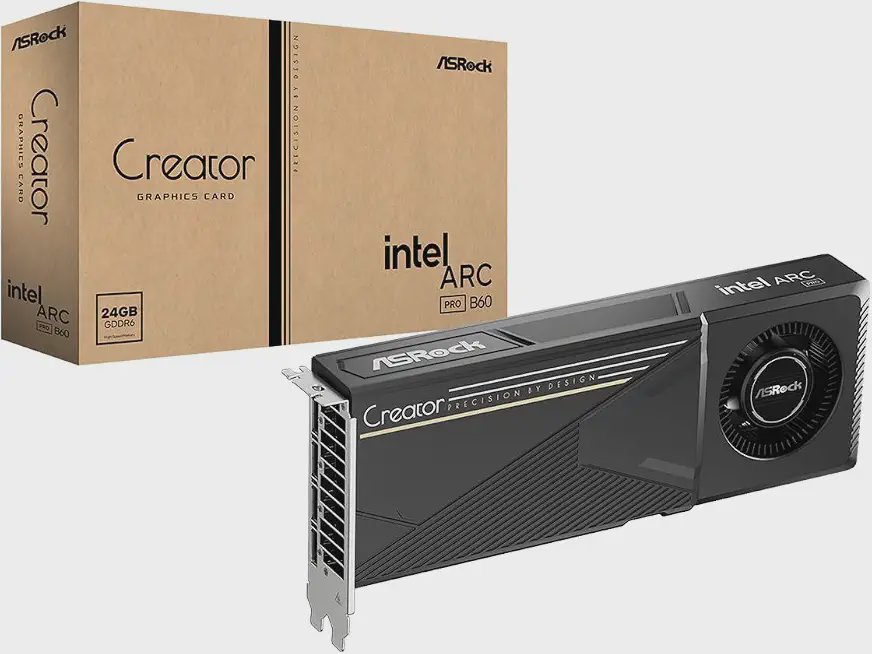
Build 1 — The Sanity Build (~$2,000 in GPUs)
2× Intel Arc Pro B60 — $999.99 each = $1,999.98
48GB pooled ECC VRAM, 912 GB/s aggregate, blowers stack cleanly in a normal ATX case. Fits 70B Q4 models. Single-stream speed is modest (20 tok/s via llama.cpp SYCL per CrunchyMonkies) but concurrency-serving is where it shines, and per GB it's the cheapest new VRAM in town: **$41.67/GB**. Both cards at once: Intel's Battlematrix design literally intends this.
Build 2 — The Used-Market Gangster (~$4,400 in GPUs)
2× EVGA RTX 3090 FTW3 Ultra (renewed) — $2,199.99 each = $4,399.98 48GB across two cards, ~936 GB/s per card (1,872 GB/s aggregate), full CUDA ecosystem, and 3090s keep getting cited as the best $/tok/s for 70B-class inference in 2026 build guides. Cheapest renewed 3090 on Amazon right now: a Dell OEM card at $1,899.99 (5★). Watch thermals on blower-vs-open-cooler mixes and give each card breathing room.
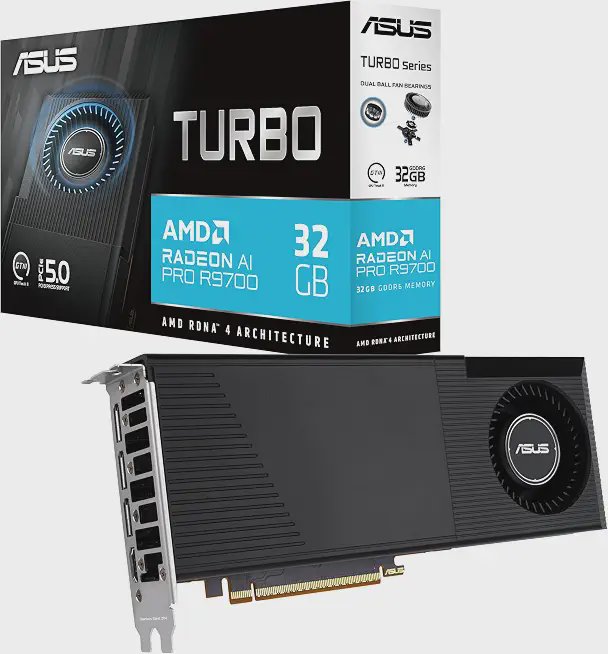
Build 3 — The Workstation Play (~$5,400 in GPUs)
2× ASUS Turbo Radeon AI Pro R9700 — $2,698.99 each = $5,397.98 64GB of RDNA 4 VRAM, ROCm 7.x across Ollama/llama.cpp/vLLM, and this is the exact rig Level1Techs benchmarked (then quadrupled). Stock is thin — only 15 left at this listing at press time — so if this is your lane, don't dither. ~$84.34/GB with full-stack AMD support and vLLM multi-GPU verified by the community.
Build 4 — The Lottery Ticket ($7,449.99 in GPUs)
1× GIGABYTE AORUS RTX 5090 Stealth ICE — $7,449.99 Yes, that's 3.7× the launch MSRP for one card. But it is still the fastest single consumer inference card on Earth: 32GB of GDDR7 at 1,792 GB/s means 290–300 tok/s on 7B, ~200 tok/s on 8B, and a usable 45+ tok/s on a fully-in-VRAM 70B Q4. One PCIe slot, one power connector, zero multi-GPU splitting overhead. If you want the single-handed experience and hate tinkering, this is it — at a brutal price.
Build 5 — The Endgame ($19,499.95 in GPUs)
1× NVIDIA RTX Pro 6000 Blackwell Workstation — $19,499.95 96GB of GDDR7 ECC at 1.79 TB/s. Llama 3.3 70B at Q4 with room for huge contexts and concurrent users on ONE card — no tensor-splitting, no dual-BIOS panic, no 1,200W PSU sudoku. Community benchmark sets show ~115 tok/s on 70B Q4. It's the same $/GB as a 5090 at current pricing ($203/GB vs $232/GB — the "pro" card is literally cheaper per gigabyte right now), just with 3× the capacity. The local-AI monolith.
💵 Live Price Check — November 6, 2026 (USD + CAD)
Amazon US (USD):
| Card | Price | Per GB VRAM | Stock/notes |
|---|---|---|---|
| Intel Arc Pro B60 24GB (ASRock) | $999.99 | $41.67 | 4.2★, 100+ bought/month |
| Intel Arc Pro B70 32GB (ASRock) | $1,839.99 | $57.50 | 4.7★, 23 ratings |
| RTX 3090 renewed (Dell OEM) | $1,899.99 | $79.17 | 5★, 1 left |
| RTX 3090 FTW3 renewed (EVGA) | $2,199.99 | $91.67 | 4.4★, 50+/mo |
| Radeon AI Pro R9700 32GB (ASUS Turbo) | $2,698.99 | $84.34 | 4★, only 15 left |
| RTX 5090 Stealth ICE (AORUS) | $7,449.99 | $232.81 | 5★, 6 ratings |
| RTX 5090 TUF OC (ASUS) | $7,699.98 | $240.62 | 4.3★, 50+/mo |
| RTX 5090 Astral OC (ASUS ROG) | $8,215.00 | $256.72 | 4.4★, 208 ratings |
| RTX Pro 6000 Blackwell 96GB (NVIDIA OEM) | $19,499.95 | $203.12 | 4.3★ |
Amazon Canada (CAD):
| Card | Price | Per GB VRAM | Notes |
|---|---|---|---|
| Intel Arc Pro B60 24GB (ASRock) | $1,412.83 | $58.87 | 4★ |
| Intel Arc Pro B65 32GB (ASRock) | $2,045.62 | $63.93 | 5★, 11 ratings |
| Arc Pro B60 Dual 48GB (MAXSUN) | $2,876.00 | $59.92 | Two GPUs, one slot |
| Radeon AI Pro R9700 Creator 32GB (ASRock) | $2,799.69 | $87.49 | 4.3★, only 3 left |
| Radeon AI Pro R9700 Turbo 32GB (ASUS) | $2,839.99 | $88.75 | 4.2★, only 8 left |
| RTX 3090 FE renewed | $2,939.99 | $122.50 | B09GWB753L |
| RTX 5090 Ventus 3X OC (MSI) | $8,499.00 | $265.59 | Cheapest .ca 5090 I found |
| RTX 5090 TUF (ASUS, intl seller) | $10,160.83 | $317.53 | Same ASIN as US card |
| RTX Pro 5000 Blackwell 48GB | $14,396.17 | $299.92 | Pro 6000 not on .ca at publish |
Newegg and B&H mirror these swings; Micro Center is your friend in the US if you live near one (in-store R9700 stock has been the escape hatch). The pattern across every retailer: 24–32GB workstation-class cards are the only sane VRAM pricing left.
🏁 The Verdict
Who should buy what:
- Tinkerer on a budget → 2× Arc Pro B60. Cheapest new VRAM per GB on the market, and the concurrency math is beautiful. Accept single-stream modesty.
- Best value 70B rig → 2× renewed RTX 3090s. Full CUDA, real bandwidth, no ecosystem caveats — just watch used-market thermals.
- AMD believer → 2× R9700. Verified ROCm multi-GPU with vLLM, 70–80% of CUDA speed, and Level1Techs literally wrote the playbook.
- Need maximum single-card speed and will pay for it → RTX 5090, ideally found near $7,450 rather than $10,999.
- "Just give me the best" → RTX Pro 6000 96GB. One card, no drama, and weirdly the best $/GB of any new Blackwell card right now.
And whichever box you build: tune before you upgrade. Full GPU offload, flash attention, KV-cache quantization, and the right engine (Ollama for you, vLLM for a crowd) will do more for your tokens-per-second than any single tier jump on this list. Ziskind's 10x-from-config video wasn't clickbait.
The VRAM crisis makes 2026 the strangest time to build a local AI box — and the arbitrage-hunter's paradise. The models are open, the software is free, and the cards with the sane pricing just happen to come from the unlikeliest brands. Build weird. Run local.
Sources
Benchmarks & analysis:
- Presenc AI — RTX 5090 Local LLM Benchmarks (200/124/61 tok/s, scoreboard 290–300): https://presenc.ai/research/rtx-5090-local-llm-benchmarks-2026 and https://presenc.ai/research/local-llm-tokens-per-second-benchmarks-2026
- Quantize Lab via Medium/CodeX — 70B in-VRAM 45+ tok/s vs 1–2 offloaded: https://medium.com/codex/best-gpus-for-running-local-llms-in-2026-what-actually-works-292f27a99f04
- BIZON — Best GPU for LLM Inference (5090: 32GB @ 1,792 GB/s; 128K ctx doubles working memory): https://bizon-tech.com/blog/best-gpu-llm-training-inference
- ComputingForGeeks — 3090 at 158 vs 186 tok/s scoreboard: https://computingforgeeks.com/best-gpu-for-llm/
- CraftRigs — RX 7900 XTX ~107 tok/s, ROCm 7.14 production: https://craftrigs.com/articles/amd-rocm-local-llm-2026/
- LocalAIMaster — 7900 XTX decode ceilings (~195 vs 4090 ~205) + ROCm stack support: https://localaimaster.com/blog/amd-rocm-local-llm-setup
- RunLocalModel — llama.cpp ROCm at 70–80% of CUDA speed: https://runlocalmodel.com/amd-radeon-rocm-local-llm-2026.html
- GPU Hunter — ROCm ~20–25% latency overhead analysis: https://www.gpuhunter.io/blog/amd-vs-nvidia-local-ai-2026
- CrunchyMonkies — Arc Pro B60 llama.cpp ~20 tok/s vs vLLM ~5 single-stream: https://crunchymonkies.com/posts/intel-arc-pro-b60-llm-inference/
- StorageReview — Intel Arc Pro B60 Battlematrix, 192GB via 8× B60: https://www.storagereview.com/review/intel-arc-pro-b60-battlematrix-preview-192gb-of-vram-for-on-premise-ai
- vLLM official blog — Arc Pro B-Series, MLPerf v5.1 perf-per-dollar: https://vllm.ai/blog/2025-11-11-intel-arc-pro-b and https://x.com/vllm_project/status/1988267886482518184 (B60: 456 GB/s, 160 AI engines, TP/PP/EP)
- GIGAGPU — B60 IPEX-LLM + llama.cpp SYCL setup: https://gigagpu.com/intel-arc-pro-b60-llm-inference/
- LLMConfigurator — R9700 32GB @ 640 GB/s, K2 Horizon 52–108 tok/s: https://llmconfigurator.com/en/gpu/radeon-ai-pro-r9700
- RunAIHome — R9700 $1,299 MSRP history: https://runaihome.com/blog/amd-radeon-ai-pro-r9700-local-ai-hardware-guide-2026/
- ASUS — R9700 product page, ~120 tok/s reference with 190K context: https://www.asus.com/motherboards-components/graphics-cards/turbo/turbo-ai-pro-r9700-32g/
- AMD — Radeon AI Pro R9700 official: https://www.amd.com/en/products/graphics/workstations/radeon-ai-pro/ai-9000-series/amd-radeon-ai-pro-r9700.html
- NVIDIA — RTX Pro 6000 Blackwell datasheet (96GB GDDR7): https://www.nvidia.com/en-us/products/workstations/professional-desktop-gpus/rtx-pro-6000/
- Spheron — RTX Pro 6000: 96GB @ 1.79 TB/s vs 5090/H100: https://www.spheron.network/gpu-rental/rtx-pro-6000/
- Perplexity research compilation (Nov 6, 2026) — 2× 5090 ~24–28 tok/s 70B Q4; RTX Pro 6000 ~32/~115 tok/s across methodologies
Video references:
- Alex Ziskind — "Your local LLM is 10x slower than it should be" (~120 → 1,200+ tok/s): https://www.youtube.com/watch?v=L9QZ97y9Exg
- Alex Ziskind — 4,000+ tok/s Docker stack: https://www.youtube.com/watch?v=3XCunZqvVDA
- Alex Ziskind — RTX Pro 6000 "96GB KING": https://www.youtube.com/watch?v=bAao58hXo9w
- Level1Techs — 4× Radeon AI Pro R9700 + HAProxy: https://www.youtube.com/watch?v=vPO19b4OPCA
- Level1Techs — Dual R9700 AI/vLLM first look: https://www.youtube.com/watch?v=efQPFhZmhAo
- Level1Techs — ASRock R9600D 8-GPU server: https://www.youtube.com/watch?v=B1rVF_RBCQg
- Donato Capitella — vLLM on dual R9700 vs RTX lineup: https://www.youtube.com/watch?v=gvl3mo_LqFo
- ServeTheHome — 8× GB10 cluster (1TB memory): https://www.youtube.com/watch?v=uYepcMoqvKQ
- ServeTheHome — DeepSeek-R1 671B on EPYC: https://www.youtube.com/watch?v=av1eTzsu0wA
- ServeTheHome — AMD Instinct MI350P 144GB HBM3e: https://www.youtube.com/watch?v=mgstdFIInII
- Techno Tim — Self-hosted AI stack (Ollama/Open WebUI/Whisper/searXNG): https://www.youtube.com/watch?v=yoze1IxdBdM
- Techno Tim — "Are Local Models Finally Good Enough?": https://www.youtube.com/watch?v=K2IGHj7KQoM
- IBM Developer — Local LLM Tools Tier List: https://www.youtube.com/watch?v=xOGKcikIuk0
Live pricing (Amazon, pulled Nov 6, 2026):
- ASUS TUF RTX 5090 OC: https://www.amazon.com/dp/B0DS2X13PH — $7,699.98 USD / https://www.amazon.ca/dp/B0DS2X13PH — $10,160.83 CAD
- ASUS ROG Astral RTX 5090 OC: https://www.amazon.com/dp/B0DS2WQZ2M — $8,215.00 USD
- GIGABYTE AORUS RTX 5090 Stealth ICE: https://www.amazon.com/dp/B0FFMWXCQD — $7,449.99 USD
- MSI RTX 5090 Ventus 3X OC: https://www.amazon.ca/dp/B0HN4BDH1Z — $8,499.00 CAD
- NVIDIA RTX Pro 6000 Blackwell 96GB: https://www.amazon.com/dp/B0F7Y644FQ — $19,499.95 USD
- NVIDIA RTX Pro 5000 Blackwell 48GB: https://www.amazon.ca/dp/B0GHY17BXR — $14,396.17 CAD
- ASUS Turbo Radeon AI Pro R9700: https://www.amazon.com/dp/B0FTMLVKLZ — $2,698.99 USD / https://www.amazon.ca/dp/B0GMYXYFY1 — $2,839.99 CAD
- ASRock Radeon AI Pro R9700 Creator: https://www.amazon.ca/dp/B0G1WZMKW6 — $2,799.69 CAD
- ASRock Intel Arc Pro B70 Creator: https://www.amazon.com/dp/B0GXHLFV2G — $1,839.99 USD / https://www.amazon.ca/dp/B0GXHLFV2G — $2,604.38 CAD
- ASRock Intel Arc Pro B60 Creator: https://www.amazon.com/dp/B0GVGFW7MB — $999.99 USD / https://www.amazon.ca/dp/B0GVGFW7MB — $1,412.83 CAD
- ASRock Intel Arc Pro B65 Creator: https://www.amazon.ca/dp/B0H4WQCMNL — $2,045.62 CAD
- MAXSUN Arc Pro B60 Dual 48G: https://www.amazon.ca/dp/B0H9RXTWZT — $2,876.00 CAD
- EVGA RTX 3090 FTW3 (renewed): https://www.amazon.com/dp/B0916ZWZ9S — $2,199.99 USD
- Dell RTX 3090 (renewed): https://www.amazon.com/dp/B0CDDGMP1N — $1,899.99 USD
- RTX 3090 FE (renewed): https://www.amazon.ca/dp/B09GWB753L — $2,939.99 CAD
Prices verified live on November 6, 2026 at ~10:00 AM ET via Amazon US/CA product search. Stock counts and marketplace pricing change hourly in this market — treat availability as a snapshot, not a promise.