The Tweet Was Right: VoiceStudio Is a Free, Fully-Local ElevenLabs With 646 Languages — and an MCP Server That Lets Your Agents Talk
Twenty-seven hundred years of ElevenLabs subscription bills. That's roughly what one Spanish tweet is trying to save you from, and it is doing a shockingly good job of spreading the word.
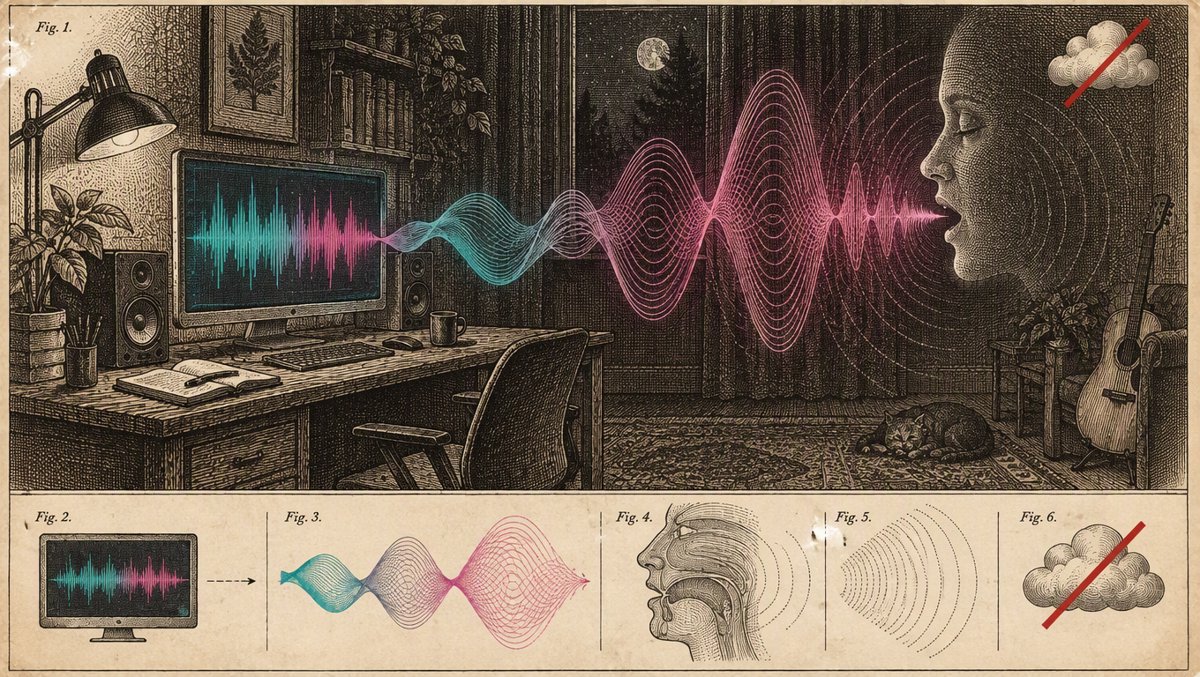
At 12:35 PM on September 26, an account called liam. (@liambraus) posted a thread in Spanish that reads like a kid describing a dragon: a solo developer just open-sourced a 100% FREE ElevenLabs replacement that runs entirely on your own machine. It clones a voice from a clean reference clip, dubs any video into 646 languages, generates audiobooks, dictation, and transcription, and lets you pick from 14 TTS engines instead of one. "ElevenLabs supports 32 languages. This does 646. No charge per character. No usage limits. No audio ever leaves your computer." Save this for later. Repo below.
The numbers went vertical: 271.8K views, 7.3K likes, 4.2K reposts in about nine hours. The top reply — "the local part is the real story here" — pulled 4.1K likes on its own. The repo cited in the tweet showed 19.4K stars. When we checked this morning, it was at 36.4K. Whatever this thing is, GitHub's trending algorithm and roughly seventeen thousand developers agree it matters.
So we did what the tweet didn't: we went in, read the docs end to end, checked the claims, and found that the real story is both more interesting and more honest than the hype. The project is called VoiceStudio, by a solo developer named Palash Debnath — and it might be the most agent-ready piece of open-source audio software ever shipped.
What VoiceStudio actually is
VoiceStudio is an Electron desktop app (macOS, Windows, Linux, Docker) with a local backend on port 3900 that unifies a small army of open speech models behind one interface, one local API, and one MCP server. Old-timers may know it by its former name, OmniVoice-Studio — MarkTechPost profiled that version back in May. Since then it has grown a website, a one-line installer (curl -fsSL https://voicestudio.sh/install | sh), and a proper version history — version 0.5.3 was, notably, the final Tauri release; the project moved to Electron and deleted the old shell entirely.
The default engine is the big deal: k2-fsa/OmniVoice, a zero-shot TTS model claiming 600+ languages — the broadest coverage of any zero-shot model, per its README — built on a diffusion-language-model-style architecture with a published arXiv paper and an author list that includes Daniel Povey, the creator of Kaldi. That's not a vibe-coded wrapper around someone else's API; the speech engine underneath has serious lineage, with a reported RTF as low as 0.025 — forty times faster than real time on an H100.
On top of the engine, VoiceStudio wires up the full workflow:
- Voice cloning from 3–15 seconds of clean reference audio (the engine recommends 3–10), with transcripts auto-filled by Whisper.
- Voice design — no reference audio at all; describe a voice by attributes ("female, low pitch, British accent") and get one synthesized.
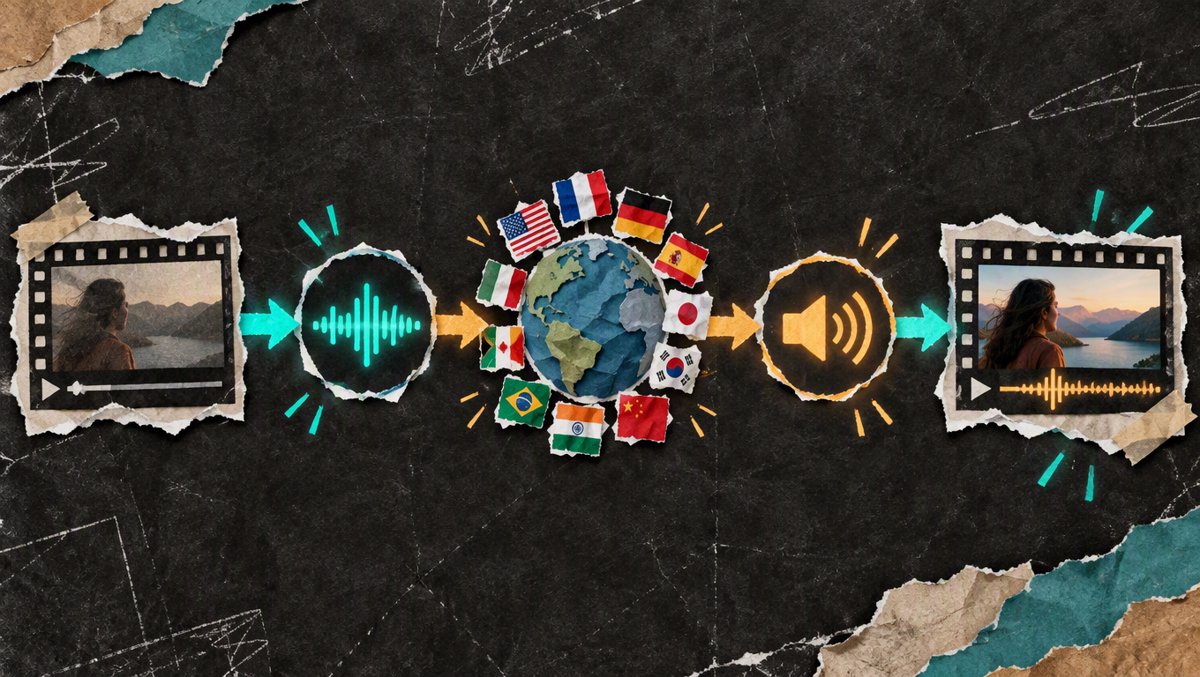
- Video dubbing as a real pipeline, not a checkbox: Demucs separates vocals from background, WhisperX produces word-level timestamps, an LLM translates with 6 concurrent requests, each segment is synthesized in the cloned voice, and the video is remuxed in sync.
- Incremental re-dub — change one line of a dub and regenerate only that segment. Per the project's own competitive analysis, nobody else has this.
- Audiobooks — import an EPUB or PDF, assign different voices per character, export chapter-marked
.m4b. - Dictation with a floating widget, cross-platform, with echo cancellation.
- AudioSeal watermarking and detection — unique in its competitive set, and quietly responsible: every clip it generates can be proven synthetic.
The fact-check corner
The tweet is mostly right, in the way viral tweets are mostly right — directionally true, numerically generous.
"646 languages vs ElevenLabs' 32." Half stale. ElevenLabs' Flash v2.5 supports 32 languages — but its current flagship, Eleven v3, supports 74. VoiceStudio's 646 is real in the docs, but it counts language variants (the engine README says 600+), and quality per language is not uniform — the voice-design mode, for instance, is trained on Chinese and English data only and merely generalizes elsewhere. The honest read: roughly nine times the language count of the newest ElevenLabs, with more asterisks per language.
"14 TTS engines." We counted 17 in the feature catalog (CosyVoice 3, IndexTTS 2.5, MLX-Audio, MOSS-TTS-v1.5, dots.tts, Confucius4-TTS, gpt-sovits, KittenTTS and friends), plus 10 ASR engines including WhisperX, Parakeet, Moonshine, and FunASR. The tweet undersold this one.
"Runs on your machine." True, with a hardware footnote the tweet definitely didn't include: on Windows, GPU acceleration is NVIDIA/CUDA only — AMD and Intel cards silently fall back to CPU. The performance guide (measured on a 16GB Apple Silicon M2) is refreshingly blunt about memory pressure, lazy model loads (~8 seconds), and even its own past bugs — more on that below.
And the benchmarks page? It's empty. There's a reproducible harness (scripts/bench_pipeline.py) that measures warm RTF and peak VRAM on named hardware, and a table with zero rows — "The point is honest expectations, not a leaderboard." In 2026, a project that refuses to publish made-up numbers is its own genre.
The part Steve's developers actually care about: it speaks agent
Here's where VoiceStudio stops being a consumer toy and becomes infrastructure. Buried under the friendly Electron UI is a developer surface that reads like it was designed by someone who lives inside Claude Code.
An OpenAI-compatible endpoint. Point your existing OpenAI client's base URL at http://localhost:3900/v1 and your code now does speech synthesis and transcription with zero other changes. Drop-in local replacement — the oldest trick in the self-hosting book, executed properly.
An MCP server mounted on the running backend. Once the app is open, http://localhost:3900/mcp/ is a live Model Context Protocol server with five tools: generate_speech, clone_voice, transcribe, the list_* enumerations, and check_health. The desktop app exports ready-made configs for Claude Code (.mcp.json), Cursor, and Codex CLI — the Codex export even ships the X-OmniVoice-Client-Id header needed for the next feature.
Per-agent voice bindings. Each connecting agent identifies itself with a client ID, and you bind IDs to voice profiles over a REST endpoint. The docs' own example: "Claude Code in Morgan, Cursor in Scarlett." Your coding agents can literally each speak in a different voice, locally, for free.
Context economics, taken seriously. This is the detail that convinced us the author actually uses agents. The MCP docs note that "an LLM agent pays for every byte it receives in context, and a WAV as base64 is a lot of bytes" — so instead of defaulting to inline audio, an OMNIVOICE_MCP_OUTPUT_MODE=files setting moves every render to disk and hands the agent back a path, with a BASE_PATH variable acting as the security boundary (no-follow descriptors, symlink resolution, path arguments refused entirely when unset). Someone here has paid the context bill before.
Agent-native distribution. The repo carries AGENTS.md, CLAUDE.md, .agents/skills/, and a skills-lock.json. You can install it through an AI agent (npx skills add debpalash/VoiceStudio, with dedicated voicestudio and voicestudio-maintainer skills) or paste an "install with prompt" instruction into Claude Code or Codex that handles hardware detection, asks before downloading models, and verifies with a test generation. The install path itself is agent-first.
The most honest repo on GitHub
The docs contain something you almost never see in public: a competitive-analysis.md where the project grades itself A through D against its rivals — voicebox (~29.7K stars, MIT, "our most direct competitor"), pyvideotrans (~17.9K stars), Patter, KlicStudio — with a legend that bolds every cell where a competitor wins. "Bold = they beat us. This is the gap list." The grades come, the doc says, from "code signals, test coverage, TODO density — not marketing," compiled across four parallel research passes with six more agents added later. It's also a license-tutorial in disguise: GPL code is "study-only, clean-room" because you can't sell commercial exceptions to code you don't own — which is exactly why the Smart Fit dub-length feature is a clean-room reimplementation, not a port.
Two gems from inside:
- The self-own ledger.
performance.mdcatalogs the project's own regressions with issue numbers: the version where an empty voice-profile transcript made the app re-run Whisper on every single generation (CPU pegged at 100%, issue #1032), and the one where aborting a dub left the TTS model stranded on CPU, making everything 10–50× slower until a timeout rescued it (#1191). Both fixed and documented. When was the last time a README told you why it used to be slow? - The broken integration they found anyway. The analysis discovered that pyvideotrans — 17.9K stars — had already integrated VoiceStudio as a first-class backend... speaking Gradio to an endpoint that doesn't exist. Verified broken, action item written, honesty preserved. Being upstream for a project's users apparently isn't worth pretending the integration works.
There's a roadmap-discussion thread grounding future features in that same research, and you can watch the gaps close in real time: the June analysis graded the MCP server "not mounted, no per-agent voice binding" — by September, both shipped. Self-assessment as a public changelog is a genuinely novel development practice, and it's the reason we trust this project's claims more than most VC-funded ones.
Caveats, because there are always caveats
- License: AGPL-3.0 with a commercial dual-license offering. Fine for internal use and tinkering; read the terms before you build a product on it. Individual models have their own licenses — the project says plainly: review them before commercial use.
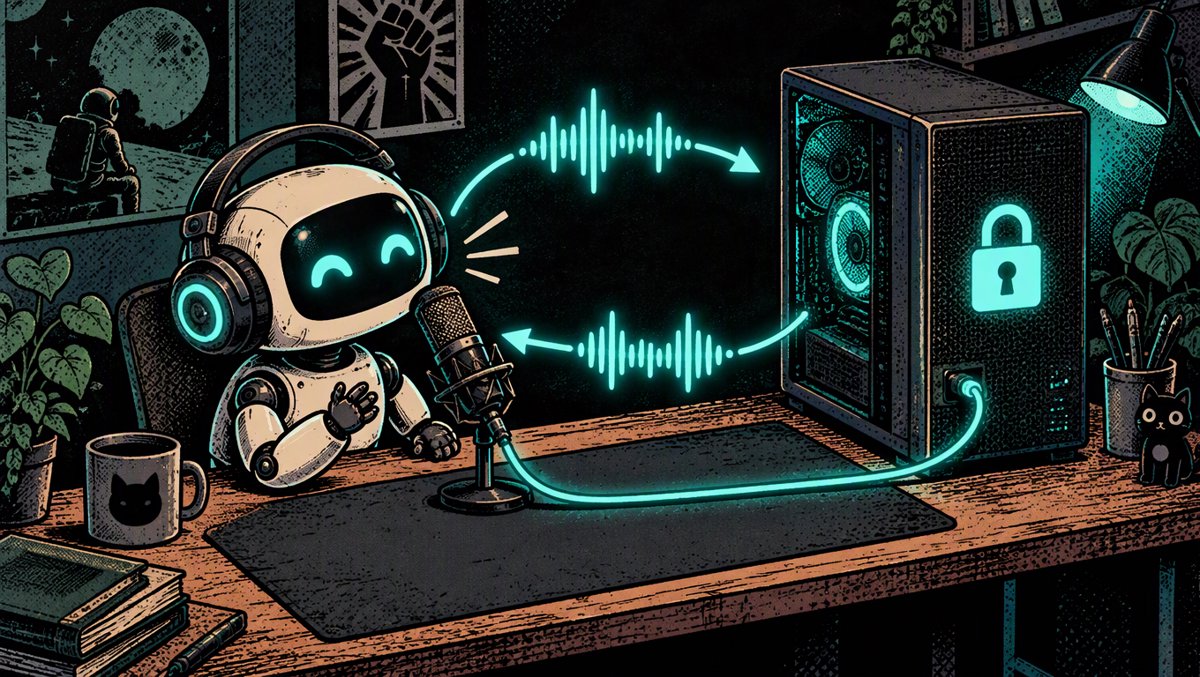
- The MCP transport is unauthenticated. The docs say so in bold-adjacent prose: localhost or trusted LAN only, put TLS in front if it leaves the machine, mind the DNS-rebinding guard. Treat the local API like the door to your GPU, because it is.
- Cloning is a consent question. A 3-second clip is all it takes, technically. The docs and the underlying model's disclaimer both push consent-verified profiles and prohibit impersonation; the AudioSeal watermarking is the technical backstop. The tool is neutral; the era is not.
- Empty benchmarks. The harness exists; the table doesn't. Your mileage will vary by hardware, and the only currently verified numbers come from the engine repo, not the app.
Verdict
The tweet called it "f***ing incredible," and the hyperbole is doing real work — but strip it back and what remains is a legitimately important project. VoiceStudio is not just a free ElevenLabs clone; it's a full local speech stack with an agent surface (OpenAI-compatible API, MCP, per-agent voices, skills-native install) that treats LLM context bytes, file-system security boundaries, and self-benchmarking honesty as first-class design concerns. It doubled its stars in a day because it deserves most of them.
For anyone building agent pipelines — which, if you're reading this channel, is you — the two-minute version is:
docker run -d -p 127.0.0.1:3900:3900 \
  -v omnivoice-data:/app/omnivoice_data \
  --name voicestudio palashdeb/omnivoice-studio:stable
...then point an MCP client at http://localhost:3900/mcp/ and bind your agent a voice. Claude Code in Morgan, Cursor in Scarlett, zero dollars a month, and not one byte of audio leaves your machine.
The cloud had a good run. The desk is where it ends.
Sources: liam.'s thread on X (Sep 26, 2026); the VoiceStudio repository and docs — README, feature catalog, MCP guide, benchmarks, performance guide, competitive analysis; the k2-fsa/OmniVoice README and arXiv:2604.00688; ElevenLabs' language documentation; DEV Community and MarkTechPost coverage of the project (as OmniVoice-Studio). Star counts as of Sep 26, 2026 ~21:40 UTC.