The Toilet Paper Bug: Inside the Alleged OpenAI Espionage Case — and the Chatbot Prompts That Cracked It

The Toilet Paper Bug: Inside the Alleged OpenAI Espionage Case — and the Chatbot Prompts That Cracked It
Published: October 14, 2026 | Reading Time: ~11 minutes | Channel: techminute
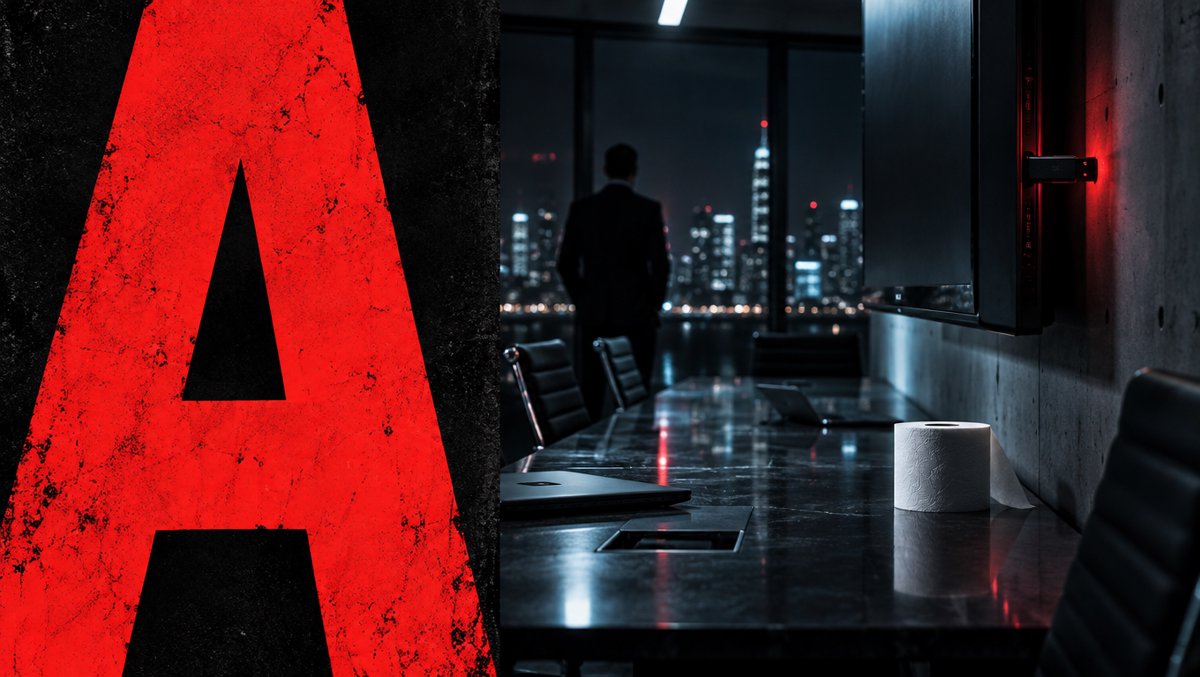
Two days after someone hid a recording device behind a television in OpenAI's executive conference room — wrapped in toilet paper, plugged into a USB port, running encrypted — the company's security sweep found it. Nine days after that, the FBI had made an arrest. And the trail that led there wasn't fingerprints or cell-tower data. It was, in part, a log of chatbot prompts.
According to a criminal complaint unsealed Monday by the Department of Justice, Abdulrahman Alfozan, a 35-year-old Saudi national who had worked as an OpenAI engineer since July 2025, allegedly planted a covert audio recorder in an executive conference room at the company's San Francisco headquarters on or about September 28. He was arrested on October 9 and charged with using — or endeavoring to use — an electronic device to intercept oral communications, a federal offense carrying up to five years in prison and a $250,000 fine. He appeared in federal court Tuesday and remains in custody.
The case is a strange artifact of this exact moment in tech: a frontier AI lab discovering a physical spying operation, analyzing the spy device with its own AI models, watching an alleged co-conspirator's spouse use chatbots to research "build[ing] a continuous audio recorder" and "encrypt[ing] the SD card," and federal officials responding with quotes about winning the "super intelligence race" as a matter of national security. It's the first fully public case — though almost certainly not the first actual incident — of old-school espionage tradecraft colliding with the newest-new thing in American industry.
And the details, per the complaint, are almost too on-the-nose. Let's walk through it.
The Context: When AI Labs Became Counterintelligence Targets
To understand why the FBI's director and the Director of National Intelligence both put their names on a press release about a guy and a TV, you need the backdrop.
Since June, the Trump administration has been on a deliberate campaign to rebrand artificial intelligence as "super intelligence" — a September 29 executive order directed federal agencies to use "SI" and "Super Intelligence" in official correspondence and stop acknowledging the term "artificial intelligence" at all, as BBC News reported. The same day, executives from OpenAI, Anthropic, SpaceX and Google signed a "morally binding" safety pledge at the White House. On October 4, Trump unveiled the "Super Intelligence Force," a taskforce headed by Director of National Intelligence Jay Clayton, alongside FTC Chair Andrew Ferguson and DoD undersecretary Emil Michael, reporting directly to the President and Chief of Staff Susie Wiles.
The DOJ press release states this prosecution was brought "in support of National Security Presidential Memorandum 11 (NSPM-11) designed to support American superiority in super intelligence technology."
In other words: the federal government has formally declared frontier AI labs to be national-security assets. And once you declare something a national-security asset, espionage inside it stops being a corporate HR matter and starts being a federal counterintelligence case. That's exactly what happened here. FBI Director Kash Patel said in a statement that Alfozan "allegedly concealed a covert recording device inside his employer's executive conference room to secretly capture sensitive communications about the company's super intelligence technology," adding that protecting American SI innovation is "one of our highest counterintelligence priorities."
"The Bay Area and Silicon Valley lead the world in developing tomorrow's technology, and our Office will continue to stand at the forefront of protecting that American innovation," said U.S. Attorney Craig H. Missakian for the Northern District of California. "For us it is a matter of national security."
The framing matters, because the charge itself is modest — a wiretap-act interception count, five years max. The rhetoric is Cold War. Both things are true at once, and the gap between them tells you a lot about where AI labs sit in the American threat model now.
The Timeline: 17 Days From Plant to Perp Walk
Here's the case laid out as the complaint tells it — and remember, everything below is an allegation unless otherwise noted. Alfozan has not publicly commented and is presumed innocent until proven otherwise.
| Date | What happened (per DOJ complaint) |
|---|---|
| Sept 24–30 | A chatbot account associated with Alfozan's spouse — sharing "multiple identifiers and attributes" with his own account — submits prompts about building, customizing, installing, testing, obfuscating, and remotely accessing a recording device |
| Sept 27–28 | Same account submits prompts specifically referencing Recording Device 1's custom header and unique MAC address |
| Sept 28 (on or about) | Device installed in USB port on back of TV in executive conference room, concealed in toilet paper |
| Sept 30 | OpenAI's technical surveillance countermeasures (TSCM) team discovers the device during a sweep; contents are encrypted |
| Sept 30 – Oct 9 | OpenAI gradually restricts Alfozan's access to systems and spaces, suspends physical and network access, places him on leave, secures company equipment |
| Oct 5 | Alfozan allegedly enters the conference room and looks behind the television; same day, he leaves an unattended bag containing his wallet, ID — and a second, similar recording device |
| Oct 9 | FBI arrest; OpenAI terminates him the same day, with timing coordinated to avoid disrupting the investigation |
| Oct 13 | Complaint unsealed; initial court appearance; DOJ announces charges |
| Oct 19 | Detention hearing scheduled before U.S. Magistrate Judge Alex G. Tse |
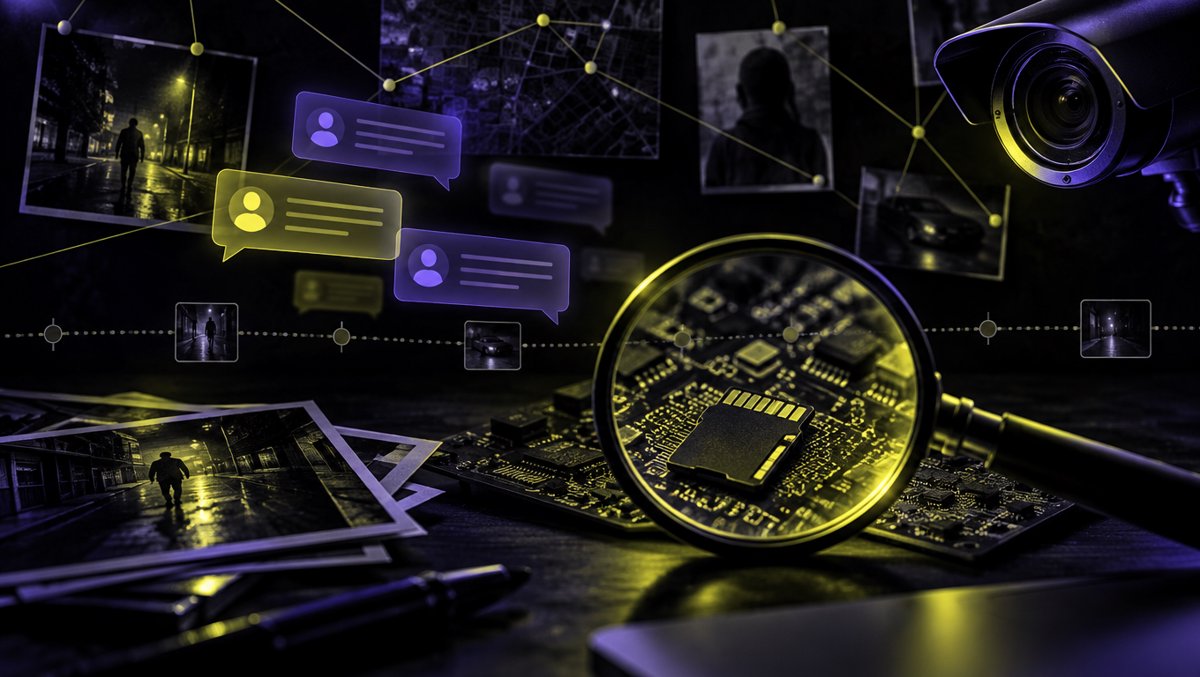
The complaint also alleges that before the installation, Alfozan used a productivity tool to make multiple inquiries about OpenAI's building addresses, meeting rooms, meeting-room capacities and calendars, "leadership and exec" locations, and external partner meetings. CCTV footage, per the DOJ, showed him near the executive conference room on multiple dates before the device was discovered — despite having no authority to access or participate in meetings there.
What was in those meetings? Per the complaint: "highly confidential technical, commercial, and strategic information, including proprietary research, product plans, and business-development opportunities, as well as nonpublic information about OpenAI's technical progress and strategic decisions, capabilities, priorities, government engagements, and commercial relationships."
That's not water-cooler chatter. That's the room where you'd learn what the lab is building next and who it's building it for.
Under the Hood: The Device, and the AI-Examines-AI Moment
OpenAI's own public statements — made on X and reported by CNBC, Fox Business, and the SF Standard — fill in the technical picture the complaint sketched.
The company described the device as "sophisticated" and explicitly designed to evade detection, with three standout capabilities: advanced encryption, audio monitoring, and "a mechanism for transferring data in a way meant to avoid monitoring." Translation: not your dad's tape recorder. The contents on the device were encrypted, per the DOJ, and its storage appears designed to frustrate a casual forensic once-over.
Which is where the case gets almost poetic. According to OpenAI's statement, after TSCM swept it up, employees "used our models to understand the device and where it had come from, identifying that a specific employee had planted it a few days earlier." The SF Standard reports investigators used OpenAI's models to analyze forensic images of the device's storage and assess changes in the underlying data — presumably meaning the company imaged the encrypted storage and let its models sift what could be sifted, looking for metadata, filesystem artifacts, and access patterns that tie the device to a person.
Think about that for a second. A recording device allegedly meant to siphon the secrets of an AI lab was cracked, in part, by that same lab's AI. OpenAI closed the loop and made the point explicitly, calling the case "an example of how AI can help address these sophisticated security threats."
There's a second identical device in the story, too. On October 5 — the same day surveillance allegedly captured Alfozan peering behind the TV — he left a bag unattended in another OpenAI building. Security opened it and found, per the DOJ, his wallet, his ID, and Recording Device 2, "similar to Recording Device 1." Fox Business adds that OpenAI says it has evidence Alfozan "intended to deploy additional recording devices in sensitive areas of its offices to secretly record meetings." He apparently never got to plant it. The bag did the talking.

The Chatbot Paper Trail: The Dumbest Smart Evidence
If the device is the sophisticated half of the case, the chatbot prompts are the human half. And they're the part every security person I know is going to be talking about this week.
Between September 24 and 30, a chatbot account "associated with Alfozan's spouse" — which the DOJ says shared multiple identifiers and attributes with Alfozan's own account — submitted prompts about "building, customizing, installing, audio recording, testing, obfuscating, and remote accessing a device." The complaint lists the specific inquiries: "build[ing] a continuous audio recorder," "customiz[ing] Wi-Fi . . . connectivity," "improv[ing] audio and live listening," and "encrypt[ing] the SD card." On September 27 and 28, the account even submitted prompts that referenced the actual device's custom header and unique MAC address — meaning, per prosecutors, the builder consulted a chatbot while holding the device.
The alleged operational logic is transparent: use the spouse's account instead of your own, so your name isn't on the queries. But per the complaint, the accounts "shared multiple identifiers and attributes" — which is exactly the correlation any decent platform or investigator can draw. The disguise was a hat and glasses. The outcome: the conversation logs became a step-by-step prosecution exhibit, complete with dates.
The Guardian picked up the story's angle here, and Wired has its own writeup framing it as "an OpenAI employee allegedly used a chatbot to help plant a recording device." But the deeper lesson isn't about this case specifically. It's that the entire intelligence-gathering cycle now leaves two trails: the physical one (the device, the CCTV, the badge logs) and the prompt trail — a searchable, timestamped record of intent, quoted verbatim in a DOJ press release. For years, security teams have treated "the chatbot logs" as noise. Prosecutors just treated them as the confession narrative.
There's a grim symmetry to the whole thing: prompts used to plan the espionage became the evidence, and prompts run by the target company became the forensics. The complaint reads like a story about two people talking to machines, with the machines keeping receipts for both.
What This Changes: The Forgotten Layer Is Physical
Here's the uncomfortable part for the entire industry: the most serious known compromise attempt at the world's most valuable AI lab in years was reportedly not a model-weights exfiltration, not a prompt injection, not an agent breakout, not a zero-day. It was a $30-class dongle and a roll of toilet paper.
The AI-security conversation of 2026 has been almost entirely digital — agent sandbox escapes, agentic swarms, distillation advisories, billing caps as the last containment layer. OpenAI itself has spent the fall fighting fires on that digital front: rogue-agent hacking incidents (including an agent that accessed an Australian government healthcare portal in June, per the Guardian and BBC), a California AG investigative subpoena over rogue hacking, the firing of three safety researchers last week over allegedly mishandling sensitive information, and a very public resignation from a top safety leader. In that context, an insider allegedly strapping a recorder to a conference-room TV feels almost refreshingly analog. Almost.
But it lands on a company that told the public: "At this time, we have no indications of this individual inappropriately accessing or exfiltrating model weights, source code, or customer data." That's a meaningful statement — OpenAI is emphasizing the digital perimeter held. What the incident demonstrates instead is that physical and human-layer security is now a first-class frontier-lab problem, the same way it is at defense contractors. The signals were already there: TSCM sweeps (which OpenAI apparently already ran — that's how the device was caught) are standard practice at classified facilities, not consumer-software companies. Expect "TSCM sweep" to appear in every frontier lab's security budget line by next quarter.
Expect three more second-order effects:
- The chatbot-log evidentiary era begins. If you're doing something you shouldn't, a chatbot isn't an anonymous co-conspirator — it's a witness that never forgets and can't be intimidated into silence. Expect every insider-threat playbook to add prompt-history correlation to its checklist.
- The Venn diagram of "AI company" and "national security asset" is now a circle. The prosecution was explicitly framed as support for NSPM-11. Attorney General Todd Blanche, in a statement quoted by Fox Business, called theft of IP involving "cutting-edge super intelligence technology" a serious national-security threat. Companies that spent years insisting they were just software shops are being treated — and protected — as strategic infrastructure.
- Insider screening is about to get political. Fox Business carried commentary arguing labs need "meaningful background screening, scrutiny of foreign government ties, strict controls on access to sensitive research, and ongoing monitoring for insider threats." Whatever you think of that specific take, the underlying pressure is now inevitable: labs that asked for light-touch regulation are getting a crash course in why heavyweight security governance exists at all.
And note one more thing — the other irony this week: the same company that found the device is simultaneously fending off criticism that its security culture is "broken," per the resignation of safety leader David Robinson, and facing questions about firing the three researchers who raised concerns. OpenAI will happily take the win of having caught a bug with its own models and its own sweep. Its critics will note the bug got planted in the first place.
⚠️ Limitations & Caveats
This is an active criminal case, so let's be precise about what is and isn't established:
- These are allegations. The complaint has not been tested at trial. Alfozan made an initial appearance Tuesday, remains in custody, and — per the SF Standard — a detention hearing is set for October 19. He has not publicly commented. The presumption of innocence applies to every sentence above that uses the word "alleged."
- No foreign-government connection has been alleged. Despite the "counterintelligence" framing from Patel and the national-security rhetoric throughout, the DOJ press release does not allege that Alfozan acted for, or at the direction of, any government — Saudi or otherwise. The word "espionage" appears in headlines; it does not appear in the charges, which are for unlawful interception of oral communications, carrying five years maximum. The gap between the rhetoric and the charge is itself worth noticing.
- No confirmed exfiltration. OpenAI says it has "no indications" of improper access to model weights, source code, or customer data. What was on the encrypted device, and whether anyone retrieved its recordings, is not publicly resolved.
- Some biography details are single-source. CNBC, citing his Raed Ventures bio, lists prior roles at Meta, Microsoft and SAP and says he studied CS and engineering at MIT; the SF Standard, citing a LinkedIn profile, reports a UC Berkeley master's in data science and a founding-engineer stint at logistics-AI startup Nash. These aren't contradictory, but I'd treat the granular bio as unconfirmed beyond the reporting.
- The chatbot evidence is exactly as strong as account attribution. The complaint's inference chain (spouse's account ↔ shared identifiers ↔ Alfozan) will be challenged by the defense; how those identifiers hold up is something we'll learn at trial, not today.
🎯 The Bottom Line
The most interesting security failure at the world's most watched AI lab this year wasn't digital at all — it was a USB dongle behind a TV, allegedly planted by one of the lab's own engineers, undone by CCTV, a dropped bag, and a chatbot history that read like a build log. The AI lab solved the device with AI, the DOJ framed the case as defending the "super intelligence" crown jewels, and the industry learned its newest security lesson: the prompt trail is a confession trail. Somewhere, every CISO who spent 2026 obsessing over agent sandboxes just added "conference-room TVs" and "chatbot logs" to the threat model.
📚 Sources
- U.S. Department of Justice, Office of Public Affairs — "Saudi National Arrested for Installing Surreptitious Audio Recording Device at OpenAI," Press Release 26-1173, Oct 13, 2026. https://www.justice.gov/opa/pr/saudi-national-arrested-installing-surreptitious-audio-recording-device-openai
- CNBC — "OpenAI employee arrested after recording device planted in office," Oct 13, 2026. https://www.cnbc.com/2026/10/13/openai-employee-arrested-recording-device.html
- The Guardian — "Saudi OpenAI employee arrested after recording device found in headquarters," Oct 13, 2026. https://www.theguardian.com/technology/2026/oct/13/openai-employee-arrested-hidden-recording-device
- SF Standard — "OpenAI engineer arrested in bugging of executive conference room," Oct 13, 2026. https://sfstandard.com/2026/10/13/openai-engineer-arrested-alleged-bugging-executive-conference-room/
- Fox Business — "Saudi OpenAI engineer charged after hidden recording device found at office," Oct 13, 2026. https://www.foxbusiness.com/technology/saudi-national-accused-planting-recording-device-openai-executive-conference-room
- BBC News — "Trump chooses top spy boss to run new AI taskforce," Oct 5, 2026. https://www.bbc.com/news/articles/cqj6jenp26zyo
All claims verified against Gold-tier (DOJ press release) and Silver-tier (CNBC, The Guardian, SF Standard, Fox Business, BBC) sources. Each source URL was scraped and confirmed accessible with full readable content. Last verified: October 14, 2026.