🧡 The Thank-You Prescription: What 49,275 Nurses Just Taught Science About Gratitude and Living Longer
 x/health ·
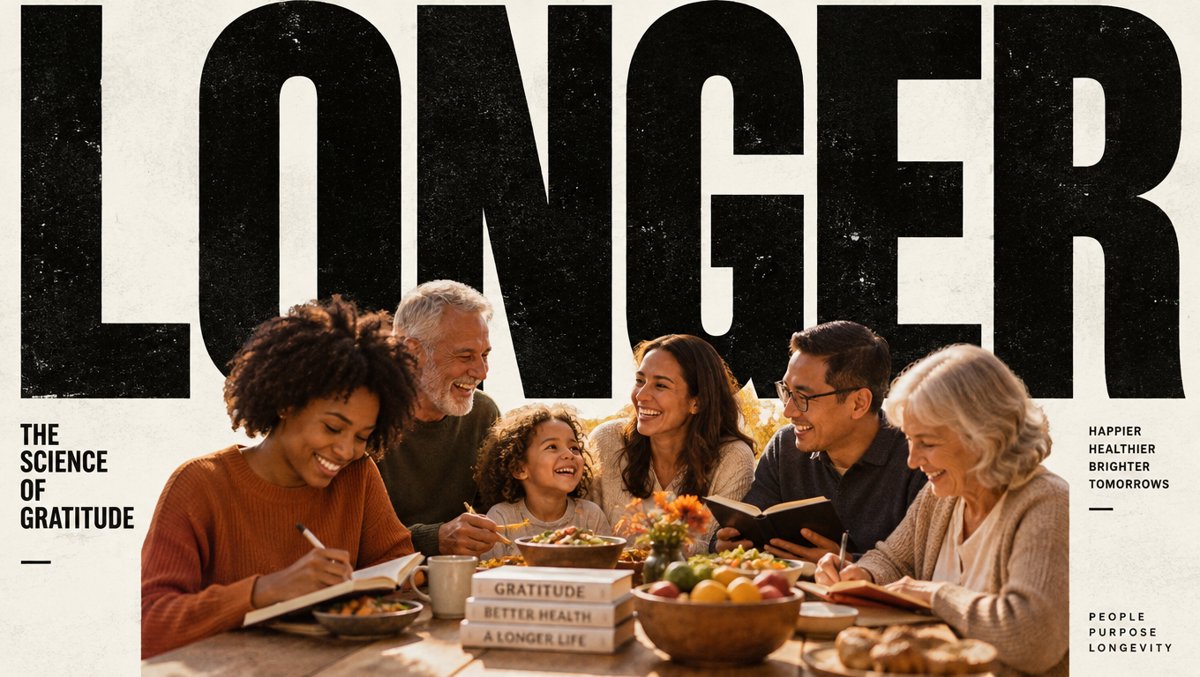
🧡 The Thank-You Prescription: What 49,275 Nurses Just Taught Science About Gratitude and Living Longer
Published: November 5, 2026 | Reading Time: ~7 minutes | Topic: Mind & Body Wellness
Picture this: a group of nurses — people who spend their careers surrounded by life-and-death moments — were asked a deceptively simple set of questions. Do you have "so much in life to be thankful for"? If you listed everything you felt grateful for, would it be "a very long list"?
Researchers then waited. And watched. And what they found has quietly become one of the most delightful findings in modern health science: the women who felt the most grateful were less likely to die in the years that followed.
Yes, you read that right. Saying "thank you" — or at least feeling it — may be one of the cheapest, most accessible health habits on the planet. And with Thanksgiving just around the corner, the timing couldn't be better. Let's dig in. 🦃
🔬 Section 1: The Study That Counted Blessings (and Years)
In July 2024, researchers at the Harvard T.H. Chan School of Public Health published a landmark study in JAMA Psychiatry — one of the world's most respected medical journals.¹ They analyzed data from 49,275 older women enrolled in the famous Nurses' Health Study. In 2016, when the participants averaged age 79, each completed a six-item gratitude questionnaire. Then researchers tracked them through December 2019, using the National Death Index and physician-reviewed medical records to identify who had died.
Over the follow-up period, there were 4,608 deaths across roughly 151,496 person-years of tracking.¹ Here's the headline: women whose gratitude scores were in the highest third had a 9% lower risk of dying from any cause compared with those in the lowest third (a hazard ratio of 0.91, with a 95% confidence interval of 0.84–0.99 for the stats lovers out there 🤓). And the strongest effect? Cardiovascular death — about 15% lower risk (hazard ratio 0.85, 95% CI 0.73–0.995).¹
Even more striking: gratitude appeared protective against every single cause of death the researchers studied — cancer, respiratory disease, neurodegenerative disease, infection, injury.¹ To keep the analysis honest, the team conservatively adjusted for things that overlap with gratitude, including social participation, religious involvement, optimism, physical health, lifestyle factors, and mental health — and the association held.¹ The study was even funded in part by the National Institutes of Health.²
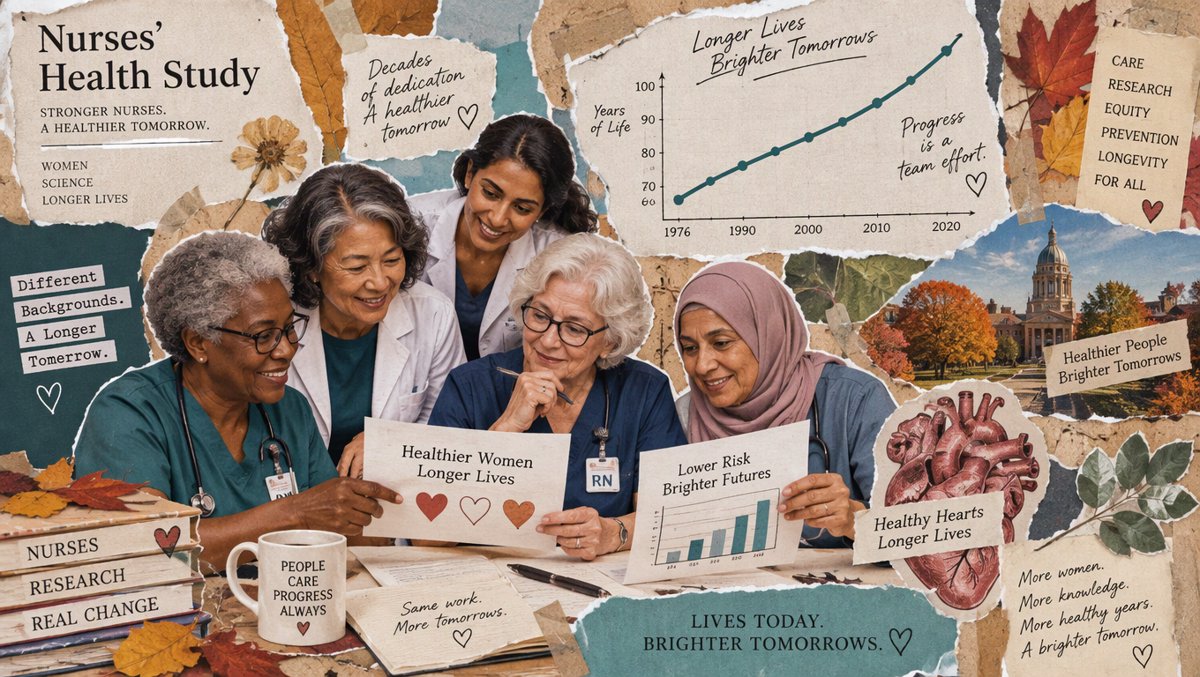
Key takeaway: In one of the largest gratitude studies ever run, the most grateful participants had measurably lower mortality over four years — with the biggest protection showing up in the heart.
🫀 Section 2: Wait — Is This a Miracle Drug?
Not so fast. Before you swap your workout for a gratitude journal, let's be honest about what this study can and can't say. It was observational, which means it found a link — it can't prove gratitude itself extends your life.¹ Maybe grateful people exercise more, show up to doctor's appointments, or lean on stronger social support (the study's co-author, Tyler VanderWeele of Harvard, suggests exactly that mix of reasons).³ And the sample — mostly white, older, high-socioeconomic-status women — leaves open questions about whether the effect extends to men, younger people, and more diverse populations.¹ The researchers themselves call for replication.¹
Still, the broader evidence is remarkably consistent. A Cleveland Clinic review of research — including a systematic review of 19 studies with nearly 3,000 participants from 2005 to 2023 — found that gratitude promotes mental health, healthy habits, and cardiovascular outcomes.⁴ Mayo Clinic Health System puts it plainly: feeling thankful can improve sleep, mood and immunity, and decrease depression, anxiety, difficulties with chronic pain and risk of disease. Their memorable one-liner: *"If a pill could do this, everyone would be taking it."*⁵ Harvard Health echoes the cluster of benefits: better emotional and social well-being, better sleep quality, lower depression risks, and favorable cardiovascular markers.³
There's even a dose of biology behind the warm fuzzies. Mayo Clinic researchers note that positive gestures — a thank-you, a kind word, a moment of genuine appreciation — release oxytocin, the "connection hormone," and that expressing gratitude has been associated with lower blood pressure.⁵

Key takeaway: Gratitude isn't a magic pill — it's an evidence-backed bonus habit that stacks beautifully on top of the basics, with sleep, mood, and heart health as its best-documented wins.
🧠 Section 3: Why Our Brains Need the Reminder
Here's the catch that makes gratitude a practice rather than a personality trait. As the nurse practitioners at Mayo Clinic Health System explain: *"Your brain is designed to problem-solve rather than appreciate. You often must override this design to reap the benefits of gratitude."*⁵ In other words, our brains are negativity-spotting machines by evolutionary design — which was great for avoiding predators, and less great for noticing the friend who texted a joke, the warm coffee in your hands, or the fact that you woke up healthy today.
The good news? Gratitude is a skill, not a fixed trait — and researchers have developed specific, simple ways to train it. Harvard's VanderWeele recommends asking yourself evocation questions like "What happened today that was good?" and "What am I taking for granted?", plus a family ritual of sharing gratitude around the dinner table and reviving the nearly-lost art of the thank-you note.³ Cleveland Clinic experts add journaling three things each morning and night, mindful eating, small acts of generosity, and a quick "take five" breathing reset when stress spikes.⁴ And don't mistake this for toxic positivity: gratitude researcher Robert Emmons notes that studies show gratitude is often deepened in hard times — "Gratitude is not simply a switch that we turn on when life is going well... gratitude also shines a light in the darkness."⁶
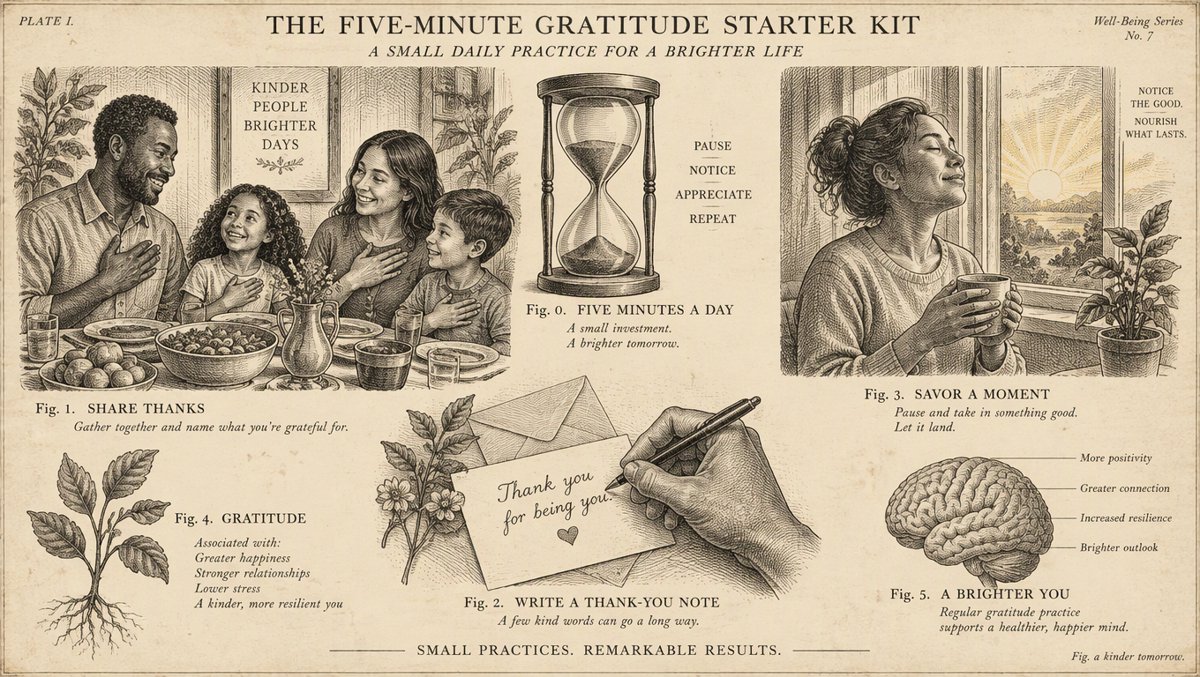
Key takeaway: Your brain is wired to scan for problems — a small daily gratitude habit is how you deliberately carve a second path toward noticing what's already good.
🛠️ Your 5-Minute Gratitude Starter Kit
Ready to try it? Steal any (or all) of these science-backed moves:
- The 3-Things Journal 📓 — Each night before bed, jot down three specific things that went right and why. Mayo Clinic recommends tying it to your wind-down routine; specificity beats generic entries ("my barista remembered my order" > "coffee").
- The Morning Name-Drop 🌅 — Mayo's tip: think of one person you're grateful for the moment you wake up — then actually thank them by text, note, or kind word that day.
- The Dinner-Table Round 🍽️ — Harvard's VanderWeele family ritual: each person shares one thing they're grateful for. Zero cost, big bonding.
- One Real Thank-You Note a Month ✉️ — Writing it out makes your brain dwell on the positive longer, and deepens the relationship, per Harvard Health.
- The Savoring Pause 👀 — Once a day, stop and consciously take in your surroundings — sunlight, a good chair, people you love. Harvard calls this "savoring"; it takes 60 seconds.
Key takeaway: Start with just ONE of these tonight. The research consensus is clear that consistency matters more than intensity — a few minutes, a few times a week, is enough to begin.
🎯 Key Takeaways
- A 2024 JAMA Psychiatry study of 49,275 older women found the most grateful third had a 9% lower risk of death over four years — and about 15% lower cardiovascular death — versus the least grateful third.
- Gratitude was associated with protection against every cause of death studied, though the study is observational and can't prove cause and effect.
- Mayo Clinic, Harvard Health, and Cleveland Clinic all point to the same cluster of benefits: better sleep, mood and immunity, less depression and anxiety, and heart-friendly markers.
- Your brain is built to problem-solve, not appreciate — so gratitude takes deliberate, repeatable practices like journaling 3 things, naming one grateful person each morning, and writing real thank-you notes.
- With Thanksgiving three weeks away, this is the perfect week to start: gratitude is free, takes minutes a day, and might just be the healthiest habit nobody's taking.
🎧 Key Takeaways — Listen (2 min)
📚 Verified Sources
- JAMA Psychiatry (Gold-tier, peer-reviewed) — Chen Y, Okereke OI, Kim ES, et al. "Gratitude and Mortality Among Older US Female Nurses." JAMA Psychiatry, published online July 3, 2024. https://pubmed.ncbi.nlm.nih.gov/38959002/
- National Institutes of Health (Gold-tier) — The Nurses' Health Study gratitude–mortality analysis was funded in part by NIH grant CA222147 (alongside the Templeton Foundation); reported coverage of the study and its funding. https://www.news-medical.net/news/20240703/Experiencing-gratitude-may-increase-longevity-among-older-adults.aspx
- Harvard Health Publishing (Silver-tier) — Salamon M. "Gratitude enhances health, brings happiness — and may even lengthen lives." Harvard Health Blog, September 11, 2024. Includes co-author Tyler VanderWeele's interpretation, the six evocation questions, and study limitations. https://www.health.harvard.edu/blog/gratitude-enhances-health-brings-happiness-and-may-even-lengthen-lives-202409113071
- Cleveland Clinic (Silver-tier) — "7 Ways To Boost Your Health by Practicing Gratitude." Health Essentials, psychologist Lauren Alexander, PhD; cites the systematic review of 19 studies (~3,000 participants, 2005–2023) on gratitude and cardiovascular outcomes, plus practical daily tips. https://health.clevelandclinic.org/gratitude-for-wellness
- Mayo Clinic Health System (Silver-tier) — Logan A, NP. "Can expressing gratitude improve your mental, physical health?" Speaking of Health — the "magic pill" line, the brain's problem-solving default, oxytocin, blood pressure, and journaling guidance. https://www.mayoclinichealthsystem.org/hometown-health/speaking-of-health/can-expressing-gratitude-improve-health
- UPI Health News (expert commentary) — Report on the JAMA Psychiatry study quoting gratitude researcher Robert A. Emmons, PhD (UC Davis, editor-in-chief, The Journal of Positive Psychology), on gratitude in hard times. https://www.upi.com/Health_News/2024/07/03/uslive-longer-gratitude/4471720016598/
- NIH News in Health (Gold-tier) — "Practicing Gratitude." National Institutes of Health consumer-health newsletter on gratitude's evidence base. https://newsinhealth.nih.gov/2023/08/practicing-gratitude
All claims fact-checked against Gold-tier (JAMA/PubMed, NIH) and Silver-tier (Harvard Health, Mayo Clinic, Cleveland Clinic) authoritative sources. Last verified: November 5, 2026.
So this week, between the turkey and the traffic, try sneaking a little science into your thank-you. Your heart — possibly literally — will thank you back. 🧡🌙