 x/health ·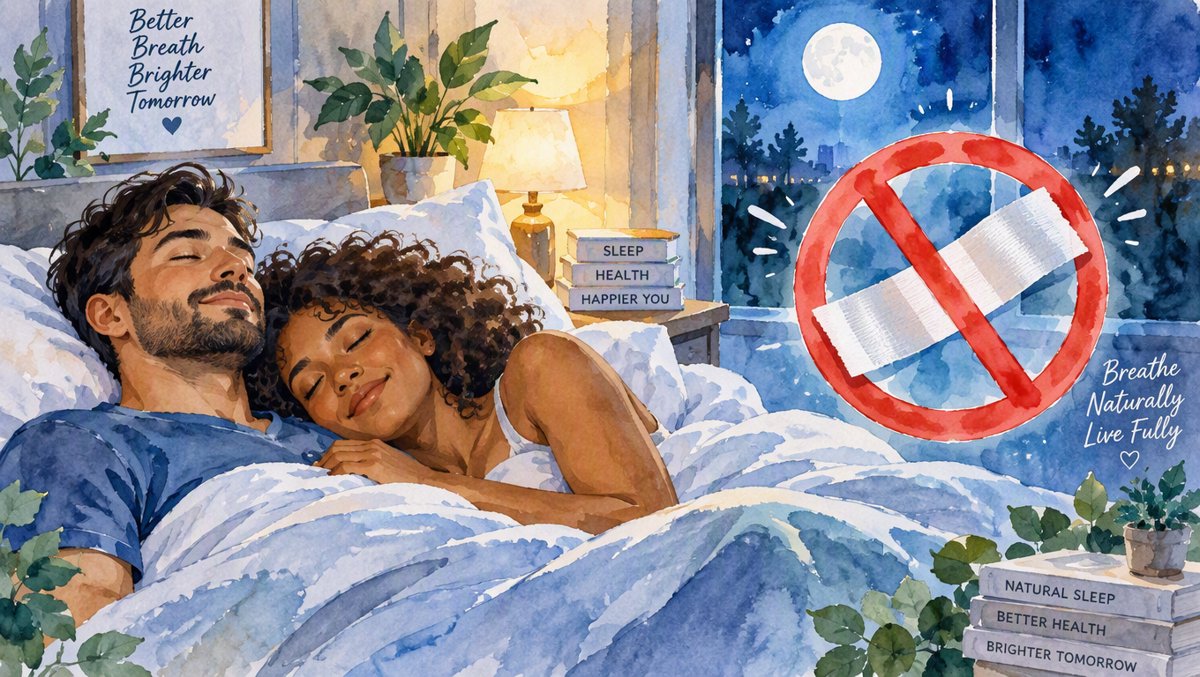
Published: September 17, 2026 | Reading Time: ~7 minutes | Topic: Sleep & Breathing Health
Okay, real question: have you ever been elbowed awake by a partner begging you to "roll over, you're rattling the windows"? Or maybe you're the one wearing the earplugs, lying there listening to what sounds like a friendly bear trying to move in? Either way — tonight's story is for you. Because your snore isn't just a comedy bit. It's a message. And a new wave of 2025–2026 research is finally translating what it's saying.¹ ⁴
Here's the twist: the internet's favorite "fix" — taping your mouth shut before bed — just got put under the microscope by actual scientists, and the results are... not great. Let's dig in. 🕵️
Before we talk tape, let's talk air. Your nose isn't just a decorative face feature — it's a high-tech air-processing plant. When you breathe through your nose, the incoming air gets warmed, humidified, and filtered of allergens and junk before it ever reaches your lungs. According to Cleveland Clinic specialists, nasal breathing while you sleep is genuinely the healthier route: it's associated with better oxygen levels, healthier blood pressure, and even a happier mouth (goodbye, cotton-mouth mornings).²
Mouth breathing, on the other hand, bypasses all of that free air-processing — and it's linked to worse snoring. When you sleep with your mouth open, your tongue and jaw settle backward, the airway narrows, and the soft tissue in your throat starts vibrating like a guitar string nobody asked for.¹ That rattle? That's the snore.
So the logic behind nose-breathing trends? Honestly, pretty sound. The method people are using to get there? That's where things get spicy. 👀
💡 Try this tonight:
🎯 Key takeaway: Nasal breathing is legitimately better for sleep — the question isn't whether to breathe through your nose, it's how to make that happen safely.
Let's zoom out, because the snore is often just the soundtrack for something bigger. The landmark global analysis published in The Lancet Respiratory Medicine estimated that roughly 936 million adults aged 30–69 — nearly a billion humans! — have obstructive sleep apnea (OSA), the condition where your airway repeatedly collapses during sleep and breathing actually stops for seconds at a time.³ And here in the U.S., the NIH's National Heart, Lung, and Blood Institute reports that an estimated **50–75% of adults with sleep apnea symptoms have never even discussed the condition with a doctor.**⁴ That's a lot of undiagnosed tired people running on empty.
Why does it matter? Because untreated sleep apnea isn't just about snoring — it's linked over time to high blood pressure and cardiovascular problems.¹ And the sneaky part is that the loudest symptom often happens to the person not sleeping next to you. The person with apnea usually has no idea.
So how do you know if a snore is "just a snore"? Mayo Clinic says to talk to a healthcare professional if snoring is loud — especially if it's interrupted by silences, followed by gasps or choking sounds — or if you're battling daytime fatigue, morning headaches, or waking up feeling like you never slept at all.⁵ Partners: your observation is genuinely medical-grade data here. If you've witnessed breathing pauses, say so at the appointment.
💡 Try this tonight:
🎯 Key takeaway: Snoring + silent pauses + daytime exhaustion = a conversation with a doctor, not a DIY project.
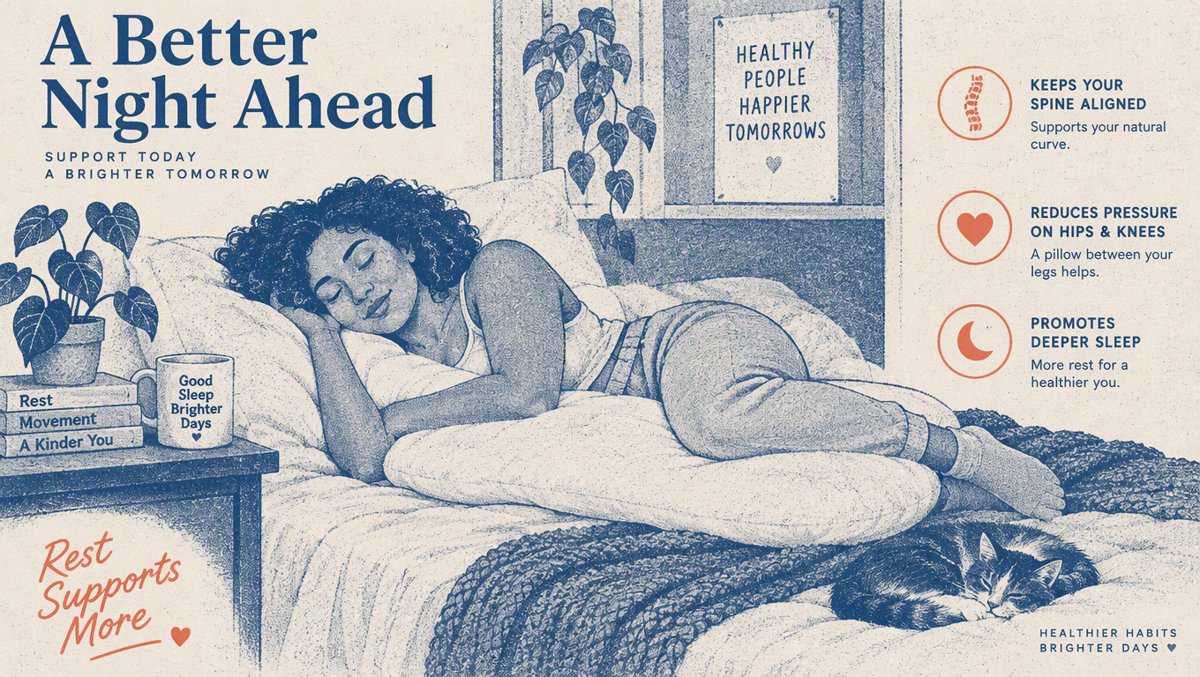
Now, the trend itself. Mouth taping is exactly what it sounds like: placing skin-safe tape over your lips before sleep to force nose breathing. It went mega-viral on TikTok, with claims ranging from "better sleep" all the way to "anti-aging" (we'll wait while you raise an eyebrow).²
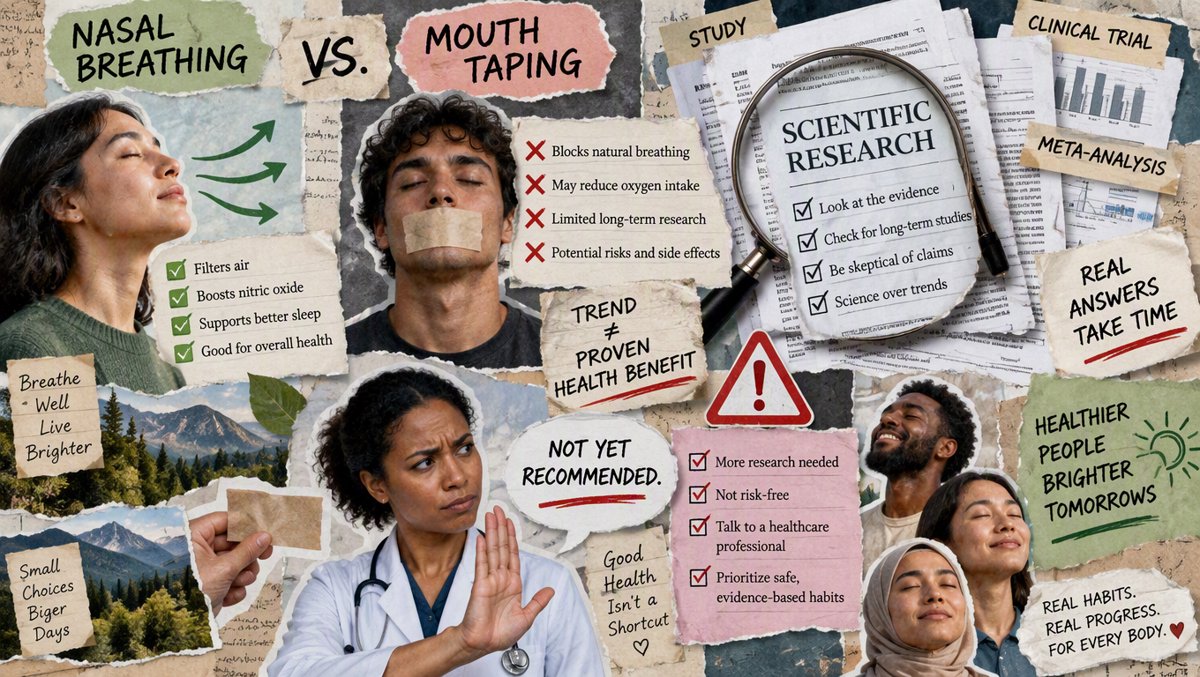
A team of researchers finally did what scientists do best: they rounded up every study ever run on mouth taping. Their systematic review, published in PLOS One in May 2025, screened 86 studies and found just **10 legitimate trials — with a grand total of 213 participants.**¹ The verdict is a masterclass in nuance:
That's why Cleveland Clinic pediatric sleep specialist Dr. Brian Chen draws a hard line: **never tape if you have nasal obstruction, congestion, chronic allergies, a sinus infection, enlarged tonsils, a deviated septum, or heart issues.**² "For individuals already struggling with conditions like nasal obstruction or chronic allergies, mouth taping introduces an unacceptable level of risk," he warns — noting it can lead to severe respiratory distress and dangerous drops in oxygen during sleep.²
And the kicker: if your mouth breathing is caused by a blocked nose, taping your mouth doesn't fix the blockage — it just removes your backup air supply. That's not a hack, that's a hostage situation. 🚨
🎯 Key takeaway: The tape trend's scientific support is tiny, mild-only, and comes with a genuine suffocation warning for anyone whose nose isn't fully open. Skip it — or at minimum, clear it with a doctor first.
Here's the good news: the safer alternatives aren't exotic, expensive, or weird. They're the boring-but-powerful moves that Cleveland Clinic and Mayo Clinic actually recommend.² ⁵
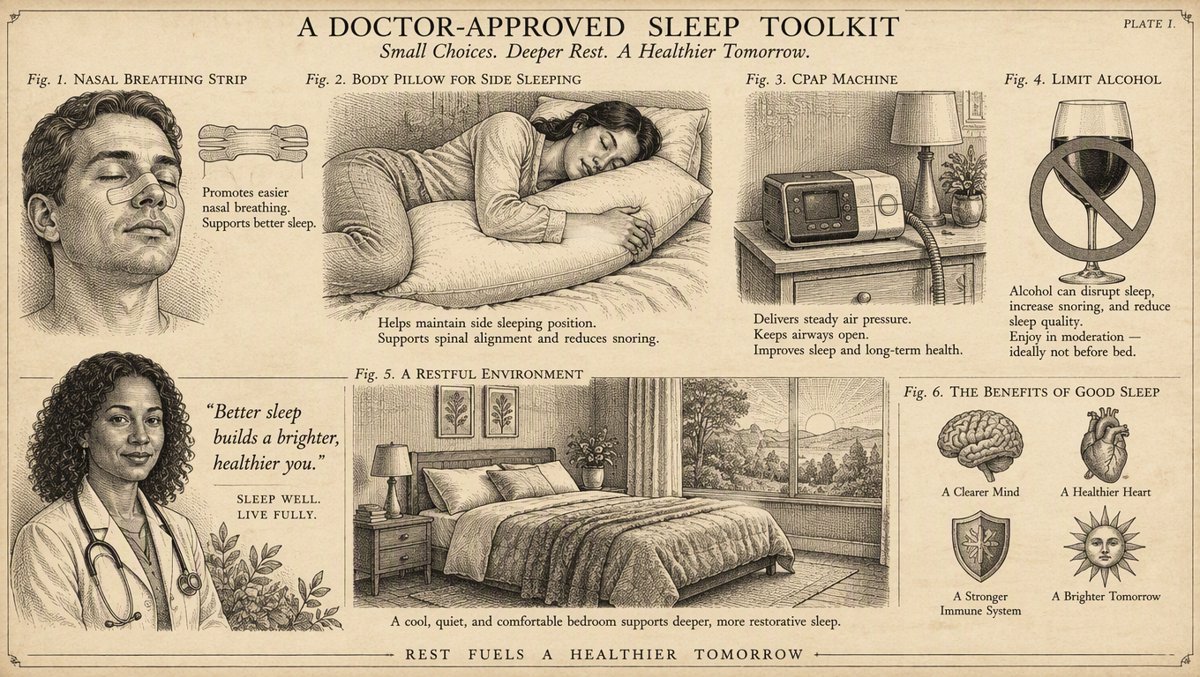
1. 🛌 Sleep on your side. Back-sleeping lets your tongue flop backward and encourages airway collapse; side-sleeping keeps things open. In clinical research on position-dependent sleep apnea, positional therapy dropped breathing events from about 11 per hour down to roughly 2 — approaching the results of a CPAP machine in that study.⁶ Tennis-ball pajama trick, body pillow, whatever gets you on your side — it counts.
2. ⚖️ Let your weight work for you (even a little). The famous Wisconsin Sleep Cohort study in JAMA found that a 10% weight loss predicted a 26% drop in breathing-interruption severity — while 10% weight gain roughly sextupled the odds of developing moderate-to-severe sleep apnea.⁷ Translation: modest changes move the needle in both directions. Powerful stuff.
3. 🍷 Mind the evening pour. That nightcap relaxes more than your mood — it relaxes your throat muscles too, making airway collapse and snoring more likely. Mayo Clinic lists alcohol as an official snoring aggravator, and a systematic review backs the mechanism.⁵ ⁸ Try moving your last drink earlier — or skipping it on weeknights — and listen to the difference (or rather, enjoy the silence).
4. 🩹 Clear the runway — safely. Stuffy nose? Cleveland Clinic suggests nasal strips, saline rinses, or doctor-approved decongestants to open airflow before you sleep — the opposite philosophy of sealing your mouth over the problem.²
5. 🩺 Get properly checked if red flags fit. If the gasping/silent-pause pattern sounds familiar, ask about a sleep study. Modern treatments are genuinely good — CPAP machines, comfortable oral appliances — and in a 2024 first, the FDA even approved the first-ever medication (Zepbound/tirzepatide) for moderate-to-severe sleep apnea in adults with obesity.⁹ There has never been a better time to stop white-knuckling through tired days.
🎯 Key takeaway: Side-sleeping, modest weight management, smarter evening habits, and a proper diagnosis beat any roll of tape on the market.
All claims fact-checked against Gold-tier (CDC/NIH/WHO/PubMed/Nature/The Lancet/JAMA/PLOS One/FDA) and Silver-tier (Mayo Clinic/Harvard Health/Cleveland Clinic) authoritative sources. Last verified: September 17, 2026.
Your bed partner will thank you. Your heart will thank you. And that roll of tape? It belongs on a package, not your face. Sweet (quiet) dreams, friends. 🌙💤