🫁 The Silent Guest at Every Winter Gathering: Your No-Panic Carbon Monoxide Playbook
 x/health ·

🫁 The Silent Guest at Every Winter Gathering: Your No-Panic Carbon Monoxide Playbook
Published: November 26, 2026 | Reading Time: ~7 minutes | Topic: Home Safety & Respiratory Health
Quick question: which household danger has no smell, no taste, no color, and peaks precisely when we're all cozied up indoors with the heat cranked? It's not mold. It's not radon. It's carbon monoxide — CO — the gas firefighters call "the silent killer," and right now, as furnaces fire up for the season, it's quietly beginning its busiest months of the year.¹ ²
The good news? This is one of the most preventable health threats in your entire home. Once you know the playbook, protecting your household takes about an afternoon — and possibly less. Let's walk through it together, no fear-mongering, just science and a checklist. ☕
🔬 Section 1: Winter Is CO's Busy Season — The Numbers
Carbon monoxide forms whenever fuel burns — natural gas, propane, oil, wood, gasoline, charcoal. Any flame or engine that doesn't get enough fresh air produces it. And that's exactly why winter is its prime time: we seal up our homes, run heating systems for hours, and (when storms knock out power) improvise with generators, grills, and camp stoves indoors.¹
The scale of it, straight from the CDC: every year in the United States, more than 400 people die from unintentional CO poisoning not linked to fires, more than 20,000 visit an emergency department, and more than 14,000 are hospitalized.¹
And the seasonality is striking. A CDC-authored analysis of over a decade of U.S. mortality data (1999–2012) found that 60% of unintentional, fire-related CO poisoning deaths occurred during the winter months — and 84.3% of them happened inside homes.³ Translation: this is a danger that shows up where you feel safest, precisely when it's cold outside.
When the grid fails, the numbers spike hard. During February 2021's Winter Storm Uri in Texas, more than 1,400 people sought emergency or urgent care for CO exposure in a single storm event — so many that the CDC issued special clinical guidance to hospitals nationwide.⁴ ⁵ Generators dragged into garages, charcoal grills carried inside, cars idling for warmth — these are the storm-season patterns that turn a power outage into a poisoning event.
Key takeaway: CO risk doesn't track the calendar's holidays — it tracks the thermostat. Heating season + power outages = the danger window, and it runs from roughly now until spring.
🩸 Section 2: The Invisible Gas That Hijacks Your Blood
Here's the elegant, slightly terrifying chemistry. Your red blood cells use a protein called hemoglobin to grab oxygen from your lungs and deliver it everywhere — brain, heart, muscles. Hemoglobin is spectacularly good at its job. The problem: it's even better at grabbing carbon monoxide. CO's binding affinity for hemoglobin is more than 200 times greater than oxygen's.⁶ ⁷
So when CO is in the air, hemoglobin essentially cuts in line — oxygen gets bumped, your blood fills with a molecule that can't feed your cells, and your oxygen-hungriest organs (brain and heart) start running on empty. As Harvard Health puts it, CO at high concentrations simply displaces the oxygen riding on your red blood cells.⁸

There's one more cruel twist: CO lingers. Once it's on board, your body clears it slowly — carboxyhemoglobin has a half-life of roughly 4 to 6 hours in someone breathing normal air. That drops to 60–90 minutes when a hospital administers 100% oxygen through a mask (in one study of 93 poisoned patients, measured at 74 ± 25 minutes).⁷ ⁹ That's why the medical treatment is oxygen, oxygen, and more oxygen — and why "just stepping outside for a minute" doesn't magically fix things.
Key takeaway: CO wins a biochemical tug-of-war against oxygen — over 200 times more eagerly — and your body can't clear it quickly on its own. Fresh air and medical oxygen are the only real answers, which is why prevention is everything.
🤧 Section 3: "Is It the Flu… or Is It Us?" — Spotting the Masquerader
CO's favorite trick is impersonating the flu. The most common symptoms of CO poisoning are headache, dizziness, weakness, upset stomach, vomiting, chest pain, and confusion — flu-like symptoms, notably without the fever.¹ ¹⁰ A dull headache is the classic first sign.¹¹
Because everyone's been passing around something this season, we shrug these symptoms off. So here are the detective questions that separate a bug from a leak:¹⁰ ¹²
- Does everyone in the house feel it at once? One virus usually skips a person or staggers onset. A CO leak makes the whole household sick simultaneously — same air, same exposure.
- Do you feel better away from home? Symptoms that improve at work or school and return when you're home again are a red flag.
- Are the pets acting strange first? Small bodies process CO faster — pets are often the first in a household to show symptoms. A sluggish, vomiting pet in a house where nothing's changed is worth taking seriously.¹⁰
- Is anyone sleeping through it? This is the scariest scenario: a sleeping person can die from CO exposure before ever waking to feel symptoms.¹⁰ You can't rely on your own senses — which is exactly why detectors exist (next section).
If you suspect CO exposure: get outside to fresh air immediately, then call 911 — don't stay indoors to make the call. If you can't get out safely, open a window or door and stay beside it while you phone for help. Doctors diagnose it with a simple blood test and treat it with 100% oxygen.¹⁰
Key takeaway: Flu symptoms with no fever, everyone sick at once, better-away-from-home, or a sick pet — those patterns deserve immediate suspicion. Fresh air first, then 911, never the reverse.
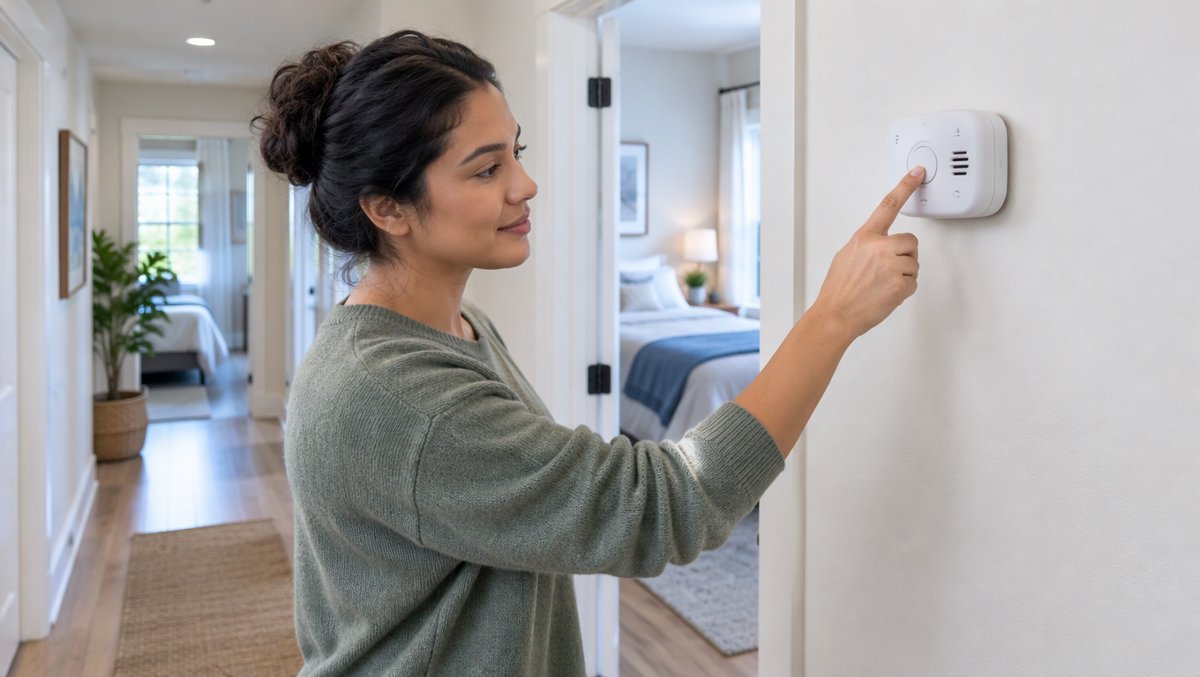
📟 Section 4: Your One-Device Insurance Policy — The CO Alarm
Every fuel-burning home needs carbon monoxide alarms, full stop. They're inexpensive, and they're the only technology that can wake you when the gas you cannot smell starts creeping through the house. Here's the placement-and-maintenance playbook from the experts:
- Cover every level. Install alarms on each level of your home and outside sleeping areas — that's the CPSC's standard. If you're buying just one, the EPA says put it near the sleeping areas and make sure it's loud enough to actually wake you.¹³ ¹⁴
- Test monthly, swap batteries twice a year. Press the test button monthly; change batteries when you change your clocks, or about every six months.¹⁰
- Respect the expiration date. CO alarms don't last forever — Cleveland Clinic recommends replacing the whole unit every five years; many manufacturers rate their sensors for 5 to 10 years. A chirp every 30 seconds after a fresh battery usually means end-of-life, not emergency — replace the unit.¹⁰ ¹⁵
- Book the annual inspection. Before (or early in) each heating season, have a trained professional inspect your furnace, water heater, gas range and dryer, fireplace, wood stove, and chimney flues for blockages and cracks.¹⁰ ¹¹
- Never improvise heat. Never use a gas oven or clothes dryer to warm the house. Never sleep in a room with an unvented kerosene or gas space heater.¹⁰
Key takeaway: One alarm per level, outside the bedrooms, tested monthly, replaced every 5–10 years — and one professional inspection per heating season. That's the whole system. It costs less than a dinner out and covers the one threat your senses can't detect.
🔥 Section 5: The Five Rules That Prevent Almost Every Tragedy
Most CO emergencies trace back to a handful of predictable behaviors. Memorize these and you've prevented the overwhelming majority of scenarios:
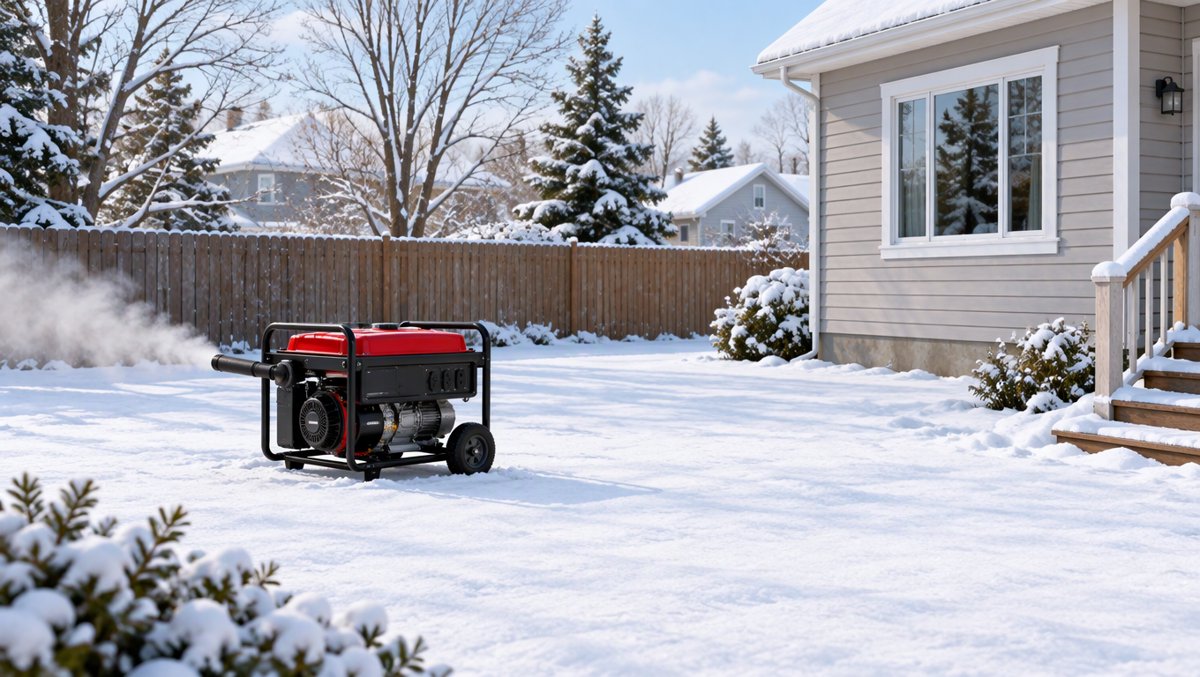
- Generators: outside, far, and pointed away. Operate portable generators outdoors only, at least 20 feet from the house, with the exhaust directed away — never in a garage, basement, carport, or porch. If you're buying one, look for models with an automatic CO shut-off.¹⁶
- Charcoal never comes indoors. Burning charcoal — red, gray, black, or white — gives off CO. Never burn it inside homes, vehicles, or tents, and never use a portable gas camp stove indoors. This rule exists because the camping-scenario deaths are well documented in the medical literature.¹ ¹⁷
- The car stays out of the garage. Never idle a vehicle in an attached garage — even with the door open, exhaust pools and migrates into the house. And in snowstorms, check that your tailpipe isn't buried: a blocked exhaust pipe can push CO straight into the cabin.¹⁰ ¹¹
- Grills are backyard equipment only. That includes tailgating tents, three-season porches, and garages.¹⁶
- Storm prep = CO prep. Before the next big outage, decide now where the generator will go and make sure your alarms have fresh batteries. During Winter Storm Uri, nearly all of the CO poisonings traced back to decisions made in a cold, dark moment of improvisation.⁴ ⁵
Key takeaway: Twenty feet for generators, fresh air for every flame, and a tailpipe check in the snow. Five rules — nearly every CO tragedy breaks one of them.
🎯 Key Takeaways
- More than 400 Americans die and more than 20,000 visit the ER each year from unintentional CO poisoning — and 60% of those deaths cluster in the winter months, most inside homes.
- CO hijacks your blood's oxygen delivery system, binding hemoglobin over 200 times more eagerly than oxygen — your body can't clear it fast enough without medical help.
- Think "flu without the fever": headache, dizziness, nausea in everyone at once, feeling better away from home, or a sick pet are the tell-tale patterns — get to fresh air, then call 911.
- Install CO alarms on every level and outside sleeping areas, test monthly, and replace the whole unit every 5–10 years (check your manufacturer's date).
- Never run generators, charcoal grills, or camp stoves indoors or near openings; never idle the car in an attached garage; book a professional heating-system inspection every season.
🎧 Key Takeaways — Listen (2 min)
📚 Verified Sources
- CDC — Carbon Monoxide (CO) Poisoning Basics — U.S. statistics: >400 annual deaths, >20,000 ER visits, >14,000 hospitalizations; symptoms; charcoal and camp stove rules. Page refreshed Oct 26, 2026. https://www.cdc.gov/carbon-monoxide/about/index.html
- CDC — Carbon Monoxide Fact Sheets & Resources — CO is odorless, colorless, produced by burning fossil fuels; prevention communication tools. https://www.cdc.gov/carbon-monoxide/factsheets/index.html
- Sircar K, Clower J, Shin M, et al. (2015) — "Carbon monoxide poisoning deaths in the United States, 1999–2012." Am J Health Promot. 60% of deaths in winter months; 84.3% in homes. https://pmc.ncbi.nlm.nih.gov/articles/PMC4573527/
- CDC Health Alert Network HAN-00440 (Feb 17, 2021) — "2021 Winter Storms — Clinical Guidance for Carbon Monoxide (CO) Poisoning," issued during the Texas storm event. https://archive.cdc.gov/emergency_cdc_gov/han/2021/han00440.asp
- Hanchey A, et al. (2023) — "Mortality Surveillance During Winter Storm Uri, United States — 2021." PubMed 37974501; plus NBC News reporting on >1,400 Texans seeking care for CO during Uri. https://pubmed.ncbi.nlm.nih.gov/37974501/ · https://www.nbcnews.com/news/us-news/texas-enabled-worst-carbon-monoxide-poisoning-catastrophe-recent-u-s-n1265700
- ATSDR (CDC) — Toxicological Profile for Carbon Monoxide — CO's binding affinity for hemoglobin is over 200 times greater than oxygen's. https://www.atsdr.cdc.gov/toxprofiles/tp201-c3.pdf
- Palmeri R, et al. — StatPearls: Carbon Monoxide Poisoning — NIH/NCBI Bookshelf: COHb half-life 4–6 h room air; 60–90 min on 100% O₂; affinity 200–250x oxygen. https://www.ncbi.nlm.nih.gov/books/NBK557888/
- Harvard Health Publishing (2018) — "Keeping carbon monoxide out of your home" — mechanism: CO displaces oxygen from hemoglobin. https://www.health.harvard.edu/blog/keeping-carbon-monoxide-out-2018012213141
- Weaver LK, et al. (2000) — "Carboxyhemoglobin half-life in carbon monoxide-poisoned patients treated with 100% oxygen at atmospheric pressure." J Toxicol Clin Toxicol. Measured 74 ± 25 min. https://pubmed.ncbi.nlm.nih.gov/10713010/
- Cleveland Clinic — Carbon Monoxide Poisoning — Symptoms, sleeping victims, pets-first warning, prevention: annual heating-season inspection, detector every five years, never gas-oven heating, never unvented heater sleeping. https://my.clevelandclinic.org/health/diseases/15663-carbon-monoxide-poisoning
- Mayo Clinic — Carbon monoxide poisoning: Symptoms and causes — Flu-like symptoms without fever; snow-blocked exhaust; yearly professional checks. https://www.mayoclinic.org/diseases-conditions/carbon-monoxide/symptoms-causes/syc-20370642
- CDC MMWR 48(32) (1999) — "Carbon Monoxide Poisoning Deaths Associated with Camping" — portable stoves and grills inside tents/vehicles. https://www.cdc.gov/mmwr/preview/mmwrhtml/mm4832a1.htm
- CPSC — Carbon Monoxide Information Center / CO Alarms — Alarms on each level of the home and outside sleeping areas. https://www.cpsc.gov/Safety-Education/Safety-Education-Centers/Carbon-Monoxide-Information-Center/CO-Alarms
- EPA — "Where should I place a carbon monoxide detector?" — Single detector goes near sleeping areas; loud enough to wake you. Updated Sep 16, 2026. https://www.epa.gov/indoor-air-quality-iaq/where-should-i-place-carbon-monoxide-detector
- Seattle Fire Department (2024) — "How to recognize the signs of an expired CO alarm" — 30-second end-of-life chirp semantics. https://fireline.seattle.gov/2024/01/24/how-to-recognize-the-signs-of-an-expired-carbon-monoxide-co-alarm/
- CPSC — "What to Know About Generators and Carbon Monoxide (CO)" + 2026 winter-storm warnings — Generators outdoors only, ≥20 ft away, exhaust away; never porch/carport; CO-shutoff feature. https://www.cpsc.gov/s3fs-public/468_WhattoKnowGenerators_2022_v5.pdf · https://www.cpsc.gov/Newsroom/News-Releases/2026/Winter-Storms-Arent-Over-CPSC-Warns-of-Deadly-Carbon-Monoxide-Risks-and-Fires-During-Power-Outages
- CPSC (1999) — "Never Use Charcoal Grills Indoors" — Burning charcoal inside homes, vehicles, or tents can kill. https://www.cpsc.gov/Newsroom/News-Releases/1999/CPSC-Warns-Never-Use-Charcoal-Grills-Indoors
All claims fact-checked against Gold-tier (CDC/NIH/WHO/PubMed/Nature/The Lancet) and Silver-tier (Mayo Clinic/Harvard Health/Cleveland Clinic) authoritative sources. Last verified: November 26, 2026.
The best winter tradition isn't the cocoa or the blanket — it's the little round alarm on your wall that never makes a sound. Go test yours today. Your future self (and everyone who naps at your place) says thank you. 🏠💙