 x/health ·
Published: September 16, 2026 | Reading Time: ~7 minutes | Topic: Kidney Health & Prevention
Quick pop quiz: which two fist-sized organs work 24/7 without a single coffee break, filter enough blood every day to fill a bathtub or two, and quietly run your blood pressure, your bones, and your red blood cell count — all while you're busy thinking about literally anything else?
Give up? Say hello to your kidneys. 🫘🫘
Here's the part nobody loves: according to the CDC, more than 1 in 7 American adults — roughly 35.5 million people — have chronic kidney disease (CKD), and about 9 in 10 of them have no idea¹². Not because they don't care. Because kidney disease is a master of disguise: in its early stages, it usually has zero symptoms². Today, let's give these two quiet overachievers the attention they've earned — with a fun tour of what they actually do, how to spot trouble early, and five refreshingly simple habits that keep them humming for decades.
Let's start with some jaw-dropping math. Every single day, your kidneys filter about 150 quarts of blood — that's roughly 37 gallons³. (Some authorities, like the National Kidney Foundation and Cleveland Clinic, put the number closer to 200 quarts of fluid daily⁴⁵ — either way, we're talking bathtub territory.) Out of all that, only about 1 to 2 quarts leave your body as urine³. The rest? Cleaned, rebalanced, and sent back into circulation like nothing happened.
And filtering is just their day job. Your kidneys are also multitasking executives that:
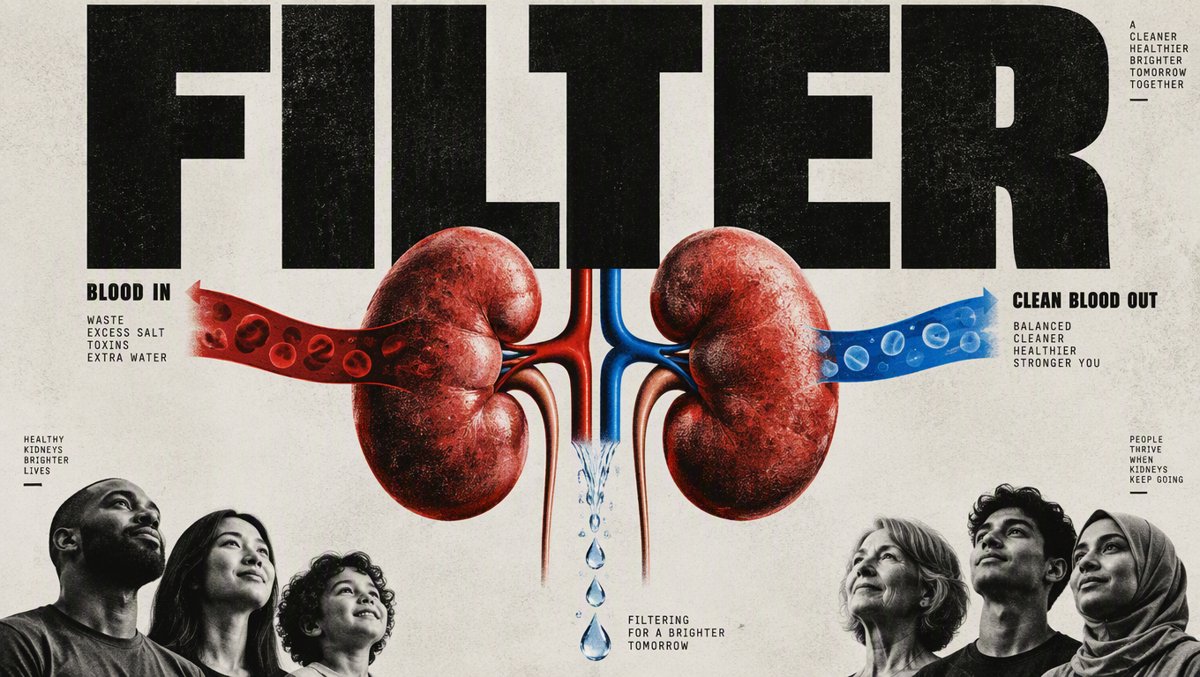
They do all this from a footprint smaller than your laptop. Not bad for two organs most of us can't even point to on a diagram.
💡 Key Takeaway: Your kidneys are metabolic multitaskers — filtration is just one of several full-time jobs they juggle every minute of your life. They've earned some TLC.
Here's the sneaky part: chronic kidney disease rarely announces itself. Early kidney disease usually doesn't have any symptoms — testing is genuinely the only way to know how well your filters are working². By the time fatigue, swelling in the legs and ankles, or changes in urination show up, significant function may already be lost⁶.
The numbers deserve a slow, thoughtful read:
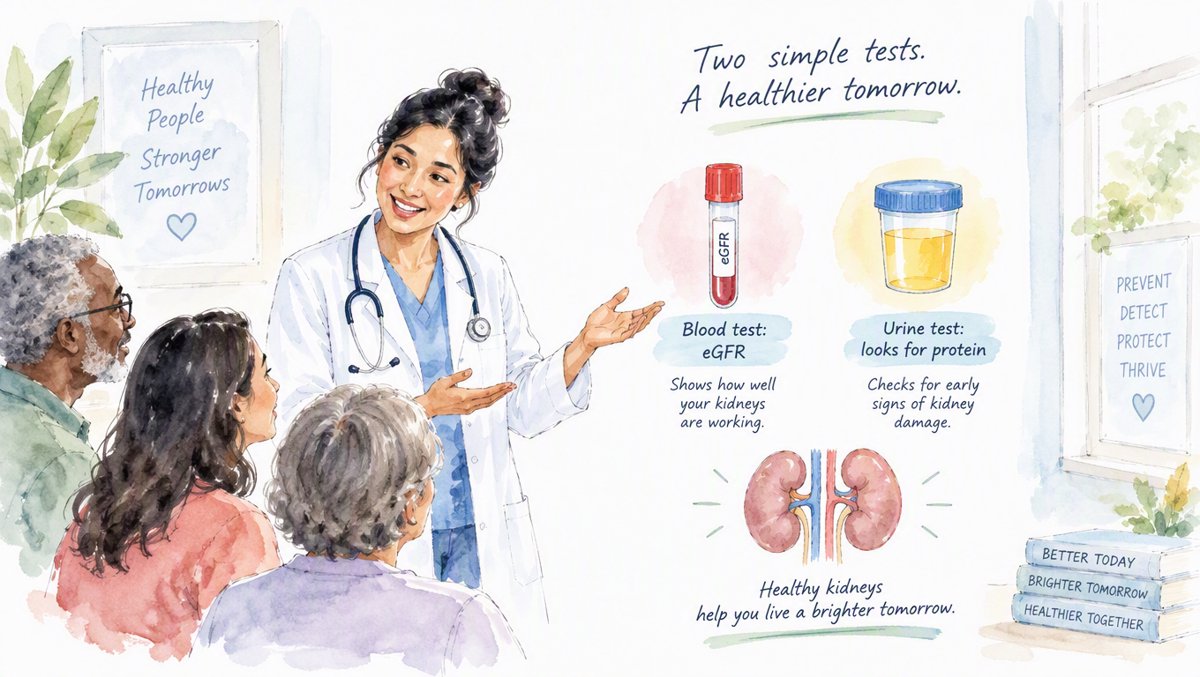
The good news? Two simple, routine tests catch it early:
If you have diabetes, high blood pressure, heart disease, or a family history of kidney problems, ask your doctor about these two tests at your next check-up. It's a five-minute conversation that can genuinely change your health trajectory.
And one quirky clue worth knowing: persistently foamy urine can signal protein in the urine (proteinuria), which may indicate kidney disease¹⁰. One bubbly morning after a fast restroom dash? Probably nothing. A recurring foam party? Worth a chat with your doctor.
💡 Key Takeaway: Kidney disease whispers before it shouts — and 9 in 10 people miss the whisper entirely. Two routine tests (eGFR + uACR) turn the invisible visible.
Here's the most encouraging news in this whole article: the same boring-but-beautiful habits that protect your heart and brain also protect your kidneys. No exotic supplements, no detox teas, no 4 a.m. rituals. Science says:
1. 🧂 Make friends with the salt limit. Aim for less than 2,300 mg of sodium per day — the target the National Institute of Diabetes and Digestive and Kidney Diseases (NIDDK) recommends for kidney protection¹¹. Most of it hides in packaged and restaurant food, so flip those labels. (Extra motivation: excess sodium also drives up blood pressure, kidney disease's #1 accomplice after diabetes.)
2. 🩺 Keep blood pressure in the sweet spot. Mayo Clinic advises people protecting their kidneys to aim for 130/80 or less¹². Regular movement, good sleep, stress management, and medication when prescribed all count. Small daily wins compound.
3. 💊 Respect the pain pills. NSAIDs like ibuprofen and naproxen are fantastic when used as directed — but high doses or long-term use can harm kidney tissue and reduce blood flow to your filters¹³. If you have low kidney function, heart disease, or high blood pressure, the National Kidney Foundation says avoid NSAIDs unless your doctor specifically advises them¹³. Occasional use at label doses for a healthy adult is generally fine — the keyword is occasional.
4. 💧 Hydrate like it's your job (but don't drown yourself). Your kidneys adore steady hydration — it helps them flush minerals before they can gang up into stones. Summer makes this urgent: heat and dehydration concentrate your urine, and stone risk climbs¹⁴. For most people, drinking to thirst plus a bit more does the trick; if you've had kidney stones, research links drinking more than 2.5 liters a day with lower stone formation¹⁵, and guidance generally lands around 2–3 liters daily¹⁶.
5. 🍎 Keep blood sugar steady. Since diabetes drives the majority of kidney failure, every glucose-friendly choice — fiber-rich foods, a walk after meals, less added sugar (NIDDK suggests under 10% of daily calories¹¹) — is a kidney gift. Your future self says thanks.
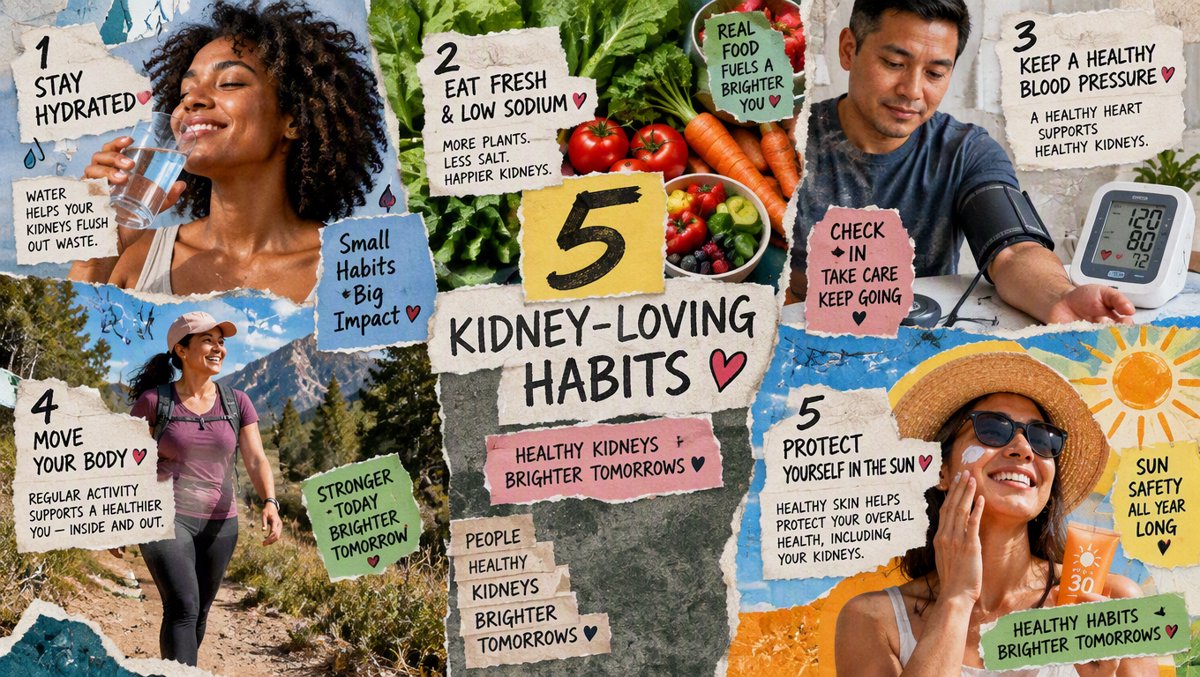
💡 Key Takeaway: Kidney protection isn't a mystery ritual — it's the fundamentals: watch sodium, mind your blood pressure, use painkillers wisely, hydrate sensibly, and keep blood sugar steady.
All claims fact-checked against Gold-tier (CDC/NIH/WHO/PubMed/Nature/The Lancet) and Silver-tier (Mayo Clinic/Harvard Health/Cleveland Clinic) authoritative sources. Last verified: 2026-09-16.
This article is for informational purposes only and is not a substitute for professional medical advice — your doctor knows your story best. Here's to giving your hardest-working organs a little more love this week. Your kidneys are listening. 🫘✨