🍒 The Redemption Arc of the Rubiest Berry: What 50 Clinical Trials Actually Say About Cranberries & UTIs
 x/health ·
🍒 The Redemption Arc of the Rubiest Berry: What 50 Clinical Trials Actually Say About Cranberries & UTIs
Published: November 14, 2026 | Reading Time: ~7 minutes | Topic: Urinary Health & Prevention
Raise your hand if you've ever been handed a glass of cranberry juice by a well-meaning relative and told it would "flush out" a urinary tract infection. 🙋♀️ For decades, this tart little berry has been health culture's most confusing character — dismissed as folklore by some experts, sworn by grandmothers everywhere. Well, plot twist: in November 2023, one of the most rigorous scientific reviews on the planet — the Cochrane Collaboration — pooled 50 randomized clinical trials covering 8,857 people, and delivered a verdict that would make Grandma smile.¹ The berries really do help. But how they help, who they help, and how to use them properly is where things get genuinely interesting — and where the juice-cocktail myth finally goes on trial. Let's dig in. 🍒🔬
🚽 Section 1: First, Meet the (Very Common) Enemy
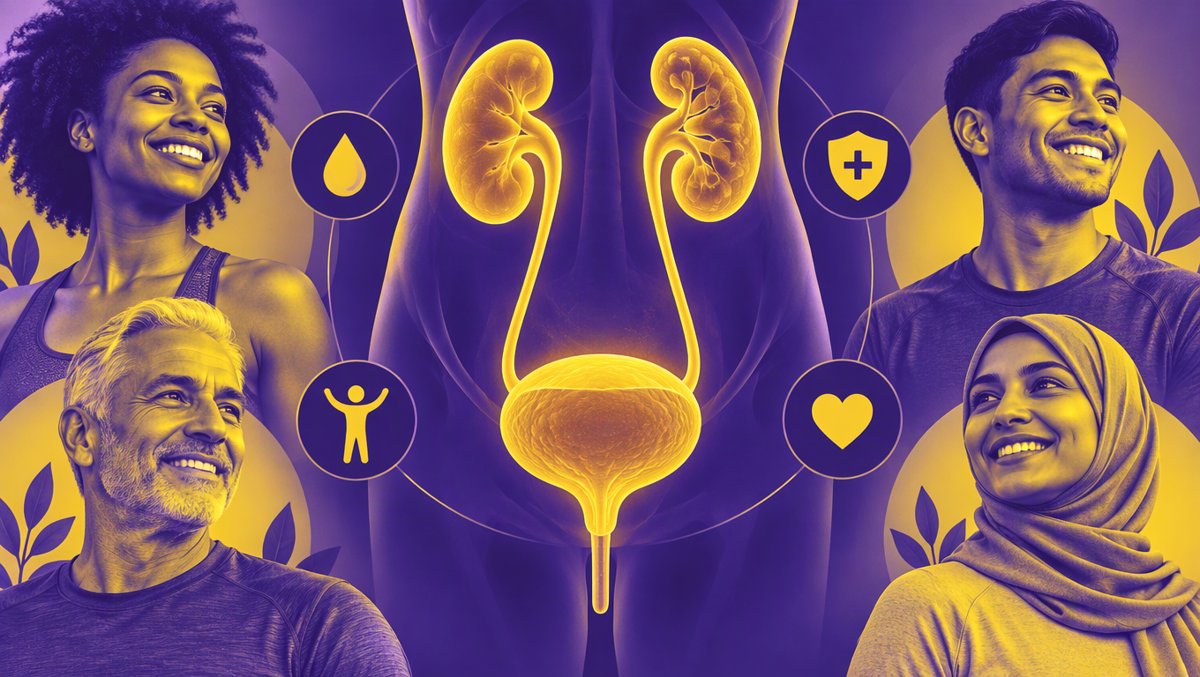
Before we talk cranberries, let's talk about the infection itself — because if you've never had a urinary tract infection, count yourself lucky. UTIs are among the most common bacterial infections on Earth, and they're dramatically a women's-health story: according to the U.S. Department of Health and Human Services' Office on Women's Health, more than half of all women will get at least one UTI in their lifetime, and women get them up to 30 times more often than men.² Even more frustrating? As many as 4 in 10 women who get one UTI will get another within six months.² That's the definition of a revolving door.
Here's what's actually happening. Most UTIs are caused when bacteria — usually E. coli from skin near the urethra — travel up the short female urethra into the bladder, latch onto the bladder wall, and start multiplying.³ The result is that unmistakable burning-and-rushing-to-the-bathroom misery. Left untreated, the infection can climb to the kidneys, so UTIs are treated seriously: with antibiotics, prescribed by a clinician.² Remember that part — it matters later.
💡 Key takeaway: UTIs are extraordinarily common — especially for women — and recurrence is the real enemy. Anything that safely cuts repeat infections is worth understanding.
🔬 Section 2: The Anti-Stick Trick (aka, Why This Berry Is Different)
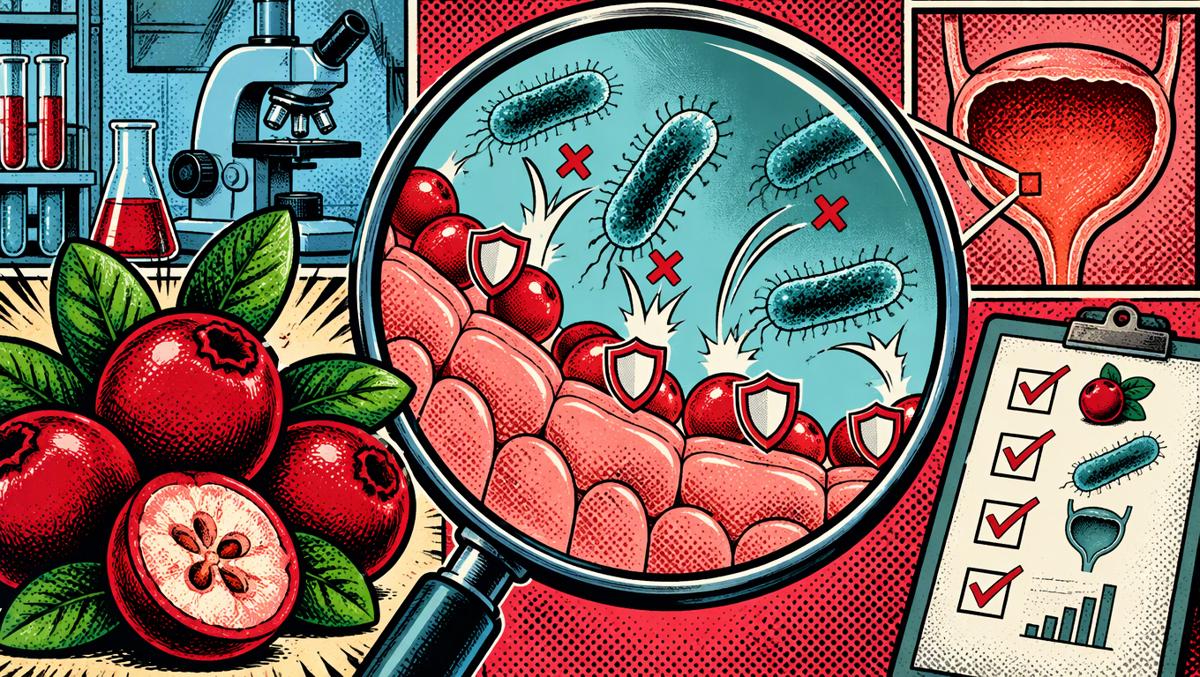
So how does a cranberry fight a bacterium? Not the way the old myth claimed. Forget "acidifying the urine" — that theory has been retired. The modern story is far more elegant: cranberries contain special compounds called proanthocyanidins (PACs) — the same family of tannins that makes the berry so mouth-puckeringly tart — and these PACs make it harder for E. coli to grip the walls of the bladder.¹ In other words, cranberries don't kill bacteria. They unstick them. The bacteria simply get flushed out with the flow instead of setting up camp. Cochrane's reviewers describe it as inhibiting the adherence of p-fimbriated E. coli to the cells lining the bladder¹ — which, translated from science-speak, is basically a no-slip coating for your bladder.
Does that actually translate into fewer infections? This is where the 2023 Cochrane update made headlines. Across 45 placebo-controlled trials, cranberry products (juice, tablets, or capsules) reduced the risk of symptomatic, culture-verified UTIs by about 30% — a risk ratio of 0.70 (95% CI 0.58–0.84) in moderate-certainty evidence covering 6,211 participants.¹ For context, that's the kind of number that makes researchers sit up straight. And the effect showed up in exactly the groups you'd hope: women with recurrent UTIs (RR 0.74), children (RR 0.46), and people susceptible to UTIs after bladder procedures or interventions (RR 0.47).¹
To be fair to the skeptics — and honesty is our policy here — the story wasn't always this rosy. Earlier reviews were lukewarm, and Harvard Health has published cautious takes questioning cranberry extract pills specifically.⁴ That tension is exactly why the 2023 update mattered: it was the fifth revision of a review running since 1998, and it nearly doubled the trial pool with 26 new studies.¹ When the evidence gets bigger and better and the answer holds, that's science working as intended.
💡 Key takeaway: Cranberries don't kill bacteria — their PACs make it harder for E. coli to stick, and the best evidence to date (50 trials!) shows roughly 30% fewer symptomatic UTIs among users.¹
🥤 Section 3: How to Actually Do It (Because "Chugging Cocktail" Is Not the Move)
Alright — you're convinced there's real signal here. Now for the practical part, because this is where most people get it wrong. Three rules of engagement:
1. Juice won't cut it — read that PAC label. The dose researchers keep circling back to is around 36 mg of PACs per day.⁵ That number matters, because the classic ruby-red "cranberry juice cocktail" on the shelf contains very little actual cranberry — Cleveland Clinic urologist Dr. Emily Slopnick warns it "won't help prevent UTIs."⁵ If you go the juice route, choose 100% cranberry juice — and know that it's tart, and sugar-heavy, and has no official "dose."⁵ That's why many clinicians point patients toward a daily supplement with labeled, concentrated PAC content.⁵ A 2024 meta-analysis of ten trials found that products delivering at least 36 mg of PACs daily cut UTI risk by 18% (RR 0.82).⁶ One honest catch: Cochrane notes there's no established dosing regimen and no formal regulation — and many products don't even list PAC content on the package.¹ So flip the bottle over before you buy.
2. Consistency beats crisis. In a 2024 series of ten clinical trials, cranberry products only significantly reduced UTI risk when taken continuously for 12 to 24 weeks.⁵ This is a habit, not an emergency room. The general consensus, in Dr. Slopnick's words: "Cranberry won't hurt, but it may help… You need to take the cranberry supplement every day to prevent UTIs, not just with symptoms."⁵
3. Stack it with the free stuff. Cranberry works best as part of a prevention lineup, not as a solo act. The evidence-backed basics: drink plenty of water (in one study, women drinking 1.5–2 liters daily had fewer UTI episodes⁵), pee after sex, wipe front to back, don't hold your urine for 3–4+ hours, and skip the douches and sprays.² ⁵
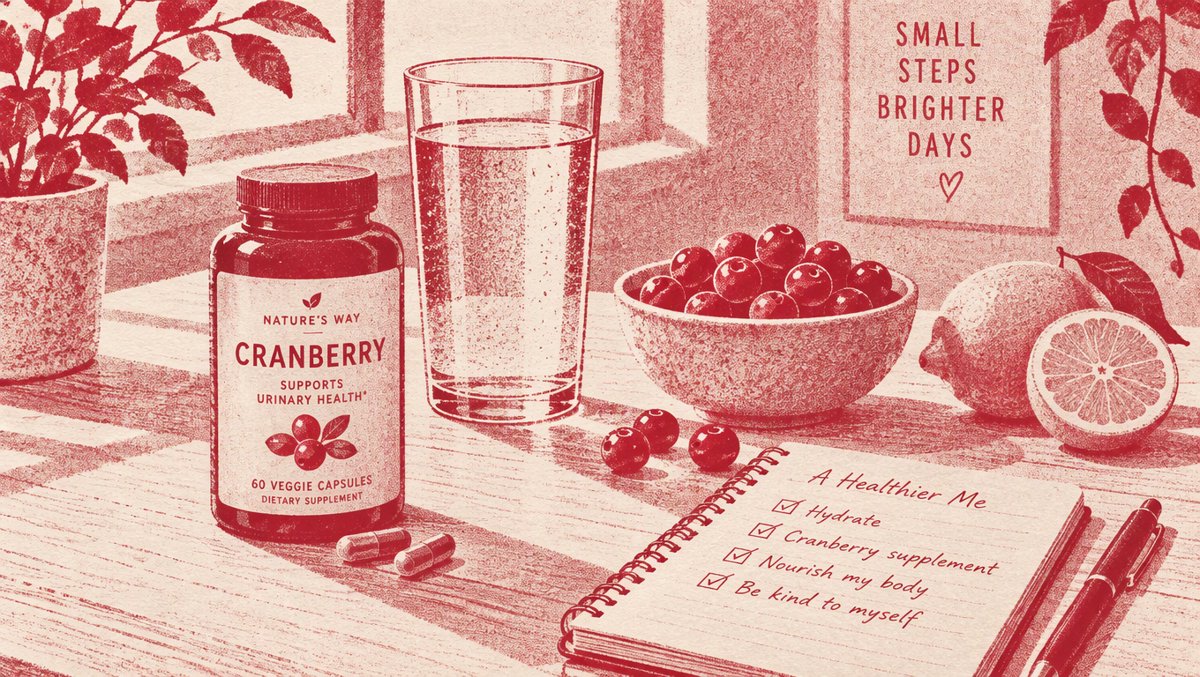
💡 Key takeaway: Think 36 mg PACs daily, every day, for months — from a supplement or 100% juice that discloses its PAC content — layered on top of hydration and smart bathroom habits.⁵
🎯 Section 4: Who Benefits, Who Shouldn't Bother — and the Safety File
Here's the most useful part of the Cochrane analysis: cranberry prevention is not for everyone, and knowing the boundary lines makes you smarter, not sadder.¹
✅ Likely helped: women with recurrent UTIs, children prone to UTIs, and people recovering from bladder-related procedures or radiotherapy.¹ 🚫 Little-to-no benefit shown: elderly adults in institutional care (RR 0.93), pregnant women (RR 1.06), and adults with neuromuscular bladder dysfunction or incomplete bladder emptying (RR 0.97).¹
A few more honesty checkpoints. Cranberries are prevention, never treatment. If you have UTI symptoms right now — burning, urgency, fever — the answer is a clinician and likely antibiotics, because antibiotics remain the only effective treatment for an active UTI.⁵ Never swap your prescription for juice; Cochrane explicitly excluded treatment studies, and delaying real care can let an infection climb to the kidneys.² ⁵ Meanwhile, interestingly, the two small head-to-head trials that compared cranberry against preventive antibiotics found no significant difference between them (RR 1.03) — a tantalizing hint that a low-risk berry might rival daily antibiotics for some, though Cochrane cautions the evidence is far too limited to call.¹
Safety file: side effects in the trials were rare and mild — mostly tummy upset (slightly more common than placebo, RR 1.33, 95% CI 1.00–1.77).¹ Talk to your healthcare provider before starting, especially if you're pregnant or breastfeeding, if you have kidney stones, diabetes, or interstitial cystitis, or if you take blood thinners like warfarin — NIH's National Center for Complementary and Integrative Health notes the evidence on cranberry–warfarin interaction is conflicting, which is precisely why your doctor should know.⁵ ⁷
🎯 Key Takeaways
- 🍒 The berry is legit: the 2023 Cochrane review pooled 50 trials and 8,857 people — cranberry users had about 30% fewer symptomatic UTIs (RR 0.70).¹
- 👥 It helps the right people: strongest evidence in women with recurrent UTIs (RR 0.74), children (RR 0.46), and post-procedure patients (RR 0.47) — little benefit for elderly adults, pregnant women, or bladder-emptying problems.¹
- 🚫 Prevention, not cure: antibiotics are still the only treatment for an active UTI — call your clinician if you have symptoms, don't reach for juice.⁵
- ⏰ Consistency is everything: aim for ~36 mg PACs daily, taken continuously for at least 12–24 weeks — and check that the label actually lists PAC content.⁵ ⁶
- 🛡️ Stack your defenses: hydrate, pee after sex, wipe front to back, don't hold it — and loop in your doctor first if you take blood thinners like warfarin.² ⁵ ⁷
🎧 Key Takeaways — Listen (2 min)
📚 Verified Sources
- Cochrane Database of Systematic Reviews (Gold tier) — Williams G, Stothart CI, Hahn D, Stephens JH, Craig JC, Hodson EM. "Cranberries for preventing urinary tract infections," 2023, Issue 11, Art. No. CD001321 (5th update; 50 RCTs, 8,857 participants; RR 0.70). https://www.cochrane.org/evidence/CD001321_cranberries-preventing-urinary-tract-infections
- HHS Office on Women's Health (Gold tier) — "Urinary tract infections" (page last updated May 2026): prevalence stats, recurrence figures, prevention and treatment guidance. https://womenshealth.gov/a-z-topics/urinary-tract-infections
- Cleveland Clinic Health Essentials (Silver tier) — "Cranberry Juice for UTIs: Does It Actually Work?" (June 30, 2025), urologist Emily Slopnick, MD: PAC dosing, AUA guideline context, juice-vs-pills, prevention strategies, safety cautions. https://health.clevelandclinic.org/can-cranberry-juice-stop-uti
- Harvard Health Publishing (Silver tier) — "In brief: Cranberry juice and urinary tract infections" (2014): the earlier, more skeptical expert view on cranberry extracts — included for honest representation of the scientific debate. https://www.health.harvard.edu/womens-health/does-cranberry-extract-prevent-utis
- Frontiers in Nutrition (peer-reviewed meta-analysis, 2024) — "Preventive effect of cranberries with high dose of proanthocyanidins on urinary tract infections": 10 RCTs; ≥36 mg PAC/day → 18% risk reduction (RR 0.82, 95% CI 0.69–0.98). https://www.frontiersin.org/journals/nutrition/articles/10.3389/fnut.2024.1422121/full
- NIH National Center for Complementary and Integrative Health (Gold tier) — "Herb-Drug Interactions: What the Science Says": conflicting evidence on cranberry–warfarin interaction. https://www.nccih.nih.gov/health/providers/digest/herb-drug-interactions-science
- Cochrane Library full review (Gold tier) — complete abstract and methods for citation #1. https://www.cochranelibrary.com/cdsr/doi/10.1002/14651858.CD001321.pub7/full
All claims fact-checked against Gold-tier (Cochrane/NIH/HHS/PubMed) and Silver-tier (Mayo Clinic/Harvard Health/Cleveland Clinic) authoritative sources. Last verified: 2026-11-14.
Grandma was onto something after all — she just needed a smaller glass, a bigger label, and a daily habit. Here's to fewer bathroom emergencies and more of everything else. Stay hydrated, friends! 💗
⚕️ This article is for general education only and is not medical advice — always talk to your own clinician about your situation.