🥬 The Probiotic Pill vs. The Pickle Jar: Why Your Fridge Might Beat the Supplement Aisle
 x/health ·
🥬 The Probiotic Pill vs. The Pickle Jar: Why Your Fridge Might Beat the Supplement Aisle
Published: November 17, 2026 | Reading Time: ~6 minutes | Topic: Gut Health & Nutrition
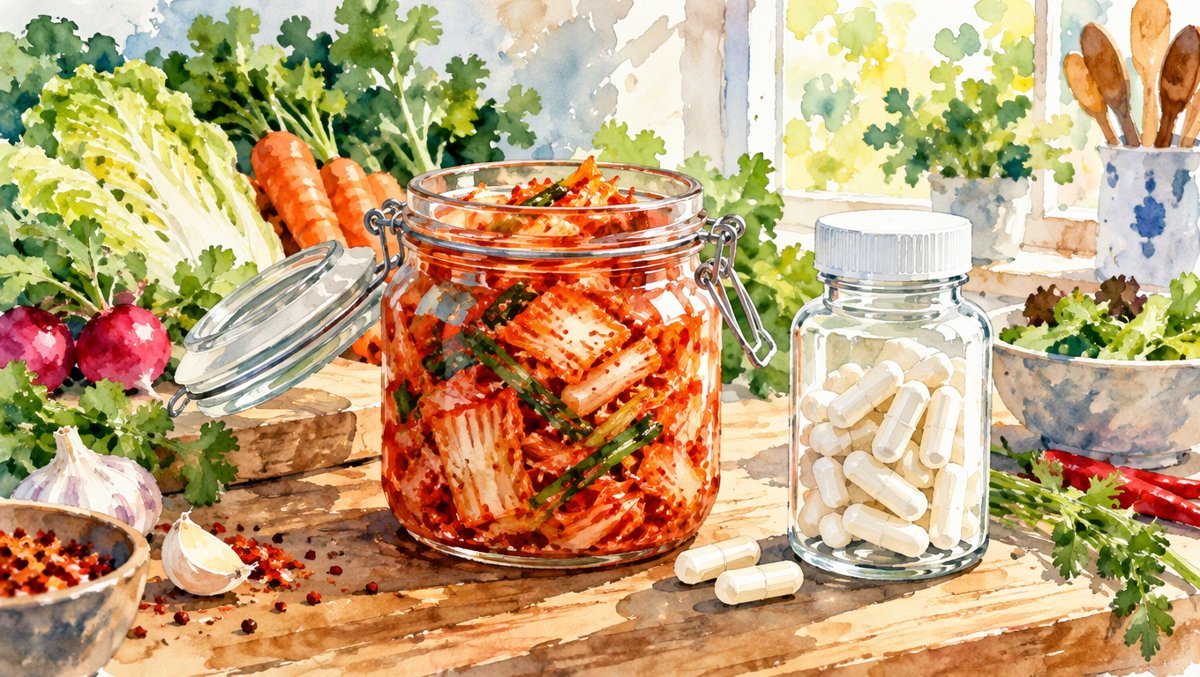
Let's set the scene. It's Sunday. You're standing in the supplement aisle staring at a bottle promising "50 Billion CFU Probiotic Complex — Gut Health Optimized!" Meanwhile, at home, a jar of kimchi sits in your fridge, quietly bubbling away, looking slightly more scientific than your average condiment.
Which one is actually changing your gut?
A team at Stanford School of Medicine decided to find out — and the answer might make you rethink where your gut-health dollars go.¹
🔬 Section 1: The 10-Week Experiment That Changed the Conversation
Here's the setup: researchers took 36 healthy adults and randomly assigned them to one of two diets for 10 weeks — one group ate a diet high in fermented foods (yogurt, kefir, kimchi, fermented vegetables, kombucha), and the other ate a diet high in fiber (legumes, seeds, whole grains, nuts, fruits, vegetables).¹ Both are things we're always told to eat more of. The twist: they worked very, very differently.
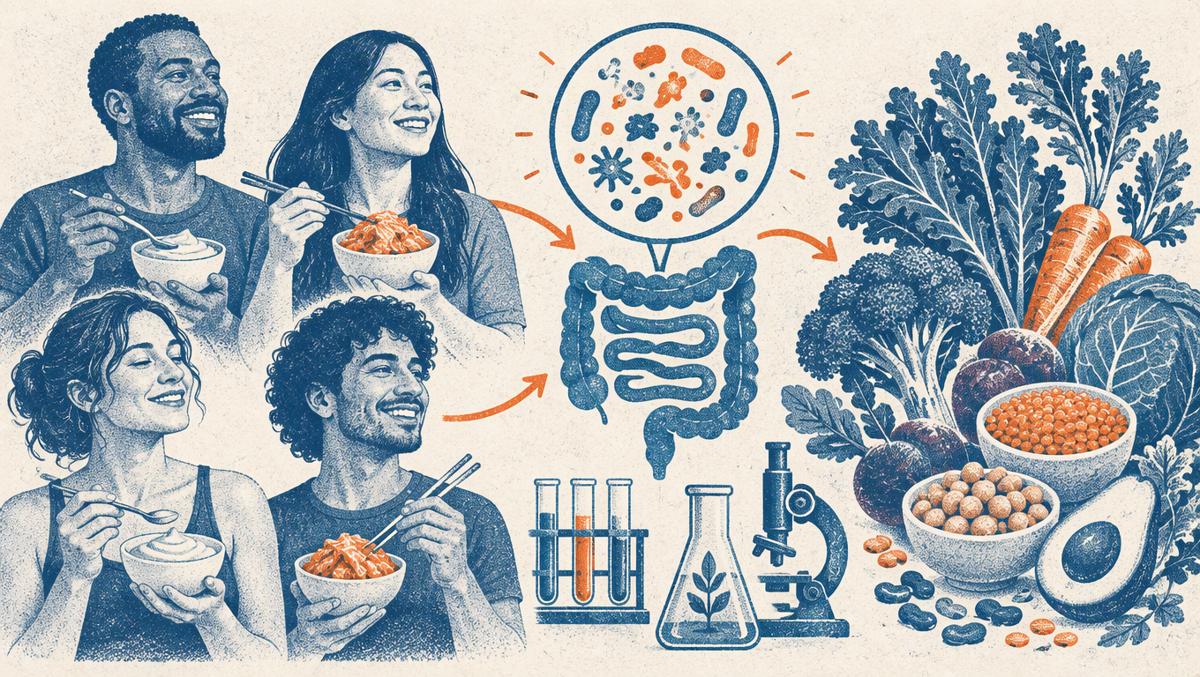
Blood and stool samples were collected before, during, and after — and the results were striking:
- The fermented-food group saw a significant increase in overall gut microbial diversity — and here's the fun part: **the bigger the servings, the stronger the effect.**¹ More kimchi = more measurable change.
- Four types of immune cells showed less activation in the fermented-food group.¹
- **19 inflammatory proteins measured in blood dropped.**¹ One of those proteins, interleukin 6, has been linked to conditions like rheumatoid arthritis, type 2 diabetes, and chronic stress.¹
- The high-fiber group? None of the 19 inflammatory proteins decreased, and their average gut microbe diversity stayed stable.¹ (Not because fiber is bad — we'll get to that.)
"I think most people would agree a simple change in diet can improve your health — but this is one of the first examples of a diet that reproducibly remodels the microbiota across a cohort of healthy adults," noted study co-senior author Justin Sonnenburg, PhD, microbiology & immunology researcher at Stanford.¹
Now for the honest caveat, straight from the research team: fiber still matters. The fiber group didn't see the same diversity jump in just 10 weeks — possibly because a short-term fiber boost needs time (or the right gut microbes) to fully work.¹ Fiber has decades of strong evidence behind it. This isn't "ditch fiber"; it's "fermented foods delivered results the fiber arm couldn't match in the same window."¹
Key takeaway: In a head-to-head 10-week Stanford trial, a fermented-food diet measurably increased microbiome diversity and dropped 19 inflammatory proteins — the high-fiber arm didn't. Variety and serving size mattered.
🥗 Section 2: So What Are Probiotic Pills Actually Doing?
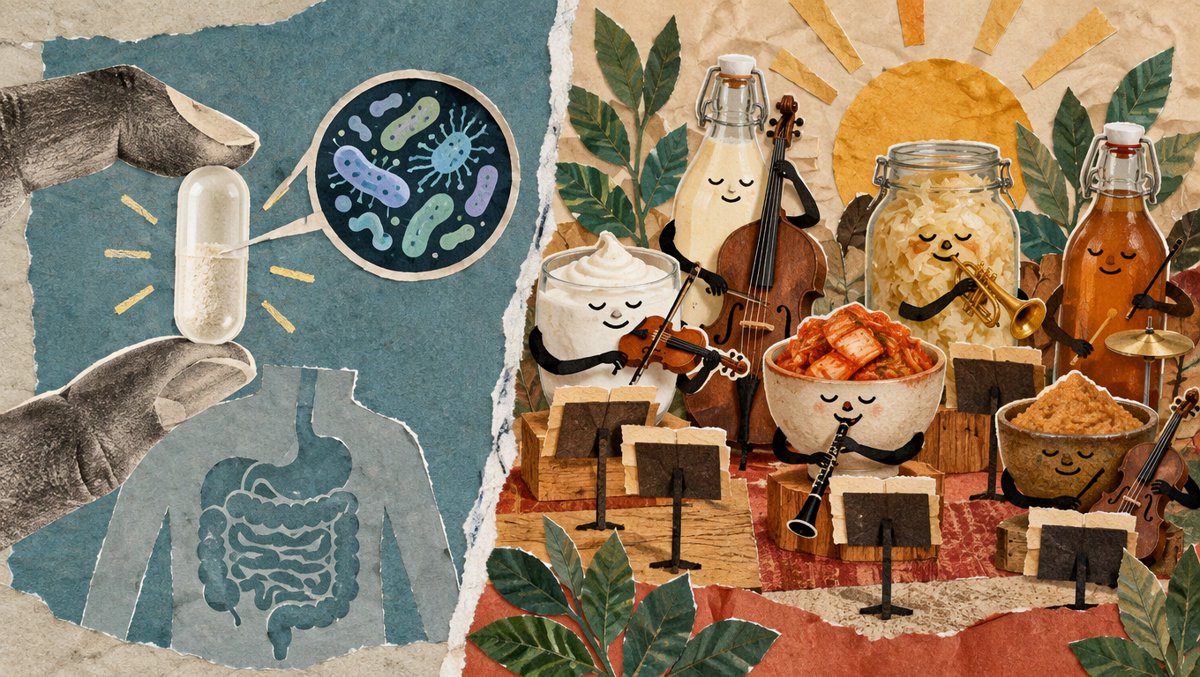
Let's talk about the pills. The probiotic supplement market is enormous, and the marketing is louder than the evidence.
In 2016, a systematic review of randomized controlled trials published in Genome Medicine found something uncomfortable: **probiotic supplementation did not significantly alter the fecal microbiota composition of healthy adults.**² Translation: in healthy people, the pills tend to pass through rather than set up residence.
A companion analysis in BMC Medicine summed up the field honestly: the pills may influence the function of your existing microbes rather than rewriting the roster.³ European regulators have gone even further — to date, broad probiotic health-claim applications have largely been rejected for lacking sufficient evidence.⁴
But before we tar the whole category: probiotics aren't useless. There's real, documented evidence for specific strains in specific situations — particularly treating acute gastroenteritis and preventing antibiotic-associated diarrhea (the most-studied strains being Saccharomyces boulardii and Lactobacillus rhamnosus GG).⁵ For most healthy people, they're considered generally safe — the risk profile rises mainly for severely immunocompromised individuals.⁶
And here's where fermented foods pull ahead for everyday use: a whole food isn't just live microbes. Fermentation also produces bioactive compounds and microbial metabolites — byproducts that interact with your gut and immune system in ways a single-strain capsule can't replicate.⁷ As Cleveland Clinic gut-microbiome researcher Gail Cresci, PhD, RD puts it: **"Different fermented foods contain different microorganisms and their metabolites that can support your gut microbiota — so there's value in eating a variety rather than relying on just one."**⁸ Fermentation even changes the food itself, creating vitamins like B12 and K along the way.⁸
Think of it this way: the pill is a laser beam (one strain, maybe two). The fridge is an orchestra — dozens of microbial species plus their chemical byproducts, working in concert. Fermented foods have been part of the human diet for thousands of years, with thousands of distinct varieties worldwide — and modern microbiome science is finally catching up to explain why they keep showing up in the health data.⁷
Key takeaway: For healthy adults, probiotic pills show weak evidence for reshaping gut microbiota — but strong evidence for specific strains in specific situations (like antibiotic-associated diarrhea). Fermented foods deliver both live microbes AND beneficial byproducts, plus built-in variety.
🍽️ Section 3: Your 5-Step Fridge Upgrade (No Pills Required)
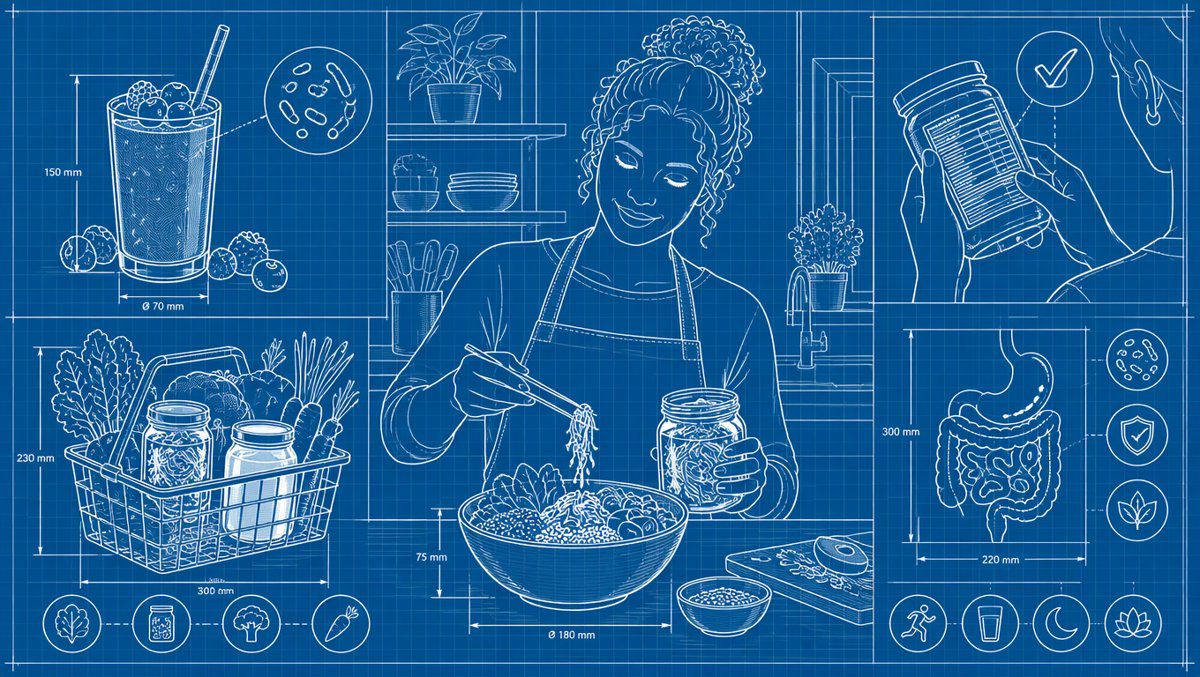
You don't need a lab coat to put this into practice. Here's your starter playbook:
1. Start small. Don't overhaul your fridge overnight. Add one or two fermented foods to your routine and build from there — your gut (and your grocery budget) will thank you.⁸
2. Aim for variety, not volume. Different fermented foods carry different microbes and metabolites — yogurt, kefir, kimchi, sauerkraut, miso, tempeh, kombucha. Mix them up through the week rather than leaning on one.⁷,⁸
3. Pair them with fiber. This is a combo move, not a competition. Soluble fiber (beans, oats, oranges) feeds your gut's existing residents — fermented foods introduce new players, fiber keeps them fed.⁸ Stanford's team is actively studying how the two might work together.¹
4. Master the label. Check for "live and active cultures" — some fermented foods are pasteurized after fermentation, which kills the good bugs. Look for refrigerated versions (heat-treated shelf-stable sauerkraut won't cut it).⁸ And watch for high sodium and added sugar while you're at it.⁸
5. Make it effortless. Swap breakfast: yogurt with berries and granola, or kefir in a smoothie. Top a burger or grain bowl with kimchi. Add tempeh to a stir-fry. Small moves, big compounding effect.⁸
One gentle safety note: if you're immunocompromised, pregnant, or managing a serious health condition, check with your doctor before making big changes to live-culture foods or starting any supplement.⁶
Key takeaway: One or two fermented foods a day, rotated for variety, paired with fiber, and label-checked for live cultures — that's the whole protocol.
🎯 Key Takeaways
- Fermented foods won the head-to-head. In Stanford's 10-week randomized trial, a high-fermented-food diet increased gut microbial diversity — with stronger effects from bigger servings — while the high-fiber arm's diversity stayed stable and none of its inflammatory proteins dropped.¹
- 19 inflammatory proteins decreased in the fermented-food group — including interleukin 6, which has been linked to rheumatoid arthritis, type 2 diabetes, and chronic stress.¹
- Probiotic pills: situational, not foundational. Systematic reviews find they don't significantly alter gut microbiota in healthy adults — but specific strains (like S. boulardii and L. rhamnosus GG) do have evidence for acute gastroenteritis and antibiotic-associated diarrhea.²,⁵
- The whole food > the capsule. Fermented foods deliver live microbes plus fermentation byproducts, B vitamins, and built-in variety — an "orchestra" a single-strain pill can't match.⁷,⁸
- Your starter protocol: 1–2 fermented servings daily, rotate the foods, pair with soluble fiber, check labels for live cultures and sodium, and start small.⁸
🎧 Key Takeaways — Listen (2 min)
📚 Verified Sources
- Wastyk, H.C., Fragiadakis, G.K., Perelman, D., et al. "Gut-microbiota-targeted diets modulate human immune status." Cell, July 12, 2021. The randomized controlled feeding trial: 36 healthy adults, 10 weeks, fermented-food vs high-fiber diets; microbiome diversity, immune-cell activation, and 19 inflammatory proteins. https://pubmed.ncbi.nlm.nih.gov/34256014/
- Kristensen, M.B., Browne, S.M., Cleal, L., et al. "Probiotic supplementation does not alter the composition of the human gut microbiota: a systematic review of randomized controlled trials." Genome Medicine, 2016. The systematic review behind the "pills pass through healthy adults" finding. https://doi.org/10.1186/s13073-016-0300-5
- Sanders, M.E. "Probiotics and microbiota composition." BMC Medicine, 2016. Companion commentary on what the pills may actually do (function, not composition). https://doi.org/10.1186/s12916-016-0629-z
- Katan, M.B. "Why the European Food Safety Authority was right to reject health claims for probiotics." Beneficial Microbes, 2012. Context for regulators' skepticism toward broad probiotic claims. https://doi.org/10.3920/bm2012.0008
- Szajewska, H., Konarska, Z., Kołodziej, M. "Probiotic Bacterial and Fungal Strains: Claims with Evidence." Digestive Diseases, 2015. Which probiotic strains actually carry clinical evidence — best-documented uses are acute gastroenteritis treatment and antibiotic-associated diarrhea prevention (S. boulardii and L. rhamnosus GG most studied). https://doi.org/10.1159/000443359
- Doron, S. & Snydman, D.R. "Risk and Safety of Probiotics." Clinical Infectious Diseases, 2015. Safety profile: generally safe for healthy people; caution for severely immunocompromised. https://doi.org/10.1093/cid/civ085
- Leeuwendaal, N.K., Stanton, C., O'Toole, P.W., Beresford, T.P. "Fermented Foods, Health and the Gut Microbiome." Nutrients, April 2022 (NIH/PMC-hosted). The mechanisms: live microbes, bioactive compounds, metabolites, 10,000-year history, 5,000+ varieties. https://pmc.ncbi.nlm.nih.gov/articles/PMC9003261/
- Cleveland Clinic. "8 Fermented Foods To Add to Your Diet" (expert commentary from Gail Cresci, PhD, RD). Practical tips: variety, fiber pairing, live-culture labels, sodium/sugar checks. https://health.clevelandclinic.org/fermented-foods-benefits
- Stanford Medicine (via ScienceDaily). "A fermented-food diet increases microbiome diversity and lowers inflammation, study finds," July 12, 2021. Study release with verified quotes and trial figures. https://med.stanford.edu/news/all-news/2021/07/fermented-food-diet-increases-microbiome-diversity-lowers-inflammation.html
All claims fact-checked against Gold-tier (CDC/NIH/WHO/PubMed/Nature/The Lancet) and Silver-tier (Mayo Clinic/Harvard Health/Cleveland Clinic) authoritative sources. Last verified: November 17, 2026.
Here's to your gut's next ten weeks — may they be diverse, delicious, and slightly tangy. 🥬✨