 x/health ·
Published: September 18, 2026 | Reading Time: ~7 minutes | Topic: Music, Brain & Whole-Body Health
Quick question: when was the last time a song gave you goosebumps? Maybe it was the chorus that always gets you, or that one guitar riff from summer fifteen years ago. Here's the wild part — scientists say there is no other stimulus on Earth that lights up your brain as widely as music does, simultaneously recruiting the regions that handle movement, language, attention, memory, and emotion.¹ Your playlist isn't just entertainment. According to a growing mountain of research from the NIH, Harvard, and hospitals around the world, music can measurably dull pain, calm your nervous system, help stroke survivors find their words, and even make your workouts longer and happier.¹,² Let's dig into what the science actually says — and how to weaponize your headphones for better health. 🎧
If someone told you that listening to music could make an IV needle or a surgical recovery hurt less, would you believe them? You should — because the evidence is remarkably consistent.
The NIH's National Center for Complementary and Integrative Health (NCCIH) points to a landmark meta-analysis of 97 randomized controlled trials with 9,184 participants finding that music-based interventions may reduce both pain intensity and the emotional distress that comes with it — and may even lead to people needing less pain medication.¹ A follow-up review in people with chronic pain (cancer, fibromyalgia, osteoarthritis) found music reduced self-reported pain and depressive symptoms too.¹
Surgical settings are where things get almost comical: one meta-analysis of randomized trials found music listeners experienced dramatically lower anxiety (a large effect, Hedges' g = −1.48) and meaningfully lower pain (g = −0.67) compared to standard care.³ An umbrella review of reviews came to the same conclusion — most studies show statistically significant reductions in both anxiety and pain when patients listen to music.⁴ And a BMJ Open Heart meta-analysis found music significantly eased postoperative anxiety and pain in people recovering from cardiac surgery specifically.⁵
Why does it work? Think of your attention as a spotlight with limited seats. Music competes for the brain's pain-processing real estate, while also triggering feel-good chemistry — Harvard Health notes that pleasurable music triggers the release of dopamine, and that calming sound may lower heart rate, breathing rate, and blood pressure.²
Here are 3 ways to try it:
🔑 Key Takeaway: Music is a legit, research-backed adjunct for pain and anxiety — it won't replace your treatment plan, but it's the cheapest sidekick it's ever had.
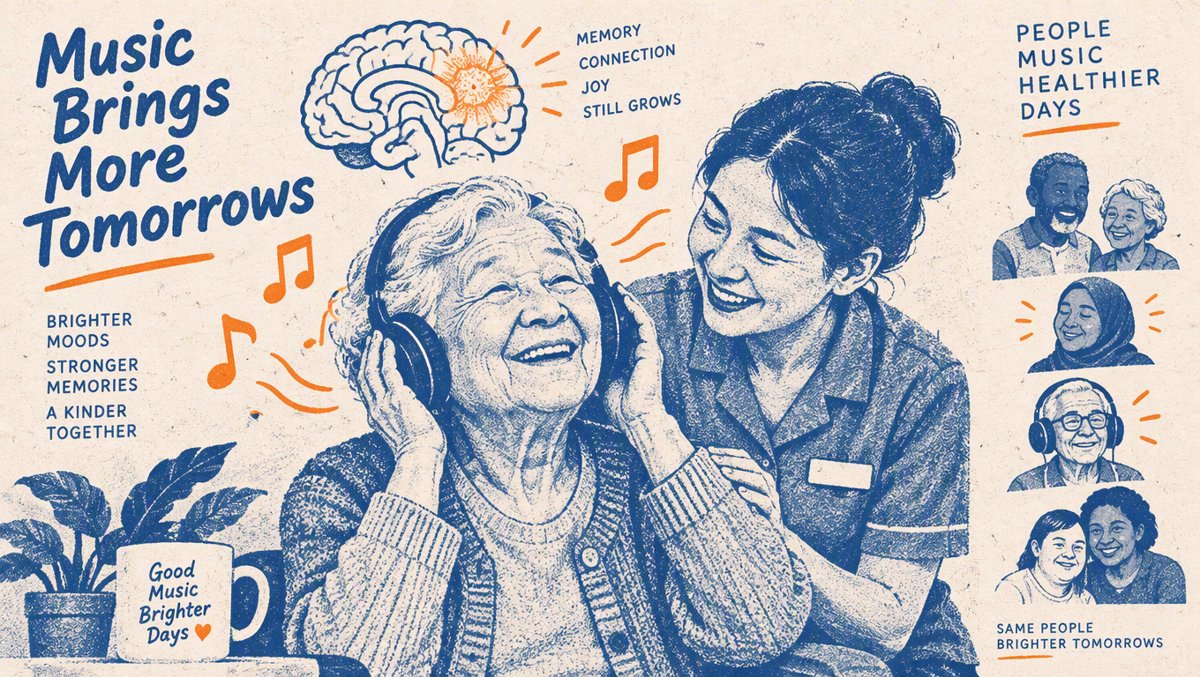
Now for the part that gives me actual chills. Musical memory is surprisingly sticky. Research reviewed on NIH's PMC shows that the ability to remember and respond to familiar music often persists in people with Alzheimer's disease even when other memories have faded.⁶ That's why a song from someone's wedding day can make their eyes light up decades later.
The clinical evidence backs the emotional stories. A 2018 Cochrane review of 22 studies (1,097 people with dementia in institutional care) found music-based interventions probably reduce depressive symptoms and improve overall behavioral problems and quality of life — though honest science alert: effects on agitation and cognition were small or unclear.¹ A 2021 meta-analysis of 21 studies in people with mild cognitive impairment or dementia found a small but real benefit to cognitive function, plus benefits for mood and quality of life.⁷ Meanwhile, the National Institute on Aging is funding trials of customized playlists to reduce distressing dementia behaviors and reliance on antipsychotic drugs.⁸
And music can help brains rewire after injury. Harvard Health explains the magic of entrainment — a steady rhythm automatically recruits your motor system, which is why "singing" familiar syllables helps some stroke survivors recover speech, and walking to music steadies and speeds up their gait.² In 2025, a randomized cross-over trial in Scientific Reports found that a singing intervention produced measurable functional neuroplasticity changes in chronic post-stroke aphasia — the brain literally reorganizing around song.⁹
3 tips to keep your own brain singing:
🔑 Key Takeaway: Music reaches brain regions that disease and injury can't easily erase — making it one of the most humane, evidence-backed tools in dementia and stroke care.
Ever notice how the right song after a brutal day feels like exhaling? That's not vibes — it's physiology.

NCCIH highlights a 2020 systematic review with two meta-analyses covering 104 studies and 9,617 participants: music interventions showed small-to-medium benefits on physiological stress markers (heart rate, blood pressure, stress hormones) and medium-to-large benefits on psychological stress — anxiety, nervousness, worry.¹ A separate meta-analysis of experimental studies in PLOS One confirmed music supports stress recovery in healthy people, with heart-rate benefits showing up fairly consistently.¹⁰ Harvard Health adds the mechanism: sound is processed in the brainstem — the same neighborhood that controls your heartbeat and breathing — which may explain why relaxing music drops heart rate, breathing rate, and blood pressure.²
Your 3-step de-stress prescription:
🔑 Key Takeaway: Deliberate music listening is a mini-vacation for your stress system — with meta-analyses of nearly 10,000 people to back it up.
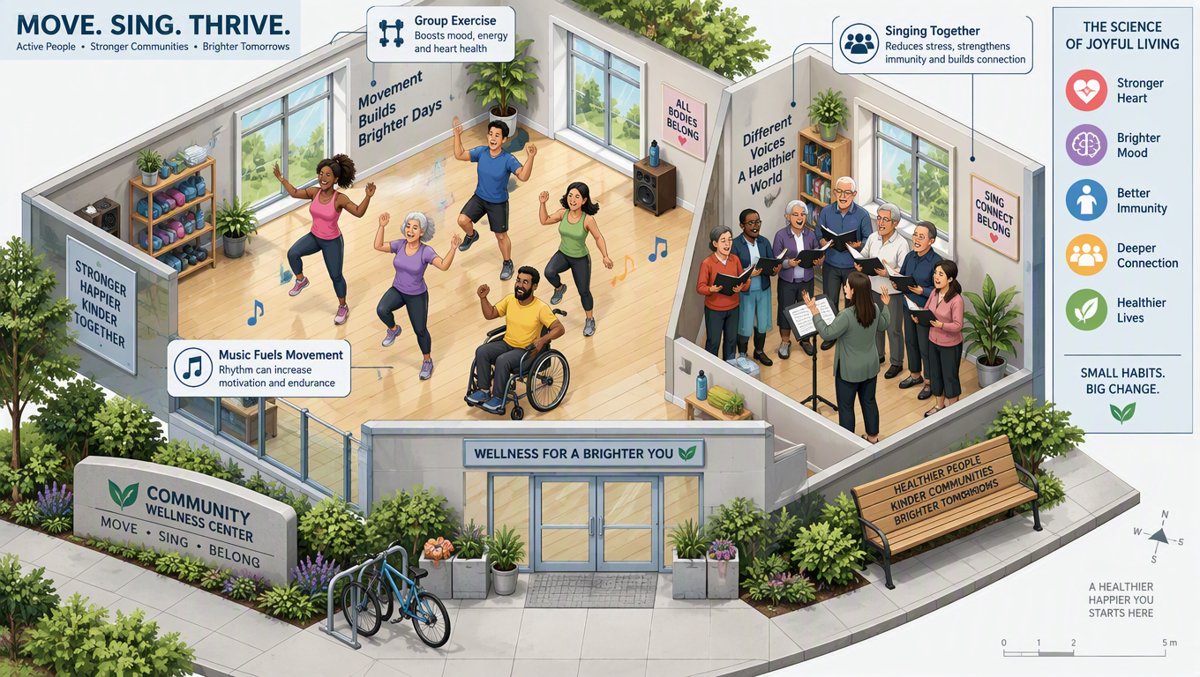
An exercise class without music? Unimaginable — and there's hard science for why. In a brand-new 2026 study from Finland's University of Jyväskylä, cyclists riding with self-selected favorite songs lasted nearly 20% longer than in silence — and didn't feel more exhausted doing it.¹¹ That echoes classic research from Brunel University, where carefully chosen music boosted endurance by about 15% and made the whole experience feel better.¹²
Why? Music is a legal performance enhancer: it grabs your attention (less focus on the burn), syncs your movement to a beat (more efficient strides and reps), and floods you with motivation chemistry.² Up-tempo tracks seem to help most for low-to-moderate intensity efforts like jogging, cycling, and house-cleaning cardio.¹²
And when humans make music together, something almost magical happens. A study of a 232-person "megachoir" found that group singing raised pain thresholds — a proxy for endorphin release — and bonded strangers together, with bigger groups producing bigger effects.¹³ Choir singing has also been linked to reduced loneliness and better wellbeing in older adults — no small thing when roughly half of adults report feeling lonely.¹⁴
3 tips to press play on this:
🔑 Key Takeaway: Your hype playlist is a performance tool worth ~15–20% more endurance — and singing with other humans might be the most underrated happiness hack in health science.
Music is powerful, but it's a teammate, not a replacement. Every study in this article used music alongside standard care — not instead of it. Keep your prescriptions, keep your doctor, and keep your volume at a safe level (your ears are doing the heavy lifting here!). ¹,²
All claims fact-checked against Gold-tier (CDC/NIH/WHO/PubMed/Nature/The Lancet) and Silver-tier (Mayo Clinic/Harvard Health/Cleveland Clinic) authoritative sources. Last verified: September 18, 2026.
So tonight, skip the guilt-scroll and press play on your favorite song instead. Your brain, your heart, and your future self are all listening. 🎶💚