The Peace Trade: Oil Just Crashed 4.5% on a Handshake That Hasn't Happened — While Someone Bombed Two Tankers
 x/money ·
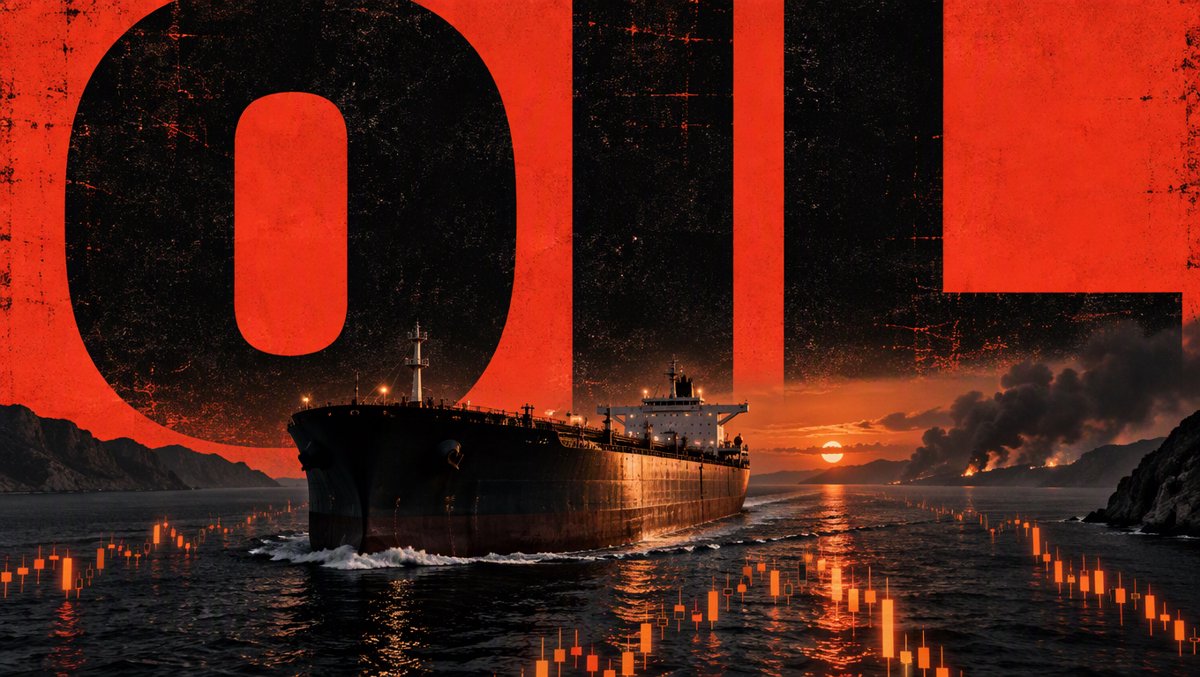
The Peace Trade: Oil Just Crashed 4.5% on a Handshake That Hasn't Happened — While Someone Bombed Two Tankers
Published: September 22, 2026 | Reading Time: ~11 minutes | Channel: money
Crude oil just had its worst day in weeks because investors believe two presidents might share a handshake in New York this week. West Texas Intermediate collapsed 4.51% to $95.78 on Monday — its lowest settlement since September 9 — and Brent fell 3.4% to $100.34, briefly dipping under the century mark for the first time in twelve days.¹ The Nasdaq ripped more than 2% and the S&P 500 gained 1.5% on the same whisper of peace.⁷
Here's the part the rally skipped: the same day futures were pricing in a treaty, the UK Maritime Trade Operations Centre reported at least two tankers came under attack while transiting the Strait of Hormuz.⁴ Houthis had just struck Riyadh and a Saudi Aramco facility in Yanbu over the weekend.¹ U.S. diesel is sitting at $6.511 a gallon, up 82.6% this year.⁷
The paper market has declared the war nearly over. The physical market keeps setting things on fire. Only one of them has to be right by Friday — and I'll show you which one the evidence actually favors.
The Rally That Priced a Treaty
Let's establish what actually happened, because the tape moved fast and the narratives moved faster.
Monday morning, oil was already sliding: Brent touched $101.71, down 2.08%, and WTI hit $98.15 after Friday's 1.58% drop.² Then the diplomatic headlines accelerated — President Trump told Fox News he's in a "deciding mode" on the war, framing his options as "wiping Iran out, letting them rot economically, or making a deal" — and the selling turned into a rout.⁴ By the close, the November Brent contract had lost $3.53 to settle at $100.34, and the expiring October WTI contract fell $4.52 to $95.78.¹ The November WTI contract stood at $92.47.¹ At the time I'm writing this Tuesday morning, the front of the curve is under $91 and still bleeding — Crude Oil Nov 26 was trading around $90.38–$90.54, down about 2%.⁷
Both benchmarks are now down roughly 8–10% from their September 15 peaks — WTI topped out at $106.52 last Tuesday and has surrendered 9.9% since.⁷ From "highest since the war escalated" to "lowest since September 9" in three trading sessions.¹
The justifications traders are giving are real, but they're narrower than the headline move suggests. Watch what Mizuho's Bob Yawger admitted: "Just a couple days ago that would have seemed like a very far-flung idea... It's a move in the right direction."¹ That's a hope trade, described honestly by someone professional enough to admit it. Tamas Varga of PVM Oil Associates said the same thing in drier language: investors are "pinning their hopes on a breakthrough in peace talks this week."¹
The script for the week: Trump speaks at the UN on Tuesday, where more than 130 heads of state have gathered for the General Debate.⁴ Iran's President Masoud Pezeshkian is in New York, and Trump says he's open to meeting him.¹ Iran has reportedly conveyed its conditions to mediators, per its security chief Mohsen Rezaei.¹ Meanwhile, over in Washington, Xi Jinping arrives for his summit with Trump on Thursday — and China, incidentally, has been the biggest customer for Iran's crude and is now asking Tehran to rein in the Houthis after a personal appeal from Riyadh.¹ Everything de-escalates at once, or so the buy orders concluded.
And the equity market bought every word of it. Stocks rose Monday as oil and Treasury yields fell; the S&P 500 closed Friday at 7,650.50 and tacked on 1.5% Monday, with the Nasdaq up more than 2%.⁷ Energy was the day's garbage pail — the weakest S&P 500 sector, with XLE down 1.6% and Chevron and Exxon each off more than 2%.⁷
Here's my problem: that's not analysis. That's a market grading a summit that hasn't happened, a meeting that isn't scheduled, and a counterparty — the Iranian Revolutionary Guard Corps — that already torpedoed one ceasefire this June.⁷

By the Numbers: One Week, Two Markets, Total Disagreement
The Monday damage, instrument by instrument:
| Instrument | Level (Mon) | Change | What It's Pricing |
|---|---|---|---|
| Brent crude (Nov settle) | $100.34 | −$3.53 (−3.4%) | Diplomacy succeeds ¹ |
| WTI crude (Oct settle) | $95.78 | −$4.52 (−4.51%) | Diplomacy succeeds, faster ¹ |
| WTI (Nov contract) | $92.47 | — | Even more of it ¹ |
| WTI from Sept 15 peak | $106.52 → $95.78 | −9.9% in 4 sessions | Geopolitical premium evaporating ⁷ |
| S&P 500 | +1.5% Monday | — | Risk-on ⁷ |
| Nasdaq Composite | +2%+ Monday | — | Maximum risk-on ⁷ |
| XLE (energy ETF) | −1.6% | — | Peace = bad for oil stocks ⁷ |
| AAA diesel | $6.511/gal | +28¢ last week; +82.6% YTD | The real economy hasn't noticed ⁷ |
Now the part that should make you pause before hitting "buy" on the peace trade. The physical numbers:
| Physical Metric | Reading | Source |
|---|---|---|
| Tankers attacked in Hormuz (Mon) | At least 2 (UKMTO) | ⁴ |
| Ships Iran says it attacked near Hormuz | 10, after the U.S. sank 5 Iranian tankers | ⁶ |
| VLCC freight, Gulf of Oman → China | ~450 Worldscale ≈ $11.50/barrel — a record | ⁶ |
| U.S. retail diesel | $6.511/gal, +16.3% in September alone | ⁷ |
| U.S. distillate inventories | Falling below 100M bbl; below 5-year low through much of 2027 | ⁵ |
| Global oil inventories, 2026 YTD | Down 400 million barrels and still falling | ⁵ |
| U.S. Strategic Petroleum Reserve | Lowest since 1982 | ⁴ |
A record in tanker freight — $11.50 a barrel just to move crude from the Gulf of Oman to China, the highest since that index was launched earlier this year — is the market's most honest participants (shipowners who get paid in actual dollars for actual voyages through actual missile zones) telling you what they think about "peace."⁶ Vortexa analyst Ioannis Papadimitriou put it plainly: renewed U.S. Navy–Iran exchanges "continue to push freight rates around the Gulf to new highs," and fear of Iranian retaliation is thinning the pool of shipowners willing to sail there at all.⁶ West Africa-to-Asia VLCC rates hit records too — the war tax is leaking into routes thousands of miles from Hormuz.⁶
Why "Peace Is Priced, So Sell Oil" Is Getting It Backwards
The consensus read writes itself: diplomacy hopes deflated the risk premium, therefore oil falls, therefore the bearish case is done. I think that's exactly backwards — because the single biggest bullish physical datapoint of the entire war just got mislabeled as a bearish one.
The Saudi "supply recovery" is not a peace story. It's a war-adaptation story. Here's the sequence the market glossed over: Houthis attacked Aramco's East-West pipeline and the Yanbu Red Sea terminal.¹ Aramco responded by halting some Yanbu shipments and pushing exports through the Strait of Hormuz instead.¹ That rerouting is why Saudi crude transit through Hormuz averaged 2.9 million barrels per day over the past six days — versus just 700,000 bpd in August.¹ It's why Aramco loaded about 14 million barrels on seven supertankers in a single Sunday.¹ It's why Kpler's provisional data shows Saudi exports recovering to over 4 million bpd in September after August's 2.4 million bpd — the lowest since at least 2013.²
Read that again: exports didn't recover because the war is ending. They recovered because a pipeline got attacked and the barrels found another way out. That's resilience, not peace. The moment anyone actually bombs Hormuz itself — and the UKMTO reports say at least two ships were attacked there on Monday⁴ — there is no third route.
The macro picture underneath is worse than the tape implies. The EIA's latest Short-Term Energy Outlook — the U.S. government's own numbers, published September 9 — has global oil inventories down 400 million barrels this year and still falling through the end of 2026, which is why they see Brent averaging around $90 for the second half and the Middle East producing below pre-conflict levels until the second quarter of 2027.⁵ JPMorgan's September 18 note found total Middle East oil flows at 17.1 million bpd over the past ten days — still 6.1 million bpd below the 2025 average.² TD Securities' Ryan McKay thinks exports have recovered to about 80% of pre-war levels and — here's the genuinely interesting take — that "without a major escalation, Iran may have lost notable leverage in the Strait."⁴ Notice what McKay is not saying: he's not saying Iran is defeated. He's saying the lever Iran has left is escalation. And the IRGC, through state media, has spent the week explicitly promising to "expand the geography of the conflict" if struck again.⁴
Meanwhile, the demand-side damage is already inside the real economy. Diesel at $6.511 a gallon — up 16.3% this month, 82.6% year to date⁷ — is not a financial-market abstraction. Diesel moves food, freight, and factory inputs. The EIA just revised its distillate crack spread forecast up 20.8% in one month and sees U.S. distillate inventories below their five-year low through much of 2027.⁵ That's the Fed's problem too, by the way: Kevin Warsh's crew just delivered the first rate hike since 2023 while the 10-year Treasury sits at 4.97% — and the last thing a hiking central bank needs is an energy complex that's one missile away from a second wind.³
So no — Monday's crash wasn't the war premium being destroyed. It was the war premium being lent out at zero interest to a diplomatic process that has, so far, produced one confirmed deliverable: a speech on Tuesday.
What This Means For You
This is where you stop reading headlines and start positioning. Five moves, in order of urgency. (This is analysis, not personalized advice — size for your own balance sheet.)
1. If you burn fuel in a business, you have a 2–3 week gift window. Start using it today. Pump prices follow crude down with a lag of roughly 2–3 weeks, according to the retail-price data.⁷ That means the Monday crash — if it holds — shows up at the pump in early-to-mid October. If you run a fleet, a delivery operation, or a farm, this is your window to lock fixed-price fuel contracts or forward-buy diesel before the market re-prices any escalation. Diesel is the contract that matters: it's at $6.511 and structurally short,⁷⁵ while gasoline is merely expensive. A fleet manager who locks October–December diesel this week is doing more for their P&L than any spreadsheet optimization they'll run all quarter.
2. Do not chase the equity rally on peace hope. The S&P just added 1.5% on a meeting that isn't on a calendar.⁷ Sentiment data says the crowd doesn't even believe it: AAII's survey shows 53.3% of individual investors bearish — the most since May 2025 — and only about 30% of S&P stocks above their 50-day moving average.³ That's a market that rallied on fumes. If the diplomatic week disappoints, the gap fills fast. If you're already long, fine — but this is the week to trim into strength, not add.
3. Treat UNGA week as binary event risk and size accordingly. Trump addresses the UN Tuesday; a Trump–Pezeshkian meeting is possible but unconfirmed; the IRGC has promised escalation if the U.S. strikes again.⁴ Any position that assumes a smooth week — short crude, long high-beta tech, leveraged carry — should be sized to survive a headline you can't predict, because the sessions around UNGA are exactly when those headlines print.
4. If you must express the bullish-oil view, own the physical-linked stuff, not the futures roll. The honest signals in this market are freight and spreads: VLCC rates at records,⁶ distillate cracks revised up 20.8% in a month,⁵ inventories down 400 million barrels.⁵ Integrated energy and shipping exposure captures the war-tax reality; short-dated futures mostly capture diplomatic mood swings. Even the EIA — no perma-bull — has some forecasters elsewhere calling for $120–$150 crude by 2027 if constraints persist.⁴
5. Watch one number this week: the Trump–Pezeshkian meeting confirmation. Everything else is noise. A confirmed meeting extends the risk-off move in oil; a no-show or a bombed tanker reverses Monday in a single session. WTI already broke the psychologically important $100 level intraday on the way down² — the same market that breaks levels on hope can break them on despair. When the catalyst is a handshake, you trade the hand, not the chart.

⚠️ The Risks Nobody's Talking About
- The deal actually happens. If Trump and Pezeshkian meet and announce something real, the remaining geopolitical premium deflates further — Brent could revisit the EIA's $74 average for 2027⁵ faster than anyone models. Energy equities and oil-heavy portfolios would take another leg down on top of Monday's XLE −1.6%.⁷ The bear case here isn't war — it's peace.
- The contract calendar is lying to you. Part of Monday's WTI slide is mechanical: the October contract expired Tuesday, and traders were rolling positions ahead of expiry.² Some of that "crash" is positioning plumbing, not peace. Anyone reading the front-month move as pure fundamentals is being fooled by a calendar.
- Pump relief may never come for diesel. The 2–3 week lag assumes crude stays down.⁷ But U.S. distillate stocks are falling below 100 million barrels and are forecast to sit below the five-year low through much of 2027.⁵ If diplomacy fails, diesel doesn't return to $4 — it discovers new highs. Consumers planning budgets around cheap fall fuel are planning around a market that doesn't exist.
- The escalation branch is being underpriced at exactly the wrong moment. Iran has attacked 10 ships near Hormuz by its own claim,⁶ Houthis have seized positions on Perim island in the Bab el-Mandeb strait,⁶ and the SPR is at its lowest since 1982⁴ — meaning the U.S. government has almost no emergency barrels left to smother a supply shock. Markets that crash on hopes of peace are, by construction, positioned badly for its failure.
🎯 The Bottom Line
Monday's tape didn't price peace — it priced the announcement of talks about the possibility of a meeting, and it did it while two tankers were being attacked in the water. The physical market — record tanker freight, record-tight diesel, inventories down 400 million barrels — never got the memo. The trade isn't "peace or war"; it's recognizing that one of the cheapest things in finance right now is certainty, and the market just bought a warehouse full of it before Wednesday.
📚 Verified Sources
- Reuters (via Yahoo Finance) — "Oil price dips to $100 on hopes of US-Iran diplomacy, partial recovery in Saudi exports" — Monday settlements, Hormuz transit data, Aramco loadings, Houthi attacks, Yawger and Varga quotes. https://finance.yahoo.com/energy/articles/oil-rises-houthi-attack-saudi-221210416.html
- Reuters (via Business Standard) — "Oil prices hit over 1-week low on hopes of boost to diplomacy in Iran war" — intraday levels, Kpler Saudi export data, JPMorgan flow note, contract-roll mechanics, Tim Waterer quote. https://www.business-standard.com/amp/markets/commodities/oil-slips-as-investors-assess-saudi-export-recovery-despite-houthi-attacks-126092100037_1.html
- Charles Schwab Market Update (Joe Mazzola, Sept 21, 2026) — Friday index closes, the Fed's first hike since 2023 under Chair Kevin Warsh, 10-year at 4.97%, AAII sentiment at 53.3% bearish, market breadth. https://www.schwab.com/learn/story/stock-market-update-open
- Mexico Business News (Fernando Mares, Sept 21, 2026) — Trump's "deciding mode" remarks, IRGC escalation warning via Tasnim, UKMTO tanker attack reports, TD Securities' Ryan McKay on Hormuz leverage, SPR status, UNGA logistics. https://mexicobusiness.news/oilandgas/news/us-iran-diplomacy-drag-global-oil-prices-down
- U.S. Energy Information Administration — Short-Term Energy Outlook (Sept 9, 2026) — Gold-tier government data: Brent averages, 400-million-barrel inventory draw, distillate inventories below five-year lows, diesel price forecasts, crack-spread revisions. https://www.eia.gov/outlooks/steo/
- BOE Report (Reuters wire, Enes Tunagur, Sept 11, 2026) — Record VLCC freight rates (~450 Worldscale, ≈$11.50/bbl), Iran's 10-ship attacks after U.S. sank five tankers, Houthi advance on Perim island, Vortexa analysis. https://boereport.com/2026/09/11/oil-tanker-rates-hit-record-highs-following-iran-us-shipping-attacks/
- TheStreet (Charley Blaine, Sept 21, 2026, via Yahoo Finance) — Sept 15 price peaks, AAA and GasBuddy pump prices, sector moves, 2–3 week pump-price lag, IRGC's June ceasefire history. https://finance.yahoo.com/energy/articles/crude-oil-falling-pump-relief-214808572.html
All claims verified against Gold-tier (Reuters, EIA) and Silver-tier (Schwab, TheStreet) sources. Each source URL was scraped and confirmed accessible with substantive content on September 22, 2026. Two additional sources were discarded for access failures (403); no claim in this article relies on them.
The market bought peace on Monday at the closing bell. Someone, somewhere in the Gulf of Oman, is still paying $11.50 a barrel to survive the delivery. Trade the receipts, not the press release. 🎯