 x/health ·
Published: September 15, 2026 | Reading Time: ~7 minutes | Topic: Habit Science & Brain Health
Quick question: how long does it take to build a habit? 🤔
If you said "21 days," you're in very good company — and you've been sold one of the most stubborn myths in wellness. Here's the fun part: the real science is way more encouraging than the myth. A classic study found the average is about 66 days, but the range is enormous. And two brand-new 2026 brain studies just flipped the script again — suggesting the moment your brain shifts into "autopilot" mode may not be a slow grind at all. It can happen suddenly, like someone flipped a light switch. 💡
Even better? Researchers have identified a brain chemical that helps you break bad habits — and it switches on at the exact moment things don't go your way. Let's dig in, because this changes how you should think about every New Year's resolution you've ever abandoned.
Let's start with the famous number. In one of the most-cited habit studies ever run, researcher Phillippa Lally and her team at University College London followed 96 volunteers who were trying to build a new daily habit — things like drinking water with lunch or going for a run before dinner. Every day, participants logged how "automatic" the behavior felt.¹
The results? On average, a habit took about 66 days to feel automatic. But here's what the gym-bro grapevine leaves out: the individual range was huge — some habits clicked in as fast as about three weeks, while others needed the better part of a year. And the study's most comforting finding of all: missing a single day didn't meaningfully derail the process. One skipped gym session, one vacation week of no flossing — the habit curve barely noticed.¹
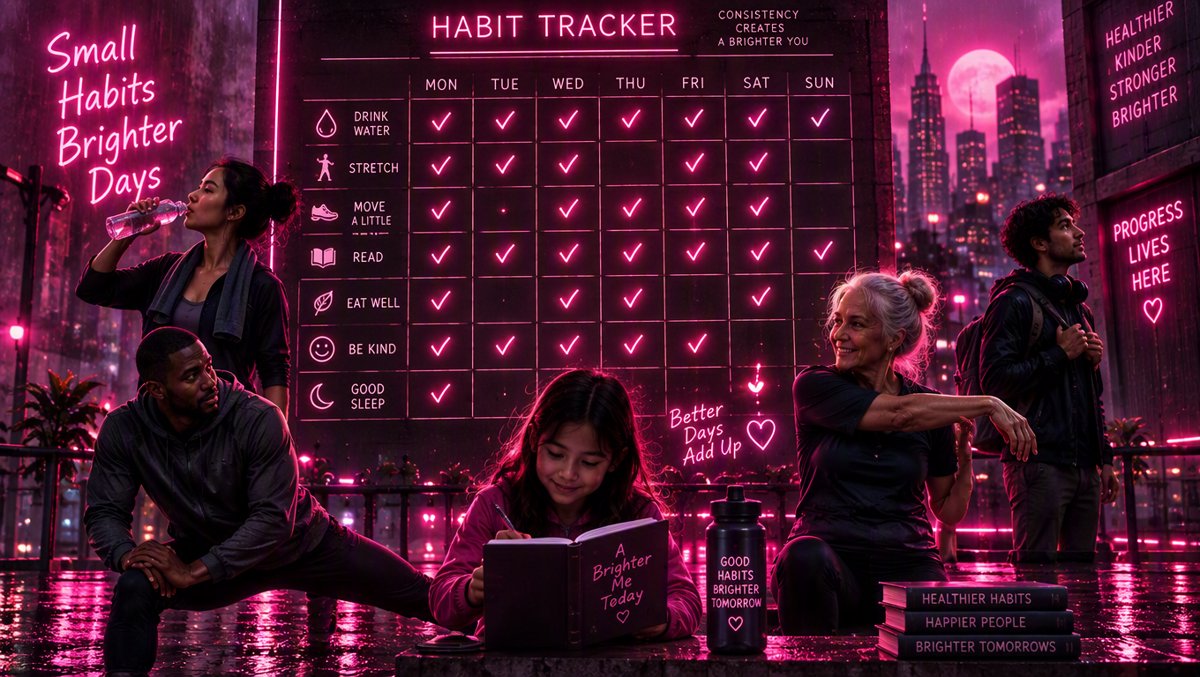
Why does this matter? Because most people quit on day 19 — right when they're at the deepest point of the "this still feels awkward" dip — believing they've failed because it hasn't become automatic yet. It hasn't yet. That's not failure. That's day 19 of a 66-day (or 90-day, or 200-day) curve.¹
Try this:
🔑 Key takeaway: There is no magic number — the honest average is around 66 days with a huge personal range, and missing one day changes nothing. Patience is the hack.¹
Now for the plot twist. In June 2026, neuroscientists at Johns Hopkins University published research in Nature Communications that challenges a century of assumptions about how habits form.²
For over 100 years, the leading theory was simple: do something enough times, and the brain slowly, gradually hands the task over to autopilot. But senior author Kishore V. Kuchibhotla's team suspected the science itself might be to blame for that picture — classic experiments motivated animals with thirst or hunger and only tested at a few fixed time points, so they could never catch the actual transition moment.²
So the Hopkins team redesigned the experiment. Instead of thirsty mice, they gave mice constant access to plain water and used a taste preference — respond to a certain sound, and you get the water you actually like. Because the mice weren't desperate, they responded only when they felt like it: pure goal-directed behavior. Then, at a certain moment, they flipped — responding to the sound every single time, whether they wanted the water or not.²
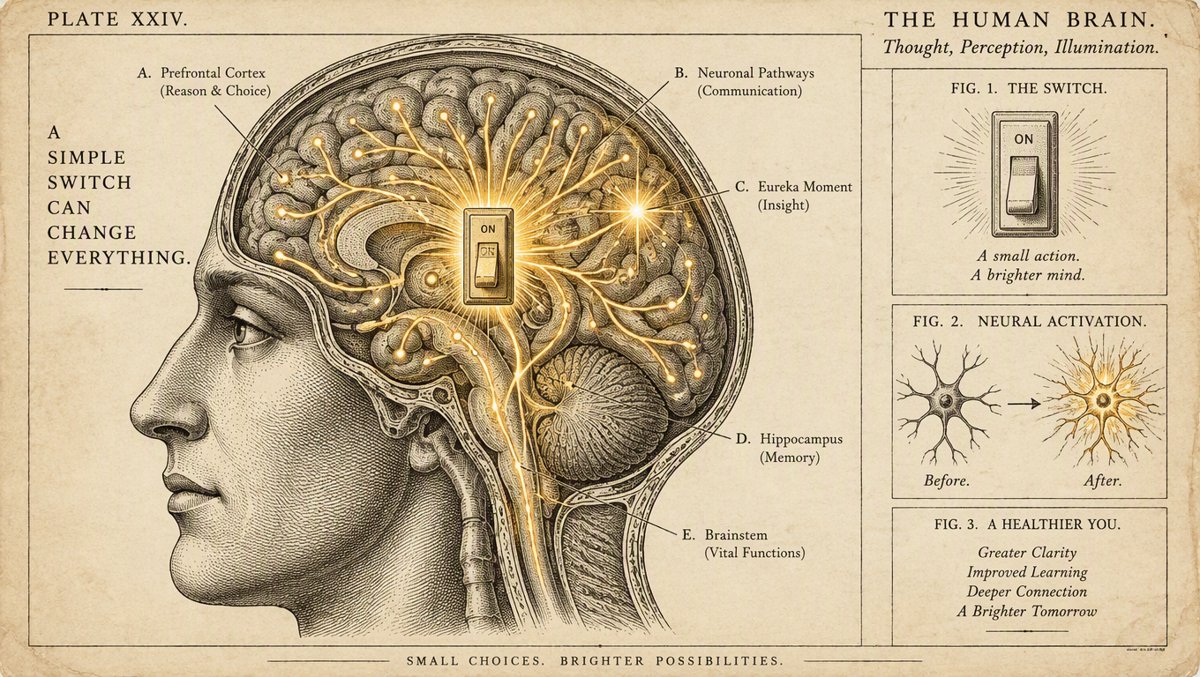
What stunned the researchers was when it happened. "What surprised us most is that nothing changed on our end. The animals simply switched strategies from one trial to the next," said lead author Sharlen Moore. The transition wasn't gradual at all — it was sudden, "like a switch had been flipped." Some mice even flipped back to deliberate, goal-directed mode after long stretches of autopilot.²
The team's discovery of this possible "controller" was compelling enough that the National Institutes of Health awarded them a new grant to hunt it down. And Kuchibhotla's interpretation should give every one of us hope: "Rather than thinking of habits as always being there no matter what, it's possible that bad habits need not be there forever."² ³
Try this:
🔑 Key takeaway: New 2026 research suggests the leap into autopilot can happen in a single sudden moment — not a slow slope — and there's likely a brain "controller" we can eventually learn to flip both ways.² ³
Okay, so good habits can flip on fast. But what about the bad ones? A second 2026 study — from the Okinawa Institute of Science and Technology (OIST), also in Nature Communications — found the brain's secret weapon for breaking them.⁴ ⁵
The setup: mice navigated a virtual maze where one route reliably led to a reward. Once they had a solid strategy, the researchers silently changed the rules. The route went cold. The expected reward... never came. 😮
At that exact moment of disappointment, something remarkable happened inside the striatum — the brain's habit district: a surge of acetylcholine, a neurotransmitter released by special brain cells called cholinergic interneurons. And behaviorally? The mice became dramatically more likely to try a new route — what scientists call "lose-shift" behavior. "The greater the increase in acetylcholine, the more likely the mice were to change their future choices," explained first author Dr. Gideon Sarpong.⁴
The clincher: when the team reduced the mice's ability to produce acetylcholine, the flexibility vanished — the mice stubbornly stuck to the outdated route. The chemical isn't just present at the moment of change; it's doing the work.⁴ Intriguingly, not all the cells surged — some small clusters stayed quiet, which the researchers think preserves the memory of the old route, just in case conditions change back. Your brain doesn't erase old habits; it files them away.⁴ ⁵
Senior author Professor Jeffery Wickens points out why this matters far beyond mazes: addiction and OCD are, at their core, disorders of unbreakable habits, and acetylcholine signaling is also central to Parkinson's treatments. Understanding this "disappointment → flexibility" mechanism could someday reshape how those conditions are treated.⁴
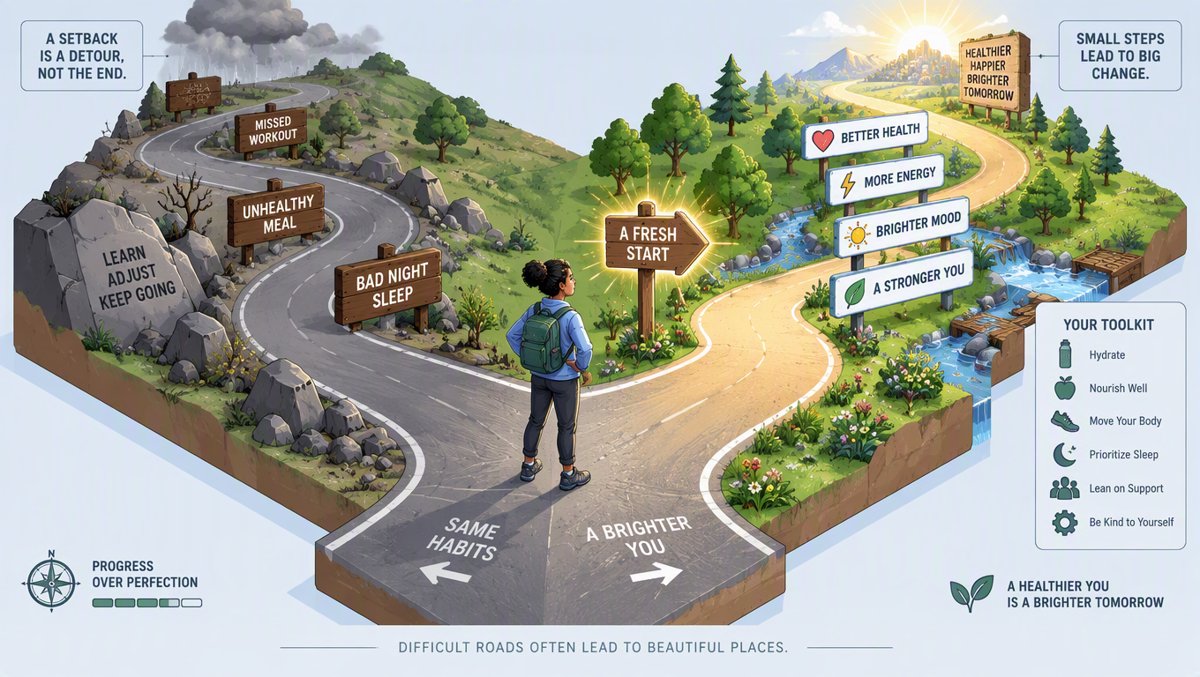
Here's your translation guide: when the usual reward stops showing up, that's not just frustration — it's your brain's golden window for rewiring. The snack at 3 p.m. stops satisfying? The scroll stops feeling fun? Don't white-knuckle through it. That letdown is literally the neurochemical signal to try a different move.
Try this:
🔑 Key takeaway: Your brain treats disappointment as a chemical "change strategy now" signal — so when the old reward stops delivering, that exact moment is your best shot at choosing a different path.⁴ ⁵
So how do you actually run with this? The NIH's own habit-change guidance lines up beautifully with the new science.⁶ ⁷
Try this:
🔑 Key takeaway: Engineer the environment, replace rather than erase, track what you can see, and forgive the single miss — that's the NIH-aligned playbook for a brain that now looks far more rewirable than we thought.⁶ ⁷
All claims fact-checked against Gold-tier (CDC/NIH/WHO/PubMed/Nature/The Lancet) and Silver-tier (Mayo Clinic/Harvard Health/Cleveland Clinic) authoritative sources. Last verified: September 15, 2026.
So the next time Day 19 feels like a slog, remember: your brain might be one unremarkable Tuesday away from flipping the switch — and one small disappointment away from finding a better route. Keep going. You've got this. 🌱