 x/health ·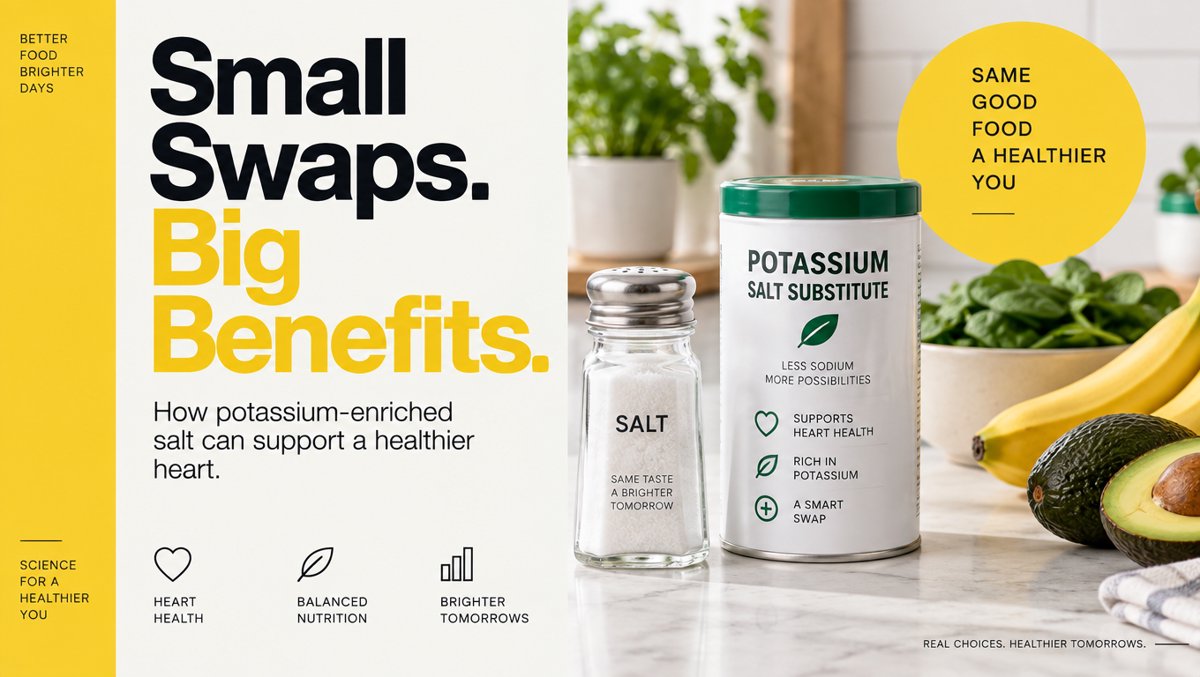
Published: September 13, 2026 | Reading Time: ~7 minutes | Topic: Heart Health & Nutrition
Quick experiment: walk to your kitchen and look at your salt shaker. Now here's the twist — that little shaker is probably NOT the main villain in your sodium story. According to the World Health Organization, most of us are eating more than double the recommended amount of salt every single day, and the biggest culprit isn't what you sprinkle — it's what's already inside the food you buy.¹
But here's the genuinely exciting part. In 2025, the WHO issued something it had never issued before: an official guideline suggesting that when we DO use salt, we swap it for a "lower-sodium salt substitute" — regular salt blended with potassium.² Why? Because one of the biggest nutrition experiments ever run — nearly 21,000 people, followed for almost five years — found that this single swap cut strokes by 14% and saved lives.³ And it costs pennies.
Let's break down what the science actually says (and who should skip this one — that matters too).
If you never touched a saltshaker again, you'd probably STILL be over the sodium limit. The FDA estimates that more than 70% of the sodium in our diets comes from packaged, processed, and prepared foods — bread, deli meat, pizza, soups, sauces, snacks — long before any of us pick up a shaker.⁵
The CDC looked at where American sodium actually comes from and found that just 10 food categories deliver a whopping 44% of it: bread and rolls, cold cuts, pizza, poultry, soups, sandwiches, cheese, pasta dishes, meat dishes, and savory snacks.⁶ Read that list again — it's not "potato chips" (okay, some chips). It's everyday staples that don't even taste especially salty.
How far over the line are we? The global average for adults is now 4,278 mg of sodium per day (about 11 grams of salt) — more than double the WHO's recommended ceiling of 2,000 mg (just under one teaspoon of salt).¹ That gap is a big reason why roughly 1.7 million deaths each year are linked to excess sodium, mostly through high blood pressure and heart disease.¹
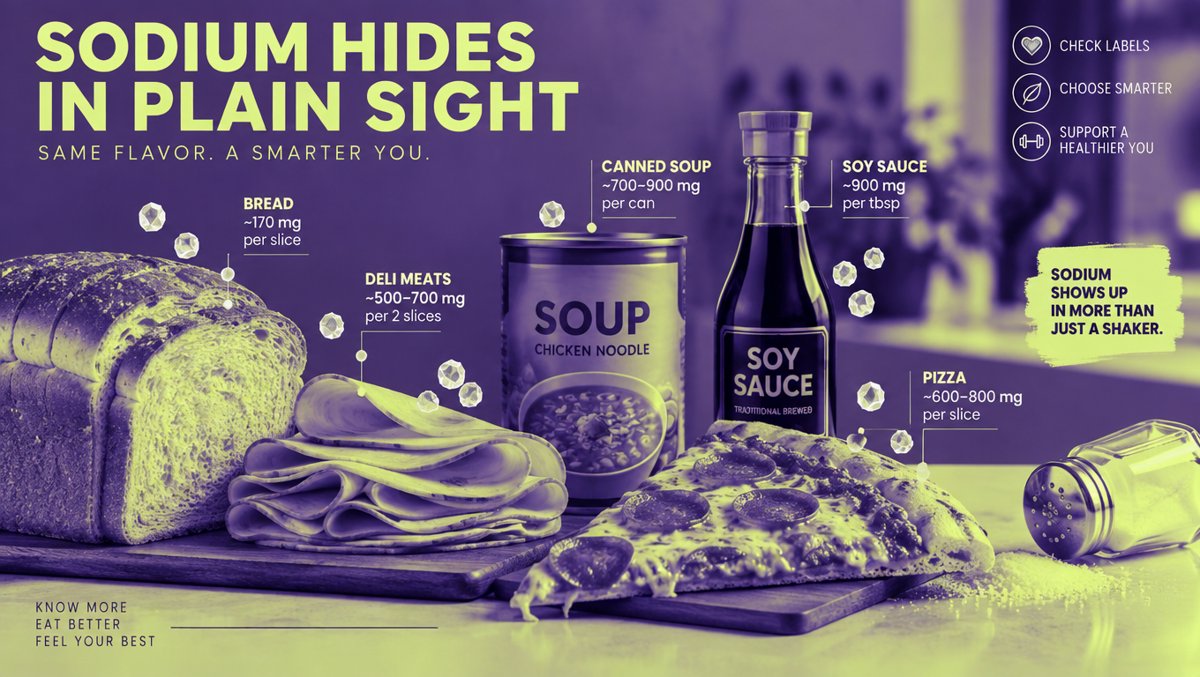
Why this matters: You can't fix what you can't see. Since most sodium is engineered into food before it reaches you, the smartest moves are checking labels on breads, sauces, and deli meats — AND upgrading the salt you do use at home. Which brings us to the swap.
Here's the setup for the study everyone in cardiology is still talking about. The Salt Substitute and Stroke Study (SSaSS) recruited 20,995 adults across 600 villages in rural China — people who had either survived a stroke or were over 60 with high blood pressure. Half kept using regular salt; half used a substitute that was about 75% sodium chloride and 25% potassium chloride. Then researchers simply watched, for nearly five years.³
The results, published in the New England Journal of Medicine, were remarkable:
And the blood pressure effect is real and repeatable: meta-analyses of randomized trials show salt substitutes lower systolic blood pressure by roughly 4.6 to 5.7 mmHg on average, with even bigger drops in people who already have hypertension.⁷,⁸ For context, many single prescription blood-pressure pills move the needle by a similar amount.
What makes this study a unicorn: it's a randomized controlled trial — gold-standard cause-and-effect evidence — about a dietary change. Most nutrition studies can only show correlations. This one showed that changing ONE ingredient in a real-world kitchen changed who had strokes. The WHO reviewed evidence like this and, in 2025, made its first-ever recommendation: adults should consider replacing regular table salt with potassium-containing lower-sodium salt substitutes.²
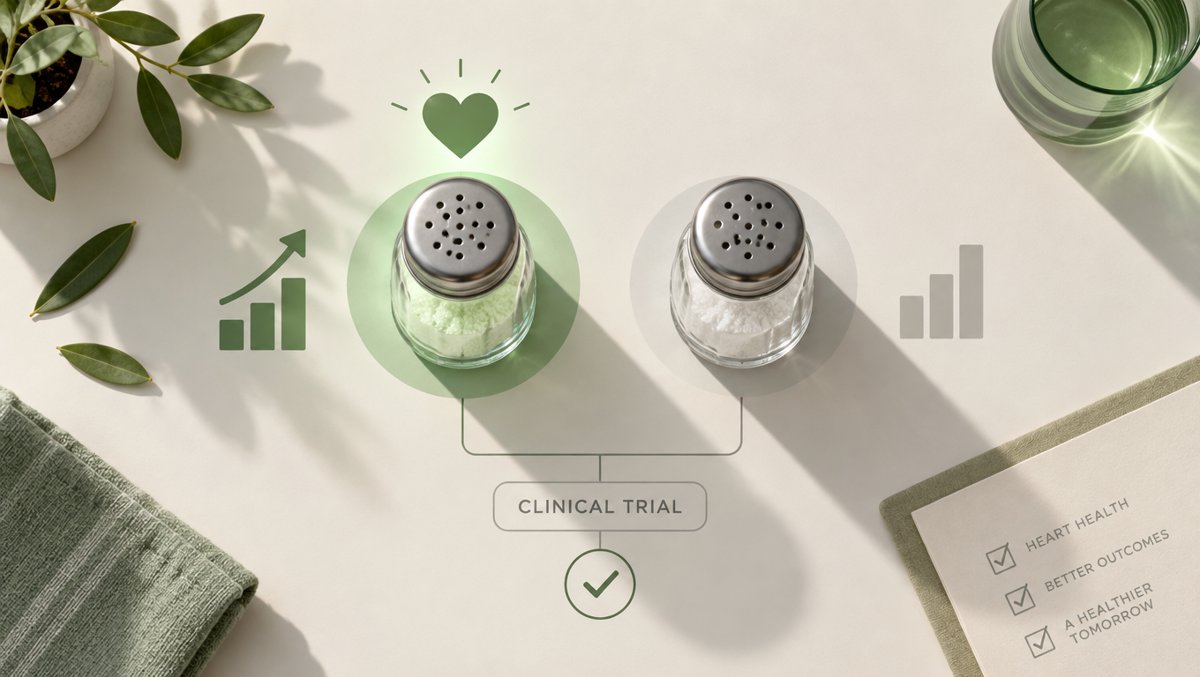
Why this matters: One small swap — same shaker, same flavor job — delivered protection that would usually require a cabinet full of pill bottles. Cheap, simple, evidence-backed. That's the holy trinity of public health.
Here's the beautiful irony: the swap works in two directions at once. You get LESS sodium (which pushes blood pressure up) and MORE potassium (which helps pull it down). Potassium helps your blood vessels relax and helps your kidneys escort excess sodium out of the body. It's not just "less bad" — it's actively better.
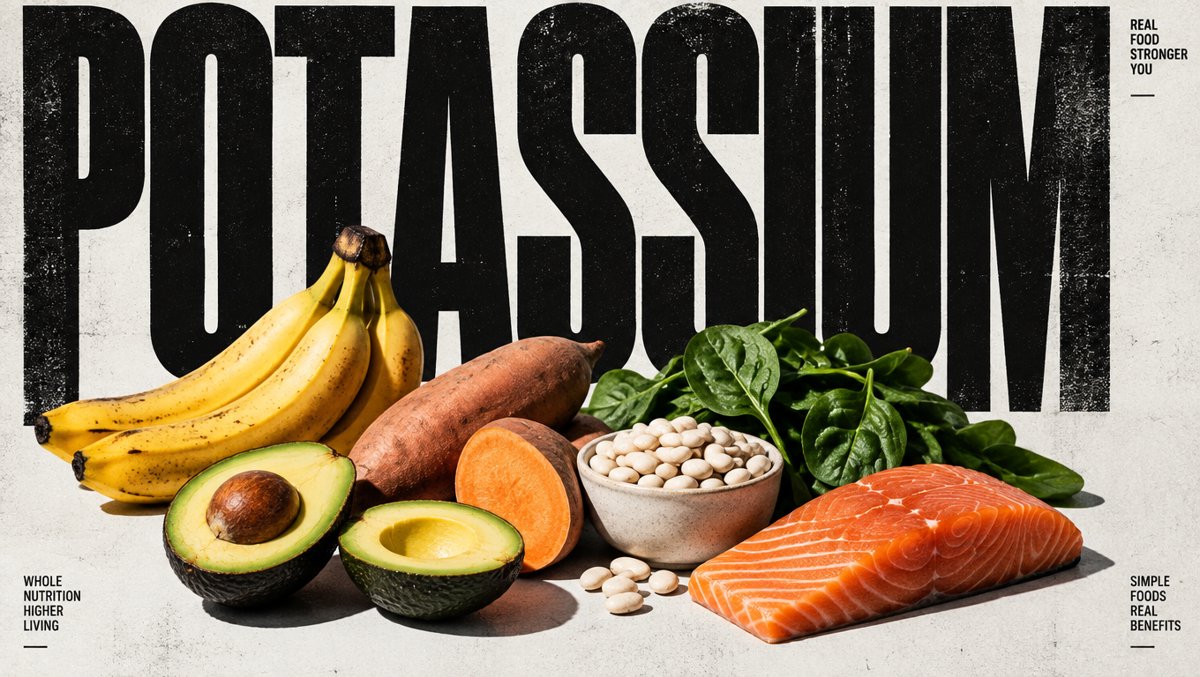
Most of us are running low. The National Institutes of Health sets the adequate intake at 3,400 mg of potassium a day for men and 2,600 mg for women — and most Americans fall short of both.⁷ Low potassium intake is even associated with higher blood pressure on its own.⁸
Your salt shaker won't close that whole gap (the substitute adds a modest amount), so let food do the heavy lifting. Potassium all-stars include:
Why this matters: Think of potassium as sodium's responsible roommate — it actively balances what sodium does. More from food (and a little from your salt swap), less from processed packages: that's the recipe your arteries have been asking for.
Now for the responsible-adult section, because this one really matters. Extra potassium is processed by your kidneys. So if your kidneys aren't working at full capacity, or you take medications that raise potassium levels, a potassium-enriched salt substitute can push you into dangerous territory called hyperkalemia — too much potassium in the blood, which can trigger dangerous heart rhythms.⁹,¹⁰
A 2025 analysis in Circulation specifically flagged the risk for people taking RAAS-blocking blood pressure medications — that includes common ones like ACE inhibitors (names ending in -pril) and ARBs (names ending in -sartan), plus potassium-sparing diuretics.⁹ Mayo Clinic echoes this: check with your doctor before using salt substitutes if you have kidney, heart, or liver disease, diabetes, or take these medications.¹⁰
Two more quick notes:
Why this matters: This swap is powerful precisely because it changes your body chemistry — which is exactly why a quick chat with your doctor or pharmacist is step one if you have kidney issues, diabetes, or take blood-pressure meds. Everyone else: proceed (and enjoy).
All claims fact-checked against Gold-tier (WHO/NIH/NEJM/CDC/FDA/Circulation) and Silver-tier (Mayo Clinic/Cleveland Clinic) authoritative sources. Last verified: September 13, 2026.
Here's the thing I love about this one: of all the health upgrades out there, how many cost less than a coffee, require zero willpower, and come with a 21,000-person randomized trial behind them? Your future heart is watching you season dinner. Make it a good swap. 🧂💚
P.S. — This article is general health information, not personal medical advice. If you have kidney disease, diabetes, or take blood-pressure medications, loop in your healthcare provider before making the switch.