😴🦃 The Great Food-Coma Trial: Exonerating the Turkey (and Convicting the Real Sleepy-Eyed Culprits)
 x/health ·
😴🦃 The Great Food-Coma Trial: Exonerating the Turkey (and Convicting the Real Sleepy-Eyed Culprits)
Published: November 6, 2026 | Reading Time: ~7 minutes | Topic: Nutrition & Sleep Science
Picture it: Thanksgiving dinner is over. The dishes are (mostly) done, the relatives are arguing about stuffing vs. dressing, and you — a grown adult with responsibilities — are horizontal on the couch, eyelids at half-mast, mumbling something about "just resting my eyes."
Blame the turkey, right? That's the story we've all been told. The poor bird has been the designated fall guy for generations of 4 p.m. naps. But when you put the evidence on trial, something surprising happens: the turkey walks free, and a whole lineup of other suspects gets marched in. Let's open the case files. 🕵️
🔬 Section 1: The Case Against the Turkey — Dismissed for Lack of Evidence
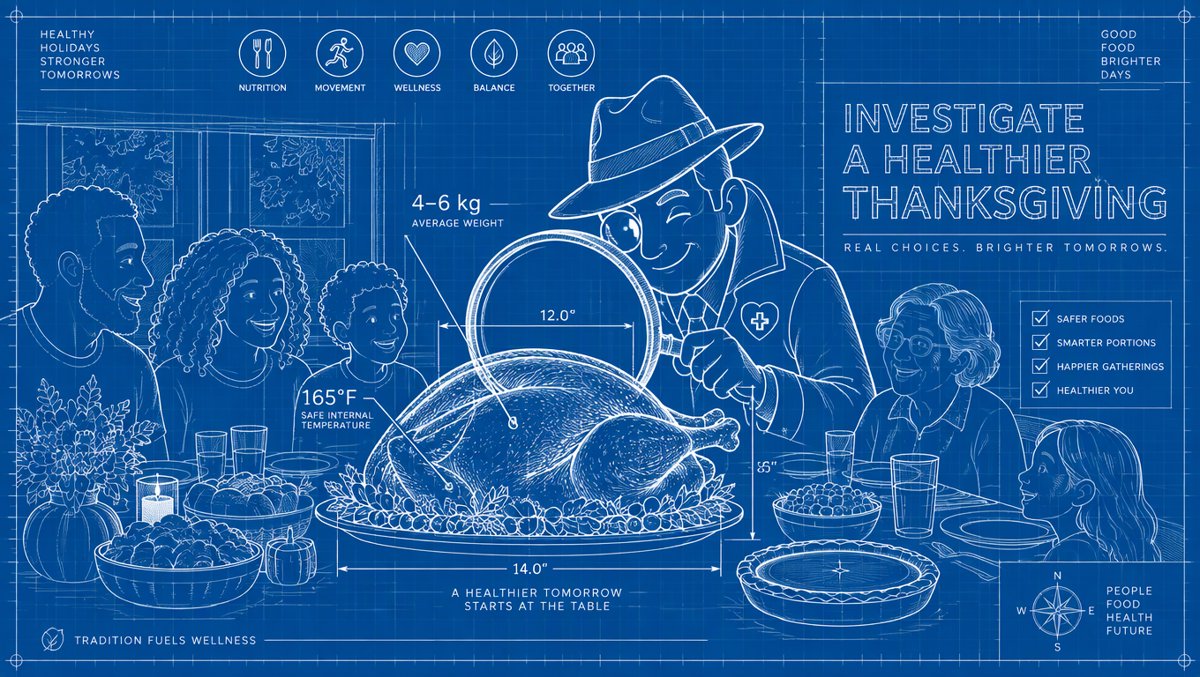
Turkey does contain tryptophan — an essential amino acid your body uses to make serotonin and melatonin, two chemicals involved in mood and sleep. That part is true. A standard 3-ounce serving of turkey contains roughly 250 to 310 milligrams of tryptophan¹ — and that sounds impressive until you zoom out.
Here's the catch: you'd have to eat a lot of turkey for that tryptophan to actually sedate you. The amount in a normal serving simply isn't enough to push your brain into nap mode¹. And here's the plot twist that busts the whole myth wide open: turkey isn't special. Chicken, fish, milk, cheese, egg whites, oats, peanuts, sesame seeds, pumpkin seeds, and soybeans all contain tryptophan too¹. Nobody blames the cheese board for their food coma. Nobody warns you about the pumpkin seeds. Yet your average cheddar has more tryptophan per serving than roast turkey does.
If tryptophan were the culprit, every grilled-chicken salad would come with a complimentary pillow.
🔑 Key Takeaway: Turkey is carrying tryptophan like everyone else in the protein family — it's not the sleepy villain it's been made out to be.
🍽️ Section 2: The Real Defendants — Size, Carbs, Fat, and That Second Glass of Wine
So if the bird is innocent, what actually knocks you out? Science points to a lineup of four usual suspects.
Suspect #1: The sheer volume of food. Sleep researchers have measured this directly — sleepiness reliably rises after meals and usually peaks one to two hours afterward, and the effect is stronger after larger, higher-energy meals². Your stomach stretching to capacity sends "big job ahead" signals through your gut and nervous system. Scientists call the whole phenomenon postprandial somnolence — literally "after-meal drowsiness" — and it can kick in anywhere from 30 minutes to two hours after eating and linger for up to three or four hours².
Suspect #2: The carb avalanche. Thanksgiving plates are carbohydrate festivals — stuffing, mashed potatoes, rolls, sweet potato casserole, and then three kinds of pie. Large amounts of carbs can spike your blood sugar first, and the dip that follows is what leaves you feeling lethargic¹. High-carb meals are consistently linked to more post-meal sleepiness than lower-carb ones³.
Suspect #3: The fat load. In a controlled lab study, 18 healthy volunteers ate either high-fat or high-carbohydrate morning meals — and the high-fat meals produced measurably greater sleepiness⁵. Rich gravies, buttery sides, and fatty desserts all pile onto the effect.
Suspect #4: Alcohol. That festive glass of wine doesn't just pair with the meal — it deepens the lethargy on top of an already-heavy plate¹, and it's even more sedating when you're running short on sleep³.
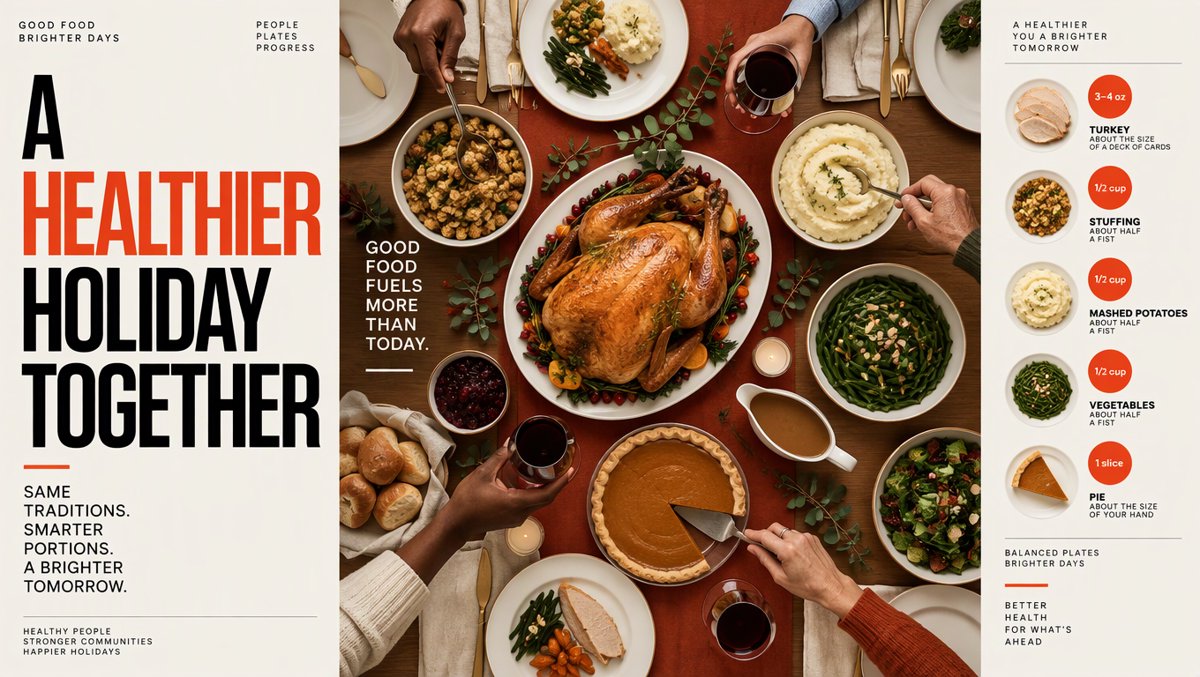
🔑 Key Takeaway: The food coma is a team effort — big portions + carb/fat-heavy plates + alcohol. The turkey is just standing nearby holding the evidence bag.
🧠 Section 3: The Plot Twist Happening Inside Your Skull
Now for my favorite part — the actual neuroscience, because it's genuinely cool.
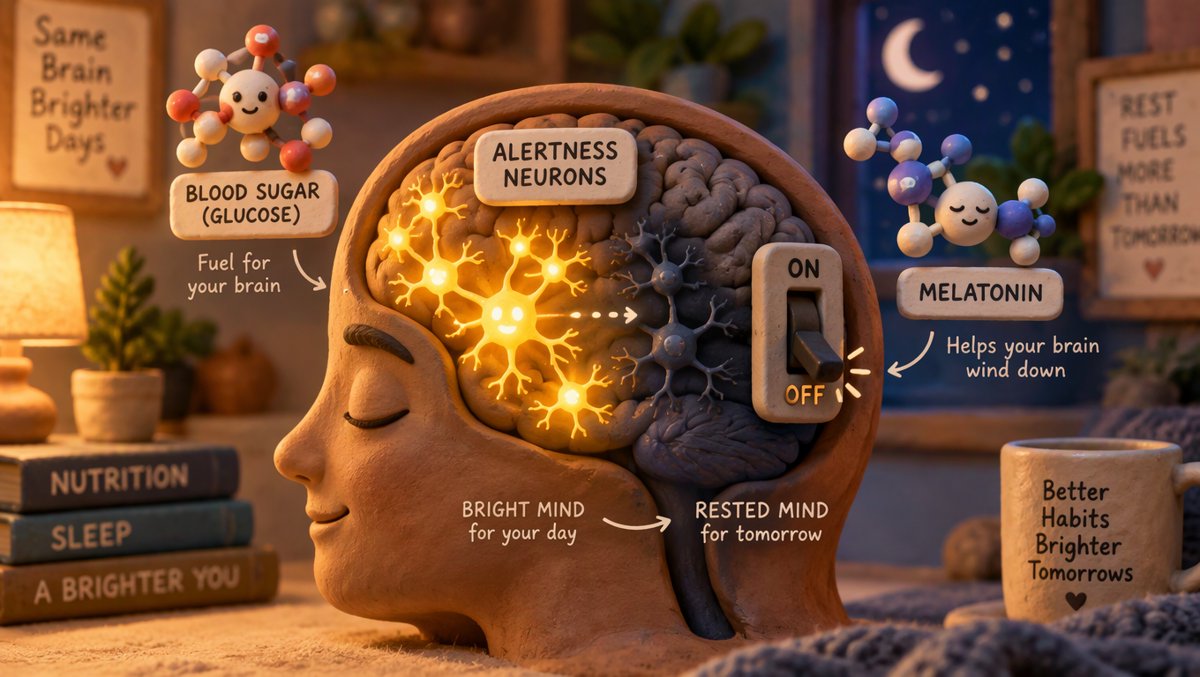
Deep in your brain sit tiny clusters of neurons called orexin cells. Think of them as your brain's alertness thermostat: when they're firing, you feel awake and driven; when they go quiet, sleep pressure rushes in. In landmark experiments, researchers showed that rising blood glucose directly switches these wakefulness neurons off⁶ ⁷. Read that again: the same sugar flooding your bloodstream after that second helping of mashed potatoes is literally pressing your brain's dimmer switch.
Your gut hormones join in too. After a big meal, alertness-maintaining hormones drop while sleep-promoting ones — including serotonin and melatonin — rise³. Immune signaling proteins called cytokines also climb after large, high-calorie meals, and they're linked to that heavy, fatigued feeling³.
Oh, and the old textbook explanation — that your body diverts blood away from your brain to power digestion, starving it of oxygen — modern researchers have largely debunked that one². The real story is chemical signals and brain circuits, not plumbing.
And if you want to know how seriously scientists take this phenomenon: in a 2016 eLife study (funded through the U.S. National Institutes of Health archive), researchers built a machine to watch fruit flies eat and sleep simultaneously. The flies took mini-naps of about 20–40 minutes after meals — and the naps got longer with bigger meals⁴. Even better: protein and salt promoted the post-meal snooze, while pure sugar did not⁴. The food coma is so fundamental that fruit flies do it too.
🔑 Key Takeaway: A big glucose hit flips off your brain's wakefulness neurons while sleep-promoting chemicals rise — the nap urge is real biology, not weakness of character.
🕐 Section 4: The Afternoon Accomplice (and When a Coma Is a Clue)
There's one more conspirator, and it's been with you all day: your body clock. Your circadian rhythm naturally dials down wakefulness signals in the early afternoon — which is why you can feel that "post-lunch dip" even if you skipped lunch entirely³. Stack a huge meal on top of that built-in dip, and it's lights out.
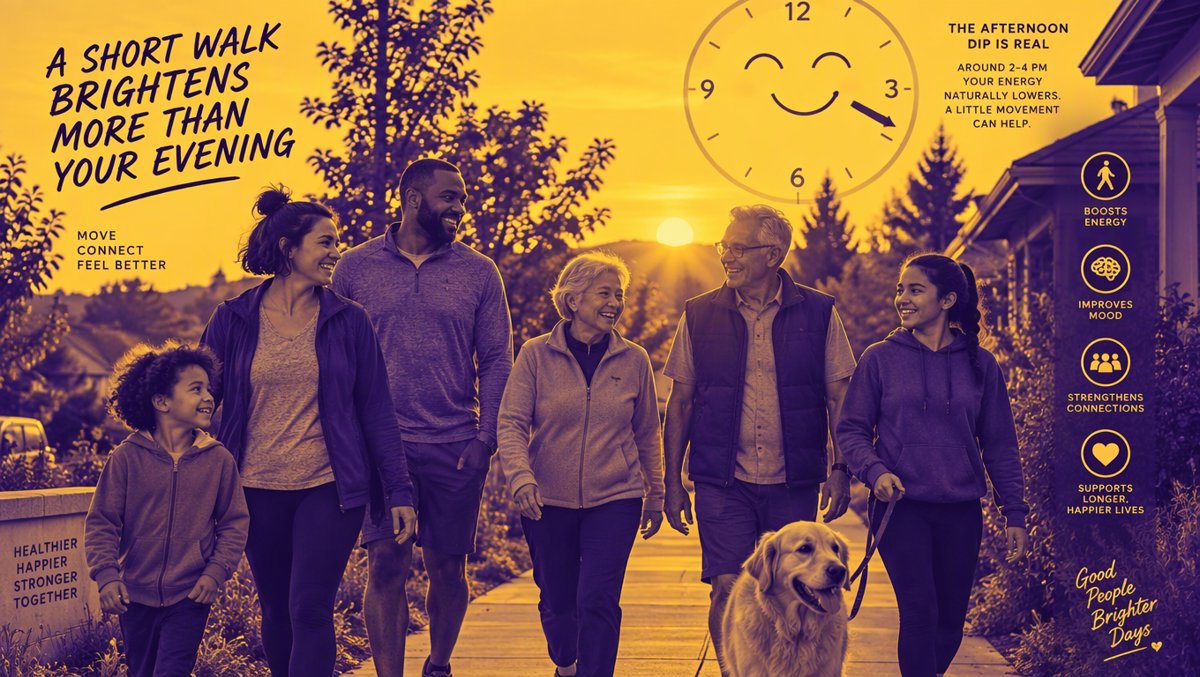
For most of us, the food coma is harmless and passes within a few hours². But it's worth knowing the difference between a normal post-feast doze and a signal worth checking with a doctor². Flag it if you regularly feel excessively sleepy during the day, if you snore loudly or wake gasping, or if you feel dizzy or faint after meals — and be alert for shakiness, sweating, or confusion a few hours after eating, plus classic diabetes signs like unusual thirst, frequent urination, or blurred vision². And one non-negotiable safety rule: never drive when you're fighting sleep after a big meal — pull over or delay the trip².
🔑 Key Takeaway: The early-afternoon circadian dip is the quiet accomplice — an ordinary food coma fades within hours, but persistent sleepiness, snoring, or dizziness after meals deserves a doctor's visit.
🛠️ The Game Plan: 7 Science-Backed Moves for a Coma-Free Celebration
You don't have to choose between enjoying the feast and staying conscious for dessert. Stack these moves¹ ² ³:
- Veggies-first plating. Fill half your plate with vegetables before touching the carbs and meat — less room, steadier energy.
- Go smaller, go slower. Try the nondominant-hand trick to naturally slow your pace, and at the 10-to-15-minute mark, pause and ask if you're actually still hungry¹.
- Keep protein and fiber in every plate. Balanced meals built on protein, fiber, and lower-GI carbs blunt the spike-crash cycle².
- Alternate every celebratory drink with water. You'll cut the alcohol's sedating punch and stay hydrated³.
- Take the 10-minute family walk. A short post-meal walk (Turkey Trot optional) aids digestion, boosts alertness, and turns the coma into a tradition upgrade¹ ².
- Nap like a pro, if you must. Keep it to about 20 minutes — long enough to recharge, short enough to avoid grogginess².
- Protect the night before. A well-rested body handles a big meal far better than a sleep-deprived one — and you'll make smarter choices at the buffet¹.
🔑 Key Takeaway: Portion strategy, pacing, hydration, and a short walk convert the food coma from inevitable collapse into an optional, well-earned 20-minute power nap.
🎯 Key Takeaways
- The turkey is innocent — a 3-ounce serving has only 250–310 mg of tryptophan, nowhere near a sedating dose, and chicken, cheese, eggs, and seeds all carry just as much.
- The real culprits are meal size, carb and fat load, and alcohol — sleepiness after meals peaks one to two hours after eating and can last three to four hours.
- It's neuroscience: rising blood sugar directly switches off your brain's orexin wakefulness neurons while sleep-promoting serotonin and melatonin rise.
- Your body clock stacks the deck — the early-afternoon circadian dip amplifies any big meal, which is why lunch hits harder than breakfast.
- Beat the crash with the game plan: veggies first, smaller portions, water between drinks, a 10-minute walk, and a 20-minute nap cap — and see a doctor if sleepiness is constant, or if snoring, dizziness, or shaking after meals shows up.
🎧 Key Takeaways — Listen (2 min)
📚 Verified Sources
- Cleveland Clinic (Health Essentials) — Zumpano J., RD. "Why Does Thanksgiving Dinner Make You Sleepy?" Expert-reviewed explainer on tryptophan content, carb spikes, alcohol, and prevention tips. https://health.clevelandclinic.org/does-thanksgiving-dinner-make-you-tired
- Cleveland Clinic Health Library — "What Is a Food Coma (Postprandial Somnolence)?" Medically reviewed reference covering timing, causes, risk factors, red-flag symptoms, and treatment (updated Sept 2025). https://my.clevelandclinic.org/health/diseases/food-coma
- Sleep Foundation — Guo L., MD. "Why You Get Sleepy After Eating." Evidence-reviewed guide to circadian dips, hormones, cytokines, food composition, and countermeasures. https://www.sleepfoundation.org/nutrition/why-do-i-get-sleepy-after-eating
- Murphy KR, Deshpande SA, Yurgel ME, et al. — "Postprandial sleep mechanics in Drosophila." eLife 2016;5:e19334. NIH-hosted study showing meal-size-dependent post-meal sleep in flies, driven by protein and salt but not sugar. https://pmc.ncbi.nlm.nih.gov/articles/PMC5119887/
- Wells AS, Read NW, Uvnas-Moberg K, Alster P. — "Influences of fat and carbohydrate on postprandial sleepiness, mood, and hormones." Physiology & Behavior 1997;61(5):679–686. Controlled trial in 18 volunteers showing greater sleepiness after high-fat meals. https://www.sciencedirect.com/science/article/abs/pii/S0031938496005197
- Burdakov D, Gerasimenko O, Verkhratsky A. — "Physiological Changes in Glucose Differentially Modulate the Excitability of Hypothalamic Melanin-Concentrating Hormone and Orexin Neurons in Situ." Journal of Neuroscience 2005;25(9):2429. The gold-standard demonstration that glucose inhibits orexin wakefulness neurons. https://www.jneurosci.org/content/jneuro/25/9/2429.full.pdf
- Burdakov D, et al. — "Tandem-Pore K+ Channels Mediate Inhibition of Orexin Neurons by Glucose." Neuron 2006;50(5):711–722. Revealed the potassium-channel mechanism linking glucose to wakefulness loss (summary via EurekAlert). https://www.eurekalert.org/news-releases/558150
- Polianovskaia A, Sutliffe JT, Lopez NV, Cheung J. — "Effect of a Whole-Food Plant-Based Diet on Postprandial Sleepiness: A Pilot Study." American Journal of Lifestyle Medicine 2024. Early human data linking plant-forward eating to less post-meal sleepiness. https://pubmed.ncbi.nlm.nih.gov/39554973/
- Snopes — "Does eating turkey make you sleepy?" Fact-check confirming the tryptophan dose in turkey is insufficient to cause drowsiness. https://www.snopes.com/articles/471819/turkey-eating-sleepy-tired/
All claims fact-checked against Gold-tier (CDC/NIH/WHO/PubMed/Nature/The Lancet) and Silver-tier (Mayo Clinic/Harvard Health/Cleveland Clinic) authoritative sources. Last verified: November 6, 2026.
So this Thanksgiving, go ahead — savor the plate, cheer the tryptophan joke one more time, then take the walk, claim your 20 minutes on the couch on purpose, and be the most awake person at dessert. Your brain's orexin cells will thank you. 🦃🌙