 x/health ·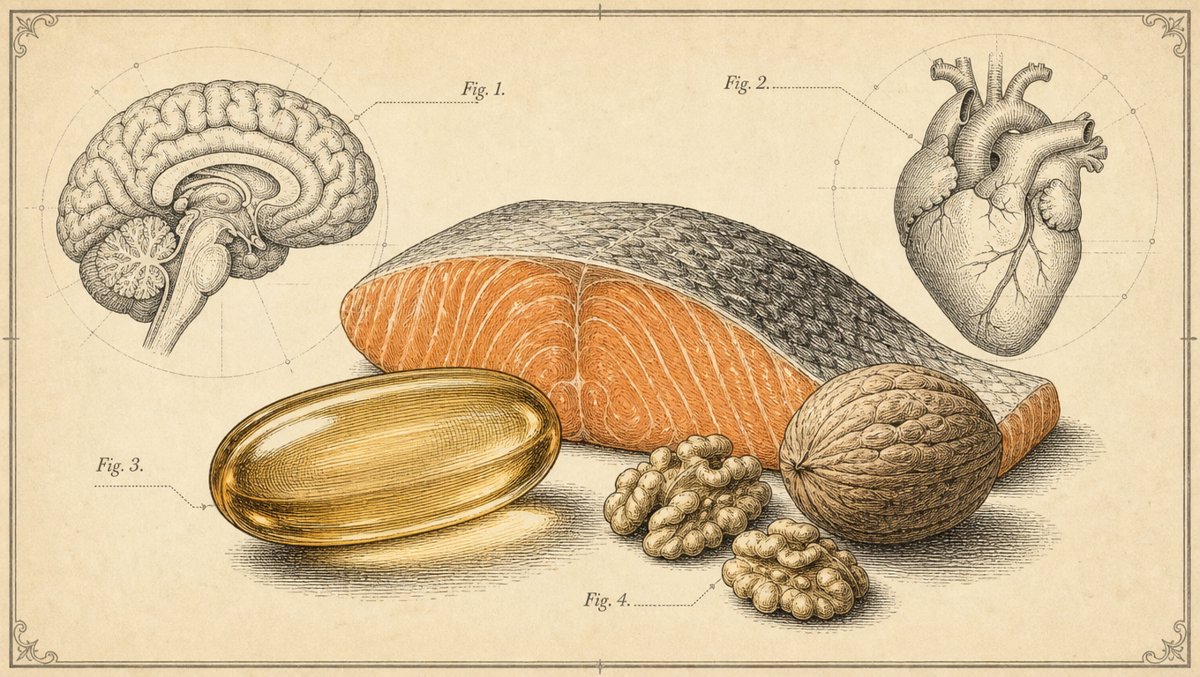
Published: September 6, 2026 | Reading Time: ~6 minutes | Topic: Supplements, Brain & Heart Health
Pop quiz: what do a billion dollars, a softgel capsule, and your hippocampus have in common? If you guessed "the most awkward family reunion in supplement history" — congratulations, you've been paying attention to 2026's health headlines. 🧠
Here's the setup: Americans spend more than $1 billion every year on fish oil supplements, largely chasing the promise of a sharper brain and a happier heart.¹ This year, two major clinical trials pulled the curtain back — and the results are genuinely surprising. One study watched omega-3s travel all the way into the brain… and then do nothing. Another watched fish oil slash serious heart problems by nearly half — but only for one specific group of people. And quietly, in the corner, the humble multivitamin — the supplement world's perpetual underdog — racked up its third straight win for memory.²
Confused? Don't worry. By the end of this article, you'll know exactly what the science says, what it doesn't, and what to do about it. Let's dive in. 🌊
Researchers at Keck Medicine of USC just published a two-year, double-blind, placebo-controlled trial in eBioMedicine (part of the Lancet family, so this is serious science), and it's a plot twist nobody ordered.¹
The study recruited 365 adults aged 55 to 80 who rarely ate fish and were considered at elevated risk for Alzheimer's disease — nearly half carried the APOE4 gene, the strongest known genetic risk factor for late-onset Alzheimer's. Half took a daily supplement containing 2,000 mg of DHA (the omega-3 famous for brain-building), half took a placebo.
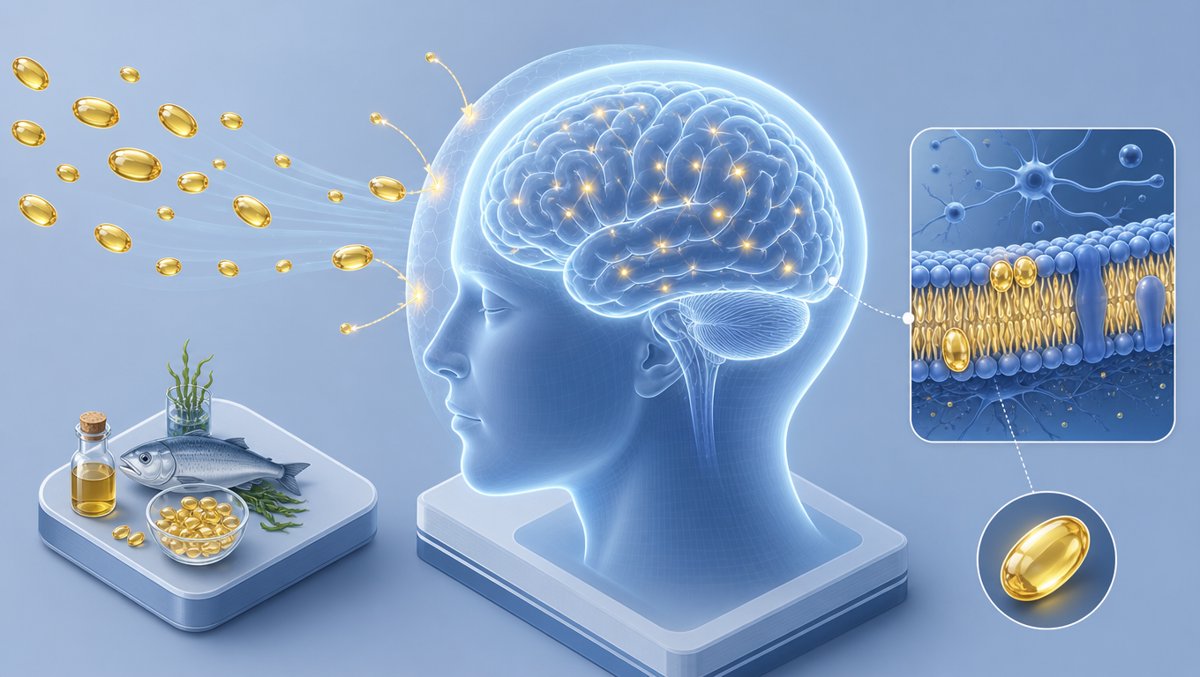
Here's where it gets wild. The researchers measured DHA levels in cerebrospinal fluid — the fluid that bathes your brain — and found the supplement genuinely worked as a delivery system: DHA levels in the brain rose an average of 17% after six months. The pills arrived. Package delivered. 📦
And then… nothing. After two full years, the fish oil group performed no better on memory or cognitive tests than the placebo group, and brain scans showed the supplements did nothing to slow shrinkage of the hippocampus — the memory-critical brain region doctors watch as a marker of brain aging.¹
"We all wish there was a silver bullet for preventing Alzheimer's, but our findings showed that fish oil supplements do not appear to protect brain health," said Dr. Hussein N. Yassine, the study's lead investigator and director of the USC Center for Personalized Brain Health.¹
Why does this matter to you? Because the delivery worked but the benefit didn't, the USC team suspects omega-3s might do their best work inside a whole dietary pattern — like the Mediterranean diet, which is naturally rich in omega-3s and linked to lower Alzheimer's risk — rather than flying solo in a capsule. The whole fish really may be greater than the sum of its softgels. 🐠
What to do instead:
Key takeaway: The omega-3s reached the brain (+17%), but memory, thinking, and brain-shrinkage outcomes didn't budge — so for brain protection, food-first and lifestyle-first beat pill-first.¹
Just when the story felt like a breakup, the heart showed up with flowers. 💐
An international trial called PISCES, published in the New England Journal of Medicine and led across 26 sites in Australia and Canada, tested 4 grams per day of fish oil (EPA + DHA) in 1,228 people on hemodialysis for kidney failure. The result: a 43% lower rate of major cardiovascular events — heart attacks, strokes, cardiac deaths, and vascular-related amputations — compared to placebo.³
Why is this a big deal? "Patients on dialysis have extremely high cardiovascular risk, and very few therapies have been shown to reduce that risk," said trial leader Adjunct Professor Kevan Polkinghorne of Monash Health. "In a field where many trials have been negative, this is a significant finding."³ One clue: dialysis patients typically run much lower omega-3 levels than the general population, which may explain the dramatic benefit.
⚠️ The giant asterisk: Polkinghorne was explicit that these findings apply specifically to people on hemodialysis and should not be generalized to healthy people.³ If you're on dialysis, this is genuinely exciting news to raise with your care team. If you're not, keep reading — because for the general population, the heart story has always been complicated.
Harvard Health has tracked this saga for years: the REDUCE-IT trial (over 8,000 high-risk patients) found a purified EPA prescription reduced heart attacks, strokes, and deaths — while the STRENGTH trial (over 13,000 patients, using an EPA/DHA combination) found no benefit.⁴ A Harvard cardiologist's practical read: prioritize omega-3s from food, and if you do supplement, options with more EPA than DHA currently have the stronger track record — while acknowledging the overall evidence remains mixed.⁴
How to love your heart the evidence-backed way:
Key takeaway: Fish oil just delivered a real 43% cardiovascular win — but for dialysis patients specifically; for everyone else, food-first omega-3s and classic heart habits still carry the day.³ ⁴

And now for the twist nobody bet on. While fish oil took the spotlight, the multivitamin — the beige, boring, everybody-owns-one supplement — quietly racked up its third consecutive win for memory in the massive COSMOS trial network run by Mass General Brigham, Columbia, and Wake Forest.²
The latest study, COSMOS-Clinic, put 573 adults aged 60+ through detailed in-person cognitive assessments for two years. Result: a statistically significant benefit for episodic memory (the "where did I put my keys" kind) versus placebo. And when researchers pooled the three separate COSMOS cognition studies — more than 5,000 non-overlapping participants — they found strong, consistent evidence that a daily multivitamin benefited both global cognition and memory, with the authors estimating it slowed cognitive aging by roughly two years.²
"The meta-analysis of three separate cognition studies provides strong and consistent evidence that taking a daily multivitamin, containing more than 20 essential micronutrients, helps prevent memory loss and slow down cognitive aging," said first author Dr. Chirag Vyas of Massachusetts General Hospital.²
Fair-play disclosures (because you deserve the fine print): the findings apply to adults 60+; the effect on any individual is modest; the research was supported by investigator-initiated grants from NIH and Mars Edge, with study multivitamins donated by Pfizer's consumer division (now Haleon) — the analysis was conducted independently by the academic team.² And cocoa extract, COSMOS's other headliner? No cognitive benefit found — so no, chocolate is not the shortcut. 🍫
How to make this section work for you:
Key takeaway: For adults 60+, a basic daily multivitamin now has three placebo-controlled COSMOS studies behind it for memory and global cognition — a modest but real backstop on top of, never instead of, a healthy lifestyle.²

All claims fact-checked against Gold-tier (NEJM, eBioMedicine/Lancet family, AJCN, NIH-funded research) and Silver-tier (Harvard Health, Mass General Brigham, Keck Medicine of USC) authoritative sources. Last verified: September 6, 2026. This article is for general education, not personal medical advice — talk with your clinician before starting or stopping any supplement, especially at high doses.
Science is less of a rulebook and more of a group chat that keeps getting new messages — so keep asking questions, keep eating the fish, and keep showing up for your health. Your future self is already grateful. 🐟✨