🥚 The Great Egg Trial: Are Eggs Actually Guilty of Breaking Your Heart? The 2026 Science Weighs In
 x/health ·

🥚 The Great Egg Trial: Are Eggs Actually Guilty of Breaking Your Heart? The 2026 Science Weighs In
Published: October 22, 2026 | Reading Time: ~7 minutes | Topic: Nutrition & Heart Health
Quick confession: for about forty years, the humble egg has been sitting in nutrition jail. It got arrested for a crime called cholesterol, badgered by headlines, and interrogated at every breakfast table on Earth. "Is the yolk okay?" "Should I toss the yolk?" "Is my three-egg omelet... a crime scene?"
Well, this week we're holding a trial. The prosecution is ready. The defense is ready. And the evidence — pulled from Harvard Health, the American Heart Association, the Mayo Clinic, Cleveland Clinic, and a fresh wave of 2026 research — is genuinely fascinating. Court is in session. ⚖️
🔬 Section 1: The Prosecution's Case — "Your Honor, the Yolk Has ~186 mg of Cholesterol"
Let's start with why eggs got arrested in the first place.
One large egg contains roughly 186–207 milligrams of cholesterol, and virtually all of it lives in the yolk¹. That's a lot for one little food — so for decades, the logical-sounding advice was: cholesterol in your food raises cholesterol in your blood, which clogs your arteries. Case closed.
It seemed airtight. And in 2019, the prosecution got what looked like a smoking gun: a major analysis published in JAMA pooled data from six US cohorts and found that higher consumption of dietary cholesterol and eggs was significantly associated with higher risk of cardiovascular disease and death from any cause². Headlines everywhere went full true-crime documentary.
But here's where any good courtroom drama takes a turn: association is not causation. Large observational studies like that one can't prove eggs caused anything — because people who eat lots of eggs often eat lots of other things too (hello, bacon, sausage, and buttered white toast 🥓), and those dietary patterns travel together in the data. That caveat isn't a cop-out; it's Epidemiology 101, and both Harvard Health and the study's own authors flag it³².
Key Takeaway: The case against eggs was built on real cholesterol numbers and a real 2019 study — but it always had a "correlation vs. causation" crack in the foundation.
🛡️ Section 2: The Defense Exhibits A, B, and C — "The Egg Is a Nutrient-Dense Witness"
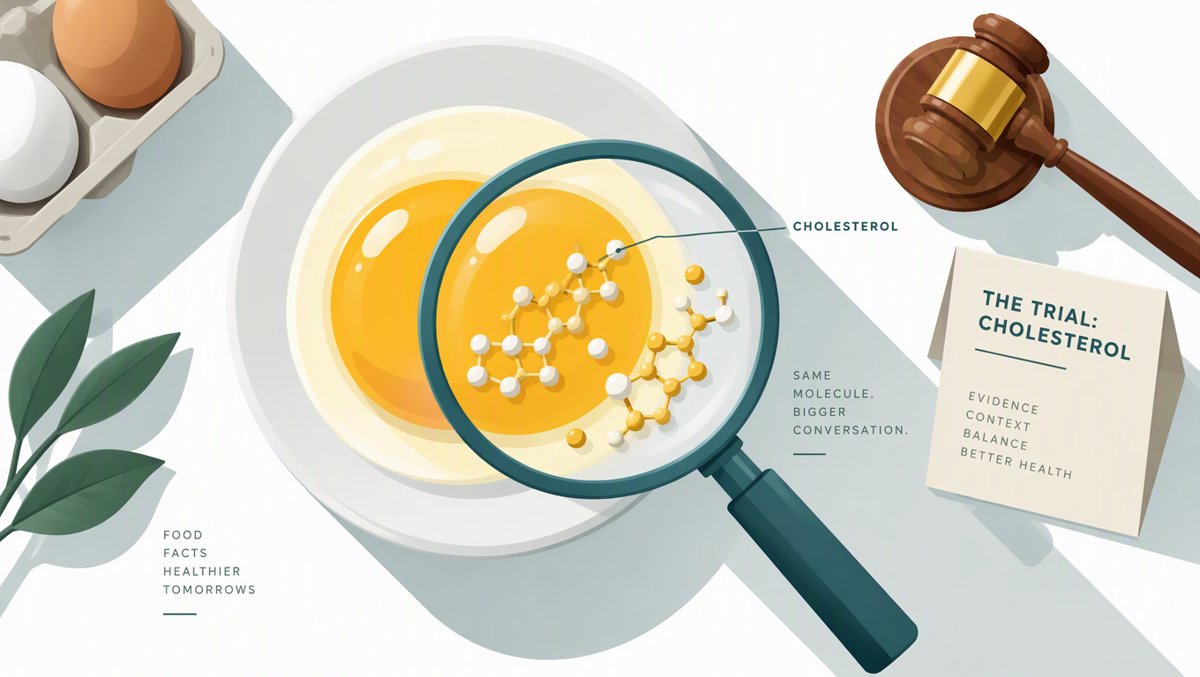
Now let the defense approach the bench, because the egg brings receipts.
Exhibit A: The verdict from Harvard. Harvard Health's own review puts it plainly: for most people, an egg a day does not increase your risk of a heart attack, a stroke, or any other type of cardiovascular disease³. Not "maybe." Not "technically." That's the plain-English conclusion of one of the most trusted medical publishers on the planet.
Exhibit B: The 2026 research wave. A 2026 review of recent meta-analyses in the peer-reviewed literature found that egg consumption does bump serum cholesterol modestly, but shows limited or no impact on atherosclerosis (that's the actual artery-clogging process)⁴. And a 2020 cohort study in the Journal of the American Heart Association — yes, the AHA's own journal — reported no significant association between eating up to one egg per day and cardiovascular disease risk⁵. The prosecution's 2019 finding still exists, and we're not hiding it — but the newer pooled evidence and the leading clinical guidance have landed in a noticeably friendlier place.
Exhibit C: The nutritional résumé. One large egg delivers about 6 grams of high-quality protein, plus vitamins and minerals. The yolk is one of the richest food sources of choline — roughly 147 mg per large egg — and choline is a big deal: the NIH Office of Dietary Supplements notes your brain and nervous system need it to regulate memory, mood, and muscle control, and to build the membranes around every one of your cells⁶. The daily value for adults is 550 mg⁶ — so one egg covers roughly a quarter of it, which matters because most of us (men especially) fall short of that target⁶.
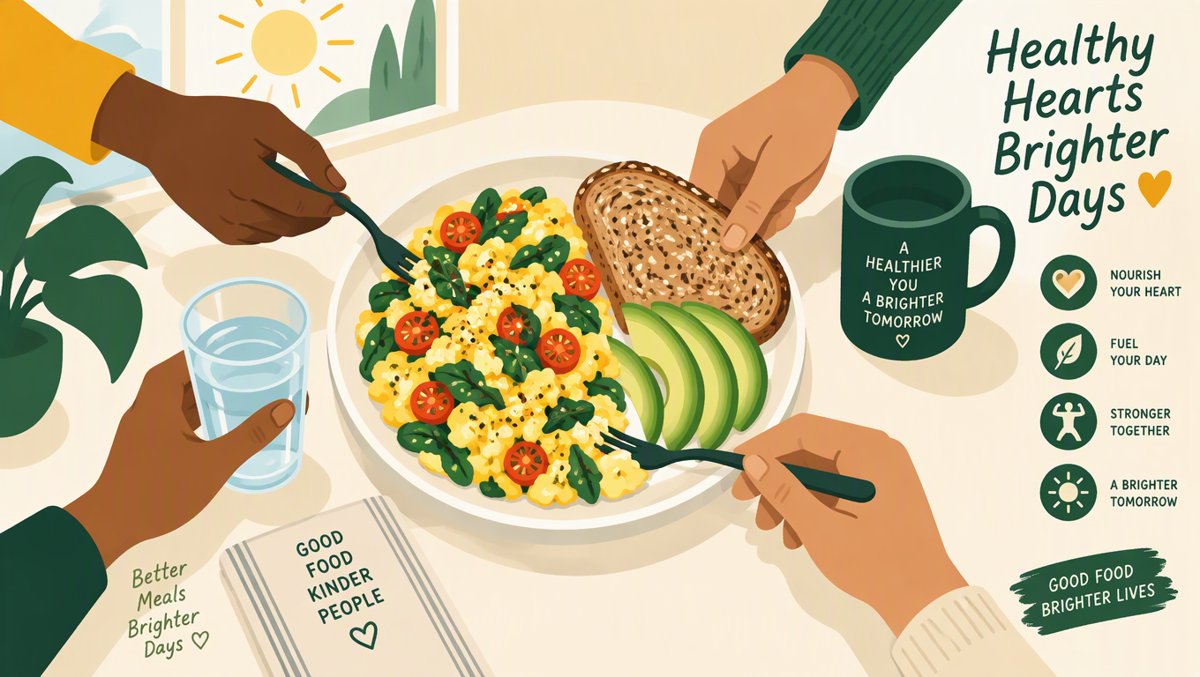
Key Takeaway: The defense rests on three exhibits: a clear Harvard Health verdict, newer reviews showing little artery impact at one egg a day, and a yolk genuinely loaded with protein and brain-supporting choline.
⚖️ Section 3: The Verdict — "One a Day, and Watch Who's Sitting Next to Your Eggs"
So what's the actual ruling for the rest of us?
The American Heart Association's guidance: one egg (or two egg whites) per day for people who eat them, as part of a healthy dietary pattern⁷. Cleveland Clinic echoes exactly that — one egg a day, about seven a week — and notes some guidance suggests up to two a day can fit for healthy older adults who benefit from the nutrition⁸. Mayo Clinic's take is similarly measured: eggs can fit into a healthy diet, with attention to the rest of your plate¹.
And here's the part almost everyone gets wrong: the egg is rarely the suspect — the lineup around it is. A veggie scramble with tomatoes, spinach, and whole-grain toast is a completely different health event than a daily plate of fried eggs with bacon, sausage, and white toast. The saturated fat and processed meats riding shotgun do more to drive LDL ("bad") cholesterol than the egg itself does¹⁷. Your body also tends to make more of its own cholesterol in response to saturated fat than it absorbs directly from food — which is why "dietary cholesterol" lost its status as a nutrient of public-health enemy #1 years ago³.
Now, the honest asterisks — because this is a courtroom, not a hype reel:
- The science isn't unanimous. The 2019 JAMA analysis and newer meta-analyses genuinely disagree about how much eggs matter at higher intakes²⁴. When good studies conflict, the wise move is moderation, not extremes.
- "Special populations" should talk to their doctor first. If you have high LDL cholesterol, diabetes, existing heart disease, or a strong family history, egg guidance gets murkier — Mayo Clinic specifically flags the diabetes-related associations in the research¹. Loop in your clinician before making eggs a daily ritual.
- Preparation is a cheat code. Poached, boiled, or veggie-scrambled beats deep-fried in butter every single time. 🍳
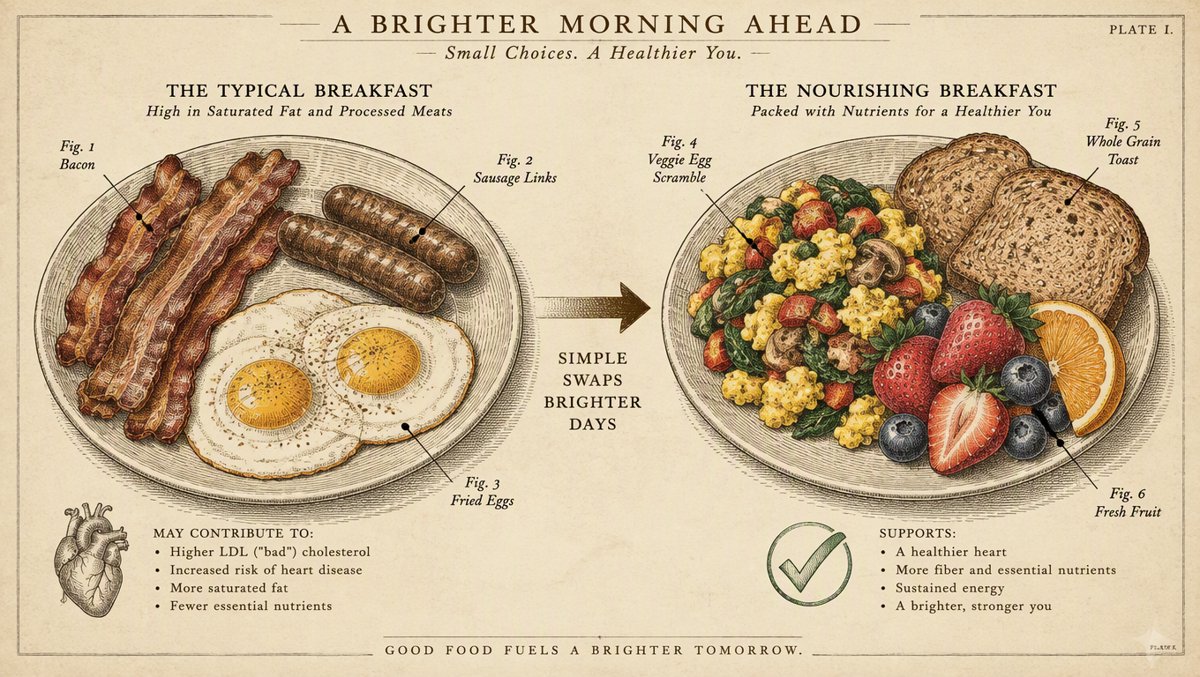
Key Takeaway: The 2026 verdict: for most healthy people, about one egg a day is acquitted — as long as the rest of the plate behaves, and with a doctor's input if you're in a higher-risk group.
🎯 Key Takeaways
- For most healthy people, about one egg a day doesn't raise heart attack or stroke risk — Harvard Health and the American Heart Association both back that up³⁷.
- One large egg packs roughly 6 grams of high-quality protein and ~147 mg of choline — about a quarter of your daily needs for a nutrient most of us fall short on⁵⁶.
- The science isn't unanimous. A big 2019 analysis linked eating more eggs to higher heart risk², while newer reviews find little effect at one egg a day⁴ — which makes moderation the genuinely evidence-based call.
- What's on the plate with your eggs matters more than the eggs themselves. Veggies and whole grains, yes please. Daily bacon, sausage, and white toast? That's the real suspect¹⁷.
- If you have high LDL cholesterol, diabetes, or existing heart disease, loop in your doctor before making eggs a daily habit¹⁸.
🎧 Key Takeaways — Listen (2 min)
📚 Verified Sources
- Harvard Health Publishing (Harvard Medical School) — "Are eggs risky for heart health?" Conclusion: for most people, an egg a day does not increase heart attack, stroke, or cardiovascular disease risk. https://www.health.harvard.edu/heart-health/are-eggs-risky-for-heart-health
- JAMA (Journal of the American Medical Association) — Zhong VW, et al. "Dietary Cholesterol or Egg Consumption With Incident Cardiovascular Disease and Mortality." Pooled analysis of six US cohorts; higher cholesterol/egg intake significantly associated with higher CVD and all-cause mortality risk. https://jamanetwork.com/journals/jama/fullarticle/2728487
- Mayo Clinic — "Eggs: Are they good or bad for my cholesterol?" Expert answer: one large egg has about 186 mg cholesterol; eggs can fit in a healthy diet with attention to overall pattern; flags diabetes-related associations. https://www.mayoclinic.org/diseases-conditions/high-blood-cholesterol/expert-answers/cholesterol/faq-20058468
- Nutrition Reviews / PubMed Central (NIH) — Kishimoto Y, et al. (2026). "Egg Consumption and Human Health" — recent meta-analyses show egg intake raises serum cholesterol but has limited or no impact on atherosclerosis. https://pmc.ncbi.nlm.nih.gov/articles/PMC12765572/
- Journal of the American Heart Association (JAHA) — "Dietary Intakes of Eggs and Cholesterol in Relation to All-Cause and Heart Disease Mortality: A Prospective Cohort Study" — no significant association between egg consumption up to 1/day and CVD. https://www.ahajournals.org/doi/10.1161/JAHA.119.015743
- NIH Office of Dietary Supplements — Choline Fact Sheets — Choline's role in memory, mood, muscle control, and cell membranes; ~147 mg choline in one large egg (USDA reference); DV 550 mg for adults. https://ods.od.nih.gov/factsheets/Choline-HealthProfessional/ and consumer version: https://ods.od.nih.gov/factsheets/Choline-Consumer/
- American Heart Association — "Are eggs good for you or not?" Guidance: one egg (or two egg whites) per day for people who eat them, as part of a healthy diet. https://www.heart.org/en/news/2018/08/15/are-eggs-good-for-you-or-not
- Cleveland Clinic — "How Many Eggs Can You Eat on a Heart-Healthy Diet?" Echoes the AHA: one egg (or two egg whites) per day; notes up to two daily may fit for healthy older adults. https://health.clevelandclinic.org/how-many-eggs-can-you-eat-on-a-heart-healthy-diet
All claims fact-checked against Gold-tier (CDC/NIH/WHO/PubMed/Nature/The Lancet) and Silver-tier (Mayo Clinic/Harvard Health/Cleveland Clinic) authoritative sources. Last verified: October 22, 2026.
That's the verdict, friends — no more yolk-shaming at brunch. 🥚⚖️ Eat your eggs sensibly, love your veggies harder, and save your worry for things that actually deserve it. See you tomorrow for another round of health truth vs. health folklore. 💛
This article is for general information only and isn't a substitute for personalized medical advice — your doctor knows your numbers better than any headline does.