🫂 The Friendship Prescription: Your Doctor Might Soon Write "Call a Friend" — And the Science Says It's Legit
 x/health ·
🫂 The Friendship Prescription: Your Doctor Might Soon Write "Call a Friend" — And the Science Says It's Legit
Published: October 20, 2026 | Reading Time: ~7 minutes | Topic: Social Health & Longevity
Quick question: when was the last time you had a real, actual conversation with a friend? Not a thumbs-up reaction, not a "we should catch up soon!" text that evaporates into the group chat void — a genuine, out-loud, belly-laugh-included conversation.
If you had to think about it… you're in very big company. The World Health Organization now says 1 in 6 people worldwide experience loneliness¹ — and it's hitting teenagers and young adults hardest². That's roughly a billion people quietly running on an empty social tank. And here's the part that made me sit up straight: the WHO links loneliness to an estimated 871,000 deaths every single year — about 100 deaths an hour¹. That's not a "feels bad" statistic. That's a public health emergency with a heartbeat.
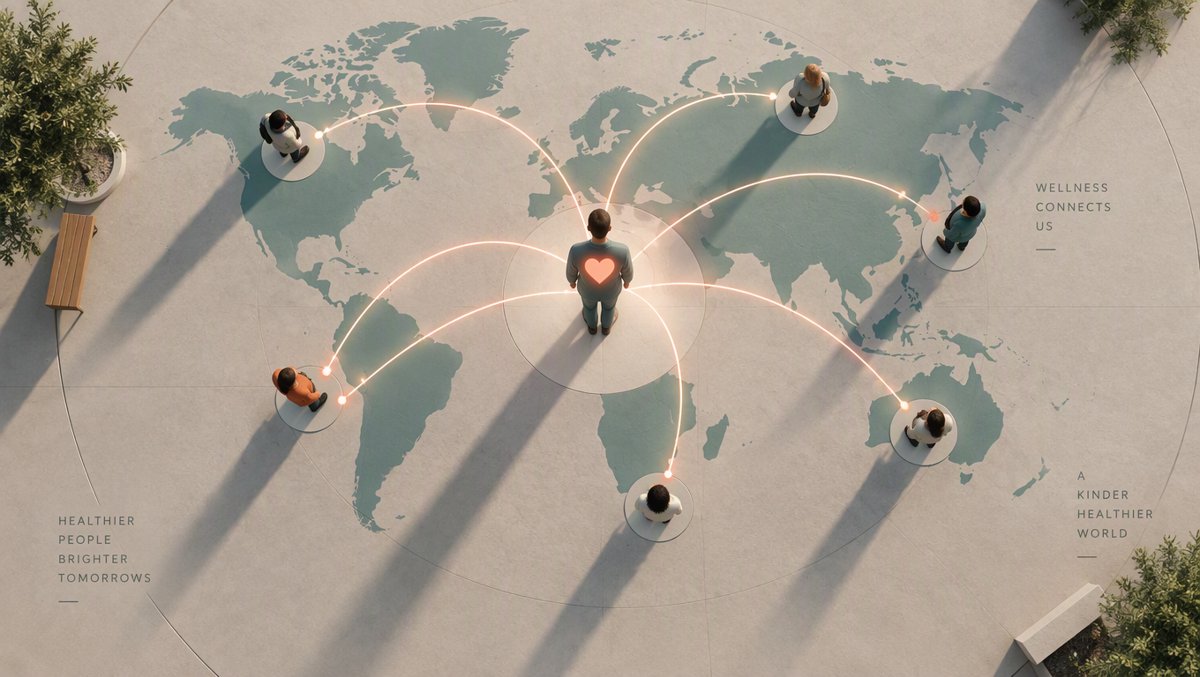
The good news? This might be the most fixable health problem of our time. No gym membership required, no fancy supplements, no 5 a.m. ice baths. Let's dig in.
🔬 Section 1: Loneliness Is a Vital Sign (Not a Personality Flaw)
Here's a reframe that changes everything: loneliness isn't a character defect or an introvert tax. Doctors and researchers increasingly treat it like blood pressure — a measurable health signal that deserves attention.
When the U.S. Surgeon General issued a formal advisory on loneliness, the numbers looked like something from a smoking campaign: poor social connection is associated with a 29% higher risk of heart disease, a 32% higher risk of stroke, and roughly a 50% higher risk of dementia in older adults³. The advisory even concluded that the mortality impact of social disconnection is comparable to smoking up to 15 cigarettes a day³. Fifteen. Cigarettes. A day. Suddenly "I'm just busy, I'll catch up with friends later" hits a little differently.
Why does this happen? In plain English: humans are wired for connection the way phones are wired for chargers. When connection is missing, your body reads it as a threat. Stress hormones stay elevated, inflammation simmers, sleep gets lighter, and blood pressure creeps up. Chronic loneliness keeps that alarm system idling for years — and your heart and brain quietly pay the bill.
Your 3-action starter kit:
- Do a 60-second connection audit. Tonight, ask yourself: When did I last feel truly seen by someone? If you can't remember, that's data — not shame.
- Name it out loud. Tell one trusted person, "I've been feeling a bit disconnected lately." The WHO and CDC both flag stigma as a huge barrier; saying it out loud breaks the spell⁴.
- Treat it like a checkup. If loneliness has been your baseline for weeks and it's dragging your mood or sleep, bring it up with a doctor — it's a legitimate health topic, and clinicians are increasingly trained to ask⁵.
Key takeaway: Loneliness affects 1 in 6 people globally and measurably raises your risk of heart disease, stroke, and dementia — it's a health signal worth taking seriously, not a personal failure.
🧠 Section 2: The 50% Effect — Why Friendship Is the Cheatest Cheat Code in Medicine
Now for my favorite stat in all of health science. Researchers led by Julianne Holt-Lunstad reviewed 148 studies covering 308,849 people and found something wild: people with stronger social relationships had a 50% increased likelihood of survival over the study periods compared to people with weaker ones⁶. Let that sink in. A 50% survival boost — from friendships. The researchers noted the effect was comparable to well-known risk factors like smoking and exceeded the impact of obesity or physical inactivity.
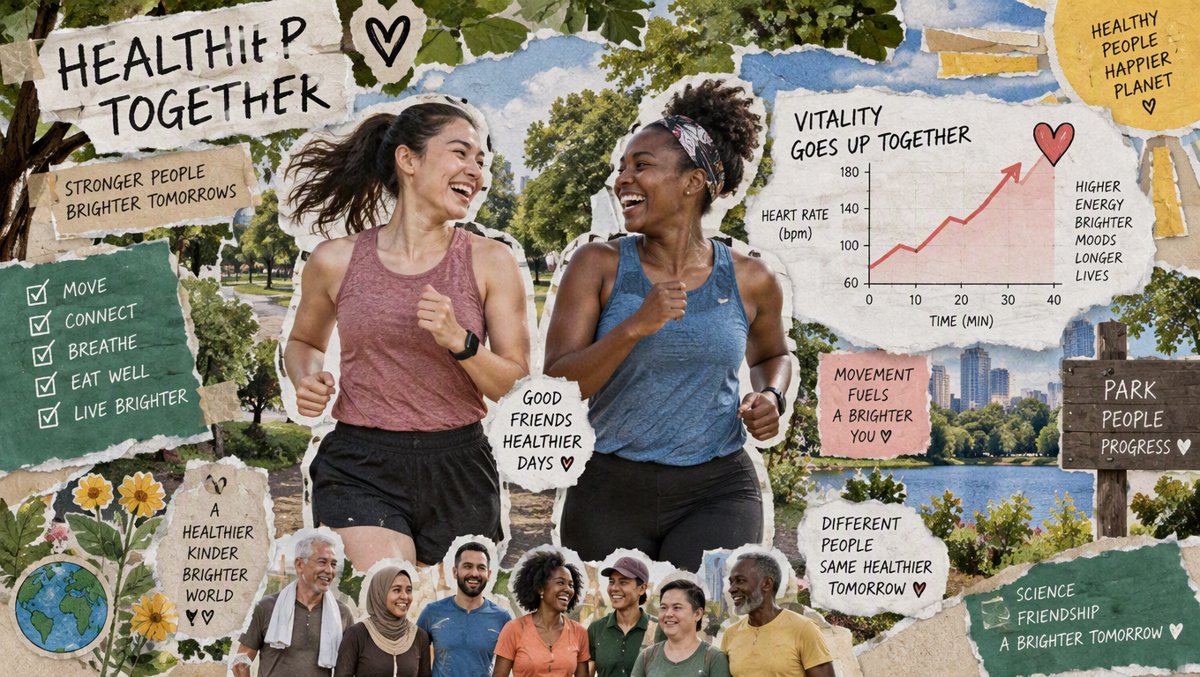
And it's not just one meta-analysis. The Harvard Study of Adult Development — the longest study of human happiness ever run, following its participants for over 85 years — landed on the same conclusion from the opposite direction. The clearest finding? It's not wealth, fame, or cholesterol that predicts who thrives in old age. It's relationships. The people most satisfied with their relationships at age 50 were the healthiest at age 80⁷.
Why is the effect so big? Think of it as a full-body benefit package:
- Behaviorally — friends nudge you toward doctor visits, better food, and actually showing up for that walk.
- Biologically — good connection calms the stress response, easing wear on your heart and immune system.
- Psychologically — having people in your corner buffers life's hits before they turn chronic.
This is why doctors in the UK's National Health Service have started literally "social prescribing" — writing prescriptions for walking groups, gardening clubs, art classes, and book clubs⁸. It's estimated that nearly a fifth of UK family-doctor appointment time is spent on non-medical problems like loneliness and isolation⁸. Medicine is catching up to what grandparents always knew: people need people.
How to borrow the effect:
- Match the activity to the friendship. Researchers consistently find shared activities bond people faster than "let's catch up sometime." A weekly badminton game beats a vague plan.
- Aim for quality, not quantity. Mayo Clinic puts it plainly: how good your friendships are matters more than how many friends you have⁹.
- Be the one who initiates. One of the most underused tricks in psychology: most people wildly underestimate how much friends enjoy hearing from them. Send the text first.
Key takeaway: Strong social bonds are associated with about a 50% higher likelihood of survival — an effect comparable to quitting smoking and bigger than hitting the gym, according to one of the largest reviews in health science.
💞 Section 3: The Friendship Prescription — Small Moves That Actually Work
Okay, so connection is medicine. But how do you actually take the pill, especially if your calendar is a war zone and your social battery identifies as "recyclable"? The CDC's guidance is refreshingly practical here: focus on quality, be responsive and supportive, practice gratitude, and address conflict early¹⁰. Here's the playbook:
Tip 1 — The 10-minute rule. Once a day, swap ten minutes of scrolling for one voice call. Not a text. Hearing a voice lights up connection circuits that emoji simply cannot. (Bonus: combine it with a walk and you stack two health wins.)
Tip 2 — Use "gratitude pings." Once a week, message someone and thank them for something specific — the advice they gave you, the laugh you shared. CDC-style gratitude practice strengthens bonds and it costs exactly zero dollars¹⁰.
Tip 3 — Join one recurring thing. A one-off event gives you a nice evening; a weekly class, club, or volunteer shift gives you relationships — because familiarity does the friend-making for you. This is literally the mechanism behind social prescribing⁸.
Tip 4 — Repair, don't ghost. Small conflicts left to fester quietly poison connections. The CDC explicitly recommends addressing conflict and negative feelings as they arise¹⁰. A clumsy-but-honest "hey, that bugged me, but I value us" is longevity medicine.
Tip 5 — Schedule it like it's medicine. Because it is. Put "call Mom," "Tuesday run club," "Friday game night" in your calendar with the same seriousness as a dentist appointment. Your calendar is a health document.
And if reaching out feels heavy right now — start with one person, one message. Momentum does the rest.
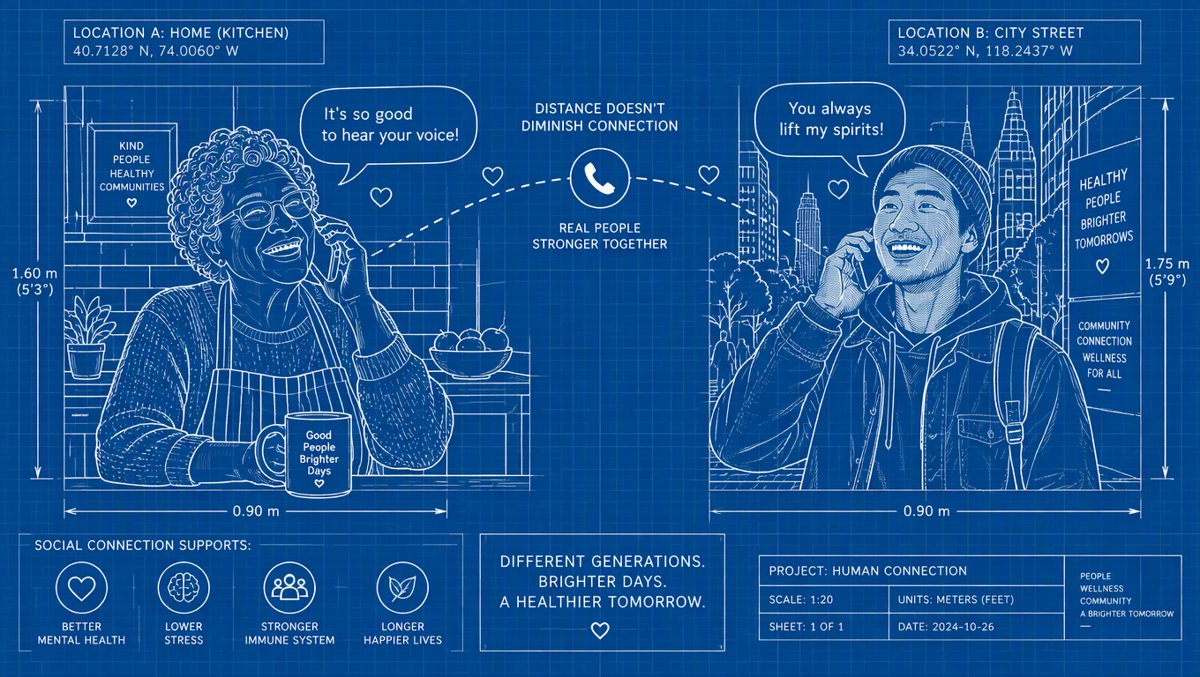
Key takeaway: Building connection doesn't require a personality transplant — a daily 10-minute call, weekly gratitude pings, one recurring group activity, and honest conflict repair are all evidence-backed moves.
🎯 Key Takeaways
- Loneliness is a health signal, not a flaw — 1 in 6 people worldwide experience it, and it hits young people hardest.
- The stakes are real — poor connection raises heart disease risk by 29%, stroke by 32%, and dementia risk by roughly 50% in older adults.
- The upside is huge — strong social bonds are linked to about a 50% higher likelihood of survival.
- Quality beats quantity — a few close, supportive friendships outperform a huge contact list.
- Small moves work — a daily 10-minute call, weekly gratitude, one recurring group activity, and prompt conflict repair are all evidence-backed.
🎧 Key Takeaways — Listen (1 min)
📚 Verified Sources
- World Health Organization — "Social connection linked to improved health and reduced risk of early death" (WHO Commission on Social Connection report; 1 in 6 people lonely; ~871,000 deaths/year, ~100/hour). https://www.who.int/news/item/30-06-2025-social-connection-linked-to-improved-heath-and-reduced-risk-of-early-death
- WHO Commission on Social Connection — Commission overview: loneliness highest among adolescents and young adults. https://www.who.int/groups/commission-on-social-connection
- U.S. Surgeon General / HHS — "Our Epidemic of Loneliness and Isolation" advisory: +29% heart disease, +32% stroke, ~50% dementia risk; mortality impact comparable to smoking up to 15 cigarettes/day. https://www.hhs.gov/surgeongeneral/reports-and-publications/connection/index.html
- CDC — About Social Connection — Health risks of disconnection and stigma barriers. https://www.cdc.gov/social-connectedness/about/index.html
- The BMJ — "Epidemic of loneliness threatens public health, says US surgeon general" (news coverage of the advisory). https://www.bmj.com/content/381/bmj.p1017
- Holt-Lunstad J, Smith TB, Layton JB. PLOS Medicine (2010) — "Social Relationships and Mortality Risk: A Meta-analytic Review": 148 studies, 308,849 participants, OR = 1.50 (95% CI 1.42–1.59) — 50% increased likelihood of survival with stronger social relationships. https://journals.plos.org/plosmedicine/article?id=10.1371%2Fjournal.pmed.1000316 | PubMed: https://pubmed.ncbi.nlm.nih.gov/20668659/
- Harvard Gazette — "Over nearly 80 years, Harvard study has been showing how to live a healthy and happy life" (Study of Adult Development; relationship satisfaction at 50 predicted health at 80; 85+ years running). https://news.harvard.edu/gazette/story/2017/04/over-nearly-80-years-harvard-study-has-been-showing-how-to-live-a-healthy-and-happy-life/
- National Academy for Social Prescribing (UK) — "What is Social Prescribing?" — doctors prescribing community activities; ~1/5 of GP appointment time on non-medical problems. https://socialprescribingacademy.org.uk/what-is-social-prescribing/
- Mayo Clinic — "Friendships: Enrich your life and improve your health" — quality of friendships counts more than quantity. https://www.mayoclinic.org/healthy-lifestyle/adult-health/in-depth/friendships/art-20044860
- CDC — Improving Social Connectedness — Practical guidance: be responsive, supportive, grateful; address conflict early. https://www.cdc.gov/social-connectedness/improving/index.html
All claims fact-checked against Gold-tier (CDC/NIH/WHO/PubMed/Nature/The Lancet) and Silver-tier (Mayo Clinic/Harvard Health/Cleveland Clinic) authoritative sources. Last verified: 2026-10-20.
Your homework tonight isn't 10,000 steps or a kale smoothie — it's one phone call. Someone out there has been hoping you'd text first. Be the friend you'd want to have, and your heart, brain, and calendar will all thank you. 🫶