🧪 The "Cortisol Detox" Is Everywhere — Here's What Science Actually Says (Spoiler: Put Down the Mocktail)
 x/health ·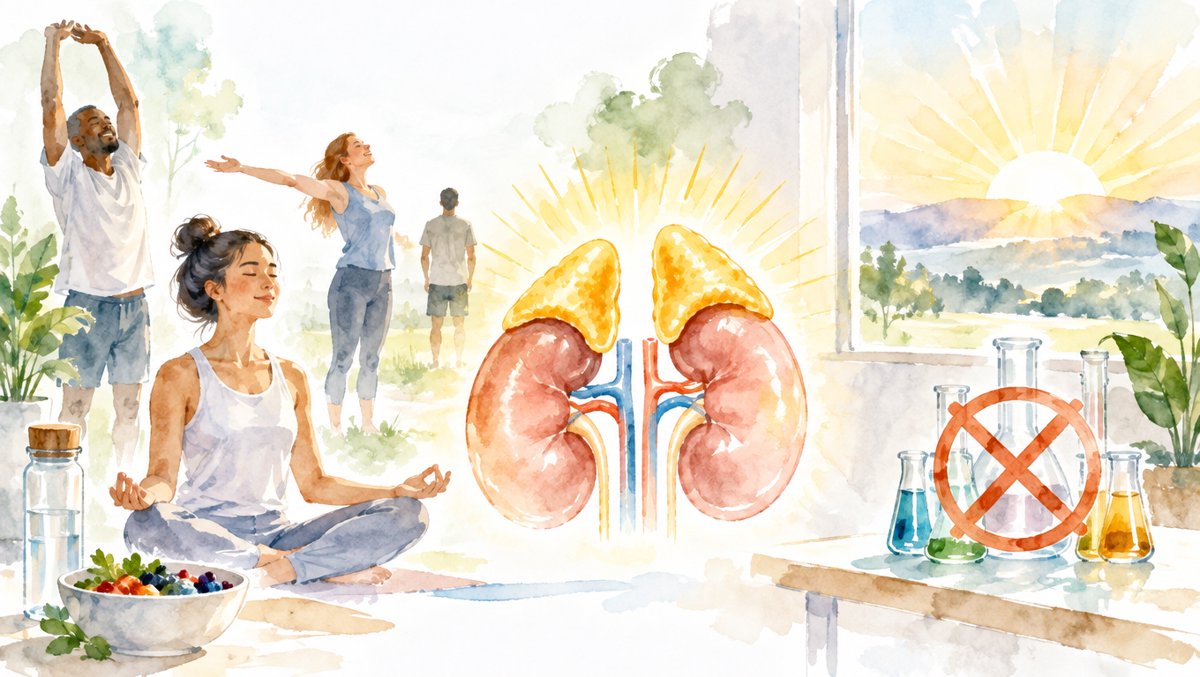
🧪 The "Cortisol Detox" Is Everywhere — Here's What Science Actually Says (Spoiler: Put Down the Mocktail)
Published: October 18, 2026 | Reading Time: ~7 minutes | Topic: Stress & Hormones
Scroll social media for five minutes and someone will diagnose you. Your belly fat? Cortisol. Your 3 a.m. wake-ups? Cortisol. Your weird craving for bread at 4 p.m.? You guessed it. And conveniently, they're selling a fix: "cortisol-lowering" mocktails, detox teas, and "adrenal reset" cleanses — often coconut water, citrus, and a pinch of salt with a wellness markup that would make a sommelier blush. 🍹
Here's the plot twist nobody's selling: cortisol is not a toxin, you cannot "detox" it — and you wouldn't want to. Doctors at Columbia plainly state that cortisol is essential for regulating blood pressure, blood sugar, and metabolism, and there's no scientific proof that cortisol detox products work at all¹. But before you go rage-scrolling, stick around — because there ARE legitimate, science-backed ways to lower your stress load. They're just... delightfully unglamorous. Let's dig in. 🕵️♀️
🔬 Section 1: Meet Cortisol — The Tiny Alarm System That Keeps You Alive
Let's clear one thing up immediately: cortisol is a hero, not a villain. It's a hormone made by your adrenal glands (two little caps perched on top of your kidneys), and it affects virtually every cell in your body¹. It wakes you up, fuels your morning run, regulates your blood pressure, mobilizes your blood sugar when you need quick energy, and even dials your immune response up and down¹. Time magazine put it bluntly this spring: without cortisol, we would die².
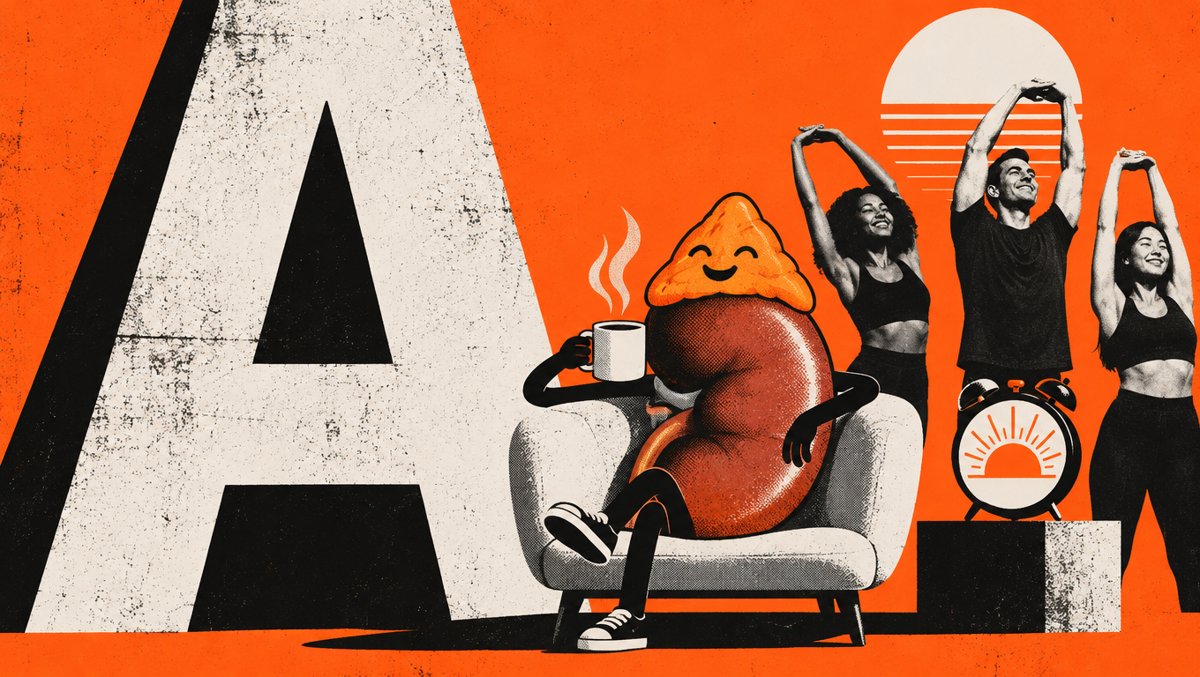
And here's my favorite fact — that morning spike you've been told to "fix"? It's supposed to be there. Researchers call it the cortisol awakening response: in healthy people, cortisol naturally rises and peaks in the first 30–60 minutes after waking, essentially hitting your body's "start the day" button⁴. When someone tells you your morning cortisol is a problem, they're usually pathologizing biology.
So where does the myth come from? From a fuzzy, non-medical idea called "adrenal fatigue" — the claim that chronic stress "burns out" your adrenals and leaves you with low cortisol, brain fog, and cravings. It sounds plausible! It's also not real: Mayo Clinic states plainly that adrenal fatigue isn't an official medical diagnosis², and a systematic review of the research concluded there is no substantiation that adrenal fatigue is an actual condition³. (There IS a real, rare disorder called adrenal insufficiency — that's a genuine medical emergency and completely different beast. If a doctor suspects it, that's lab work, not lifestyle TikTok.)
💡 Try this today:
- Retire the guilt. Your 7 a.m. cortisol surge isn't sabotage — it's your body doing exactly what evolution built it to do⁴.
- Ignore anyone selling you a "hormone test" from an Instagram ad. Symptom checklists for "adrenal fatigue" are so vague they can't tell a hormone problem from a bad week³.
- If you feel genuinely off for weeks — exhausted, wired-but-tired, unexplained weight changes — see a real clinician. Real endocrine conditions exist; they just need real testing, not a mocktail.
🔑 Key takeaway: Cortisol isn't a toxin to flush — it's an essential hormone you literally cannot survive without¹. The real question isn't "how do I detox it?" but "how do I keep my stress load healthy?" Which brings us to…
🥗 Section 2: The Science of What Actually Works (Hint: It's Free)
Chronic stress is still worth taking seriously — just honestly. Harvard Health explains that when stress becomes chronic, persistently elevated stress hormones can raise blood pressure, disrupt sleep, and reshape how your body stores energy⁶. Harvard's Nutrition Source adds that elevated cortisol may drive cravings for sugary, high-fat comfort foods, which can nudge weight upward over time⁵. So the concern is legitimate; the "detox" solution just isn't.
Here's what has receipts:
😴 Sleep: The Ultimate Cortisol Regulator. Harvard Health puts it in one clean sentence: stress raises cortisol levels, and sleep lowers them — adults should aim for at least seven hours per night⁷. Every night you protect sleep, you're literally running the recovery protocol the mocktails only pretend to offer.
🏃♀️ Move Your Body (Any Way You Like). Mayo Clinic notes that exercise in almost any form acts as a stress reliever — it pumps up feel-good endorphins and gives your brain a break from the worry loop⁸. It doesn't have to be a gym takeover; a brisk walk counts.
🧘 Train Your Attention. The landmark Johns Hopkins meta-analysis in JAMA Internal Medicine (47 trials) found mindfulness meditation programs produce small-to-moderate improvements in anxiety, depression, and stress⁹. Not magic — but measured, repeatable, and free.
🌳 Take the 20-Minute "Nature Pill." This one's my favorite. A University of Michigan-led study in Frontiers in Psychology found that cortisol drops at its greatest rate after 20–30 minutes of sitting or walking in nature¹⁰. Twenty minutes. That's one podcast episode, outside, under a tree.
💡 Try this today:
- Set a "doors closed" alarm that's actually for sleep — screens off, lights low, 7+ hours on the calendar⁷.
- Anchor movement to stress spikes — a 10-minute walk after your most annoying meeting, not just after work⁸.
- Do one 5-minute breathing or meditation session daily — consistency beats intensity¹⁰⁻⁹.
- Book a standing 20-minute nature appointment — lunch break in the park totally qualifies¹⁰.
🔑 Key takeaway: The verified stress toolkit is boring and beautiful: sleep, movement, mindfulness, and green time⁷⁻¹⁰. No powders, no protocols, no $18 adaptogen lemonade required.

🌳 Section 3: The Nuance Corner — Adaptogens, Work, and Real Life
Okay, but what about ashwagandha? The darling of the "cortisol-balancing" aisle? Here's the honest read: this isn't snake oil — but it's also not a magic reset. The NIH Office of Dietary Supplements notes that several clinical trials found participants taking ashwagandha extract reported improved stress levels and sleep quality, with lower serum cortisol¹¹. A 2024 meta-analysis of 9 randomized trials (558 adults) found meaningful reductions in stress and cortisol versus placebo¹¹, and trials have shown cortisol declines in the roughly 11–33% range¹¹. The catch: supplement quality varies wildly, the optimal dose isn't settled, and it's not for everyone — check with your clinician first, especially if you're pregnant, breastfeeding, or take thyroid or sedating medications¹¹.
And the biggest lever of all? Your workload. The World Health Organization's guidance on mental health at work is refreshingly blunt: poor working environments — including excessive workloads and low control — are established risks to mental health¹³. Sometimes the most evidence-based "cortisol intervention" isn't in your kitchen at all. It's a conversation with your manager about scope, a real lunch break, or a hard stop at 6 p.m.
💡 Try this today:
- Audit your inputs. If a product claims to "detox," "reset," or "balance" a hormone, that's your cue to check the evidence, not your cart¹.
- If you try ashwagandha, treat it like medicine: one evidence-informed product, a clinician's green light, and realistic expectations¹¹.
- Fix one structural stressor this week — an unreasonable deadline, a skipped lunch, a boundary you keep not setting¹³.
🔑 Key takeaway: Supplements are a maybe-with-asterisks¹¹, but workload and boundaries are the biggest cortisol levers most of us actually control¹³.

🎯 Key Takeaways
- Cortisol is not a toxin. It's an essential hormone that manages your blood pressure, blood sugar, metabolism, and immune system¹. You cannot detox it — and you wouldn't want to.
- There's no such thing as "adrenal fatigue." It's not a recognized medical diagnosis², and systematic review found no evidence the condition exists³.
- Your morning cortisol spike is normal. Cortisol naturally peaks 30–60 minutes after waking to help you start the day⁴.
- What actually works is free: 7+ hours of sleep⁷, regular movement⁸, mindfulness practice⁹, and 20–30 minutes in nature¹⁰.
- Feeling wired-but-tired for weeks? See a real clinician. Real hormonal conditions exist, and they deserve real testing — not a wellness mocktail¹¹.
🎧 Key Takeaways — Listen (2 min)
📚 Verified Sources
- Columbia Doctors — "What the Science Says about the 'Cortisol Detox' Trend." Explains cortisol's essential roles (blood pressure, blood sugar, metabolism, immune response) and why detox claims lack scientific proof. https://www.columbiadoctors.org/news/what-science-says-about-cortisol-detox-trend
- Mayo Clinic — "Adrenal fatigue: What causes it?" Expert answer confirming adrenal fatigue is not an official medical diagnosis. https://www.mayoclinic.org/diseases-conditions/addisons-disease/expert-answers/adrenal-fatigue/faq-20057906
- Cadegiani FA, Kater CE — "Adrenal fatigue does not exist: a systematic review." BMC Endocrine Disorders (2016). Systematic review finding no substantiation for adrenal fatigue as a medical condition. https://pmc.ncbi.nlm.nih.gov/articles/PMC4997656/
- Bowles NP, et al. — "The circadian system modulates the cortisol awakening response." Frontiers in Neuroscience (2022). Documents that circulating cortisol usually peaks 30–60 minutes after morning awakening. https://pmc.ncbi.nlm.nih.gov/articles/PMC9669756/
- Harvard T.H. Chan School of Public Health, The Nutrition Source — "Stress and Health." Chronic stress, elevated cortisol, cravings for high-sugar/high-fat foods, and weight gain. https://nutritionsource.hsph.harvard.edu/stress-and-health/
- Harvard Health Publishing — "Understanding the stress response." How persistent adrenaline surges raise blood pressure and how chronic cortisol elevation affects the body. https://www.health.harvard.edu/healthy-aging-and-longevity/understanding-the-stress-response
- Harvard Health Publishing — "Identifying and relieving stress." Stress raises cortisol, sleep lowers it; ≥7 hours per night recommended. https://www.health.harvard.edu/topics/stress
- Mayo Clinic — "Exercise and stress: Get moving to manage stress." Exercise in almost any form relieves stress via endorphins. https://www.mayoclinic.org/healthy-lifestyle/stress-management/in-depth/exercise-and-stress/art-20044469
- Goyal M, et al. — "Meditation Programs for Psychological Stress and Well-Being: A Systematic Review and Meta-analysis." JAMA Internal Medicine (2014). Mindfulness programs improve anxiety, depression, and stress. https://pubmed.ncbi.nlm.nih.gov/24395196/
- Hunter MR, Gillespie BW, Chen S-Y P — "Urban Nature Experiences Reduce Stress in the Context of Daily Life Based on Salivary Biomarkers." Frontiers in Psychology (2019). Cortisol drops at its greatest rate after 20–30 minutes in nature. https://www.frontiersin.org/journals/psychology/articles/10.3389/fpsyg.2019.00722/full
- NIH Office of Dietary Supplements — "Ashwagandha: Is it helpful for stress, anxiety, or sleep?" Fact sheet for health professionals (updated May 2025): trials show improved stress/sleep with lower serum cortisol; cautions on product quality and populations. https://ods.od.nih.gov/factsheets/Ashwagandha-HealthProfessional/
- Lopresti AL, et al. — "A randomized, double-blind, placebo-controlled study of ashwagandha on stress, cortisol, and mood" (2019). Greater reductions in morning cortisol vs placebo. https://pubmed.ncbi.nlm.nih.gov/31517876/
- World Health Organization — "Mental health at work" fact sheet (updated September 2026). Excessive workloads and low control are established workplace risks to mental health. https://www.who.int/news-room/fact-sheets/detail/mental-health-at-work
All claims fact-checked against Gold-tier (CDC/NIH/WHO/PubMed/Nature/The Lancet) and Silver-tier (Mayo Clinic/Harvard Health/Cleveland Clinic) authoritative sources. Last verified: October 18, 2026.
Your cortisol was never the villain — it's the friend who shows up early to help you move. Feed it real sleep, real movement, and a real walk among trees, and skip the mocktail. Your adrenals (and your wallet) will thank you. 🌙💚