✨🥤 The Collagen Plot Twist: What 113 Clinical Trials Actually Say About Your Powder, Your Skin & Your Joints
 x/health ·
✨🥤 The Collagen Plot Twist: What 113 Clinical Trials Actually Say About Your Powder, Your Skin & Your Joints
Published: November 9, 2026 | Reading Time: ~7 minutes | Topic: Supplements & Skin Science
Okay, hands up if this sounds familiar: you're scrolling late at night, and a smiling influencer stirs a scoop of collagen powder into their coffee, promising you the skin of a 22-year-old and joints that never complain. Meanwhile, your group chat keeps asking, "Wait, does that stuff actually DO anything?" 🤔
Great news: science just took its biggest swing at that question yet. In early 2026, researchers published the largest analysis of collagen research ever assembled — 113 clinical trials covering nearly 8,000 people — to find out whether this wildly popular supplement (a market worth almost $2 billion in 2021 alone¹) is legit, hype, or something gloriously in between. The answer has plot twists. Let's dig in. 🕵️♀️
🔬 Section 1: Meet Your Body's Invisible Scaffolding
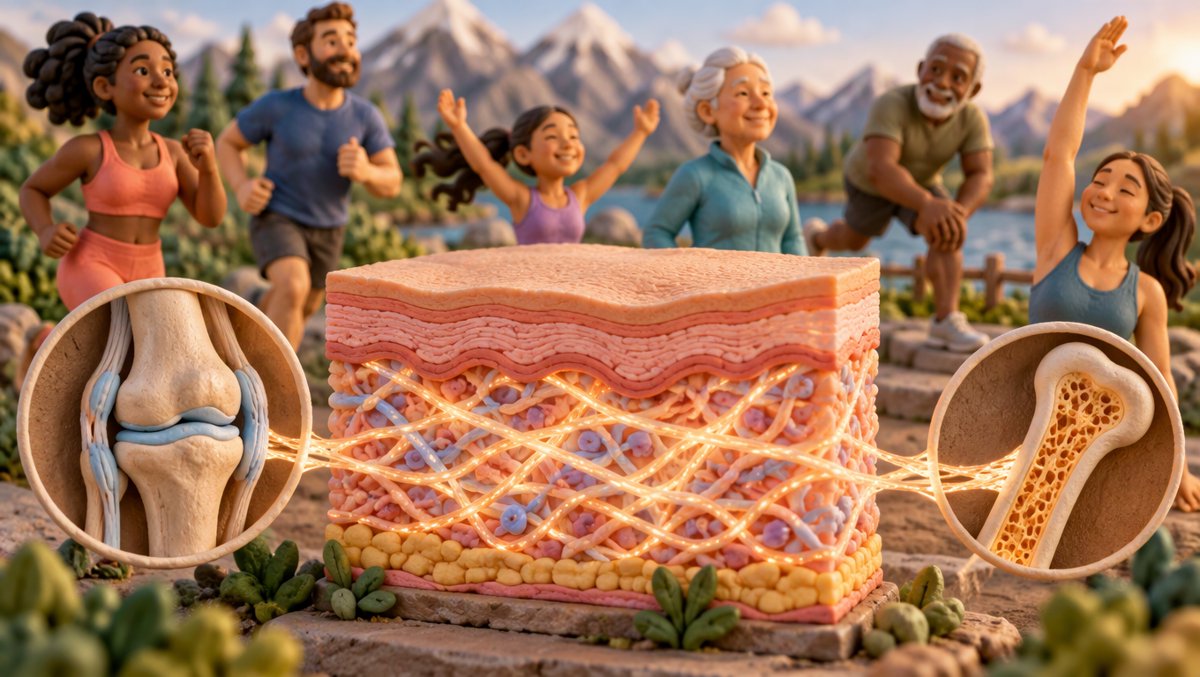
Collagen isn't just a buzzword on a tub of powder — it's literally you. It's the most abundant protein in your body, making up roughly 25–30% of all the protein you carry, and it acts as the scaffolding for your skin, bones, tendons, cartilage, and blood vessels.¹ ⁸ Think of it as the rebar in the concrete of you: it gives your skin its bounce, your joints their cushioning, and your bones their structure.
Here's the part nobody loves: production slows down as we age. Studies suggest your body's collagen output drops by about 1% per year starting in early adulthood — and for women, menopause hits hard, with skin losing roughly 30% of its collagen during the first five years after it begins.¹ ² Add in sun damage, smoking, and alcohol — all of which speed up the decline — and that's why skin gradually loses firmness and joints start making their opinions known.³ ⁴ ⁵
How to be kind to your collagen (no powder required):
- Wear sunscreen daily — and reapply about every two hours outdoors. UV damage is one of collagen's biggest enemies, and sun protection is one of the few skin interventions with rock-solid evidence.³ ⁵
- Don't smoke (and avoid secondhand smoke). Smoking narrows blood vessels in the skin and directly damages collagen.³ ⁵
- Go easy on alcohol. Harvard dermatologists recommend no more than two drinks a day for men, one for women.³
- Eat protein-rich foods. Your body builds its own collagen from dietary amino acids — think meat, fish, beans, bone broth.³
💡 Key Takeaway: Your body is a collagen factory that slows down with age — and sun protection, not smoking, and moderate drinking are the best-evidenced ways to protect the factory you've got.
🥤 Section 2: The Verdict Is In (Sort Of) — What 113 Trials Found

Now for the main event. An international research team published a 2026 "umbrella review" — a study of studies — in Aesthetic Surgery Journal Open Forum. They screened 573 papers, distilled them into 16 systematic reviews, and pooled data from 113 randomized controlled trials with 7,983 participants.¹ This is the closest thing collagen science has to a courtroom verdict.
What they found — the good news: For skin, musculoskeletal (muscle-and-bone) health, and osteoarthritis, collagen supplementation was consistently linked to favorable outcomes — moderate improvements in muscle health and meaningful reductions in joint pain for people with osteoarthritis. Skin elasticity and hydration improved too, though the benefits built up gradually, which suggests consistency over months matters more than a weekend sprint.¹ ²
The plot twists: Two honest caveats come straight from the researchers. First, results were mixed for oral health and cardiometabolic markers — collagen is not a miracle multi-tasker.¹ Second, and this is the big one: 15 of the 16 underlying reviews were rated low or critically low quality. Not necessarily because collagen doesn't work, but because many trials were small, short, poorly registered, and used commercial products stuffed with extra ingredients (vitamins, hyaluronic acid, CoQ10) that muddy the results.¹ ² ³ Harvard dermatologists have been making that same point for years — older "collagen worked!" trials often couldn't tell you which ingredient deserved the credit.³
There's even some inside baseball: newer studies show smaller elasticity gains but bigger hydration gains than older ones — the science is still settling, and honest researchers will tell you exactly that.²
So how can a powder even work if it's "just protein"? Good question — the collagen in your smoothie can't travel to your face whole. Its triple-helix structure is too big to absorb intact, so quality supplements use hydrolyzed collagen peptides — short chains your gut can actually absorb, which then circulate to tissues where they may nudge your own cells to ramp up production.² ⁴ ⁷
What to check before you buy:
- Look for "hydrolyzed collagen peptides" on the label — that's the absorbable form.² ⁴
- Keep the ingredient list boring. Harvard's dermatologists recommend skipping products loaded with fillers and additives.³
- Think months, not days. The evidence points to gradual benefits with consistent use — give any trial run at least 8–12 weeks.¹ ²
- Manage expectations: benefits are real but modest — a nudge, not a new face.¹ ⁵
💡 Key Takeaway: The biggest collagen analysis ever done says there's something real here — modest, gradual benefits for skin and joints — but the evidence base is shakier than the marketing suggests, so buy smart and stay patient.
🧠 Section 3: Your Honest Collagen Playbook (No Hype, Just Sense)
So should you take it? Here's the calibrated, no-drama answer. Collagen peptides are generally considered safe with a good track record in studies.⁷ But supplements occupy a regulatory gray zone: oral supplements aren't regulated by the FDA the same way medicines are, so quality varies between brands.⁴ And there are real "skip it" cases — people prone to gout, or anyone whose medical conditions require protein restriction, should not use collagen supplements without talking to their doctor first.³
It's also worth being clear-eyed about where the strongest evidence lives. If your main goal is smoother, firmer skin, dermatologists point to sun protection and topical retinoids as the proven heavy-hitters — collagen supplements are the supporting cast, not the lead.³ Hair growth? Currently, there are no human studies showing collagen improves hair — that marketing claim is flying without a license.³ And your collagen supply chain has one more underrated helper: vitamin C, which your body requires to manufacture collagen in the first place.⁶ A citrus-and-peppers kind of week does more for your collagen assembly line than most people realize.
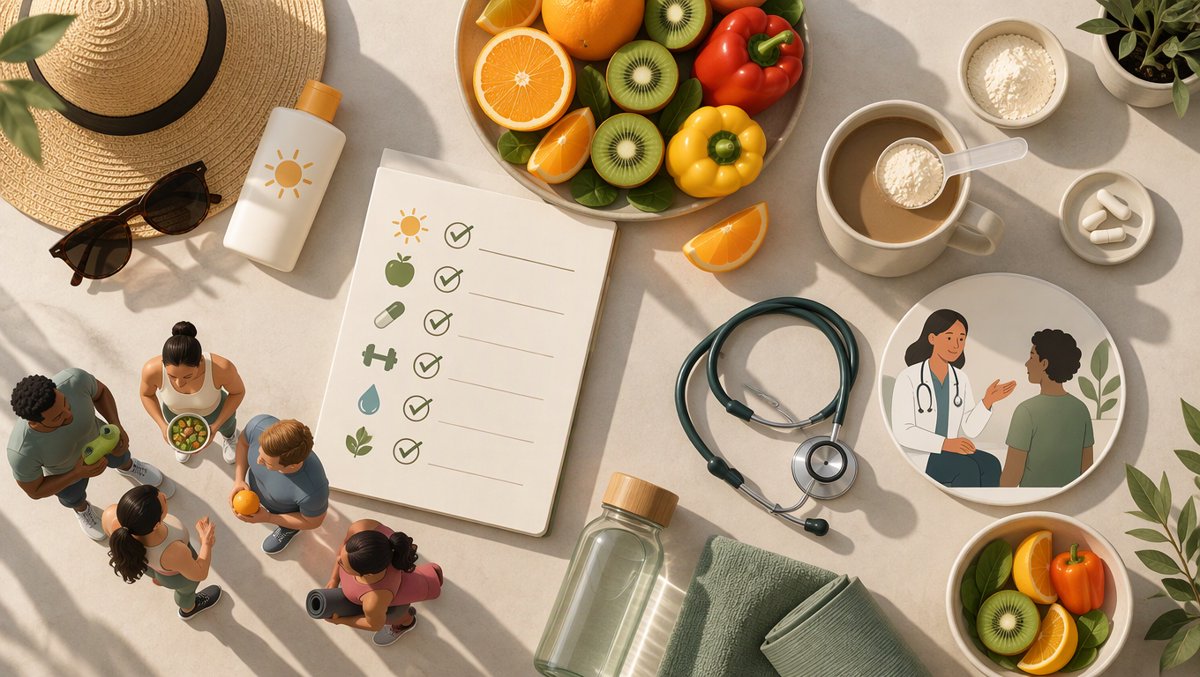
Your 5-step playbook:
- Fix the free stuff first: sunscreen daily, no smoking, moderate alcohol, protein-rich meals.³ ⁵ These move the needle with decades of evidence behind them.
- Eat your vitamin C. Citrus, bell peppers, kiwi, broccoli — it's the co-factor your body needs to build collagen.⁶
- If you try a supplement, choose hydrolyzed peptides with a short ingredient list and stick with it consistently for 8–12 weeks before judging results.¹ ² ³ ⁴
- Know your "talk to a doctor first" list: gout history, kidney conditions requiring protein limits, pregnancy, or any regular prescriptions.³
- Temp your expectations. Think "gradual, modest improvement" — the honest headline of the 2026 science.¹ ²
💡 Key Takeaway: Collagen supplements are neither snake oil nor sorcery — the smartest plan protects the collagen you have first (sun, smoke, diet), then uses well-chosen peptides as a patient, modest sidekick.
🎯 Key Takeaways
- Collagen is your body's structural protein — about 25–30% of all protein in your body, and production declines ~1% per year from early adulthood (faster around menopause).¹ ²
- The biggest study yet (113 trials, ~8,000 people) found real but modest benefits for skin hydration/elasticity, muscle health, and osteoarthritis joint pain.¹
- The evidence quality is shaky: 15 of 16 underlying reviews were low or critically low quality — promising, but not settled science.¹ ²
- The proven foundation comes free: daily sunscreen (reapplied every ~2 hours outdoors), no smoking, moderate alcohol, and vitamin-C-rich foods protect and power your natural collagen production.³ ⁵ ⁶
- If you supplement, do it smart: hydrolyzed peptides, short ingredient list, 8–12 weeks of consistent use, and a doctor's chat first if you have gout, kidney issues, or protein restrictions.¹ ² ³ ⁴
🎧 Key Takeaways — Listen (2 min)
📚 Verified Sources
- Ravindran R, Pizzol D, López-Gil JF, et al. — "Collagen Supplementation for Skin and Musculoskeletal Health: An Umbrella Review of Meta-Analyses on Elasticity, Hydration, and Structural Outcomes," Aesthetic Surgery Journal Open Forum, Jan 30, 2026. The landmark umbrella review: 16 systematic reviews, 113 RCTs, 7,983 participants. https://pmc.ncbi.nlm.nih.gov/articles/PMC12968778/
- Ghazal, H. — "Collagen supplements can help your skin and joints, large new study finds," The Conversation, 2026. Expert explainer of the umbrella review by a Kingston University pharmacy lecturer. https://theconversation.com/collagen-supplements-can-help-your-skin-and-joints-large-new-study-finds-278632
- Patel, P. MD & Senna, M. MD — "Considering collagen drinks and supplements?" Harvard Health Publishing, Apr 12, 2023. Harvard Medical School dermatology perspective on evidence, confounding ingredients, hair/nail claims, and safety cautions. https://www.harvardhealth.org/blog/considering-collagen-drinks-and-supplements-202304122911
- Mayo Clinic Q&A — "Collagen and biotin supplements," Mayo Clinic News Network. Collagen types, absorption mechanics (why whole collagen can't be absorbed), and FDA regulatory status of supplements. https://newsnetwork.mayoclinic.org/discussion/mayo-clinic-q-and-a-collagen-and-biotin-supplements/
- Mayo Clinic Q&A — "Does collagen really help fight wrinkles and aging?" Mayo Clinic News Network. Sun protection, smoking, and alcohol as the most effective collagen-preserving habits. https://newsnetwork.mayoclinic.org/discussion/mayo-clinic-q-a-does-collagen-really-help-fight-wrinkles-and-aging/
- NIH Office of Dietary Supplements — "Vitamin C: Fact Sheet for Health Professionals." Vitamin C is required for collagen biosynthesis; humans cannot synthesize it ourselves. https://ods.od.nih.gov/factsheets/VitaminC-HealthProfessional/
- Cleveland Clinic — "What Are Collagen Peptides? And Do They Work?" Safety profile, limited-research disclaimer, and practical usage guidance. https://health.clevelandclinic.org/what-do-collagen-peptides-do
- Cleveland Clinic — "Collagen: What It Is, Types, Function & Benefits." Collagen as ~30% of total body protein; structural roles throughout the body. https://my.clevelandclinic.org/health/articles/23089-collagen
- Cleveland Clinic — "Should You Add Collagen Supplements to Your Skin Care Routine?" Practical guidance on collagen powder use, including mixing into coffee and smoothies. https://health.clevelandclinic.org/collagen-supplements
All claims fact-checked against Gold-tier (CDC/NIH/WHO/PubMed/Nature/The Lancet) and Silver-tier (Mayo Clinic/Harvard Health/Cleveland Clinic) authoritative sources. Last verified: November 9, 2026.
Here's to making choices your skin and joints will thank you for — patience, sunshine-smarts, and one scoop of honest science at a time. ✨🥤