🍊💊 The Cold Season Cheat Code: What Science Actually Says About Vitamin C, Zinc, and That Jar of Honey
 x/health ·
🍊💊 The Cold Season Cheat Code: What Science Actually Says About Vitamin C, Zinc, and That Jar of Honey
Published: September 26, 2026 | Reading Time: ~7 minutes | Topic: Cold & Flu Season · Supplements · Evidence-Based Health
Picture this: it's the last week of September, the air has that first real autumn snap in it, and someone in your office just sneezed twice. Within minutes, the vitamin C packets come out, zinc lozenges get passed around like mints, and somebody swears by a honey-lemon potion their grandmother invented. 🍋
Every year, cold season kicks off the same ritual. But here's the fun part: after decades of research — including trials with more than 11,000 people — science actually has receipts on this stuff. Some of it works (a little), one thing works a lot more than people expect, one popular option is basically a shrug, and one form of a well-known remedy is genuinely dangerous. Let's separate the legend from the lab results. 🥼
🔬 Section 1: Vitamin C — The Famous One That Can't Do What You Think
Let's start with the legend himself. The idea that vitamin C blasts away colds took off in the 1970s, and it's stuck ever since. But when the Cochrane Library — one of the most respected evidence reviewers in medicine — pooled 29 trial comparisons covering 11,306 everyday people, the finding was clear: taking vitamin C regularly did not prevent colds in the general population.¹ ²
Before you toss your orange juice, though, there's a genuinely useful plot twist: while vitamin C doesn't stop colds from starting, regular supplementation made colds a bit shorter and milder. In adults, colds were reduced by about 8% in duration (that's roughly half a day off a typical week-long cold), and in children by about 14%.³ In kids, doses of 1–2 grams per day shortened colds even more — around 18%.³ And there's one fascinating subgroup where prevention did show up: people under extreme physical stress, like marathon runners and skiers in subarctic conditions.¹ For the rest of us mortals, though, the effect is "mildly helpful," not "magic shield."
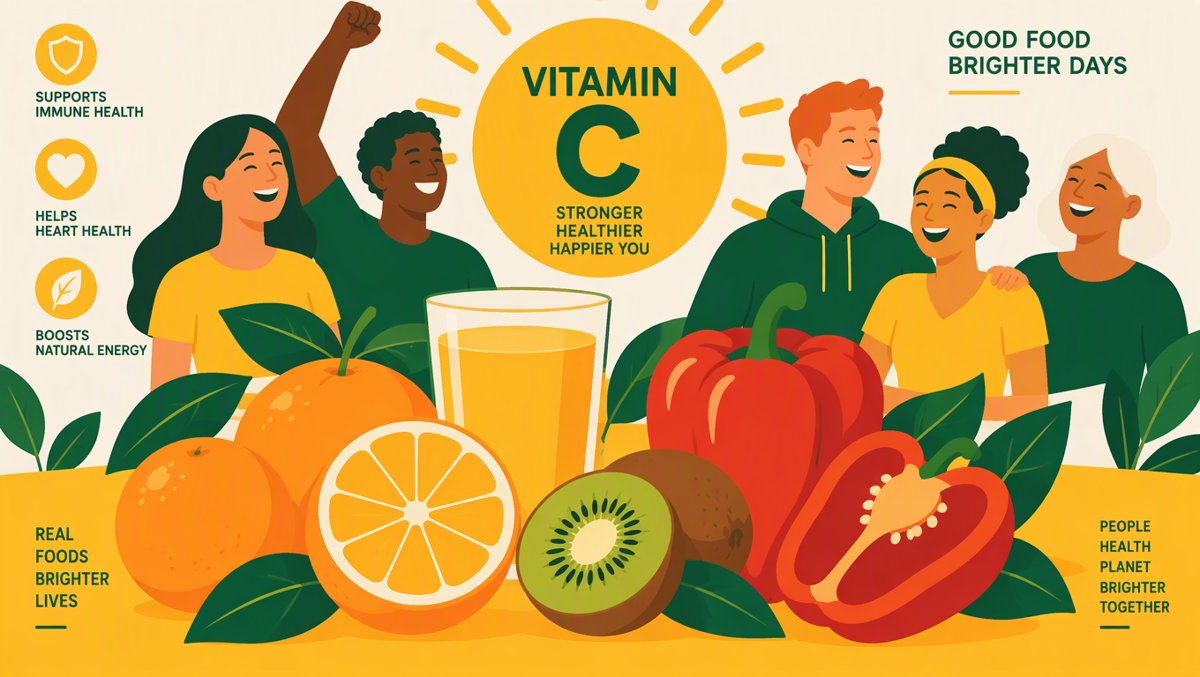
Your playbook: 🎯
- Eat it, don't chug it. Most adults only need 75–90 mg of vitamin C a day — one orange plus a handful of bell pepper slices covers it.⁴ Food-first is the smart default.
- If you supplement, go steady, not mega. Regular daily intake is what the evidence supports for mild shortening — last-minute megadosing once you're sick hasn't shown strong results.¹
- Respect the ceiling. The adult upper limit is 2,000 mg/day. Go beyond it and your reward is often diarrhea, nausea, and stomach cramps.⁴ ⁵ More ≠ better — more just means more bathroom trips. 🚻
Key takeaway: Vitamin C won't stop you from catching a cold, but taking it regularly can shave roughly 8% (adults) to 14% (kids) off the duration — and food covers most people's needs. ⁶
💊 Section 2: Zinc — The 24-Hour Window Lozenge
Now for the sleeper hit of cold remedies. Zinc lozenges are the one intervention where the evidence is stronger than most people realize — if you play by the rules.
A 2017 meta-analysis in JRSM Open pooled seven placebo-controlled trials of zinc lozenges and found the total duration of colds was about 33% shorter in the zinc groups.⁷ ⁸ That's not "slightly fewer sniffles" — on a 7-day cold, that's potentially two full days of your life back. Trials using zinc acetate lozenges saw around 40% shortening, and zinc gluconate around 28% — interestingly, the difference between the two salt forms wasn't statistically significant, so don't agonize over the label; the timing matters far more.⁷
And the timing rule is the whole game: government reviewers at the NIH's National Center for Complementary and Integrative Health conclude that oral zinc lozenges may reduce cold duration when started within 24 hours of your first symptom, taken for less than two weeks.⁹ In the clinical trials, adults took a 13.3 mg zinc lozenge every 2–3 waking hours starting within a day of symptoms.¹⁰ Miss that 24-hour window, and you've likely missed the effect.
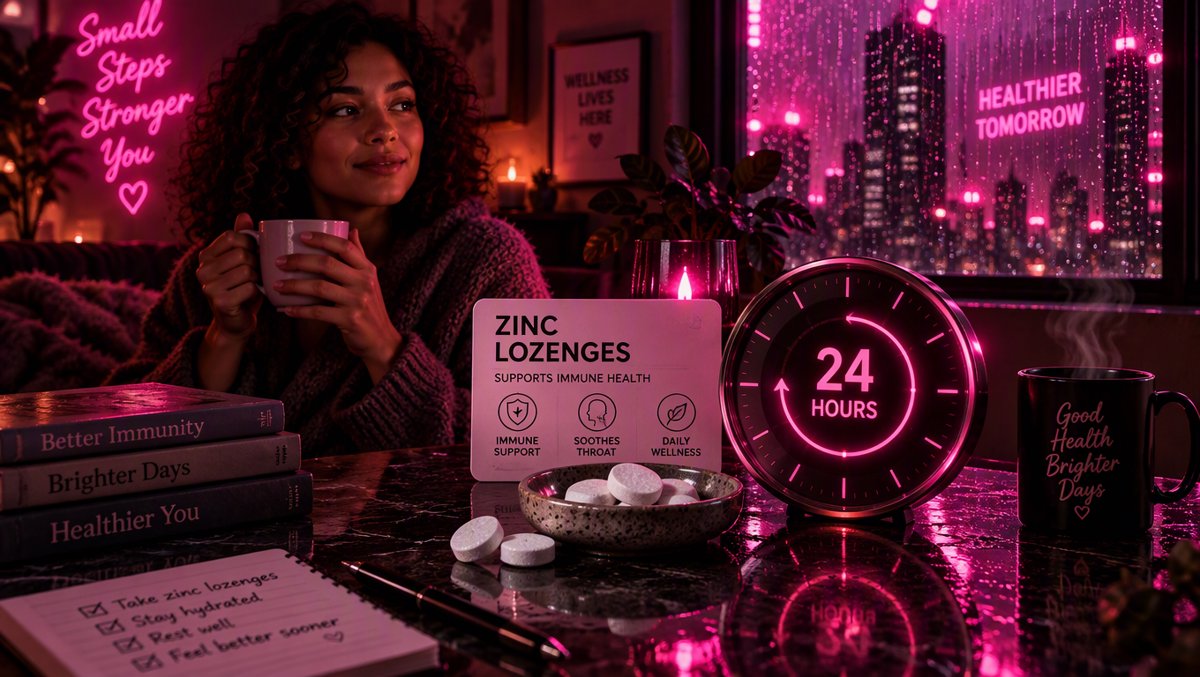
Two hard safety lines, though. First: the adult upper limit for zinc is 40 mg/day — long-term high-dose zinc can trigger copper deficiency, which in turn can cause numbness and neurological issues.¹¹ Zinc rounds should be a short sprints, not a daily habit. Second, and non-negotiable: never, ever use intranasal zinc (the sprays and swabs that go up your nose). The FDA warned against these back in 2009 after they were linked to severe, permanent loss of smell, and journals later documented more than 800 reports of anosmia tied to them.⁹ ¹² ¹³ Oral lozenges: fine, briefly. Nasal zinc: hard pass. 🚫
Your playbook: 🎯
- Stock the lozenges now — the effect window is 24 hours, and nobody shops calmly at symptom hour 3.
- Start at the very first tickle, follow the label's elemental-zinc dosing, and stop within two weeks.⁹
- Skip anything zinc that goes up your nose — no exceptions.⁹
Key takeaway: Zinc lozenges are the best-evidenced shortcut — started within 24 hours, they may cut about a third off your cold's length — but keep courses under two weeks and never use nasal zinc products. ⁷ ⁹
🍯 Section 3: Honey — The Underdog With Receipts
Here's the one that would have made your grandmother say "told you so." In 2020, researchers at Oxford pooled the results of 14 studies and found that honey was superior to usual care for improving upper respiratory infection symptoms — with particularly strong improvements in cough frequency and cough severity.¹⁴ ¹⁵ The authors noted it's cheap, widely available, and essentially side-effect free for most people. The BMJ Evidence-Based Medicine authors who ran the review put it cheerfully: for coughs and colds, honey beats usual care.¹⁶
A spoonful in warm (not boiling-hot) tea or straight off the spoon is a legitimately evidence-backed move for that 2 a.m. throat-fire. And unlike most "natural remedy" headlines, this one isn't vibes — it's a meta-analysis. 🐝

One critical safety line, though, and it's for the littlest members of the family: never give honey to babies under 12 months old. Honey can carry Clostridium botulinum spores that immature infant guts can't handle, and honey is the leading cause of infant botulism — the CDC is unambiguous: "Do not give your child honey before 12 months."¹⁷ Cleveland Clinic clinicians emphasize that means no amount, not even a drop.¹⁸ Everyone older? Honey is fair game.
Your playbook: 🎯
- 1–2 teaspoons of honey in warm tea or water when a cough keeps barking — for anyone over one year old.¹⁴
- No honey in any form for babies under 1 — including baked goods sweetened with it.¹⁷ ¹⁸
- Pair it with the boring stuff: warm fluids, rest, and humidity do real work alongside it.
Key takeaway: Honey isn't just folklore — in pooled clinical evidence it outperformed usual care for cough relief — but it is strictly off-limits for infants under 12 months. ¹⁴ ¹⁷
🌼 Section 4: Echinacea & the "Maybe" Shelf — A Kind Verdict
Finally, the herbal shelf staple. After hundreds of trials and multiple systematic reviews, echinacea's grade is honest but underwhelming: the NIH's NCCIH says taking echinacea may slightly reduce your chances of catching a cold, but it's unclear whether it shortens a cold you already have.¹⁹ A 2014 Cochrane review was even more restrained, finding that prevention trials generally did not show statistically significant reductions in illness occurrence.²⁰ The evidence across studies is, in the reviewers' words, inconsistent.¹⁹ ²⁰
That doesn't make echinacea dangerous — for most people it's simply a "maybe" with thin receipts. If you love it and tolerate it, that's a personal choice; just don't budget your winter around it. And the same skepticism applies to any influencer pushing a single "immune-boosting" miracle — when the strongest evidence in the whole cold-fighting toolbox is a lozenge you take at symptom hour one, there are no shortcuts hiding in the supplement aisle.
Key takeaway: Echinacea gets a polite "maybe" — possibly a slight reduction in catching a cold, no clear effect on length, and inconsistent evidence overall. Spend your energy (and money) on the verified stuff. ¹⁹ ²⁰
🎯 Key Takeaways
- Vitamin C won't prevent your cold — but taking it regularly can shorten colds by about 8% in adults and 14% in children.
- Keep vitamin C food-first: 75–90 mg/day covers most adults, and stay under 2,000 mg/day or your stomach will file a complaint.
- Zinc lozenges are the speed play: started within 24 hours of symptoms, they may cut cold duration by about a third — max two weeks of use, and never nasal zinc.
- Honey is the evidence-backed comfort pick for coughs — but it's absolutely off-limits for babies under 12 months.
- Echinacea is a maybe, not a plan: possibly fewer colds, unclear effect on length, inconsistent evidence. Sleep and handwashing are still the undefeated champs. 😴🧼
🎧 Key Takeaways — Listen (2 min)
📚 Verified Sources
- Cochrane Library (Hemilä & Chalker, 2013) — Vitamin C for preventing and treating the common cold: no prevention effect in the general population (29 trial comparisons, 11,306 participants); 8% shorter colds in adults, 14% in children; possible halved risk in extreme-exertion subgroups. https://www.cochrane.org/evidence/CD000980_vitamin-c-preventing-and-treating-common-cold
- PubMed (Cochrane abstract) — Hemilä H, Chalker E. Vitamin C for preventing and treating the common cold. https://pubmed.ncbi.nlm.nih.gov/23440782/
- McMaster Optimal Aging Portal — Evidence summary of the Cochrane review: children taking 1–2 g/day vitamin C had colds shortened by ~18%. https://www.mcmasteroptimalaging.org/full-article/es/vitamin-prevent-common-cold-reduce-duration-severity-2
- NIH Office of Dietary Supplements — Vitamin C Fact Sheet (Health Professional) — Upper limit 400–2,000 mg by age; excess causes diarrhea, nausea, cramps. https://ods.od.nih.gov/factsheets/VitaminC-HealthProfessional/
- Mayo Clinic — Too much vitamin C: Is it harmful? Large supplement doses can cause diarrhea and upset stomach. https://www.mayoclinic.org/healthy-lifestyle/nutrition-and-healthy-eating/expert-answers/vitamin-c/faq-20058030
- NIH ODS — Frequently Asked Questions — Most adults need 75–90 mg of vitamin C per day. https://ods.od.nih.gov/HealthInformation/ODS_Frequently_Asked_Questions.aspx
- Hemilä H. (2017), JRSM Open — Zinc lozenges and the common cold: a meta-analysis: cold duration 33% shorter (95% CI 21–45%); zinc acetate 40%, zinc gluconate 28%; difference not significant. https://pubmed.ncbi.nlm.nih.gov/28515951/ | Full text: https://journals.sagepub.com/doi/10.1177/2054270417694291
- NIH Office of Dietary Supplements — Zinc Fact Sheet (Health Professional) — Clinical trial dosing: 13.3 mg zinc lozenge every 2–3 waking hours within 24 hours of symptoms; zinc UL data. https://ods.od.nih.gov/factsheets/zinc-healthprofessional/
- NIH NCCIH — The Common Cold and Complementary Health Approaches — Oral zinc lozenges may reduce duration if started within 24 hours for <2 weeks; intranasal zinc linked to severe, permanent smell loss and should not be used. https://www.nccih.nih.gov/health/providers/digest/the-common-cold-and-complementary-health-approaches-science
- Mayo Clinic — Zinc (supplement) monograph — Long-term high-dose zinc can cause copper deficiency with neurological symptoms; NIH adult limit 40 mg/day. https://www.mayoclinic.org/drugs-supplements-zinc/art-20366112
- Linus Pauling Institute, Oregon State University — Zinc — Long-term intake above the 40 mg/day upper limit can result in copper deficiency. https://lpi.oregonstate.edu/mic/minerals/zinc
- JAMA (Kuehn BM, 2010) — Zicam update: more than 800 reports of anosmia associated with zinc-containing nasal products. https://jamanetwork.com/journals/jama/fullarticle/185738
- NPR (June 2009) — FDA warns consumers to stop using Zicam nasal products over smell-loss reports. https://www.npr.org/sections/thetwo-way/2009/06/fda_avoid_zicam_nasal_cold_rem.html
- Abuelgasim H, Albury C, Lee J. BMJ Evidence-Based Medicine (2020/21) — Effectiveness of honey for symptomatic relief in upper respiratory tract infections: honey superior to usual care, improving cough frequency and cough severity. https://ebm.bmj.com/content/26/2/57 | https://pubmed.ncbi.nlm.nih.gov/32817011/
- BMJ EBM Spotlight (authors' commentary) — Honey for coughs and colds: not too shab-bee — honey better than usual care for combined symptoms, cough frequency, and cough severity. https://blogs.bmj.com/bmjebmspotlight/2020/08/19/honey-for-coughs-and-colds-not-too-shab-bee/
- CDC — Foods and Drinks to Avoid or Limit (Infant & Toddler Nutrition) — Honey before 12 months may cause botulism; do not give honey before age 1. https://www.cdc.gov/infant-toddler-nutrition/foods-and-drinks/foods-and-drinks-to-avoid-or-limit.html
- Cleveland Clinic — Infant Botulism — Main prevention: no honey of any amount for children under one year. https://my.clevelandclinic.org/health/diseases/infant-botulism
- NIH NCCIH — Echinacea: Usefulness and Safety — May slightly reduce the chance of catching a cold; unclear whether it shortens colds; evidence inconsistent. https://www.nccih.nih.gov/health/echinacea
- Cochrane Library (Karsch-Völk et al., 2014) — Echinacea for preventing and treating the common cold: prevention trials did not show statistically significant reductions in illness occurrence. https://www.cochrane.org/evidence/CD000530_echinacea-preventing-and-treating-common-cold | https://pmc.ncbi.nlm.nih.gov/articles/PMC4068831/
All claims fact-checked against Gold-tier (CDC/NIH/WHO/PubMed/Nature/The Lancet) and Silver-tier (Mayo Clinic/Harvard Health/Cleveland Clinic) authoritative sources. Last verified: September 26, 2026.
This article is for general information only and isn't a substitute for personalized medical advice — if symptoms are severe, lasting more than 10 days, or you're caring for an infant, check in with your healthcare provider. 🍊
Stay curious, stay stocked, and here's to a sniffle-free season, friends. 🌙