The Chip Industry Just Crossed $1 Trillion in Eight Months — And the 144% Headline Is Mostly a Price Tag

The Chip Industry Just Crossed $1 Trillion in Eight Months — And the 144% Headline Is Mostly a Price Tag
Published: October 7, 2026 | Reading Time: ~12 minutes | Channel: Technology
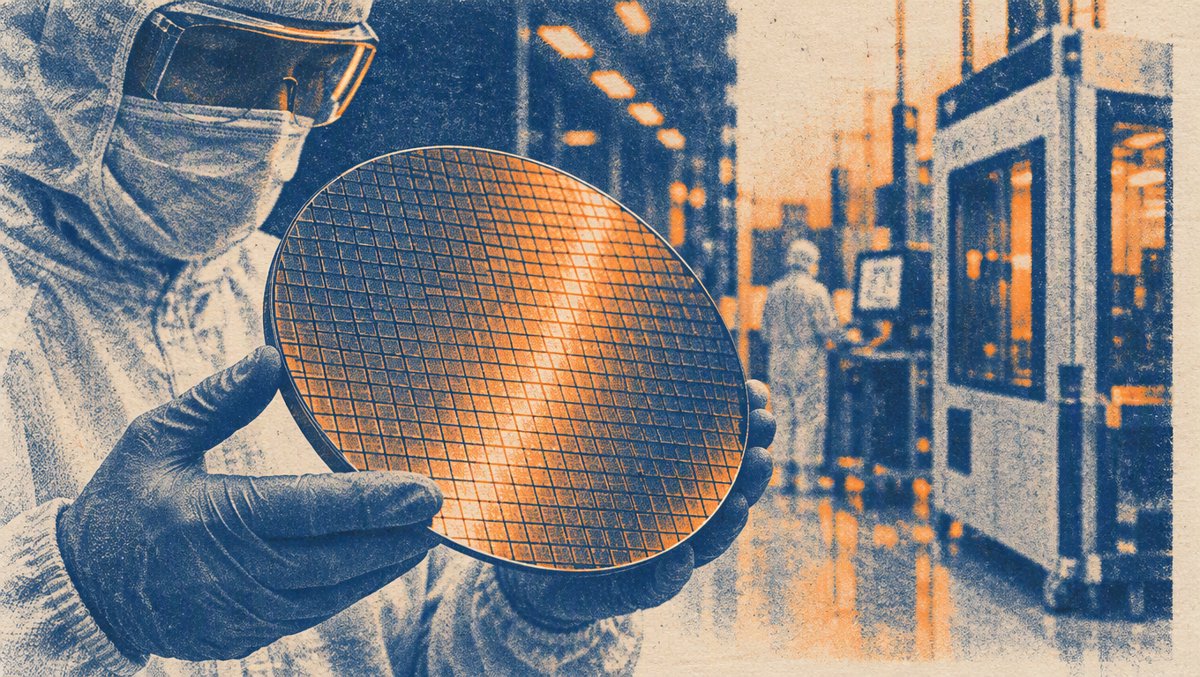
Global semiconductor sales hit $159.7 billion in August 2026 — up a jaw-dropping 144.3% year-over-year¹ — and year-to-date sales just crossed $1 trillion for the first time in the industry's history¹. Eight months. One trillion dollars. The Semiconductor Industry Association's new CEO called it "an exciting new era of growth and innovation," and the full-year projection now sits above $1.6 trillion¹.
Here's the part the press releases won't underline for you: at SK hynix — the company that anchors the entire AI memory trade — DRAM bit shipments were flat quarter-over-quarter in Q1, and NAND shipments actually **fell 10%**⁵. Revenue exploded anyway. That's not a demand story. That's a price story. And price stories end very differently than demand stories.
This isn't a piece about whether AI is real. It is. This is a piece about what happens when an industry books $1 trillion while shipping barely more silicon than it did last year — and what you, as a buyer, builder, or business owner, should do about it before the music changes.
The Month the Chart Broke
Let's start with the raw print, because it deserves a moment of silence.
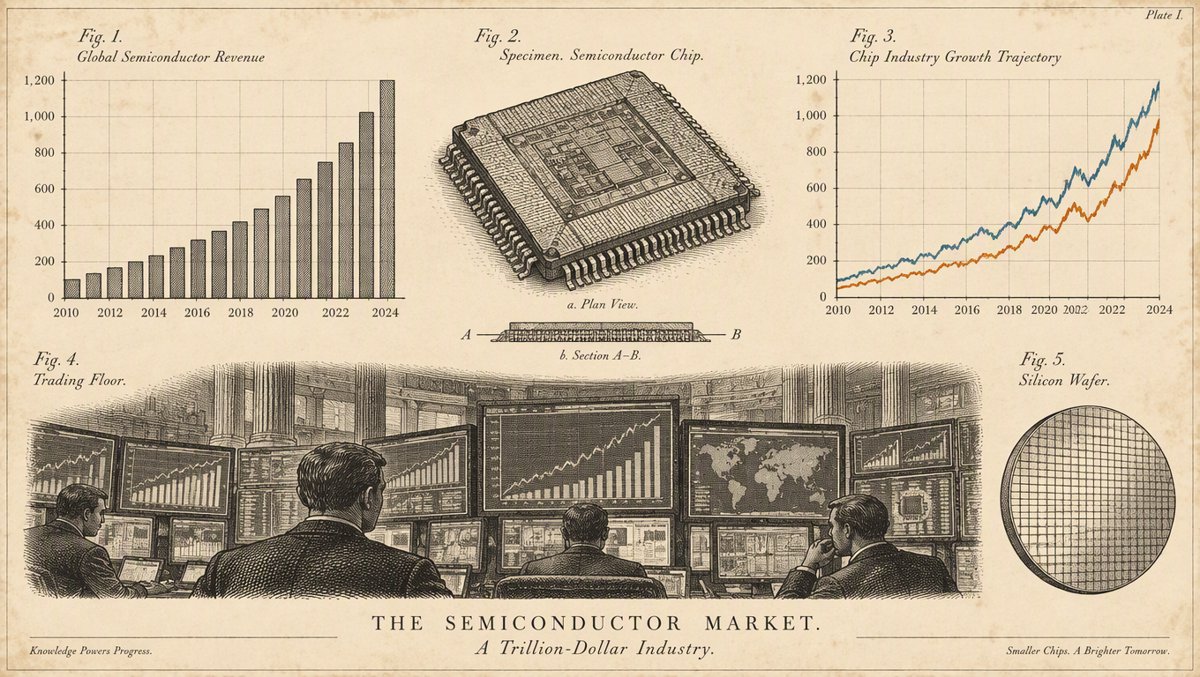
In August 2026, the world bought $159.7 billion of semiconductors — 8% more than July's $147.9 billion and 144.3% more than the $65.4 billion booked in August 2025¹. That's the 18th consecutive month of year-over-year growth¹. Year-to-date through August, sales topped $1 trillion — a milestone the industry had never hit even on a full-year basis until 2026's projection².
"We are still only scratching the surface of what's possible" is the kind of thing trade-group CEOs say. But the numbers backing Michael Robbins's optimism are, on their face, unprecedented: the SIA's own monthly ladder shows an industry climbing a staircase that gets steeper every month²:
| Month (2026) | Sales | MoM Growth | YoY Growth |
|---|---|---|---|
| March | $99.5B | — | — |
| April | $110.5B | +11.0% | +93.9% |
| May | $120.6B | +9.2% | +104.1% |
| June | $134.5B | +9.7% | +123.6% |
| July | $147.9B | +6.4% | +135.1% |
| August | $159.7B | +8.0% | +144.3% |
Source: SIA monthly press releases, 2026¹ ². Monthly figures are WSTS three-month moving averages.
Read that last column again. The YoY growth rate isn't decelerating as the comparison bases get harder — it's accelerating, from +93.9% in April to +144.3% in August. Q2 2026 alone booked $403.3 billion, up 35.1% from Q1². For context, the entire industry did $791.7 billion in all of 2025 — which was itself a record, up 25.6%³. This year is running at roughly double last year's record pace.
Regionally, August's YoY numbers were: Americas +180.9%, Asia Pacific/All Other +143.0%, China +131.3%, Europe +98.5%, Japan **+62.3%**¹. Month-over-month, every major region grew, led by Asia Pacific at +9.1%¹. There is no weak link in this chain — which is exactly why you should be suspicious of it.
The $1 Trillion Question: Units or Dollars?
Now for the decomposition nobody's putting in the victory-lap headlines.
The SIA doesn't break out units versus average selling prices in its monthly release — that's WSTS dollar data only. So let's look one level down, at the companies that actually ship the memory driving this boom, whose quarterly disclosures tell a very different story from the topline.
Samsung's Q1 2026 earnings (reported May 15) showed average memory selling prices — DRAM and NAND combined — surged about 146% versus the 2025 full-year average⁵. One hundred and forty-six percent. Not bits shipped. Price per bit.
SK hynix's Q1 disclosure told the same story from a different angle: DRAM bit shipments were "broadly in line with the previous quarter" while ASP rose by the mid-60% range. NAND was more extreme — bit shipments fell around 10% quarter-over-quarter while ASP climbed by the mid-70% range⁵.
Let that sink in. The fastest-growing segment of the fastest-growing industry in the world just posted a quarter where it shipped fewer NAND chips than the prior quarter — and revenue soared anyway.
This pattern didn't start in 2026, but 2026 industrialized it. In 2025, memory was already the industry's second-largest category at $223.1 billion (up 34.8%), behind logic at $301.9 billion³ — and Q4 2025 sales grew 37.1% YoY against a 25.6% full-year average, which Tom's Hardware's Anton Shilov correctly flagged as a sign that "increased prices" were doing heavy lifting in the acceleration³.
The banks see it too. Bank of America has labeled 2026 a memory "supercycle similar to the boom of the 1990s," forecasting DRAM revenue up 51% and NAND up 45% — driven by ASPs rising 33% and 26% respectively — with the HBM market hitting $54.6 billion, up 58%⁴. Goldman Sachs forecasts custom-ASIC HBM demand up 82%, reaching one-third of the HBM market⁴. Note what those numbers have in common: the price assumption is the engine, and the unit-growth assumption is comparatively modest.
And the price inflation is now flowing through the stack like water through a cracked ceiling:
- Nvidia posted quarterly revenue above $96 billion in Q2 of its fiscal 2027 — and had to commit to procuring up to $160 billion of memory, including its supply pact with SK hynix⁷. The world's most important chip company is now the memory makers' best customer, on their terms.
- Samsung's own device division — the one making the phones and appliances you buy — saw mobile memory costs rise 107% year-over-year, and for the first time added "mobile memory" to its raw-material procurement list, at 9.4% of the division's procurement mix (KRW 1.993 trillion of purchases, with Micron listed as a key supplier)⁵. When Samsung — the world's largest memory maker — is getting gouged by the memory market, you know where your next laptop quote is headed.
- The consumer endpoint: Nvidia's flagship RTX 5090 gaming GPU now costs at least $5,000 at retail in North America, with Tom's Hardware noting prices have "surged astronomically thanks to the AI rush"⁸. Interestingly, gamers are still spending — Steam posted a record $1.7 billion September⁹ — but that's existing demand paying the toll, not new demand being created.
Why the "Demand Boom" Narrative Is Only Half Right
Here's the contrarian math that the $1.6 trillion headlines are skipping.
In its earlier 2026 outlook — published before the year's pricing violence was fully known — WSTS projected the industry would reach approximately $975 billion in 2026, with memory growing 30%⁴. Independent forecasters (Gartner, as of August) now peg 2026 at $1.6 trillion⁶. The SIA's own CEO now says sales "are projected to exceed $1.6 trillion in 2026"¹.
Sit with that migration for a second: from ~$975 billion to $1.6 trillion+ — a ~64% upward revision in the headline forecast — in the space of a few months. Real economies don't discover 64% more end-demand mid-flight. What they do do is reprice. When Samsung's blended memory ASP jumps 146% in a single quarter⁵, arithmetic alone can add hundreds of billions to the industry's topline with zero additional chips leaving the fab.
A quick sanity check on the math: memory was $223.1 billion of the $791.7 billion industry total in 2025³ — about 28%. If memory ASPs roughly double on ~flat-to-modestly-growing unit volumes (exactly what SK hynix and Samsung's disclosures describe⁵), you get something on the order of $200+ billion of "growth" that is a repricing of the same physical silicon. Now layer in price pass-through on logic, networking, and storage that travels with it, and the "$1 trillion in eight months" starts to look like what it is: the same chips, with new price tags, plus a genuine (but smaller) unit-demand core.
The demand core is real — I want to be clear about that. Eighteen straight months of YoY growth, every region up double digits¹, BofA and Goldman both still expanding HBM forecasts⁴, and hyperscalers signing multi-hundred-billion-dollar memory commitments⁷ don't happen in a fake market. But there's a difference between an industry growing because more units are being consumed and one growing because the same units cost more. The first compounds. The second mean-reverts the moment the comparison bases normalize or supply catches up.
One more thing the cheerleaders skip: these headline numbers are smoothed, and they drift. WSTS monthly figures are three-month moving averages² — designed to damp volatility, not to give you a live print. And they revise. July 2026 was first reported as $146.8 billion on September 4²; by the October 5 release it had been revised up to $147.9 billion². Nobody's accusing anyone of funny business — that's how moving averages work — but it means the "144.3%" you read today is a smoothed, revised number, not gospel. Traders who build models on the fresh print get run over by the revision machine.
And note where the growth is booked: the Americas, up 180.9% YoY¹, is where the hyperscaler buyers sit. The buyers paying the new prices are, mostly, the same half-dozen AI capex giants. When your $1 trillion topline is heavily weighted toward a handful of counterparties' procurement budgets — budgets themselves propped up by circular financing arrangements — concentration risk isn't a footnote. It's the whole story. (We covered what happens when that financing gets creative in our Amazon AI-chip securitization piece on October 5. Different door, same building.)
What This Means For You
Enough macro. Here's the playbook, by role. This is analysis, not financial advice — but it's the checklist I'd run this week.
1. If you BUY hardware (any hardware — laptops, servers, point-of-sale, IoT, anything with memory in it): lock your pricing now. TrendForce's market reporting shows buyers are already paying premiums to secure supply through long-term agreements⁵. Twelve-month minimum. If your vendor won't fix the price, get the escalation formula in writing with a cap. The worst contract you sign this year will be the one you sign in a hurry in Q1 2027. Memory is no longer a rounding error in your BOM — treat every quote like it has an expiration date, because it does.
2. Audit your bill of materials this quarter, not next. Samsung's own device division watched mobile memory go from a background cost to 9.4% of its total procurement mix in one quarter⁵. Pull your last three quotes, identify every component with DRAM/NAND exposure, and model what a further 30% memory increase does to your unit economics. If the answer is "we're unprofitable," you needed to know that in October, not January.
3. If you SELL hardware: reprice before your renewal cycle, and stop absorbing. Your costs are going up double digits whether you act or not. Samsung — with more purchasing leverage than you will ever have — is paying +107% on mobile memory and passing it through⁵. You don't have that leverage, which means you have less room to absorb. Announce the increase before you're forced to, with a sunset date. Customers forgive a disclosed cost pass-through; they don't forgive a surprise.
4. Watch units, not dollars. This is the tell for the whole cycle. Bit-shipment growth is demand; ASP growth is repricing. When SK hynix-style quarters start showing flat shipments and rolling-over ASPs simultaneously, the price-led phase is ending — and price-led phases end harder than demand-led ones, because the volume was never there to catch the fall. Bookmark the quarterly disclosures from Samsung and SK hynix alongside the SIA monthly print. The companies tell you the truth a month before the trade data does.
5. If you're a consumer or small buyer: don't buy chips at the top of a repricing cycle unless you need them. The RTX 5090 at $5,000+⁸ is a cycle-peak price, not a value. Steam's record $1.7 billion month⁹ tells you plenty of people are paying the toll anyway — that's their call. But unless your workload demands it, the rational move during an ASP supercycle is to ride current hardware one more year. The same physics that doubled memory prices this year will, historically, give a chunk of that back when the cycle turns. Patience is a position.

⚠️ The Risks Nobody's Talking About
Every boom article owes you the counter-case. Here are the four I'd put on the whiteboard:
-
The HBM correction is already being forecast — by the industry itself. SK hynix's own market outlook cites analysts warning that "HBM prices could enter a correction phase after 2026 due to intensified competition and expanded production capacity"⁴. When the cycle's biggest winner puts a correction scenario in its own PR materials, that's not hedging — that's a disclosure. Capacity being built today (see next risk) is the mechanism.
-
The supply response is enormous, and it's coming. Samsung plans to spend more than KRW 110 trillion on capex and R&D in 2026⁵, and SK hynix's quarterly R&D spend hit KRW 2.55 trillion — up 68.3% year-over-year, versus a ~KRW 1.11 trillion quarterly average across 2022–2024⁵. Every supercycle in memory history has died the same way: record prices → record capex → supply arrives → prices crater. The 1990s-style boom BofA is invoking⁴ eventually produced the memory busts of the late 90s, too. The capex being committed right now is the seed of the next glut — likely 2027–2028.
-
Demand destruction is quietly accumulating at the edges. Memory ASPs up 146%⁵, gaming GPUs at $5,000+⁸ — at some point, the price-led boom eats its own volume base. Phone and PC makers (the largest non-AI memory buyers) are already paying +107%⁵. When they cut orders — and they will, because they're margin-takers, not margin-makers — the demand pillar under the "$1.6 trillion" forecast gets a hole in it. The consumer ceiling is the canary; watch the holiday-quarter unit numbers, not the revenue.
-
The data is smoothed, revised, and concentration-weighted. Three-month moving averages² that revise upward as they roll (July: $146.8B → $147.9B²), a topline increasingly booked by a handful of hyperscaler counterparties, and an ASP component that makes YoY comparisons after August 2026 almost meaningless (the August 2025 base was $65.4B¹ — next year's "growth rate" against this year's inflated base will look anemic even in a healthy market). Don't anchor your planning to any single print, including a $1 trillion one.
🎯 The Bottom Line
The chip industry crossing $1 trillion in eight months is a genuine historic milestone — but the honest decomposition says it's a price story wearing a demand story's clothes: real unit demand from AI, amplified roughly twofold by the steepest memory repricing in a generation. Price-led booms are real money, and they're also the ones that snap back hardest when the base effect normalizes and the capex arrives. The number that matters isn't $159.7 billion. It's whether bit shipments grow — because units are the truth, and dollars are just the truth multiplied by however much the market can charge this quarter.
📚 Verified Sources
- Semiconductor Industry Association (Gold) — "Year-to-Date Global Semiconductor Sales Top $1 Trillion Through August" — official Oct 5, 2026 press release: $159.7B August sales, +8% MoM, +144.3% YoY, 18 consecutive growth months, >$1.6T full-year projection, full regional breakdown. https://www.semiconductors.org/year-to-date-global-semiconductor-sales-top-1-trillion-through-august/
- Semiconductor Industry Association (Gold) — Latest News archive with the complete 2026 monthly release ladder (March $99.5B through August, including the July release's original $146.8B print and the Aug 6 Q2 release at $403.3B). https://www.semiconductors.org/news-events/latest-news/
- Tom's Hardware (Silver) — "Semiconductor industry on track to hit $1 trillion in sales in 2026, SIA predicts" — 2025 final data: $791.7B (+25.6%), Logic $301.9B (+39.9%), Memory $223.1B (+34.8%), Q4 2025 acceleration, regional splits, and the price-vs-demand analysis. https://www.tomshardware.com/tech-industry/semiconductors/semiconductor-industry-on-track-to-hit-usd1-trillion-in-sales-in-2026-sia-predicts-bumper-forecast-follows-usd791-7-billion-haul-for-2025
- SK hynix Newsroom (Gold-company; BofA/Goldman Sachs/UBS/Counterpoint/WSTS citations) — "2026 Market Outlook – Focus on the HBM-Led Memory Supercycle" — WSTS ~$975B earlier forecast, BofA supercycle call (DRAM +51%, ASP +33%), HBM $54.6B (+58%), Goldman +82% ASIC HBM forecast, HBM correction risk disclosure. https://news.skhynix.com/en/2026-market-outlook-focus-on-the-hbm-led-memory-supercycle/
- TrendForce News (Bronze — analyst/industry; cites Samsung and SK hynix Q1 2026 disclosures, ZDNet, The Elec) — "Memory 1Q26 Price Surge: Samsung Flags 146% ASP Jump, SK hynix Sees Mid-60% DRAM Gains" — Samsung ASP +146%, SK hynix flat DRAM shipments/-10% NAND shipments, Samsung DX +107% mobile memory costs, capex and R&D figures. https://www.trendforce.com/news/2026/05/18/news-memory-supercycle-drives-1q26-price-surge-samsung-flags-146-asp-jump-sk-hynix-sees-mid-60-dram-gains/
- Gartner forecast via Quest Review Center syndication (Bronze) — "Semiconductor market surpasses $1.6 trillion in 2026 driven by AI demand" — Gartner's August 2026 revenue forecast and the full regional YoY detail. https://questreviewcenter.com/tech-news/semiconductor-market-surpasses-1-6-trillion-in-2026-driven-by-ai-demand/
- Tom's Hardware (Silver) — "Nvidia revenue tops $96 billion as memory commitments soar to $160 billion" — Q2 FY2027 revenue and the $160B memory procurement commitment including the SK hynix pact. https://www.tomshardware.com/tech-industry/big-tech/nvidia-revenue-tops-usd96-billion-as-memory-commitments-soar-to-usd160-billion-ceo-jensen-huang-says-ai-has-reached-its-inflection-point
- Tom's Hardware (Silver) — "Nvidia's top-end RTX 5090 gaming GPU now costs at least $5,000" — consumer endpoint of the memory repricing cycle. https://www.tomshardware.com/pc-components/gpus/nvidias-top-end-rtx-5090-gaming-gpu-now-costs-at-least-usd5-000-blackwell-cards-continue-to-endure-drastic-price-hikes
- Tom's Hardware (Silver) — "Steam hits record $1.7 billion in September 2026 despite soaring PC hardware costs" — consumer spending resilience datapoint. https://www.tomshardware.com/video-games/pc-gaming/steam-revenue-hit-usd1-7-billion-in-september-2026-pc-gaming-spending-grows-despite-skyrocketing-hardware-costs
- Semiconductor Industry Association (Gold) — "Global Annual Semiconductor Sales Increase 25.6% to $791.7 Billion in 2025" — the 2025 record baseline (figure cross-verified against Source 3). https://www.semiconductors.org/global-annual-semiconductor-sales-increase-25-6-to-791-7-billion-in-2025/
All claims verified against Gold-tier (SIA/WSTS official releases, SK hynix corporate disclosures) and Silver-tier (Tom's Hardware) sources, with Bronze-tier analyst data (TrendForce, Gartner via syndication) explicitly labeled. Each source URL was scraped and confirmed accessible on October 7, 2026. Monthly sales figures are WSTS three-month moving averages and are subject to revision.
In a price-led boom, the register rings loudest right before the discount bell. Watch the units — they never lie. 🎯