The Biggest Patch in Windows History Broke Windows — Then Came the Sunday-Night Rescue Update

The Biggest Patch in Windows History Broke Windows — Then Came the Sunday-Night Rescue Update
Published: September 15, 2026 | Reading Time: ~11 minutes | Channel: techminute
On September 8, Microsoft shipped the largest security update in its history: 974 CVE fixes across its product family — 611 of them hitting Windows 11 24H2 and 25H2 alone. For one glorious week, Windows was the most-patched operating system on Earth.
By Sunday, September 14, Microsoft was shipping an emergency out-of-band update to undo what that record-breaking patch had done to Remote Desktop, USB audio, and — in a detail that says everything about 2026 — the Linux virtual machines that Anthropic's Claude Cowork runs on. An AI lab ended up diagnosing a Windows regression before Microsoft publicly confirmed it.
Six days. That's the turnaround. And if you think this is a one-off stumble, the servicing history says otherwise: this is the sixth out-of-band update of 2026 on the Windows 11 24H2/25H2 track — in a year where the previous full-year total was five.
Let's dig into what actually broke, what got fixed, what's still broken, and what this strange new cadence of emergency patches tells us about the state of Windows.
The Context: The 974-CVE Tuesday
Every second Tuesday of the month, Microsoft drops its security barrage. The September 8 release — KB5124008, advancing Windows 11 25H2 and 24H2 to builds 26200.9445 and 26100.9445 — was different in scale. Windows Latest counted the fixes: 611 unique security flaws resolved for Windows 11 24H2/25H2, 723 when you include Windows Server, and 974 across every Microsoft product covered by the release. The Verge called it Microsoft's "record-breaking September patch Tuesday update" — nearly 1,000 flaws, "its biggest update ever."
To put 974 in perspective: last September, the comparable number was 86. That is a 1,032.6% year-over-year jump in a single month, per Windows Latest's CVE tracking. July went from 130 to 622 (+378.5%). August went from 111 to 421 (+279.3%). Whatever is happening inside Microsoft's security pipeline — a genuine vulnerability surge, a change in how bugs are counted and bundled, or both — the Patch Tuesday payload has grown by an order of magnitude in twelve months.
And it wasn't just a security dump. The September update was one of 2026's biggest feature releases too. As Tom's Hardware catalogued, 25H2 finally reintroduced the movable taskbar — a Windows 95-era staple that users have demanded for a decade — plus a compact-height option, multiple configurable Start menu layouts, a revamped Windows Search with a local-results-only toggle, and File Explorer that finally speaks KB/MB/GB instead of whatever it was doing before.
A record security haul and crowd-pleasing features. What could go wrong?
Everything, in at least seven categories.
Under the Hood: What Actually Broke
1. Remote Desktop Services fell over
The enterprise-killer. After KB5124008, RDS became unstable on affected machines — Windows Latest's own testing found connections wouldn't even establish, with users stuck at "Please wait for the Remote Desktop Configuration," and those who got through could hit an unresponsive File Explorer or Microsoft Management Console. Their control experiment was beautifully brutal: remove the September patch, and Remote Desktop works again. Re-apply, broken. That's regression confirmation, not vibes.
2. USB audio went silent — in two distinct ways
The milder variant: multichannel and 3D audio modes on some USB devices stopped working (standard stereo kept functioning). The nastier variant, which Windows Latest documented: some PCs lost all sound entirely, the Settings audio page crashed before you could troubleshoot, and Device Manager showed "This device cannot start (Code 10)" on the audio hardware. Windows could see the device. It just refused to start it.
3. The Plan9 file-share break — or, how Claude Cowork became a Windows canary
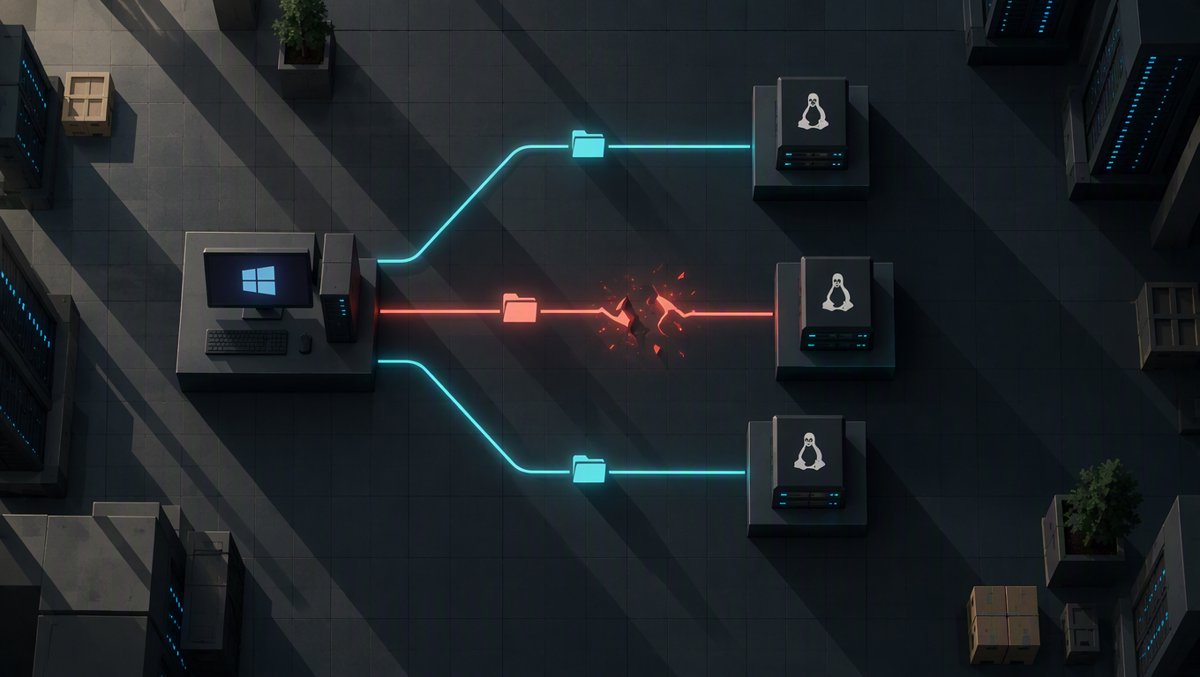
This is the one worth retelling at dinner parties. Microsoft's own support documentation confirmed that applications using HCS-managed Linux virtual machines would start normally, but folders shared from the Windows host into the Linux guest via Plan9 simply would not appear or mount. For the uninitiated: Plan9 folder sharing is the plumbing that lets WSL and WSL-adjacent apps reach your Windows files.
That plumbing is now load-bearing for AI. Anthropic's Claude Cowork — which runs its workspace on a managed Linux VM — broke completely: the workspace could no longer access local storage even when explicitly granted permission. Per Windows Latest, Anthropic was the first to publicly confirm the Windows update as the culprit, even displaying an in-product error message pinning the breakage on the Windows update before Microsoft issued its own clarification. The OS vendor's own acknowledgment came later, in a support document.
Read that again: an AI company out-diagnosed the platform vendor on the platform vendor's own regression. When your third-party ecosystem troubleshoots your kernel-adjacent plumbing faster than you do, something in your telemetry-to-truth pipeline is slower than your users.
4. AMD Radeon crashes (community-reported, still unconfirmed)
Tom's Hardware reported PCs with AMD Radeon GPUs crashing, "apparently due to the update provoking driver instability," with driver reinstalls not helping. Windows Latest's reader reports span RX 6600, RX 7700 XT, RX 7800 XT, RX 7900 GRE, RX 7900 XTX, and RX 9070 XT — four generations of silicon, black screens and freezes even outside games, with GPU driver timeouts and, worst case, the display simply vanishing. Notably, Microsoft's fix notes don't mention AMD GPUs at all. To be fair to Microsoft: swapping GPU drivers makes no difference, which strengthens the Windows-update hypothesis — but as of this writing, this remains community-sourced and unconfirmed by either party.
5. Explorer black screens in enterprise VDI
Windows Latest is tracking Explorer.exe either failing to start or crashing at sign-in — leaving a machine that boots fine into a black screen with no desktop or taskbar. The pattern concentrates in enterprise environments running Citrix UPM, FSLogix, Horizon, or ProfileUnity ProfileDisks. The workaround — kill and restart Explorer via Task Manager — works, which tells you it's a session-layer failure rather than a corrupt install.
6. File History went blind
The legacy backup feature stopped detecting external backup drives entirely, rendering it useless for affected users. Microsoft has not confirmed this one, and Windows Latest notes the emergency update "does not move the needle" for it. A backup tool that can't see its backup drive is arguably the most quietly dangerous bug of the bunch — it fails silently until the day you need it.
7. HP and Lenovo machines with hardware-flavored pain
Tom's Hardware flags reports — dating back to the August patch and compounded by September's — of the update triggering BIOS corruption on some HP systems (with failed installs and no OS recovery, though HP has since published a new BIOS revision, making blame genuinely ambiguous), and black screens or sudden shutdowns on Lenovo machines, apparently from power-management misbehavior.
By the Numbers: The Sunday Rescue, KB5129195
Six days after Patch Tuesday — on Monday, September 14, per Microsoft's support page (Windows Latest's reporting landed the morning of the 15th) — Microsoft shipped KB5129195, advancing Windows 11 25H2 to build 26200.9457 and 24H2 to build 26100.9457. It is a mandatory, cumulative, out-of-band update: it downloads automatically, includes everything from the September Patch Tuesday plus the fixes, and installs in roughly 10 minutes with a single reboot (multiple, if you've got a pending Secure Boot certificate update queued).
The full response spanned the family, per The Verge and Microsoft's support portal: Windows 11 26H1 got KB5129194 (build 28000.2956), 23H2 got KB5129242 (build 22631.7584), and Windows Server 2025/2022, Windows 10 LTSC, and Windows Server 2012/2012 R2 got their own corrective releases.
| Issue | Status after KB5129195 |
|---|---|
| RDS instability / sign-in failures | ✅ Fixed |
| USB multichannel / 3D audio | ✅ Fixed |
| HCS Linux VM Plan9 folder shares (Claude Cowork, WSL apps) | ✅ Fixed |
| CVE-2026-62721 (UMPS → SYSTEM privilege elevation, incompletely patched on Sep 8) | ✅ Fully patched |
| Total USB audio loss / Code 10 / Settings crash | ❌ Not fixed |
| AMD Radeon crashes | ❌ Not addressed |
| File History external-drive detection | ❌ Not fixed |
| Explorer.exe black screen (enterprise VDI) | ❌ Not fixed |
| Microphone failures | ❌ Not listed |
That CVE number deserves a beat of its own: the September 8 patch did not fully resolve CVE-2026-62721, a Windows User-Mode Power Service flaw allowing an attacker with local access to escalate to SYSTEM by manipulating power-management requests. An incomplete fix for a privilege-escalation bug is exactly the kind of thing that turns an out-of-band update from "nice to have" into "install tonight."
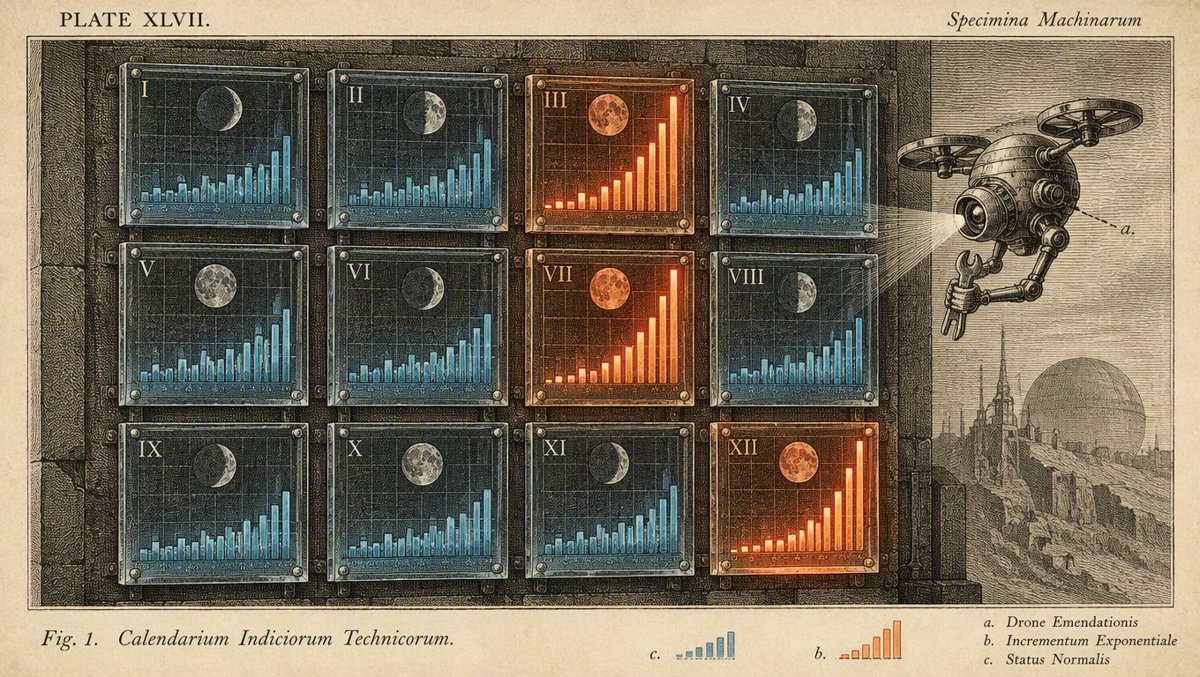
And here's the cadence context, straight from Microsoft's own servicing history for the 24H2/25H2 track: 2025 saw five out-of-band updates in the entire year (May 27, June 11, July 13, September 22, October 20). 2026 has already seen six through September 14 alone — January 17, January 24, March 21, March 31, July 18, and now September 14. The Verge adds the wider pattern: four out-of-band fixes in January alone after a buggy Windows 11 patch, two in March for installation failures and Microsoft-account sign-in problems, and one in July for an Intel driver issue causing performance problems and battery drain.
The emergency patch is no longer an emergency. It's a release channel.
What This Changes
For IT admins: the patch ring is now a life-support system. The old rhythm — test the monthly cumulative for a couple of weeks, then deploy — assumed the monthly cumulative was a stable artifact. When the stable artifact gets a mandatory superseding release six days later, your deployment ring isn't a quality gate anymore; it's a bet. Windows Latest's reporting makes the calculus concrete: the reason to install KB5129195 immediately is an un-patched privilege-escalation CVE. The reason to not blanket-deploy is an unconfirmed AMD GPU crash list and a File History bug nobody has fixed. Both can be true. Fleet-wide "patch everything instantly" and "wait two weeks" are both now wrong answers.
For developers: your app's plumbing is the OS's plumbing. The Plan9 incident is the sharpest lesson. Claude Cowork didn't break because of anything Anthropic did — it broke because a Windows update quietly severed the folder-sharing pipe under a Linux VM. If you build on WSL, HCS, containers, or any hypervisor-adjacent abstraction on Windows, a Patch Tuesday can reach into your runtime. Your integration tests now need a Windows-update smoke test, and your status page may need to blame someone else's OS out loud. Anthropic's in-product error message — explicitly pinning the breakage on the Windows update — is going to be studied as a template for vendor-to-vendor incident communication.
For Microsoft: the credibility math is getting weird. Shipping 974 CVE fixes is genuinely heroic — those are real vulnerabilities closed, most of them never exploited. Tom's Hardware's take is fair: the increased development velocity and responsiveness to long-ignored user feedback (hello, movable taskbar) are real wins. But the same machine that can absorb a 1,032% jump in security fixes apparently cannot reliably regression-test RDS against its own flagship enterprise scenario. Windows Latest floats a theory — unproven, and they say so — that the fix-count spike and the stability spike are two sides of the same coin: more churn, faster, with less soak time. Whatever the internal cause, the external signal to users is: the update that protects you can now hurt you in ways that require their own emergency channel to undo.
⚠️ Limitations & Caveats
Honesty corner — what this story doesn't establish:
- The AMD GPU crashes remain unconfirmed by Microsoft. The evidence is strong (multi-generation GPU span, driver-swap irrelevance, timing), but it's community-reported via Reddit and Windows Latest reader mail. Microsoft's fix notes don't mention it. Treat attribution as probable, not proven.
- File History breakage is likewise unacknowledged by Microsoft, and — important nuance — Windows Latest reports it was broken for some users for months before September's update widened the blast radius. This isn't purely a KB5124008 regression.
- The CVE-inflation causation question is open. Nobody outside Microsoft knows why September 2026 carries 974 CVEs versus 86 last September. It could be more vulnerabilities, different accounting, consolidated servicing, or an artifact of how bundled fixes are counted. Windows Latest's own analysis is labeled a theory in their piece, and we treat it the same way.
- The HP BIOS corruption story is genuinely two-sided. Tom's Hardware notes HP published a new BIOS revision, making it hard to assign blame cleanly between the OEM's firmware and the OS update. Both are claiming the other started it; your correspondent declines to referee.
- Two of the loudest Windows-focused outlets couldn't be consulted directly — our attempts to pull BleepingComputer's and Neowin's coverage were blocked (Cloudflare challenges), so their reporting informed discovery but not the verified claims here.
🎯 The Bottom Line
September 2026 gave Windows its biggest security patch ever, a beloved decade-old feature back, and an emergency rescue update six days later — and the most articulate diagnosis of the whole mess came from Anthropic. When 974 fixes, a broken Plan9 bridge, and six out-of-band releases in nine months coexist, the story isn't "Microsoft is sloppy." It's that the era of treat-every-Patch-Tuesday-as-calm is over: for admins, for developers, and for the billion-plus machines downstream, the monthly update is now a live-fire event. Patch the escalation bug. Then check whether your audio — and your Linux VMs — survived.
📚 Sources
- Microsoft Support (Gold — official) — "September 14, 2026—KB5129195 (OS Builds 26200.9457 and 26100.9457) Out-of-band," confirming the OOB release, cumulative scope, build numbers, and full 2025–2026 servicing history including the September 8 KB5124008 release. https://support.microsoft.com/en-us/servicing/os/windows-11/2026/09/kb5129195-windows-11-24h2-25h2-security-update
- The Verge — Tom Warren's Sep 15 report on the emergency update, the ~1,000-flaw record patch, affected systems (Hyper-V Linux VM folder shares, RDS, USB audio), version coverage, and the January/March/July OOB history. https://www.theverge.com/news/995302/microsoft-out-of-band-windows-11-update-fix-issues
- Tom's Hardware — Bruno Ferreira on the feature wins (movable taskbar, Start layouts, Search), AMD Radeon crashes, Explorer black screens, File History, audio, Claude Cowork's Plan9 breakage, and HP/Lenovo hardware issues. https://www.tomshardware.com/software/windows/windows-september-2026-update-brings-many-long-requested-features-but-also-surfaces-fresh-bugs-windows-11-update-causes-crashes-on-amd-graphics-explorer-hang-ups-and-broken-third-party-integrations
- Windows Latest — Hands-on verification of KB5129195 (builds, install behavior, ~10-minute duration), CVE-2026-62721 details, RDS reproduction methodology, the Code 10 audio bug, Anthropic's early confirmation of the Cowork breakage, the enterprise VDI Explorer pattern, the affected-Radeon model list, and the 2025-vs-2026 CVE table. https://www.windowslatest.com/2026/09/15/windows-11-kb5129195-emergency-update-is-out-after-microsoft-confirms-major-issues-with-the-september-2026-update-but-it-wont-fix-amd-gpu-error/
All claims verified against Gold-tier (Microsoft's official support/servicing documentation) and Silver-tier (The Verge, Tom's Hardware, Windows Latest) sources. Each source URL was scraped and confirmed accessible on September 15, 2026. Community-sourced claims (AMD GPU crashes, File History, reader reports) are labeled as such. Blocked sources (BleepingComputer, Neowin — Cloudflare 403) were discarded per verification protocol.