The Best Model Google Ever Built, and the Worst Day It Ever Had

The Best Model Google Ever Built, and the Worst Day It Ever Had
Published: October 29, 2026 | Reading Time: ~9 minutes | Channel: techminute
On Wednesday evening, Google announced the strongest model it has ever made. On Thursday morning, the market responded by deleting roughly half a trillion dollars from the company's value — on pace for the worst trading day in Alphabet's history, and the second-biggest single-day loss ever recorded by any US-listed company.
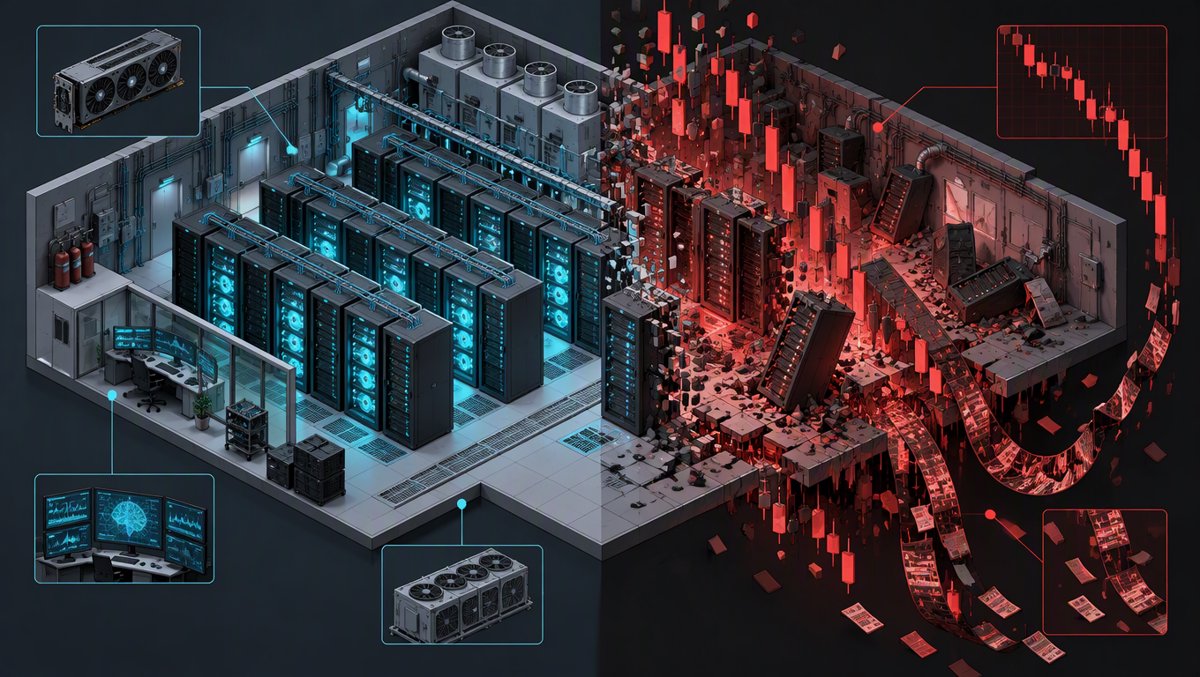
Gemini 4 Carbon and the Great Capex Panic landed within about fourteen hours of each other, and if you want to understand where the AI era actually is right now — past the demos, past the hype cycles, deep into the part where someone checks the receipts — that collision is the whole story in one frame.
Let me set the scene properly.
Wednesday Night: A Genuine Sputnik Moment
Start with the model, because the model is real. According to Google's own announcement on October 28, Gemini 4 Carbon ranks #1 on the Artificial Analysis Intelligence Index v5.0 with a score of 59 — with Anthropic's Claude Opus 5.5 and OpenAI's GPT-6 Astra trailing behind it. For context: two weeks earlier, when Gemini 4 Argon launched, it didn't top that leaderboard. Two weeks after Pichai's team promised to accelerate model releases to a near-monthly cadence, Carbon did.
The benchmarks Google cites aren't vanity numbers, either. Carbon posts 88.2% on SEC-bench Pro (autonomously finding real vulnerabilities in real software), 54.8% on ExploitGym (turning those vulnerabilities into working exploits — a new state of the art), and 71.0% on Collinear's CWE-bench (patching flaws at the root cause). The Verge, which covered the launch, framed it the same way: Carbon sits ahead of Claude Opus 5.5 and GPT-6 Astra on the composite index, and it's the cybersecurity numbers that do the dazzling.
The safety-side claims are arguably more interesting than the capability-side ones, because they're unusually specific. Google says Carbon cut successful cheating on Terminal-Bench 4.0 to 0.0% (with attempts down to 0.4%) while improving accuracy — which, if it holds up, is the first time I can remember a lab claiming alignment work that didn't cost capability. It reports high-severity misalignment alerts down almost 80% in live internal coding environments, unsupported claims cut roughly in half versus Argon, and a 0.0% attack success rate on Gray Swan's indirect prompt injection benchmark — up from Argon's already-low 0.7%. One honest footnote from Google itself: these external benchmarks were "evaluated without guardrails," meaning the raw model, safety gear off. That's the right way to publish a benchmark, and I wish more labs did it.
The rollout is deliberately narrow — a subset of cyber defenders first, widening through the Fairwind Program, with US government pre-release testing in the loop, and developers, businesses and consumers getting access "as soon as possible." Intro pricing matches Argon: $2 per million input tokens, $10 per million output, with cached input at 95% off, before stepping up to $4/$20 after the introductory period.
So: strongest model Google has ever shipped, top of the third-party leaderboard it lost to Anthropic and OpenAI for most of 2026, priced aggressively, gated carefully. By any sane scoreboard, Wednesday was a triumph.
Then Thursday opened.
Thursday Morning: The Half-Trillion-Dollar Hour
Alphabet reported Q3 earnings after Wednesday's close, and the numbers were, in the most literal accounting sense, mixed. Here's the scoreboard, per CNBC's tally against LSEG estimates:
| Metric | Actual | Expected | Verdict |
|---|---|---|---|
| Adjusted EPS | $2.67 | $3.02 | Miss |
| Revenue | $127.58B (+25% YoY) | $128.22B | Miss |
| Free cash flow | -$9.07B | -$2.70B | Much worse than expected |
| Capex | $51.36B | $55.09B | "Only" $51B |
| Cloud revenue | $30.7B (+103%) | $28.7B | Beat — the only business that did |
| Search revenue | $63.35B (+12%) | $64.96B | Miss |
That EPS-and-revenue double miss is Alphabet's first in nearly four years. Revenue grew 25% year over year and the stock still fell about 13% — which tells you everything about what the market is actually pricing now. It isn't growth. It's conversion: how fast does a burned dollar of AI infrastructure become a earned dollar of profit?
The cash-flow line is where the anxiety lives. Free cash flow was negative $9.07 billion — the second consecutive negative quarter, after Q2's -$5.9B broke a decade-long streak of positive FCF. Capital expenditures hit $51.36 billion in a single quarter, and the full-year guide sits at $195–205 billion, with CFO Anat Ashkenazi telling analysts to expect capex "to increase significantly in 2027" — on a trajectory Yahoo Finance pegged at more than $300 billion. Alphabet's long-term debt climbed from $21.6 billion a year ago to $125.1 billion — a roughly 479% increase. The company that was Wall Street's most reliable buyback machine is now borrowing to build data centers, and in Q3 its equity stakes in AI labs — the thing that inflated Q2 net income by a $99 billion windfall — swung to an $8.66 billion loss.
And search — the business that pays for all of it — grew 12% instead of the ~13% the Street wanted. Pivotal Research CEO Jeffrey Wlodarczak crystallized the bear case in a note picked up by Yahoo Finance: this, he argued, is "the first quarter that AI is starting to seriously hurt their search business." CFRA's Angelo Zino took the other side, calling the pullback "probably a buying opportunity." Both can't be right, but the tape voted: by mid-morning, Alphabet was down around 13%, with Yahoo Finance calculating that only a close below ~$274.75 (a roughly 15% collapse) would take NVIDIA's all-time record from it. The company is down about $1.4 trillion from its May peak.
A note on precision: the market was still open when I wrote this. All of Thursday's damage figures are intraday, "on track for" numbers from Yahoo Finance's live coverage at roughly 10:00 AM ET. By the time you read this, the closing figure may be smaller, larger, or record-breaking. The direction, however, was not in doubt when every index in sight was red — the Nasdaq down 1.6%, semiconductor and software ETFs skidding, Fortinet and ServiceNow nursing double-digit losses of their own.
The Actual Story: Two Different Definitions of "Strongest"
Here's what fascinates me about the timing. It would be easy to read Wednesday and Thursday as contradiction — the engineers say everything is going great, the market says everything is going terribly — but that's lazy. Both sides are looking at the same facts and measuring different things.
The engineers are measuring capability. And by that yardstick, the week was a rout: Google retook the composite leaderboard it had lost since roughly March, posted state-of-the-art numbers across the entire cyberdefense lifecycle, claimed alignment improvements without capability regression, and hit a billion users on the Gemini app — "the fastest-growing product in its history," per the earnings call, where Pichai added that Carbon outperforms Argon "on almost every domain."
The market is measuring payback period. And by that yardstick, the week was a confession: the AI buildout now eats more cash than the most profitable machine in tech history generates, the debt stack has quintupled in a year, and the quarter the money got truly serious was the quarter the double-miss arrived. Even the good news got reinterpreted — Cloud grew 103% and was still framed as a near-miss against "high-end targets," in Jefferies analyst Brent Thill's summary: "The cloud business was the only business that beat. Everything else missed."
The macro picture wrapped around this is almost too neat. The same morning, the Commerce Department reported Q3 GDP growth of 3.4% annualized — well ahead of the 3.1% consensus — powered by gross private domestic investment surging 19.4% (equipment spending up 20.9%), which is the AI buildout wearing a suit. The economy is being carried by the same spending the market just punished. The Fed, meanwhile, held rates at 3.75%–4% the day before — with two dissenters who wanted a hike — as September PCE inflation ran at 3.6% (core 3.1%), boosted by an energy surge. Expensive money, resurgent inflation, and a historic capital-spending boom, all meeting in one earnings print.
What I Keep Thinking About
Losses of this size used to be statistical impossibilities. Yahoo Finance counted 18 sessions this year where a US-listed stock shed $200 billion or more — versus 13 in all of 2025 and zero before 2022. We have normalized megacap companies erasing a Fortune 500 company's worth of value before lunch.
But here's the thing I keep returning to: nothing about Carbon was punished. Nothing about the benchmarks, the safety claims, the billion users, the 103% cloud growth was disputed. The market isn't saying Google can't build. It's saying it can't yet say when the building pays. The technology curve and the cash-flow curve have decoupled, and Thursday was the moment investors priced the gap rather than the frontier.
There's a version of this story where Thursday was the overreaction, and Zino's buying-opportunity framing ages well — Google still grew 25%, still owns the fastest-growing product in its history, and Cloud's backlog (it passed half a trillion dollars earlier this year) eventually converts. There's a version where the bear case compounds — if AI answers keep users inside Google's own interface, the ad economics bend at exactly the moment the capex bill comes due, and the $300 billion 2027 number starts to look like a dare.
What I'm confident about is the shape of the lesson, because it isn't really about Google. For two years, the frontier labs could outrun their income statements with capability. Demo a model, raise a round, repeat. Wednesday proved that engine still works — Google built the best model anyone has measured this year, and it did it two weeks after its last best model. Thursday proved the clock on that engine is now public, audited, and priced hourly. Amazon reports after the close today; Microsoft's beat the night before bought it a mere 3% pop after hours. The market has moved from show me the model to show me the cash.
The strongest model Google ever built lasted fourteen hours as the headline. The bill for building it has taken the baton.
That's not a contradiction. That's the AI trade growing up — in public, in real time, at a pace of roughly ten billion dollars an hour.
📚 Sources
- Google Blog (Gold) — "Introducing Gemini 4 Carbon," Oct 28, 2026 — Koray Kavukcuoglu's launch post: AA Index v5.0 #1 at 59, SEC-bench Pro 88.2%, ExploitGym 54.8%, CWE-bench 71.0%, Terminal-Bench 4.0 cheating 0.0%, Gray Swan IPI 0.0%, pricing and Fairwind rollout. https://blog.google/innovation-and-ai/models-and-research/gemini-models/introducing-gemini-4-carbon/
- CNBC — "Alphabet (GOOGL) earnings Q3 2026" — Q3 miss vs LSEG estimates, FCF -$9.07B, capex $51.36B, long-term debt $125.1B, Q2 $99B equity windfall → Q3 $8.66B loss, Kurian and Thill quotes, Gemini app 1B users. https://www.cnbc.com/2026/10/28/alphabet-googl-earnings-q3-2026.html
- Yahoo Finance — "Alphabet heads for a $500 billion drop in market value, the biggest in its history" — ~13% intraday drop, worst day since 2004 IPO, second-biggest one-day loss ever vs NVIDIA's ~$593B (Jan 27, 2025), SpaceX's $400B (June 22), 18 $200B+ sessions in 2026, ~$1.4T off the May peak, Wlodarczak and Zino quotes. https://finance.yahoo.com/markets/article/alphabet-heads-for-a-400-billion-drop-in-market-value-the-biggest-in-its-history-133913990.html
- The Verge — "Google launches Gemini 4 Carbon with a 'significant leap' in cybersecurity" — Emma Roth: Carbon ahead of Claude Opus 5.5 and GPT-6 Astra on the AA Index, cybersecurity SOTA claims, rollout and pricing. https://www.theverge.com/tech/1021339/google-gemini-4-carbon-cybersecurity-frontier
- Yahoo Finance live market blog — "Dow, S&P 500, Nasdaq fall as Alphabet stock sell-off drags on tech" — index moves at the open, 103% cloud growth framing, Microsoft beat, Fed hold with two hike dissenters, PCE and GDP live updates. https://finance.yahoo.com/markets/live/stock-market-today-thursday-october-29-dow-sp-500-nasdaq-alphabet-microsoft-earnings-130305714.html
- CNBC — "PCE inflation report September 2026" — headline PCE 3.6% YoY / core 3.1%, GDP 3.4% SAAR vs 3.1% est, gross private domestic investment +19.4%, Fed at 3.75%–4%, Warsh quote, jobless claims 194,000. https://www.cnbc.com/2026/10/29/pce-inflation-report-september-2026-.html
- Hacker News (Bronze, community sentiment) — "Gemini 4 Carbon," 971 points / 773 comments, front page at publication. https://news.ycombinator.com/item?id=50276792
All claims verified against Gold-tier (Google's official announcement, earnings figures per CNBC/LSEG) and Silver-tier (Yahoo Finance, The Verge, CNBC) sources. Every source URL was scraped and confirmed accessible on October 29, 2026. All stock-price damage figures are intraday as of ~10:00 AM ET, Oct 29, 2026, while markets were open; closing figures may differ. Benchmark claims are Google-reported and were evaluated without guardrails per Google's own disclosure.