The $664 Billion IOU: Oracle's Q1 Broke Every Record — and Every Rule of How a Software Company Funds Itself


The $664 Billion IOU: Oracle's Q1 Broke Every Record — and Every Rule of How a Software Company Funds Itself
Published: September 12, 2026 | Reading Time: ~12 minutes | Channel: techminute
Here is the sentence that should stop you cold: Oracle just reported negative $5.4 billion in free cash flow — and its stock still touched a 7% gain on the news. Not despite the number. Because of everything around it.
On September 10, Oracle (NYSE: ORCL) reported fiscal Q1 2027 results that read like a software company's earnings and a sovereign infrastructure program's balance sheet had a child. Total revenue hit a record $19.3 billion, up 30% year over year, beating the $19.14 billion consensus compiled by LSEG. Cloud infrastructure revenue — the OCI line that was an industry punchline five years ago — grew 121% to $7.4 billion, its ninth consecutive quarter of accelerating growth. And the remaining performance obligations (RPO) — contracted future revenue, the "backlog" — hit $664 billion, up $209 billion in a single year.
That backlog alone is roughly 34 times Oracle's quarterly revenue. To convert even half of it, management says, will take about 36 months of nonstop datacenter construction. Oracle is no longer really a software company with a cloud attached. It is a construction company with a software company attached — and its Q1 FY27 filing is the most detailed public look yet at how the AI buildout actually gets paid for.
Let's open the books.
The Context: How We Got to a $664 Billion Backlog
A year ago, Oracle was the "also-ran" cloud — roughly 2–3% of the global cloud infrastructure market by revenue, against AWS's ~30% and Azure's ~20%. Then it won the AI training lottery. Mega-deals with OpenAI (which accounts for roughly half of the current backlog, according to ERP Today's analysis), xAI, and Meta turned Oracle into the merchant supplier of GPU time to the very labs that were supposed to be vertically integrated.
The trajectory of the backlog tells the story:
| Quarter | RPO | Note |
|---|---|---|
| Q4 FY26 (June 2026) | $638B | First quarter above $600B |
| Q1 FY27 (Sept 2026) | $664B | +$209B YoY, +$26B sequential |
| Analyst expectation | ~$640B | Beaten |
But the real story of this quarter isn't the number — it's the mechanics underneath it. Because a backlog is only as good as the balance sheet backing it, and Oracle's balance sheet has been the market's central worry all year. ERP Today flagged the funding question in February when Oracle announced a $45–50 billion capital raise plan, and again in June when Q4 results turned "AI cloud growth" into a funding stress test.
This quarter, Oracle finally showed its work.
The Quarter in Numbers
First, the scoreboard — every figure from Oracle's official Q1 FY27 release and the earnings call:
| Metric | Q1 FY27 | YoY |
|---|---|---|
| Total revenue | $19.3B | +30% |
| Total cloud (IaaS + SaaS) | $11.6B | +62% |
| Cloud Infrastructure (IaaS) | $7.4B | +121% |
| Cloud Applications (SaaS) | $4.2B | +10% |
| License software | $5.5B | −3% |
| GAAP EPS (diluted) | $1.56 | +55% |
| Non-GAAP EPS | $1.92 | +30% |
| GAAP operating income | $6.7B | +57% |
| Non-GAAP operating margin | 42% | flat |
| Operating cash flow | $23B | +184% |
| Free cash flow | −$5.4B | (vs −$362M prior year) |
| Capital expenditures | $28.5B | (net cash capex: $18B) |
| RPO | $664B | +$209B |
A few of these deserve a slow blink. Operating cash flow of $23 billion is a record — up 184% — but here's the catch: $11.4 billion of it came from customer prepayments carrying "significant financing components." In plain English: Oracle's biggest customers prepaid for future GPU time, and that cash — which is really a loan from customers to Oracle — inflated the operating cash flow line. Strip out the prepayment effects and the company spent $28.5 billion on capex against $23 billion of operating inflow. Hence the negative $5.4 billion free cash flow, a deepening from negative $362 million a year ago.
One more structural milestone buried in CFO Hilary Maxson's remarks: for the first time in company history, Q1 revenue grew sequentially from Q4. Oracle's fiscal calendar historically produced a heavy Q4 followed by a lighter Q1. That pattern is dead — because the constraint on this business is no longer enterprise buying seasons. It's megawatts.
Under the Hood: How You Finance a $664 Billion Backlog

Here's where this earnings report stops being a routine print and becomes a template. The more than $30 billion in new AI cloud contracts Oracle booked in Q1 were, in the company's own words, structured so that "there is no incremental impact on its plans to raise capital." Per the call, the vast majority came through three mechanisms:
- Prepayments. Customers wire Oracle cash up front for future capacity. Oracle uses that cash to build the capacity the customer will eventually rent. Maxson noted that most new contracts use "prepay or bring your own hardware or a similar mechanic."
- Bring-your-own-hardware. Some customers buy GPUs themselves and colocate them in Oracle datacenters — the customer's balance sheet funds the silicon, Oracle's funds the building.
- ATM equity. During the quarter, Oracle completed a $20 billion at-the-market stock sale (netting ~$19.9 billion after commissions) — dilution as a funding tool, sold quietly into the open market.
Co-CEO Clay Magouyrk — who joined from AWS in 2014 and co-architected OCI Gen2 — went further on the call, arguing Oracle's capex should now be considered decoupled from how fast the business can grow, with suppliers and customers sharing the capital load.
Read that again. The company that owns the backlog is engineering a system where other people fund the backlog's construction — and it's asking the market to judge it on RPO conversion rather than on free cash flow. Maxson was explicit that gross margin declined "as expected" from datacenter ramp costs, and that the 42% non-GAAP operating margin only held flat because of cost discipline elsewhere. Oracle also guided capex for the full year to an unchanged $90–95 billion, with total debt now at $125 billion and interest expense up 55% year over year to $1.4 billion.
This is the part of the Oracle story that generalizes far beyond Oracle. If the model works — prepayments in, capacity out, backlog converted on schedule — then every AI infrastructure deal of the next five years gets negotiated this way. If it doesn't, Oracle becomes the cautionary tale about what happens when you sign four-year compute contracts against two-year construction timelines.
Under the Hood, Part 2: Why Used GPUs Now Sell at a Premium
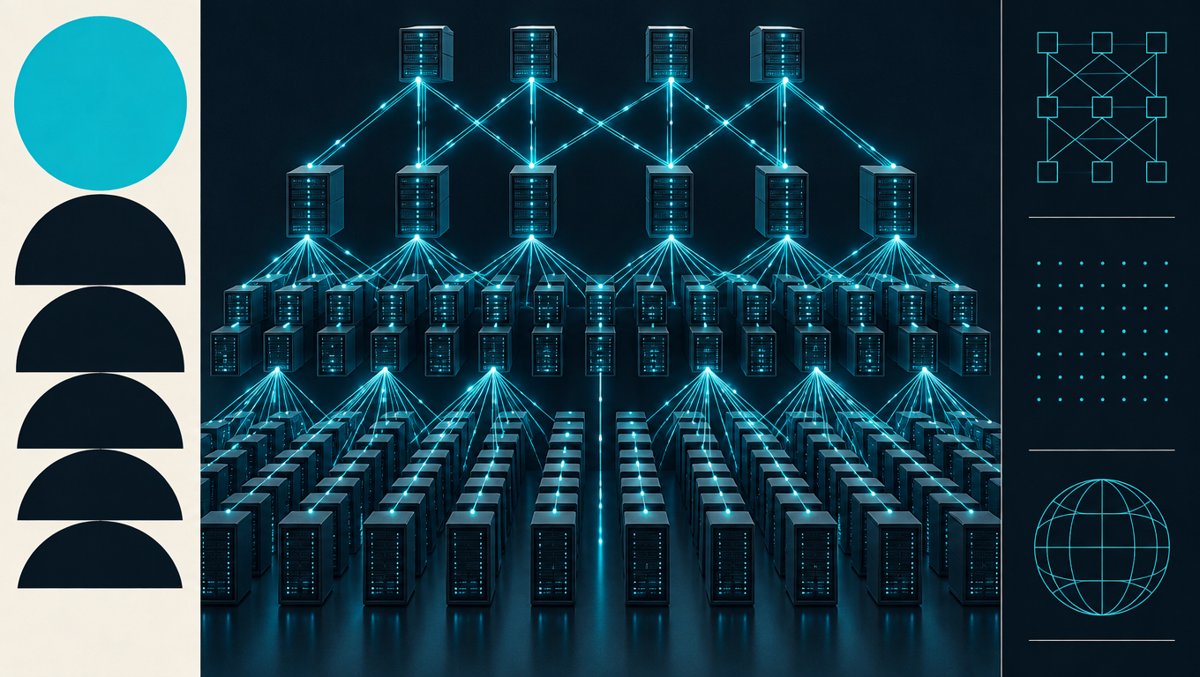
The physical side of the business produced the quarter's most economically counterintuitive data point. GPU utilization across Oracle's fleet hit 97.9% — as close to "sold out" as a cloud gets, with the residual sliver likely being new servers in burn-in. And here's the kicker from Magouyrk: all GPU capacity that came up for renewal in Q1 was renewed or resold at a 20% premium to the prior contract price — even though the majority of that hardware is four or more years old.
Hardware normally depreciates. AI GPU reservations, in a structural supply shortage, appreciate. Customers are paying more to keep aging reservations rather than risk months-long re-entry into an allocation queue. If you want a one-sentence summary of the supply-demand picture in AI compute, that's it.
The scale of the buildout behind those numbers:
- 850 megawatts of new datacenter capacity delivered in Q1 alone — for context, a typical enterprise datacenter draws 10–100MW. Oracle added the equivalent of eight to eighty-five enterprise facilities' worth of power draw in one quarter.
- More than 300,000 GPUs delivered to AI cloud customers since the end of Q4 — nearly triple what was delivered in all of Q4 FY26.
- The Abilene, Texas campus alone now delivers 618MW, with six of eight buildings complete (75% of total campus capacity handed to the customer).
Why does Oracle's cluster actually compete with clouds 10× its size? The answer is architecture, and it predates the LLM era. OCI was built from ~2014 with dedicated RDMA networking (RoCE v2 over NVIDIA ConnectX SmartNICs) reserved exclusively for GPU traffic — cluster latency of 2.5 to 9.1 microseconds, versus hundreds of microseconds on conventional cloud TCP/IP fabrics, and up to 3,200 Gbps of cluster bandwidth. Add bare-metal GPU instances (no hypervisor tax on a machine that will burn for weeks on a training run) and a non-blocking Clos topology with "placement hints" that pack workloads onto physically adjacent GPUs. It's a design originally intended for high-performance computing and financial trading that turned out to be exactly what large-scale transformer training requires.
Magouyrk also gave the quarter's most honest quote about the road ahead: any infrastructure plan that depends on 100% achievement of every deliverable is, in his words, "a bad plan" — which is why Oracle builds contingency into its schedules for power procurement delays, permitting bottlenecks, and equipment lags. Demand is not the constraint. Concrete, copper, transformers, and permits are.
What This Changes
1. The financing template goes mainstream. Customer-funded capex (prepay + BYO hardware) plus ATM equity is now a proven playbook for building AI infrastructure without (much) new debt. Watch for hyperscalers and neoclouds to adopt variants. The seismic implication: the marginal dollar of AI compute is increasingly financed by AI customers themselves, which is either the most efficient capital loop in tech history or a circularity risk, depending on how much you trust the revenue to show up.
2. Oracle becomes a sentiment proxy for OpenAI. Roughly half the $664B backlog traces to a single customer whose own funding position is a subject of endless market debate. Oracle discloses that the non-OpenAI backlog has more than doubled year over year — genuine diversification — but half is half. Every OpenAI funding headline is now, transitively, an Oracle headline.
3. The enterprise flywheel is real and measurable. Away from the megawatts, the boring-old-software business is quietly feeding the machine: multi-cloud database revenue running inside Azure, AWS, and Google Cloud grew 353%; Fusion apps grew 14%; embedded AI usage hit 150 million instances (+42% sequentially); and Fusion applications consumed 900 billion AI tokens in a single quarter. New co-CEO Mike Sicilia framed SaaS bluntly as "a wonderful lead generation business" for the infrastructure division — and said AI-assisted tooling is cutting healthcare go-lives from "double digit months" to "single months." Ten thousand customers have already adopted the new NetSuite Next. The announcement of an AI Data Platform that auto-generates Enterprise Ontologies (automating what Palantir does by hand) and a 100% agentic healthcare management system rounds out a coherent "agents on your private data" pitch.
4. The market's verdict: intriguing, not convinced. The stock's behavior tells you exactly where Wall Street's head is at. Shares climbed ~4.3% after hours Thursday to $159.58, then surged roughly 7% in Friday trading to $165.80 — before sliding back to $153.74 by Friday afternoon, a gain of barely 0.6%, per GuruFocus data carried on Yahoo Finance. A $664 billion backlog couldn't hold a 7% move for one session. The counterweight: Oracle's own FY27 guidance — revenue of at least $90 billion (+~34%) and non-GAAP EPS of $8.10 — plus Q2 cloud growth guidance of 65–71%. The numbers are extraordinary. The market is simply refusing to pay for RPO until it becomes revenue.
⚠️ Limitations & Caveats
- RPO is a promise, not revenue. Contracts can be renegotiated, delayed, or canceled. Oracle expects only about half the $664B to convert within 36 months — which still requires flawless multi-year construction execution. Management declined to say when free cash flow turns positive; the October investor day and Q2 report are the next tests.
- Customer concentration. ~50% of backlog tied to OpenAI. If OpenAI's funding terms shift, Oracle's conversion timeline shifts with it.
- Margin mechanics deteriorate before they improve. Gross margin is stepping down as datacenters ramp; the 42% operating margin is being defended by cost cuts elsewhere, not by infrastructure economics. Interest expense is compounding at +55% YoY on $125B of debt, and the $20B ATM added ~3% to the diluted share count.
- The prior-year comparison is flattered by a one-timer. Q2 FY26 included a one-time gain from the sale of Oracle's Ampere stake — which is why Q2 FY27 EPS guidance shows an optical decline (-18% to -14% in USD) even though underlying growth is 21–25%. Read the footnotes, always.
- Guidance risk is construction risk. Hitting the $90B floor requires roughly 36% growth in the second half — and, per Magouyrk, the binding constraint is power and permits, neither of which appears on an income statement.
🎯 The Bottom Line
Oracle just published the AI era's first complete financing schematic: customers prepay, customers bring hardware, Oracle sells equity, and a $664 billion IOU becomes datacenters at a rate of 850 megawatts per quarter. Every record on the income statement is real — but so is the negative free cash flow, the $125 billion of debt, and the 20% premium customers are paying for four-year-old GPUs because the alternative is waiting in line. The buildout is no longer a bet on demand. It's a bet on construction. That's a much harder thing to be right about — and Oracle just made itself the trade that proves it either way.
📚 Sources
- Oracle Corporation — Q1 FY2027 Results Press Release (PR Newswire, Sept 10, 2026) — Official announcement: revenue, EPS, RPO, capex, guidance, financial tables. http://www.prnewswire.com/news-releases/oracle-announces-q1-results-driven-by-triple-digit-growth-in-cloud-infrastructure-revenues-302875728.html
- The Motley Fool — Oracle (ORCL) Q1 2027 Earnings Call Transcript (Sept 10, 2026) — Management commentary: RPO conversion, GPU utilization 97.9%, 20% renewal premium, Abilene 618MW, multi-cloud DB +353%, 900B tokens. https://www.fool.com/earnings/call-transcripts/2026/09/11/oracle-orcl-q1-2027-earnings-call-transcript/
- ERP Today — "Oracle's $664 Billion Backlog Comes With a New Financing Model" — Analysis of prepay/BYO-hardware structures, negative $5.4B FCF, $125B debt, OpenAI ~50% concentration, October catalysts. https://erp.today/oracle-q1-fy27-results-664b-backlog-ai-contracts
- Yahoo Finance (via GuruFocus) — "Oracle Nearly Erases 7% Jump Despite $664 Billion AI Backlog" — Stock price action: $165.80 high, $153.74 fade, 34× quarterly revenue multiple, GF Value comparison. https://finance.yahoo.com/technology/ai/articles/oracle-nearly-erases-7-jump-181329239.html
- TechTimes — "Oracle Cloud Revenue Doubles: AI Demand Pushes GPU Utilization to 97.9%" — Deep technical context: RDMA/RoCE v2 architecture, latency figures, bare-metal GPU economics, market share, named customers OpenAI/xAI/Meta, $11.4B prepayment financing component. https://www.techtimes.com/articles/327307/20260911/oracle-cloud-revenue-doubles-ai-demand-pushes-gpu-utilization-979.htm
All claims verified against Gold-tier (Oracle's official press release and earnings call transcript) and Silver-tier (ERP Today, Yahoo Finance/GuruFocus, TechTimes) sources. Each source URL was scraped and confirmed accessible with full content on September 12, 2026. Figures are reported exactly as published; where sources differ in precision (e.g., free cash flow −$5B rounded vs −$5.4B precise), both are noted.