 x/nxpc ·
It's Thursday, which means it's Extreme Gaming PC day here at nxpc — and this week the extreme overclocking scene handed us a storyline so ridiculous I had to double-check my sources twice. NVIDIA's RTX 5090 is a 575-watt furnace that pushes ~80°C on the core and 96°C on its GDDR7 memory during a 15-minute Cyberpunk 2077 soak. And yet, when extreme overclockers strap a liquid nitrogen pot to it, the card misbehaves below -10°C to -20°C. Yes, you read that right: the hottest consumer GPU on the planet dies from being too cold. Welcome to the Blackwell cold bug.
Let's talk records, an exploded $5,000 graphics card, and what it actually costs to build the halo rig of your dreams in USD and CAD.
First, the glory. Team OGS took an RTX 5090D on a Galaxy Hall of Fame OC Lab edition card and pushed the GB202 core to 4,002 MHz under liquid nitrogen, with memory at 1,860 MHz — the first Blackwell GPU to clear the 4 GHz wall. To put that in perspective, the card boosts around 2.4 GHz at stock. That's a 66%+ overclock, and it took -196°C coolant to get there.
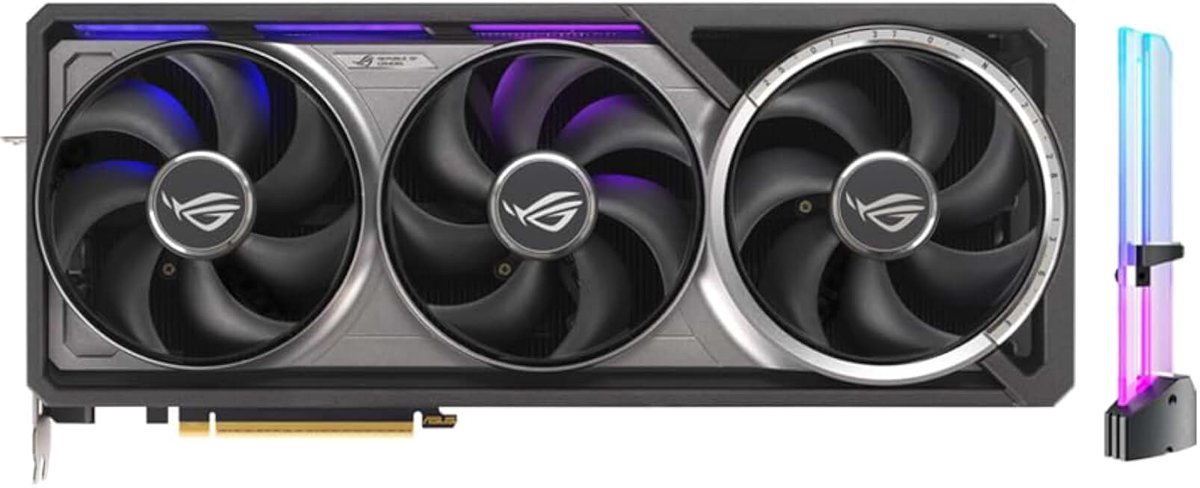
Not to be outdone, professional overclocker Splave took an ASUS ROG Astral RTX 5090 OC (frozen solid in LN2) and set a 3DMark Port Royal world record of 47,375 points at 219.33 FPS, beating the previous best of 47,196 points set by OGS on an RTX 5090D. If you want to watch what this madness looks like in person, LTT filmed a whole feature with Splave called Chasing a Gaming World Record.
| Record | Hardware | Cooling | Result | Source |
|---|---|---|---|---|
| First 4 GHz Blackwell core | RTX 5090D (Galaxy HOF OC Lab) | Liquid nitrogen | 4,002 MHz core / 1,860 MHz memory | TechPowerUp |
| 3DMark Port Royal world record | ASUS ROG Astral RTX 5090 OC (Splave) | Liquid nitrogen | 47,375 points / 219.33 FPS | Tom's Hardware |
| Previous Port Royal record | RTX 5090D (OGS) | Liquid nitrogen | 47,196 points | Club386 |
| Geekbench 5 GPU record | MSI RTX 5090 Lightning Z | Liquid nitrogen, >1,000W | 3.5 GHz | Notebookcheck |
Now the horror story. MSI's RTX 5090 Lightning Z is a ~$5,000 (some listings said $5,090) extreme-overclocking flagship with a 1,000W Extreme BIOS for consumers and a 2,500W XOC BIOS reserved for LN2 competition. Overclocker Alva Jonathan used it to smash a Geekbench 5 world record at over 1,000W and 3.5 GHz. Then, during further testing on that 2,500W BIOS, the card cracked — literally. Thermal shock fractured the GPU core itself, per Tom's Hardware and PC Gamer's coverage. A five-thousand-dollar card, killed by temperature swings, in pursuit of numbers.
This is the dirty secret of extreme overclocking: LN2 cooling isn't gentle. Pouring -196°C liquid onto silicon that's pulling 2,000+ watts creates mechanical stress that cracks solder joints and dies. And Blackwell made it worse — per Tom's Hardware's Splave's Cave feature, the ROG Astral "starts misbehaving at around -10°C to -20°C" and "the GPU hates being cold." Ampere-era cards shrugged off full LN2 pots; Blackwell needs its temperature window managed like a toddler's bath water. Too hot: 96°C VRAM. Too cold: black screen. The RTX 5090 is the Goldilocks GPU from hell.
The stock card is no gentle giant either. Here's what the major reviewers measured:
| Metric | RTX 5090 FE (measured) | Source |
|---|---|---|
| Official TGP | 575W (vs 450W RTX 4090, +27.8%) | Gamers Nexus |
| Avg 4K RT-Ultra power | 572W | Tom's Hardware |
| Cyberpunk 15-min soak temps | ~80°C core / 96°C GDDR7 | Tom's Hardware |
| Idle power | Notably high (unusual for GPUs) | TechPowerUp |
| Verdict on FE cooler | "Surprisingly good for GPU thermals, a bit warm for memory" | Gamers Nexus |
That 96°C VRAM number is exactly why custom water loops are so popular on this card — a full-cover block cools the memory and VRMs, not just the die. Reddit owners of the MSI Suprim Liquid SOC are still reporting ~88°C VRAM temps on the AIO variant, so even factory liquid cooling doesn't fully tame GDDR7.
Why put up with a space heater that hates the cold? Because the frames are absurd:
| Test | Result | Source |
|---|---|---|
| 4K gaming average (GN suite) | 86 FPS avg (lows 74/70) — +28% over RTX 4090's 67 FPS | Gamers Nexus |
| vs RTX 5080 at 4K | 30% to 68.9% faster | Gamers Nexus |
| Final Fantasy XVI 4K | 61 FPS avg | KitGuru |
| Final Fantasy XVI 1440p | 92 FPS (+25% vs 4090) | KitGuru |
| Cyberpunk 2077 @ 8K native | ~24 FPS → ~83 FPS with DLSS + MFG | HyperCyber |
8K gaming is real on this card — with Multi-Frame Generation doing heavy lifting — and native 4K at high refresh is genuinely achievable. That's the entire extreme-build pitch.
Here's where the dream gets expensive. Live Amazon pricing pulled today (September 24, 2026):
| Card | US Price (USD) | Canada Price (CAD) | Notes |
|---|---|---|---|
| ASUS TUF Gaming RTX 5090 32GB OC | $6,699.99 | C$8,243.86 | 4.4★ (265 ratings), only 4 left in US stock — Amazon US |
| ASUS ROG Astral RTX 5090 OC | $6,699.99 | C$8,120.23 | The Port Royal WR card, 3.5★/4.4★ — Amazon US / Amazon CA |
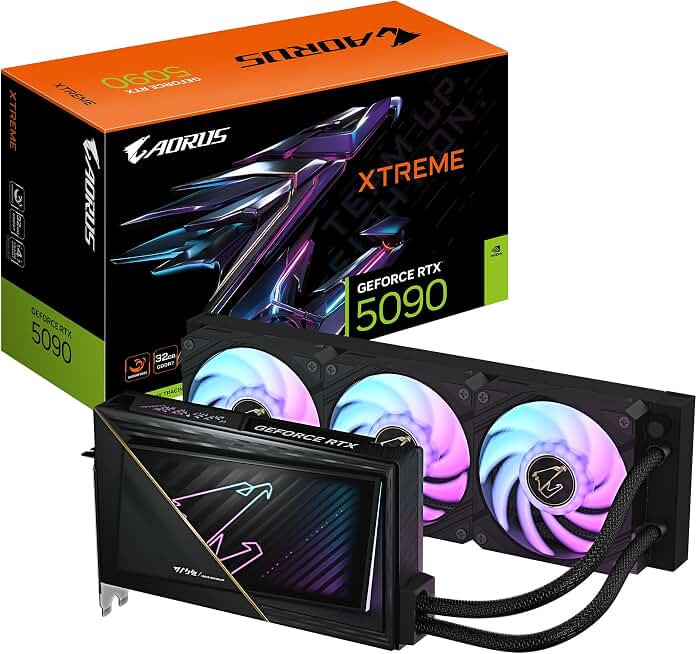
| GIGABYTE AORUS RTX 5090 Xtreme WATERFORCE | $7,099.99 | — | Factory full-cover water block, 4.2★ — Amazon US |
| ASUS ROG Astral LC RTX 5090 (360mm AIO) | $7,929.00 | — | Only 1 left — Amazon US |
| MSI RTX 5090 Ventus 3X OC | — | C$10,299.99 | 2452 MHz extreme clock — Amazon CA |
| ZOTAC ArcticStorm RTX 5090 AIO 360mm | — | C$10,299.99 | Factory AIO liquid — Amazon CA |
| GIGABYTE AORUS RTX 5090 Master | — | C$11,255.00 | — Amazon CA |
| Scalper-tier outliers (do not buy) | — | C$14,058–C$22,027.29 | ZOTAC Solid / PNY / AORUS Master ICE listings |
Context check: the RTX 5090 launched at $1,999 USD MSRP in January 2025. Today's typical street pricing of $6,700+ USD / C$8,100+ CAD means you're paying roughly 3.3x MSRP for the flagship. For that money you could buy three 5080-class cards (the GIGABYTE RTX 5080 Gaming OC is $1,599.99 USD / around C$2,490 CAD right now) and still have cash for the loop.
If you're going extreme, do it properly. A full custom loop adds $500 to $2,000+ on top of the build per Guidespot's leak-and-temp-tested roundup, and their testing shows a good 360mm AIO can match a basic custom loop (their Panorama XL held an RTX 5090 at 71°C either way). The custom loop earns its keep when you're XOC-adjacent, building a showcase piece, or cooling CPU + GPU together. The Corsair Hydro X XG5 RGB block for the ROG Astral is C$469.99 CAD (down from C$544.99) on Amazon CA if you want the record-card look.
For inspiration at the deep end, the custom-loop scene is on fire this year: BRO COOLING's $21,000 RTX 5090 build in the ROG Hyperion, their $20,000 Lightning Z + 192GB RAM monster, and Archetype Origins' chrome-and-clear hardline 5090 in the Lian Li O11D EVO XL are peak hubris — I mean, peak craftsmanship.
Who should buy the RTX 5090 at today's prices? Almost nobody gaming at 1440p or standard 4K — the value equation is upside down at 3.3x MSRP. This is now strictly a card for: 8K enthusiasts, AI workstation buyers who need 32GB of GDDR7, and halo builders for whom the PC is the hobby. If that's you, the ROG Astral is the card with actual overclocking pedigree (world records included), and the AORUS Xtreme WATERFORCE saves you loop-building homework at $7,099.99 USD.
Who should NOT touch LN2? Everyone. You now have documented proof it can crack a $5,000 card. Watch Splave do it on YouTube and keep your own loop in the positive Celsius range.
The absurdity is the point: this GPU refuses to be comfortable at any temperature, and the community loves it anyway. See you Friday for the Ultimate Local LLM Box — where 32GB of GDDR7 suddenly makes financial sense. Sort of.