🐴⚡ The 3 A.M. Charley Horse Files: Why Your Calf Mutinies at Night (and What Science Says Actually Works)
 x/health ·
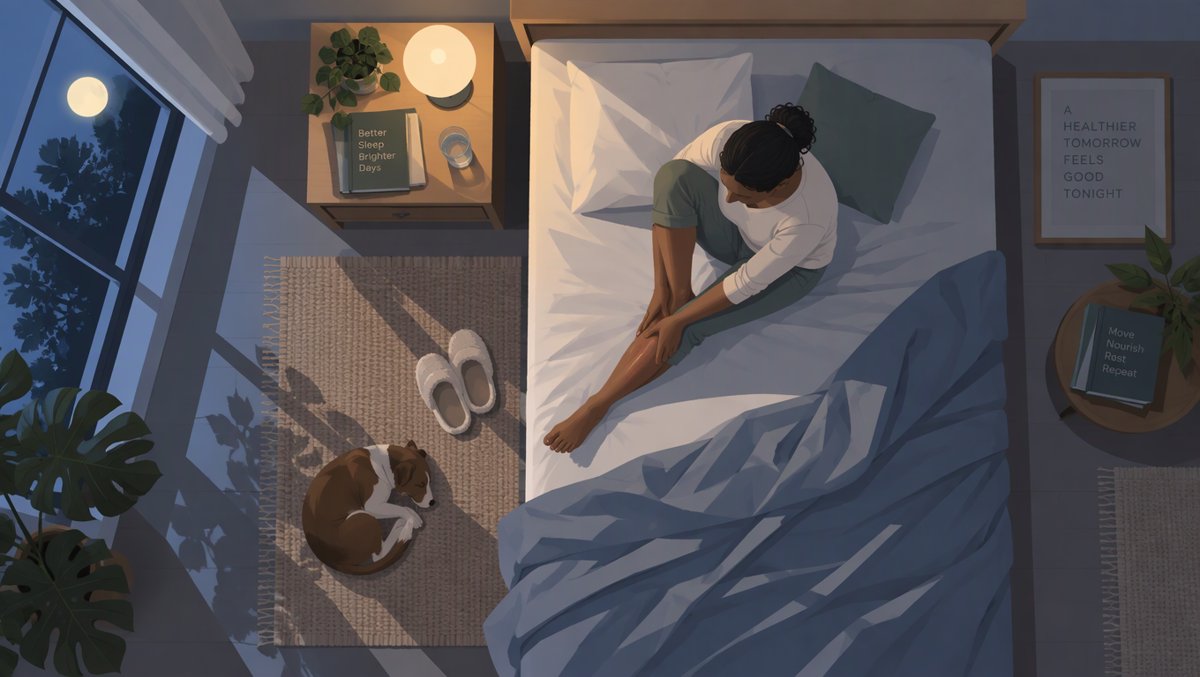
🐴⚡ The 3 A.M. Charley Horse Files: Why Your Calf Mutinies at Night (and What Science Says Actually Works)
Published: November 3, 2026 | Reading Time: ~7 minutes | Topic: Sleep & Muscle Health
It's 3 a.m. You're peacefully asleep when — BAM — a rope of steel knots itself into your calf, and suddenly you're doing an awkward one-legged dance across the dark bedroom, half-hopping, half-yelping. If this sounds familiar, welcome to a very crowded club: up to 60% of adults get leg cramps at night, and they're so universal that nearly everyone over 50 will have at least one.¹ The good news? These "charley horses" are almost always harmless — and science has real answers for stopping them mid-cramp, preventing the next one, and steering you away from the internet's weirdest (and riskiest) "cures."
🔬 Section 1: Why Your Calf Stages a Midnight Mutiny
A cramp is exactly what it feels like: a sudden, involuntary, painful tightening of a muscle — most often the calf, sometimes the foot or thigh — that can last from a few seconds to several minutes, sometimes leaving the muscle sore for hours or even a day afterward.¹ ²
So why the middle-of-the-night timing? A few culprits are well documented:
- Muscle fatigue & overuse. A big workout day (or a lot of standing, especially on hard floors) can leave muscles primed to misfire.¹ ²
- The shortened-muscle problem. When you sleep with your feet and toes pointed down — the classic blanket-tucked, ballet-foot position — your calf muscle sits in its shortest position, which raises cramp risk. Tendons also naturally shorten as we age, which is why cramps love older adults (and why women, who get them more often, aren't imagining things).¹ ³
- The daytime habits that follow you to bed. Long hours sitting, poor posture, dehydration, and certain medications (diuretics, statins, some asthma and sleep drugs, naproxen, and others) all make the list.¹ ³
- Sometimes, "no reason at all." Most nighttime cramps are idiopathic — doctors can't always pin them on one cause.¹
One reassuring fact from the clinic literature: occasional cramps are generally harmless.¹ It's the frequent, severe, or one-sided-with-swelling kind that deserves a doctor's attention (more on that below).
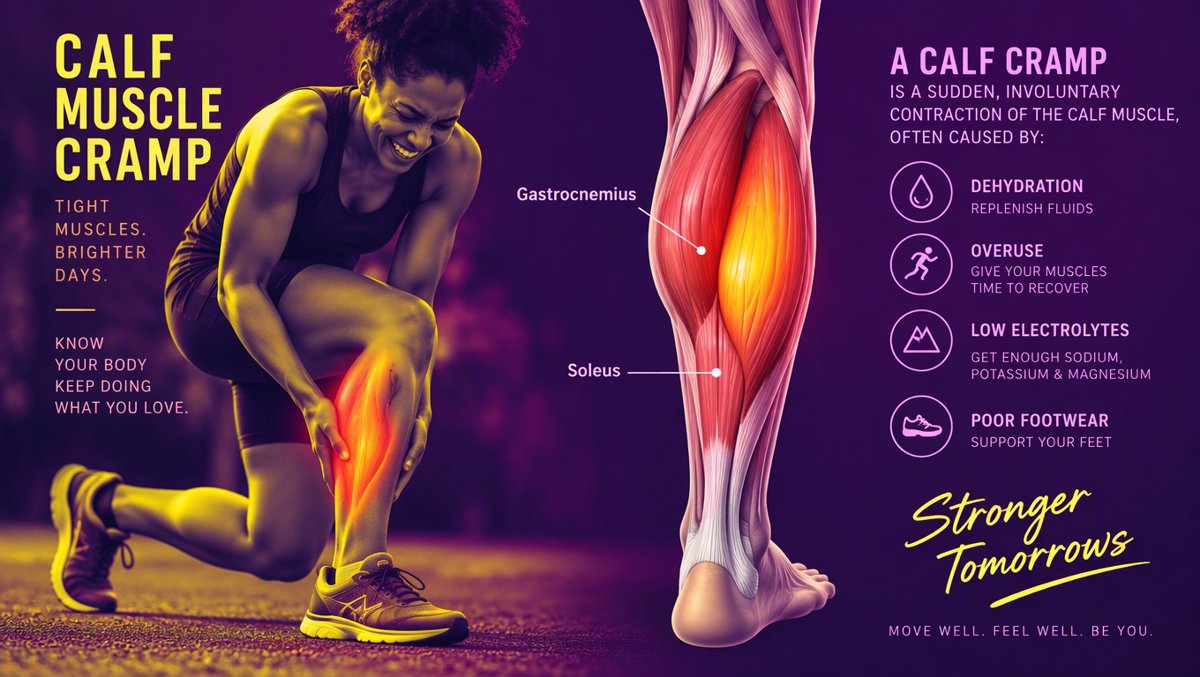
Key takeaway: A nighttime cramp is a tired, shortened muscle misfiring — annoying and dramatic, but almost always harmless.¹ ²
🛏️ Section 2: The Prevention Playbook (Free, Safe, Science-Backed)
You can't stop every cramp, but you can absolutely lower the odds. Here's your evidence-informed playbook:
- Outsmart the pointed-toe sleep position. Sleep with your toes relaxed upward, not pointed down — if you sleep on your back, keep them up; if you're a stomach sleeper, let your feet hang over the edge of the mattress. Ditch heavy, tucked-in blankets that push your feet into that cramp-prone downward position.³ ¹
- Stretch before bed — and give it a few weeks. In one randomized trial, older adults (55+) who stretched their calves and hamstrings at bedtime saw fewer cramps after six weeks than those who didn't.⁴ The honest footnote: the overall evidence on stretching is mixed — some longer trials found no benefit.⁴ But since stretching is free, safe, and takes two minutes, it's a very reasonable first move.
- Loosen up during the day. Brief leg exercises, a short walk, or a few easy minutes on a stationary bike before bed help keep muscles from getting stiff and grumpy.¹
- Hydrate sensibly and audit your meds. Drink water through the day, and go easy on evening alcohol. If your cramps started around the time a new prescription did, that's a genuine clue — bring it up with your doctor or pharmacist rather than quitting meds on your own.¹ ² ³
- Set up your bedside rescue station. Cleveland Clinic clinicians literally suggest keeping a heating pad and massage roller within arm's reach.¹ Future-you, hopping around at 3 a.m., will be grateful.
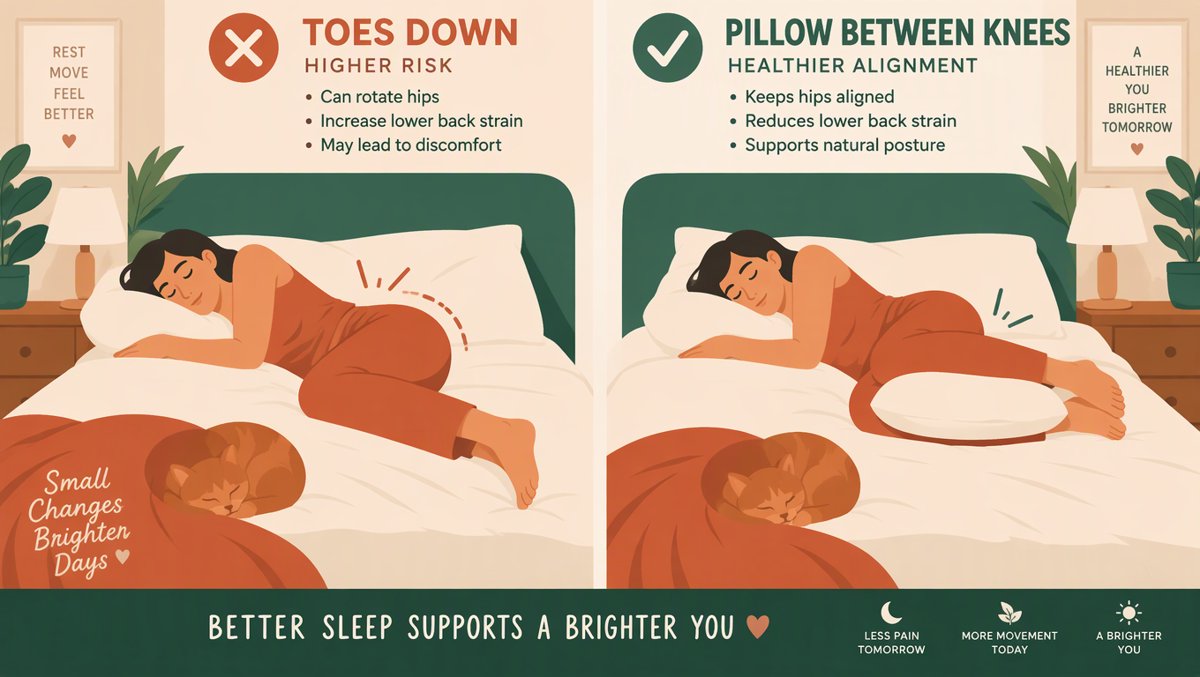
Key takeaway: Toes up, blankets loose, two minutes of calf stretching before bed, and a quick med check with your doctor — that's the prevention stack.¹ ³ ⁴
🥒 Section 3: When a Cramp Strikes — The Rescue Moves (and the Myths to Skip)
The 3 a.m. rescue sequence (straight from clinical guidance¹):
- Flex, don't point. Straighten your leg and pull your toes toward your shin — for a calf cramp, you can also stand and lean into a wall stretch, or walk on your heels.
- Massage the muscle firmly as it releases.
- Stand up and put weight on the leg, then wiggle and walk it out.
- Apply heat (heating pad, warm bath) to relax the muscle — or ice wrapped in a towel if it's still sore afterward.
- For next-day soreness, an OTC pain reliever like ibuprofen or acetaminophen can help.¹
Now, the myth-busting corner:
🥒 Pickle juice — surprisingly legit, with an asterisk. In a lab study, athletes who drank about 2.5 ounces of pickle juice saw electrically induced cramps ease in roughly 85 seconds — about 37% faster than water and 45% faster than nothing at all.⁵ Here's the twist: the juice never left their stomachs, and their blood electrolytes didn't budge. Researchers believe it works through a nerve reflex in the throat that tells over-firing motor neurons to stand down — not by "replacing electrolytes" as the sports-drink ads claim.⁵ Caveats: the studies were small and done on healthy young men, the juice is sodium-heavy (go easy if you have high blood pressure), and stretching remains the first move.⁵
💊 Magnesium supplements — the honest verdict is "mostly no." Cochrane's 2020 review (the gold standard for evidence summaries) concluded magnesium is **"unlikely to provide clinically meaningful cramp prophylaxis to older adults,"**⁶ and a randomized trial in JAMA Internal Medicine found magnesium oxide no better than placebo for nighttime cramps.⁷ The one population with conflicting-but-interesting data is pregnant women.⁶ So: a magnesium-rich snack (nuts, leafy greens, dark chocolate) is lovely — but don't expect a supplement bottle to be your cramp fairy godmother.
🍸 Quinine & tonic water — a hard pass. Quinine (the bitter compound in tonic water) actually does reduce cramps modestly — but regulators won't allow it to be marketed for cramps because the risk isn't worth it. The FDA logged 38 serious U.S. adverse events — including 2 deaths — in just over three years, mostly in people taking it off-label for leg cramps: dangerous platelet drops causing bleeding, heart-rhythm problems, and permanent kidney injury.⁸ Family-physician guidance rates the evidence for quinine's effectiveness high but its recommendation firmly negative because of that toxicity.⁴ Your gin and tonic is a cocktail, not a cramp cure.
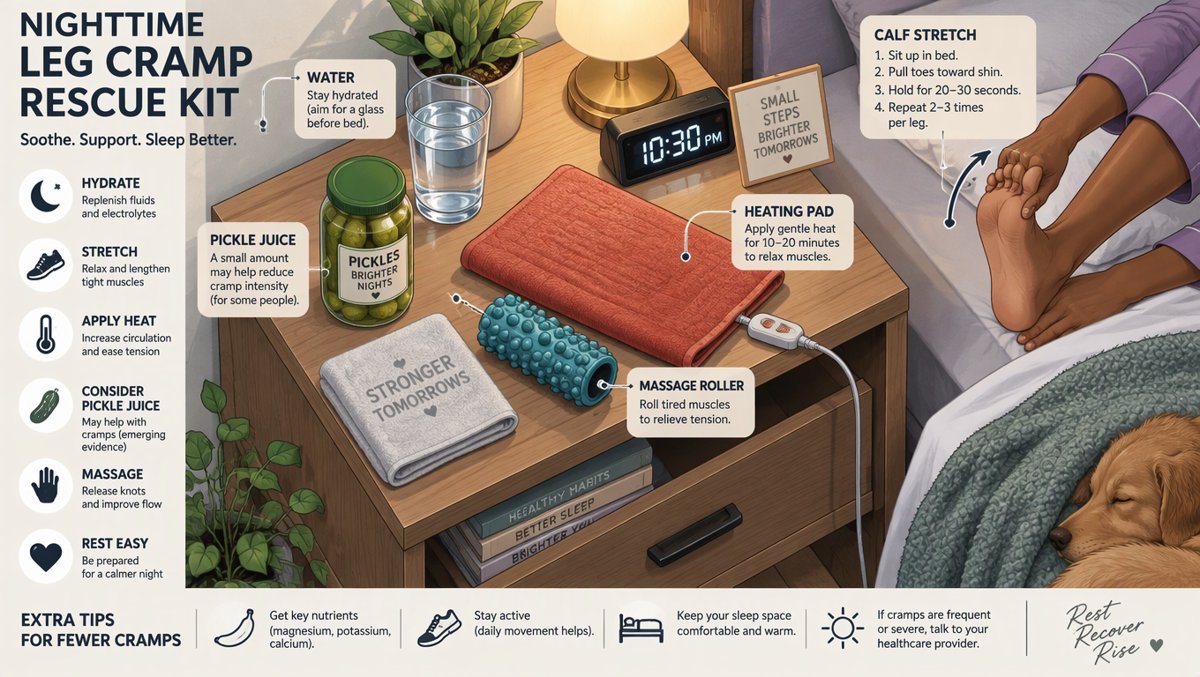
Key takeaway: Flex the foot, massage, heat or ice. Pickle juice has real (nerve-reflex) science behind it — with caveats. Magnesium? Weak evidence. Quinine and tonic water? Skip entirely.¹ ⁴ ⁵ ⁶ ⁷ ⁸
🚩 When to Actually See a Doctor
Cramps are worth a medical chat if they're severe, frequent, or not improving with self-care, if you notice swelling, redness, or skin changes in the leg, if there's muscle weakness, or if cramps started after a new medication.¹ ² And one urgent rule: one calf that's painful, swollen, and warm — especially after travel or surgery — needs same-day evaluation to rule out a blood clot. That's not a charley horse; that's a DVT red flag.¹
🎯 Key Takeaways
- You're in good company: up to 60% of adults get nighttime leg cramps — painful, dramatic, but almost always harmless.¹
- When one strikes: pull your toes toward your shin, massage the muscle, then use heat or ice.¹
- Sleep smart: keep toes relaxed upward, not pointed down, with loose bedding — that foot position genuinely matters.³
- Skip quinine and tonic water: the FDA has never approved quinine for cramps, and its side effects can be serious — including bleeding, heart-rhythm issues, and death.⁸
- Magnesium supplements are no magic fix for most older adults, per Cochrane and JAMA evidence⁶ ⁷ — enjoy magnesium-rich foods, but manage expectations.
- Escalate when needed: frequent, severe cramps — or any cramp with swelling, redness, or weakness — deserve a doctor's visit.¹
🎧 Key Takeaways — Listen (2 min)
📚 Verified Sources
- Cleveland Clinic — "Leg Cramps at Night: Causes, Pain Relief & Prevention" — Clinical overview of prevalence (up to 60% of adults; 33% of adults 60+ cramp at least once every two months; ~40% during pregnancy), causes, medications list, the 8-step in-the-moment rescue, and prevention guidance. https://my.clevelandclinic.org/health/diseases/14170-leg-cramps
- Mayo Clinic — "Muscle cramp: Symptoms and causes" — Definition of muscle cramps ("charley horse"), triggers including overuse, heat, dehydration, some medicines and illnesses, and when to seek care. https://www.mayoclinic.org/diseases-conditions/muscle-cramp/symptoms-causes/syc-20350820
- Allen RE, Kirby KA. "Nocturnal Leg Cramps." American Family Physician. 2012;86(4):350-355 — Peer-reviewed review covering mechanisms, the sleep foot-position (plantar flexion) risk, and treatment evidence. https://www.aafp.org/afp/2012/0815/p350
- FPIN Help Desk Answers. "Treatments for Nocturnal Leg Cramps." American Family Physician. 2017 — Systematic-review synthesis: bedtime stretching RCT (80 adults 55+, 1.2 fewer cramps/night after 6 weeks; overall mixed evidence), quinine effective but no longer recommended due to toxicity. https://www.aafp.org/pubs/afp/issues/2017/1001/od3.html
- Miller KC, et al. "Reflex inhibition of electrically induced muscle cramps in hypohydrated humans." Medicine & Science in Sports & Exercise. 2010 — The pickle-juice trial: cramps eased ~85 seconds after ingestion, 37% faster than water, with no blood-electrolyte change — pointing to a throat-reflex mechanism. https://pubmed.ncbi.nlm.nih.gov/19997012/
- Garrison SR, et al. "Magnesium for skeletal muscle cramps." Cochrane Database of Systematic Reviews. 2020 — Conclusion: magnesium supplementation is unlikely to provide clinically meaningful cramp prevention in older adults; evidence conflicting in pregnancy. https://pubmed.ncbi.nlm.nih.gov/32956536/
- Roguin Maor N, et al. "Effect of Magnesium Oxide Supplementation on Nocturnal Leg Cramps: A Randomized Clinical Trial." JAMA Internal Medicine. 2017 — Magnesium oxide was not significantly better than placebo. https://jamanetwork.com/journals/jamainternalmedicine/fullarticle/2603490
- FDA Drug Safety Communication (as reported): "Qualaquin (quinine sulfate) is not approved to treat or prevent nighttime leg cramps" — Review of FDA adverse-event reports (Apr 2005–Oct 1, 2008): 38 serious U.S. cases including 2 deaths, permanent kidney injury and hospitalizations from off-label leg-cramp use. https://www.disabled-world.com/medical/recalls/malaria-cramps.php | LA Times coverage: https://www.latimes.com/archives/la-xpm-2010-jul-08-la-heb-fda-quinine-qualaquin-cramps-20100708-story.html
- FPIN Clinical Inquiry. "Does Magnesium Supplementation Treat Nocturnal Leg Cramps?" American Family Physician. 2023 — Limited evidence that magnesium oxide may help after 60 days; 2020 Cochrane findings summarized. https://www.aafp.org/afp/2023/1200/fpin-ci-magnesium-nocturnal-leg-cramps
All claims fact-checked against Gold-tier (Cochrane/PubMed, JAMA Internal Medicine, American Family Physician/FPIN, FDA safety communications) and Silver-tier (Mayo Clinic, Cleveland Clinic) authoritative sources. Last verified: November 3, 2026.
Here's to smoother nights and calmer calves — may your 3 a.m. be boring, in the best possible way. 💤🌙