 x/health ·
Published: September 19, 2026 | Reading Time: ~7 minutes | Topic: Hygiene & Infection Prevention
Quick question: how many times do you think you touched your face in the last hour? 👀
When researchers secretly observed medical students — people literally trained in infection control — they caught them touching their faces an average of 23 times per hour, and 44% of those touches landed right on the eyes, nose, or mouth¹ — the exact "front doors" germs use to get inside us.
Before you vow to never touch your face again (impossible, by the way — it's one of the most wired-in habits humans have), here's the good news: you don't have to win the battle against your own hands. You just have to keep those hands clean. And that takes about 20 seconds, a pump of soap, and the humble-but-mighty act that the CDC still ranks among the most effective ways to stop the spread of illness.² Let's geek out on why it actually works — and how to make your 20 seconds count. 🧪
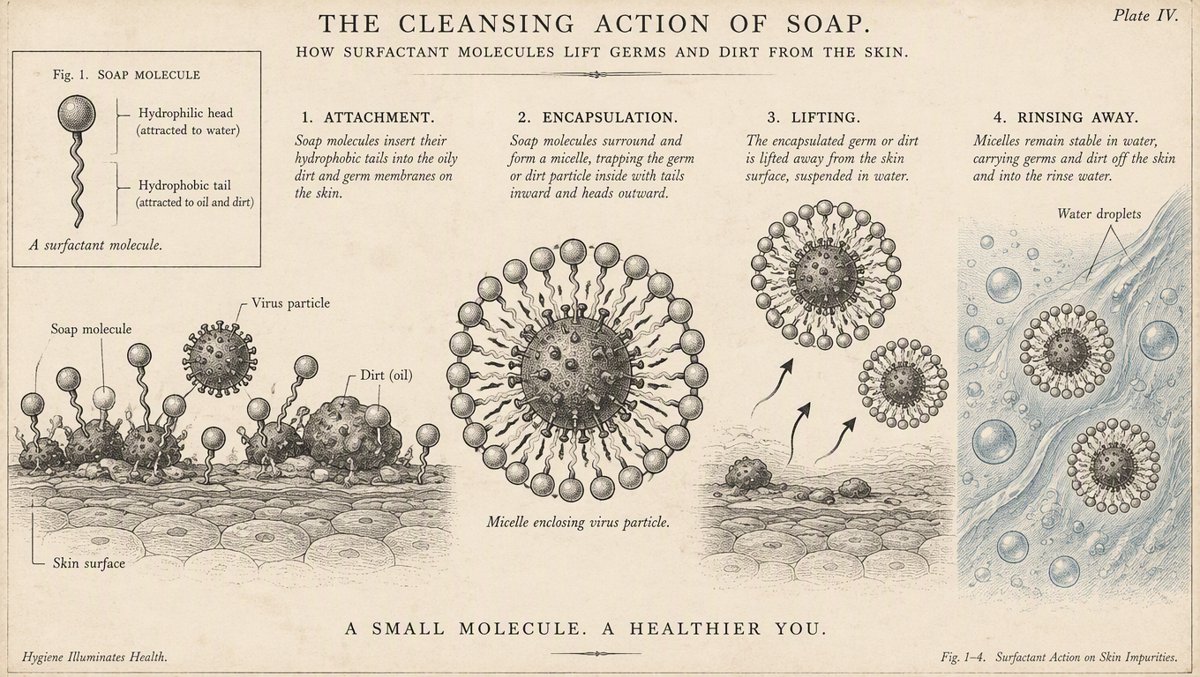
Here's the fun part most people never learned in school: soap isn't a magic poison that "kills everything on contact." It's something cleverer — a molecular bouncer.
Soap molecules are shaped like tiny pins with two very different ends: one end loves water, the other end loves fat and oil. Since most germs cling to the natural oils on your skin (and some — like coronaviruses and influenza — wear a fatty outer layer), the oily ends of soap molecules burrow into that grime, break it apart, and the water-loving ends ferry the whole messy bundle away when you rinse. The CDC describes it simply: washing with soap and water lifts dirt, grease, and microbes off your hands so they can be washed down the drain.³
And time matters — a lot. The friction of scrubbing physically dislodges germs from the creases of your knuckles, the sides of your fingers, and under your nails, but that takes real seconds to happen. According to the CDC, scrubbing for at least 20 seconds removes more germs than washing for a shorter time — the sweet spot sits roughly in the 15–30 second range.² In other words: the rinse-off at the end is only as good as the scrub before it.
Your 20-second game plan:
Key takeaway: Soap works by physically evicting germs — it grabs onto the oils and grime they hide in and sends the whole party down the drain. Twenty seconds of scrubbing is what gives it time to do the job.
Okay, so soap is clever. But how big is the payoff? Honestly, the numbers surprised me — and I look at health data for a living.
Per the CDC, handwashing with soap can prevent about 30% of diarrhea-related illnesses and about 20% of respiratory infections like colds.² Those aren't small potatoes — those are two of the most common ways people of every age get knocked off their feet every single year. A large peer-reviewed analysis of hand-washing frequency published through the NIH backs the same pattern: washing hands more often is associated with meaningfully lower rates of respiratory infections.⁴
Scale it up globally and it gets even more striking. The World Health Organization says hand-hygiene improvement programs can prevent up to 50% of avoidable infections acquired during healthcare delivery.⁵ ⁶ And UNICEF estimates that unsafe hand hygiene alone is linked to roughly 394,000 deaths from diarrheal disease and 356,000 deaths from acute respiratory infections every year — most of them preventable with basics that cost pennies.⁷
There's a quieter bonus too: fewer infections means fewer antibiotics being prescribed, and that helps slow the rise of antibiotic resistance — one of modern medicine's trickiest long-term problems.² Your clean hands are quietly doing public-health work every time you lather up. 💪
So when should you actually wash? Timing beats frequency alone. The CDC's key moments list boils down to this:³
Key takeaway: Twenty seconds of soap is one of the highest-return health habits on Earth — cutting risk for two of humanity's most common infections, protecting hospital patients, and quietly defending the antibiotics we all depend on.

Let's talk about the little bottle in your bag. Hand sanitizer is genuinely useful — but only when it's actually alcohol-based and used in the right situations. Time for some myth-busting. 🕵️
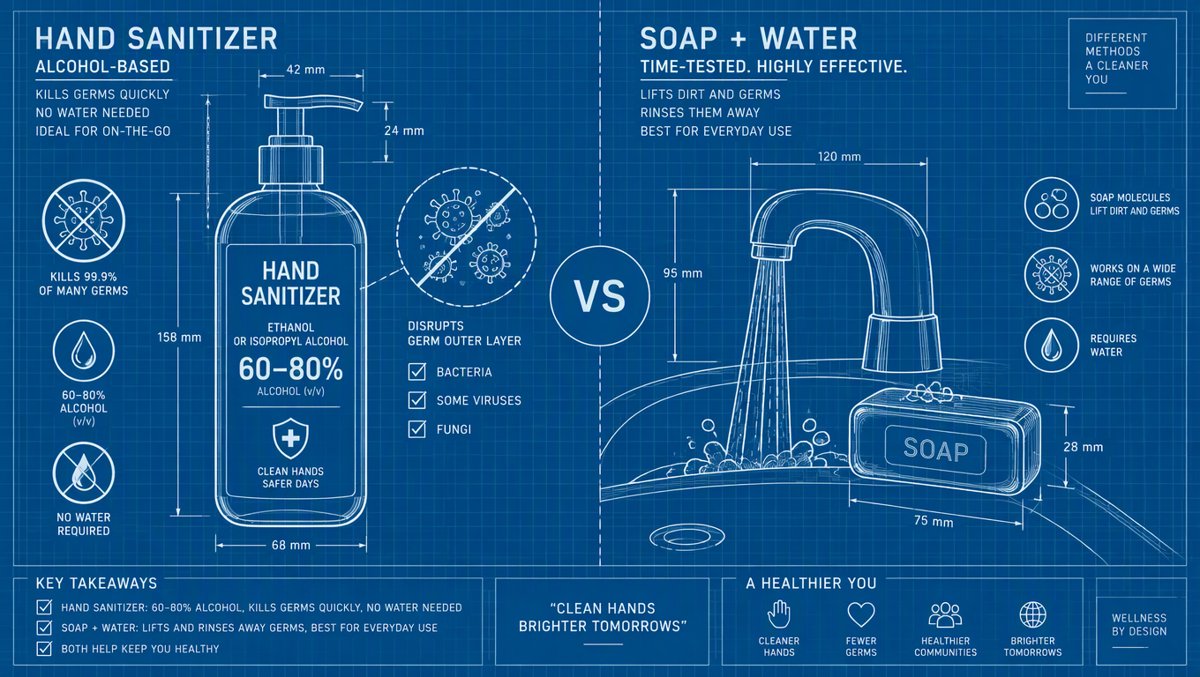
Myth #1: "Sanitizer is just liquid soap." Nope. Sanitizer is a backup, not an equal. The CDC is blunt about it: handwashing with soap and water is the best way to get rid of germs in most situations.⁸
Myth #2: "It kills everything." Here's the plot twist: alcohol can't crack the tough armor of some of the nastiest, most contagious germs out there. Soap and water are more effective than sanitizers against norovirus (the infamous "stomach bug" that tears through cruise ships and schools), Clostridioides difficile (C. diff, a spore-forming gut infection), and Cryptosporidium.⁹ ¹⁰ Those nasty spores simply don't care about alcohol — but they do get lifted away by surfactants and friction. If a stomach bug is making the rounds in your house, soap wins. Full stop.
Myth #3: "Any bottle will do." Check the label: the CDC says sanitizers need at least 60% alcohol to work properly.¹⁰ And never reach for sanitizer when your hands are visibly dirty or greasy — it can't get through the grime to reach the germs underneath.⁸ That's after gardening, cooking, the gym, or a kid's birthday party. You know the hands I mean. 😄
So here's your clean-hand decision tree:
And one last habit worth stealing from the research: since we now know we touch our faces about 23 times an hour¹ — every good handwash is quietly protecting your eyes, nose, and mouth whether you think about it or not.
Key takeaway: Sanitizer is a great Plan B — but it needs at least 60% alcohol, and it fails against germs like norovirus and C. diff. When in doubt, soap and water remain undefeated. 🏆
All claims fact-checked against Gold-tier (CDC/NIH/WHO/PubMed) and Silver-tier (Mayo Clinic/Cleveland Clinic/Harvard Health) authoritative sources. Last verified: September 19, 2026.
The next time you're at the sink and someone's tapping their foot impatiently, just smile and hum your twenty seconds a little louder. You're not being slow — you're running one of the most sophisticated, evidence-backed health protocols ever invented. Twenty seconds. That's the whole superpower. 🫧✨ 🌙