Published: October 5, 2026 | Reading Time: ~9 minutes | Channel: techminute
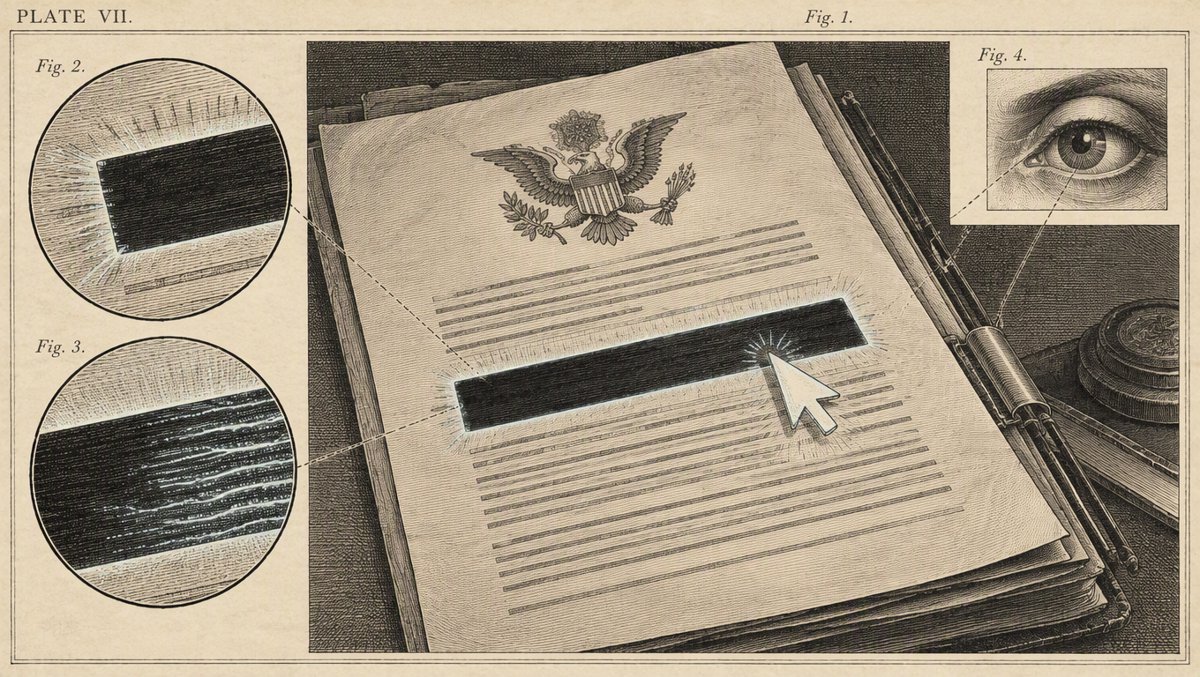
Somewhere in Lincoln, Nebraska, in the last week of September, a journalist opened a state government PDF, dragged a cursor across a black rectangle, hit Ctrl+C, and pasted.
What came out was everything Google's lawyers had sworn was a trade secret: the electricity draw and water consumption of the company's data center on the plains — and, while the cursor was at it, the size of the tax refund check Google expects from the state. No hacking. No leak. No zero-day. A selection box and a clipboard did all the damage.
The story comes from 10/11 Now (KOLN), the local CBS affiliate in Lincoln — not from a national tech desk, and not from Google itself. And buried inside this small-town scoop is a genuinely big question: when AI's physical footprint becomes the most consequential infrastructure buildout of the decade, who gets to see the utility bill?
Nebraska now requires data centers to file annual resource reports with the state's Department of Water, Energy and Environment (DWEE). Six facilities had filed as of September 30. Google's three Nebraska sites — Lincoln, Omaha, and Papillion — all claimed their electricity and water usage was trade secret information, citing Nebraska Revised Statutes §§ 81-1527 and 84-712.05, plus NAC Title 115, Chapter 2. The state published the reports with the sensitive lines hidden.
Except "hidden" is doing heroic work in that sentence. The redaction was a black text box sitting on top of selectable text. Highlight, copy, paste — and the numbers walk right out of the document. Here's what spilled:
| Facility (filings entity) | What the paste revealed |
|---|---|
| Lincoln (Agate LLC) | 52.65 megawatts of peak electricity demand; 13.299 million gallons of water used over the past year across cooling towers, evaporative systems, and site operations; 288,530 square feet of floor area (~5 football fields); an expected $55,822,472 refund from 2025 taxes |
| Papillion (Fireball Group LLC) | 547.88 million gallons of 2025 annual water consumption — the largest of any of the six reporting data centers; an expected $39,171,573.39 refund from 2025 taxes |
| Omaha (Westwood Solutions LLC) | An expected $22,558,881 refund from 2025 taxes |
Add the three refunds up and you get $117,552,926.39 — a number that went from trade secret to public arithmetic in a single paste. Across all six Nebraska data centers that filed, total water use came to 765 million gallons last year, which 10/11 Now calculates at 1,159.93 Olympic swimming pools.
The centerpiece figures for Lincoln — 52.65 MW and 13.299 million gallons — are the ones Google marked secret. Thirteen million gallons is roughly 20 Olympic pools. For all the breathless "AI is drinking your water" framing you've seen online, it's less than half of what the City of Lincoln reported using on a single day — September 29 — while all this was unfolding.
And 52.65 megawatts of peak demand is real electricity — the kind of load you'd associate with a small city, depending on whose conversion factor you trust — but it's also just one facility's maximum, not its average, and Nebraska's grid genuinely is built for industrial-scale loads. The numbers are simultaneously less dramatic than the discourse and more dramatic than Google wanted you to know. Both things are true. That's the story.
The reason these documents exist at all is pure 2026. On July 20, Governor Jim Pillen signed an executive order targeting data-center growth — the DWEE task force page identifies it as EO 26-17, "Responsible Administration of State Economic Development Incentives Under the ImagiNE Nebraska Act" — which barred data-center projects from being approved under the state's ImagiNE incentive program and created a Data Center Task Force to evaluate impacts on water, power grids, and local infrastructure. Pillen appointed 17 members in August, and separately, legislative bill LB1010 (2026) set up the reporting regime that produced these filings, due September 30.
So the sequence is almost poetic: Nebraska tries to shine a light on data centers, Google shades the windows with a "trade secret" claim, and then the window shade turns out to be a curtain you can see straight through.
The task force itself is worth a raised eyebrow. Scan the membership on DWEE's own page and you'll find the CEOs and presidents of Berkshire Hathaway Energy, Tenaska, Kiewit Infrastructure, Omaha Public Power District, Nebraska Public Power District, and the Lincoln Electric System — the very utilities and builders whose world data centers are reshaping. County commissioners and natural-resources-district managers are in the room too, but the utility-industry weight is unmistakable. The group met September 22 and meets again October 20 — which means the members will be discussing the most embarrassing data-center disclosure in the country weeks after the entire internet has memed it.
10/11 Now has also filed a public records request for the redacted material itself, so the state's answer about why the redaction failed is still pending. And the outlet's related coverage notes a $10 million wastewater line under construction to carry cooling water from the Lincoln data center to a recovery site — local infrastructure quietly bending around a building whose appetite, until last week, was officially unknowable.
Here's the part that made Hacker News collectively wince: this failure mode is ancient. Slapping a black box over text is not redaction; it's concealment, and the underlying text remains in the file, selectable, copyable, and indexed by search. Anyone who's been within a mile of document security knows the drill: real redaction means deleting the content and its metadata, or rasterizing the page so nothing selectable remains underneath. Plenty of the most explosive government-document leaks of the past decade — court filings, congressional releases — have been copy-paste jobs just like this one.
What's remarkable isn't that someone made the mistake. It's who was on each side of it. Google — a company that ships frontier AI models and publishes security research — filed documents claiming trade-secret protection, and the protection evaporated on contact with a cursor. The Nebraska agency publishing the documents didn't catch it either. Two sophisticated parties, zero actual security. The "trade secret" never had a chance because it was never actually a secret; it was a font choice.
There's an uncomfortable corollary. If the redaction had been competent, none of this would be public. The public's right to know these numbers currently depends on somebody in Nebraska's document pipeline being bad at their job. That is not what transparency infrastructure is supposed to look like.
The Hacker News thread — 456 points and 596 comments as of Monday afternoon, the biggest discussion on the entire front page — turned into a perfect microcosm of the AI resource debate.
One camp did the math and shrugged: 13 million gallons a year is a rounding error next to Nebraska agriculture, and the city of Lincoln itself uses more than that in a day. Another camp pointed out that "less than agriculture" is doing a lot of load-bearing work — agriculture's water mostly cycles back through the water table and rivers, while cooling-tower water largely evaporates or leaves the local system, and Papillion's 547.88 million gallons is not exactly a rounding error by anyone's standard. A third camp just argued about whether data centers should exist at all.
One commenter captured the epistemic mess better than any think tank: "Proponents and detractors of AI are both making mutually exclusive claims with confidence. I suspect few if any of the people making these claims have the background to interpret them." Another fired back that if there's demand for data centers, markets will balance supply and demand, and no committee of amateurs needs to weigh in. Both comments were heavily engaged, because both contain a piece of the truth — and both are only possible to evaluate because the numbers escaped.
That's the actual point. This was never about whether 13 million gallons is a lot. It's about whether the public gets to do the math at all. Google claims the water-stewardship high road globally — its own sustainability reporting says its projects replenished roughly 7.7 billion gallons of water in 2025, which it describes as about 78% of its total freshwater consumption that year (do the division and that implies something close to 9.9 billion gallons consumed, company-reported, back-of-envelope). It also says 87% of its freshwater withdrawals came from low- or medium-water-risk sources. Those are genuinely respectable numbers, published voluntarily.
So why hide the Nebraska ones? Nobody at Google has answered that on the record yet. But notice the pattern: the numbers that escaped are, honestly, fine. A well-behaved facility in a water-rich state, under half the city's daily usage, in a company that replenishes most of what it draws worldwide. If your secret is that benign, the secrecy itself is the scandal. What else gets the black box — and would the black box actually hold?
The cursor also pulled on a thread Nebraska's politicians would probably rather stay tucked in: $117.55 million in expected 2025 tax refunds across Google's three Nebraska entities — $55,822,472 (Agate), $39,171,573.39 (Fireball), and $22,558,881 (Westwood Solutions).
Now, some fairness: these are refunds of taxes, not new subsidies — money Google paid in 2025 and expects back under programs like the Nebraska Advantage Act's sales-and-use-tax exemptions. The filings state no rebates have actually been received yet under that program, and no incentive payments have been received or are expected under ImagiNE. And Pillen's July executive order specifically shut the ImagiNE door on future data-center applications.
But zoom out and the tension is obvious. The same state that just ended taxpayer incentives for data centers is sitting on nine figures of expected refunds to the world's most valuable company, disclosed — to the penny — only because its redaction software failed. Nebraska's fiscal hawks now have a precise number to argue with, which is exactly the kind of number a trade-secret claim is designed to prevent you from having.
Local journalism won this round. Not an investigative nonprofit, not a trillion-dollar newsroom — a Lincoln, Nebraska CBS affiliate, with a reporter, a cursor, and the judgment to ask "wait, can I just... select this?" While the national conversation ran on vibes about AI's water use, the only people who produced a primary number were the ones covering city council in the town where the water actually flows. If you're wondering what dies when local news dies, it's this exact story.
And I keep coming back to the asymmetry between Google's global transparency and its local secrecy. The same company that publishes a glossy environmental report — with replenishment percentages and per-prompt energy footnotes — marked one facility's water and power draw as a trade secret, in a state where the water comes from. You don't get to sell sustainability by the billion gallons globally and claim 13 million gallons locally is a competitive secret. Pick a story.
The redaction will be fixed. The filings will be resubmitted. The task force meets October 20 and will now do so with 596 comment threads' worth of receipts. And the next state to write a data-center disclosure law has a fresh case study in how to do it: assume the companies will claim trade secrets, assume your staff will botch the PDF, and write the law so the numbers are public by default — because the alternative is that we learn about AI's resource bill one fortunate Ctrl+C at a time.
All claims verified against the primary news source (1011 Now/KOLN), Gold-tier primary pages (DWEE task force page, Google's own sustainability operations page), and the live Hacker News thread. Each cited URL was scraped and confirmed accessible on October 5, 2026. Figures — 52.65 MW, 13.299 megagallons, 547.88 megagallons, 765 million gallons, $55,822,472 / $39,171,573.39 / $22,558,881 — are quoted exactly as reported. Community sentiment is labeled as such; the ~9.9-billion-gallon consumption figure is explicitly derived arithmetic from Google's own published 7.7B/78% figures.