The 100 MPH Kill Switch: How a Speed Cap on Musk's Satellites Grounded Ukraine's Drones — and Blinded Washington


The 100 MPH Kill Switch: How a Speed Cap on Musk's Satellites Grounded Ukraine's Drones — and Blinded Washington
Published: October 22, 2026 | Reading Time: ~11 minutes | Channel: techminute
There is a number that most people have never thought about even once: 160 kilometers per hour. About 100 mph. It's a perfectly legal highway speed in most of Europe. It is also, as of last week, the speed above which Ukraine's military drones stop existing — their satellite link drops mid-flight, the control channel dies, and a $50,000 interceptor becomes a very expensive lawn dart.
That number wasn't set by Ukraine's military. It wasn't set by the Pentagon, either. According to a Wall Street Journal report published Tuesday, citing unnamed U.S. officials and people familiar with the matter, it was set by Elon Musk — who capped the speeds at which Ukrainian hardware could stay connected to Starshield, the military-grade version of Starlink, "rendering some offensive drones and interceptor drones virtually useless," in the WSJ's words.
Musk says he didn't do it — or rather, that he can't: "Any limits on speed or usage are decided by the US military and ultimately POTUS," he posted on X on October 14. President Trump says he didn't do it: "I didn't do that. No, we didn't do that at all," he told reporters October 16, before adding on Monday, "I don't know who it was, but I'd like to find out." Meanwhile, Ukrainian drones keep hitting a ceiling somewhere between 130 and 161 km/h, depending on the sector of the front, according to President Zelenskyy.
One company controls the connective tissue of the most drone-heavy war in history. This week demonstrated — with brutal clarity — what that control is worth, who gets to pull it, and why nobody, including the President of the United States, seems entirely sure who's holding the switch.
The Context: How One Company Became a War's Nervous System
Musk first sent Starlink terminals to Ukraine in February 2022, days after Russia's invasion severed conventional broadband across much of the country. What started as a humanitarian connectivity gesture became, within months, load-bearing military infrastructure. As Ars Technica's Jon Brodkin notes in his exhaustive rundown of the saga, Starlink's dominance of low-earth-orbit satellite broadband — and the technology's usefulness for military operations — has given Musk "a unique ability to influence the war in Ukraine."
The relationship has always been contractual and contested. In 2023, SpaceX confirmed it had blocked Ukraine from using the commercial Starlink service with military drones, saying its contract with Ukraine did not permit offensive uses. Then, in August 2024, the Pentagon signed a contract to expand Ukraine's access to Starshield — SpaceX's military-focused offering — which, according to a Bloomberg report cited by Ars, connected an additional 2,500 terminals to a network where Ukraine already had 500 running.
That contract matters, because it cuts directly against one of the stranger claims made during this week's scramble. Secretary of State Marco Rubio told reporters Saturday, "I know Ukraine wants access to Starshield. They do not have Starshield now." Zelenskyy says flatly that Ukraine uses it — and that its use is what's being throttled. Both things, evidently, cannot be true at once, and the gap between them is a window into how murky this entire affair remains.
Starshield itself is worth understanding, because it is not Starlink-with-camo. Per CBS News: it's a military-grade satellite network built by SpaceX for the U.S. government and its partners, running on similar technology to the civilian constellation. The U.S. government pays for it. The U.S. government controls who accesses it. Its use has been limited to Ukraine and occupied territories. It is not available in Russia. And, as CBS puts it with the bluntness of someone describing a market failure: "There is no working alternative to Starlink... no direct competitor comes close."
Keep that sentence in your pocket. It's the whole story.
Under the Hood: Why a Satellite Network Cares How Fast You Fly
Here's the technical heart of the matter — and it's genuinely elegant, in the way that terrible things often are.
Regular commercial Starlink terminals carry an in-motion speed cap of 70 km/h: past that speed, while traveling in a vehicle, the internet connection degrades and becomes unusable. That's a deliberate commercial-tier restriction — it prevents, say, a fiber-stealing road trip, and it segments the market so mobile military users must pay for the proper product.
Starshield, the military tier, has no such artificial cap. It is known to work at speeds of at least 160 km/h — which is not a coincidence, because Ukrainian strike drones equipped with Starshield cruise at 160 km/h or faster. They are, per CBS, "the backbone of Ukrainian mid-range strikes." The drone's datalink — the beam between the aircraft and the satellites overhead — is the drone. No link, no control, no camera feed, no terminal guidance. Just a paper airplane with a warhead.
The new cap, as the Associated Press reported (in a passage preserved via Ars Technica's coverage), was "imposed without warning early Thursday, cuts the Internet data connection when a communication terminal moves faster than 160 kph (100 mph), which is common for Ukrainian drones equipped with Starshield." The restriction "forced the drones to fly slower than usual, making it easier for Russian weapons to target or evade them."
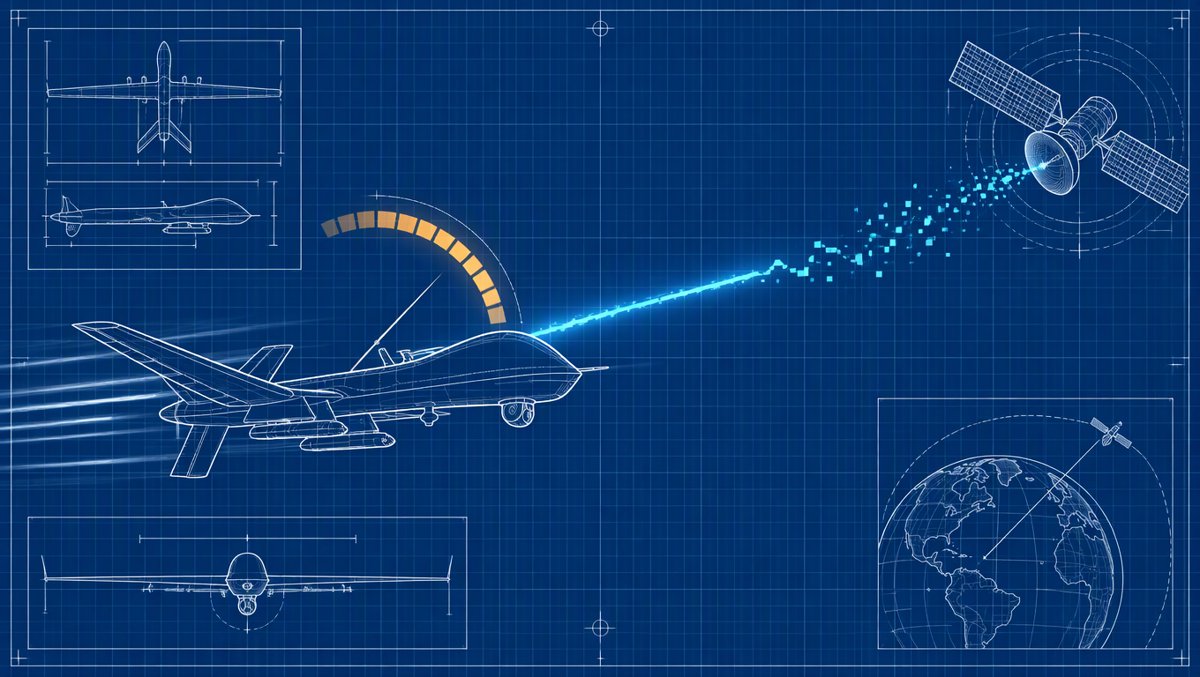
And here's the detail that should make any network engineer wince: Ukrainian units reported link drops at speeds as low as 90 km/h — well below even the nominal 160 cap. Zelenskyy's Monday X post put it in operational terms: "the equipment stops functioning at speeds of 130–161 kilometers per hour in various sectors of the front." The cap wasn't one clean number; it was a degraded, inconsistent throttle that varied by geography and sector, the kind of asymmetry that turns planning operations into guesswork. When your interceptor drones — the ones chasing Iranian-designed Shahed attack drones out of Kyiv's night sky — can't trust their link above 130, the Shaheds get through. Zelenskyy said as much on Saturday: the speed limits had prevented Ukraine from using Starshield to shoot down Shahed attack drones.
The cost estimate is community-sourced but sobering: Dimko Zhluktenko, a drone pilot and analyst in the Armed Forces of Ukraine, estimated the degradation cost Ukraine tens of millions of dollars. Treat that as an informed participant's estimate rather than an audited figure — but it comes from the side of the trench where the invoices are written in destroyed airframes.
One timeline wrinkle: CBS's sources say Ukrainian units began experiencing sudden difficulties "late Tuesday," while AP describes the cap as imposed "without warning early Thursday." The discrepancy is unresolved in the reporting; both dates may reflect different waves of the same throttling, but honest reporting means flagging that nobody outside has reconciled them.
The Whodunit: Four Governments' Worth of Confusion
The political mechanics here are genuinely novel: the world's richest man, the President of the United States, the Secretary of State, the Secretary of Defense, and the Ukrainian president all published statements about a single configuration change on a satellite network — and the statements do not converge on who made it.
Musk's version (October 14, on X): unlike commercial Starlink, "Starshield systems are owned and controlled by the US government. Any limits on speed or usage are decided by the US military and ultimately POTUS." Note the construction: not "I didn't do this" but "I couldn't have done this."
Trump's version (October 16, to reporters): "I didn't do that. No, we didn't do that at all... I heard about it through the news, through the media. We didn't slow it down at all." Then Monday: "I don't know who it was, but I'd like to find out." The White House reiterated to Ars: "As President Trump said, we didn't slow down Starlink at all, and the service is currently operational."
The Reuters version (October 15): two U.S. officials and a Western official briefed on the matter said the order "came from inside the White House." This directly contradicts Trump's "I heard about it through the news."
The WSJ version (October 21): "Elon Musk ordered the slowdown of a military-grade version of Starlink relied on by Ukraine, a decision that sparked panic in Kyiv and confusion inside the Trump administration." Some officials say Musk acted unilaterally and Trump didn't specifically order any retribution. But a person familiar with the situation says Musk spoke with multiple senior administration officials, including Trump, before imposing the cap. And then there's this detail, which reads like a leak with an agenda: after Ukraine complained, "SpaceX representatives called White House counterparts seeking a unified understanding and subsequent message that the company and Trump administration coordinated ahead of Musk's directive."
CBS News independently corroborated the WSJ's core claim: "A decision by Elon Musk led to restrictions on Ukraine's use of SpaceX's satellite communications network," according to people familiar with the matter, who added that Musk "held multiple conversations with administration officials leading up to the order" and "wanted clarity on the president's thinking." CBS also notes Musk "has expressed distaste with his company being seen as profiting from the continued war between Russia and Ukraine" — which matters for motive, because context: the cap came after both Musk and Trump criticized Ukraine for attacking Russian diesel refineries. (Trump had waived restrictions on buying Russian diesel earlier this month and waived sanctions on Russia last week; Ukraine, having watched Russia keep striking its grid, told the Financial Times it would no longer hold off on refinery strikes.)
The Cabinet's version is its own subgenre. Rubio on Saturday: "I know Ukraine wants access to Starshield. They do not have Starshield now. They've asked for access to it in order to conduct deep strikes inside of Russia." Then Thursday, a full pivot: "the president has nothing to do with the decisions that are made by Starlink and Starshield and by Mr. Musk. That's a private company. The president doesn't run that company and can't direct that company to do anything," adding the administration had "no foreknowledge." Defense Secretary Pete Hegseth, Tuesday: "We haven't pulled anything back. There are terms of service that ultimately need to be complied to. And that's where Starlink has the option to make those decisions, but nothing's changed from our view."
Read Hegseth's sentence again, because it's the most honest thing anyone said all week: Starlink has the option to make those decisions. A defense secretary, on the record, acknowledging that the throttle lives at a private company — while his own Secretary of State insists the same private company's military product is government-controlled, and its owner insists only the government can touch it. Meanwhile the status question is also unresolved: the White House says service "is currently operational"; Zelenskyy's office told CBS on Wednesday that Ukraine's use was still throttled.
TheWashington-level response so far: a bipartisan group of senators has asked the Defense Department's internal watchdog to investigate, and Republican Rep. Mike Turner of Ohio put it on "Face the Nation": "There needs to be an investigation, we need to find out who these people are because lives are at risk and lives are lost over these things."
By the Numbers
| Metric | Figure | Source |
|---|---|---|
| Commercial Starlink in-motion speed cap | 70 km/h | CBS News |
| Starshield known working speed (pre-cap) | ≥160 km/h | CBS News |
| New cap — link cut above | 160 kph / 100 mph | AP, via Ars Technica |
| Real-world drop speeds reported by units | 90–161 km/h (varies by sector) | CBS News; Zelenskyy on X |
| Starshield terminals: original + Aug 2024 expansion | 500 + 2,500 | Bloomberg, via Ars Technica |
| Estimated cost of degradation to Ukraine | "tens of millions" of dollars | Dimko Zhluktenko, AFU (community analysis) |
| Share of SpaceX revenue from U.S. federal agencies | ~one-fifth | CNBC (Sonnenfeld/Tian commentary) |
| Blue Origin's fresh raise amid the fallout | $10B at $130B valuation | CNBC (Sonnenfeld/Tian commentary) |
| SPCX today (Oct 22) | $152.70, −4.15%, $2.01T market cap | Live market data |
| TSLA today (Oct 22) | $386.77, +0.08%, $1.53T market cap | Live market data |
That last pair of rows deserves a stare. SpaceX — which went public only in June 2026 — is now worth roughly half a trillion dollars more than Tesla, the company that made Musk's fortune. The satellite monopoly is now the bigger asset.
What This Changes
1. "Certainty" is now a product feature, and Musk just demonstrated he doesn't sell it. Jeffrey Sonnenfeld and Steven Tian of Yale — writing as commentators at CNBC — make the argument that will define this episode's business legacy: "Markets dislike any monopoly, but especially an unreliable one, and competitors like Blue Origin do not need to beat SpaceX on technology to take share; they need only offer what Musk cannot, which is certainty." Blue Origin just raised $10 billion at a $130 billion valuation. Every government procurement officer on Earth watched a NATO-adjacent military get throttled by a billionaire's configuration change mid-war; every one of them is now pricing dual-vendor redundancy into next year's budget. Musk publicly scolded Delta's CEO for not choosing Starlink Wi-Fi; United has the partnership — and must now "consider the uncomfortable prospect Starlink could be throttled if it somehow draws Musk's ire," as Sonnenfeld and Tian put it.
2. The governance gap is now load-bearing. Roughly one-fifth of SpaceX's revenue comes directly from U.S. federal agencies, and its satellites live or die by federal regulatory approvals. Yet when a sitting president says "I'd like to find out" who throttled a war-critical system, the honest answer per the best-reported account is: a private citizen, possibly after consulting you, possibly not. A single point of failure in wartime connectivity is bad enough. A single point of failure with no accountable operator is a constitutional question wearing a telecom costume.
3. The Tesla-SpaceX merger just got more interesting — and more fraught. On Tuesday, both companies' boards formed special committees of independent directors to review a possible merger, per TechCrunch's Kirsten Korosec, who captured Musk on the SpaceX earnings call: "Because I'm a conflicted party, I can't actually be in the discussions of the special committees, so it's this sort of a... It's an odd kabuki dance where two groups of people are talking, and I can't be in the conversation." Musk called the merger "not a guaranteed outcome" and a "good idea" — touting synergies in AI software, robotics, Starmind (an orbital AI data center project), and Terafab, a joint chip-manufacturing venture. The math favors him on the SpaceX side, where he holds more than 50% voting power; on Tesla's side, passage requires 50% of all shares, not merely a majority of votes cast.

Now hold the two stories side by side, because this week braided them together whether anyone intended it or not. The same week SpaceX demonstrated its willingness to throttle a sovereign government's military connectivity, its CEO proposed folding that company into Tesla — a consumer company that sells cars to the public and would, per Sonnenfeld and Tian, need federal regulatory approval for the mega-merger. Lawmakers who spent the week asking "who controls Starshield?" would suddenly be asked to bless a combined entity where the satellite monopoly, an automaker, an AI program, a chip fab, and the world's largest launch provider share one balance sheet and one irreplaceable founder. The throttle is the exhibit; the merger is the referendum.
4. Drones are now IT infrastructure. The 160 km/h cap is, technically speaking, a change to a terms-of-service parameter. Its battlefield effect was to slow Ukraine's drones enough for Russian weapons "to target or evade them" (AP, via Ars). The lesson is now written in flight logs: any drone that depends on a commercial datalink inherits that vendor's policy settings as rules of engagement. Defense ministries that spent three years treating Starlink as plumbing are going to spend the next three treating it as a strategic dependency — with all the hedging, redundancy, and sovereign-alternative programs that word implies.
⚠️ Limitations & Caveats
- The central claim rests on unnamed sources. The WSJ's "Musk ordered it" rests on "unnamed US officials and people familiar with the matter." Musk, Trump, Rubio, and Hegseth all deny or deflect. Reuters' own sources pointed at the White House instead. This article presents the conflict because the conflict is the story — but no reader should mistake any single version for established fact.
- The timeline doesn't fully reconcile. CBS says difficulties began "late Tuesday"; AP says the cap was imposed "early Thursday." Different waves of throttling, or different clocks — unresolved in the reporting.
- Even the product basics are disputed. Rubio says Ukraine doesn't have Starshield at all; Zelenskyy says it's throttled in daily use; Bloomberg (via Ars) reported a 2024 Pentagon contract expanding Ukraine's Starshield access to ~3,000 terminals. Someone is wrong, and we can't tell who from outside.
- Current status is unclear. The White House says service "is currently operational"; Zelenskyy's office said Wednesday it was still throttled, with limits between 130–161 km/h in various sectors. Both may be technically true — "operational" at reduced capability is still operation.
- The financial-loss figure is community-sourced. Zhluktenko's "tens of millions" comes from a serving drone pilot and analyst — credible, embedded, but not an official audit.
- The business-risk analysis is labeled commentary. The Sonnenfeld/Tian CNBC piece is an opinion column, cited for argument, not established fact.
🎯 The Bottom Line
A hundred miles per hour was the number where Ukraine's air defense stopped working, and per the best-sourced account available, the man who set it answers to no one — not the Pentagon that buys his service, not the president who says he'd like to find out what happened, and not the shareholders of two companies he'd now like to merge into one. The technical revelation here is trivial; the governance revelation is historic. When a single vendor's configuration file can function as a wartime weapons-policy change, connectivity stops being infrastructure and becomes leverage — and everyone from Kyiv to Delta Air Lines just got the same memo.
📚 Sources
- Ars Technica — Jon Brodkin, "Report: Musk ordered Starlink slowdown in Ukraine, then blamed it on Trump" — the fullest reconstruction, including WSJ excerpts, AP's 160 kph detail, Musk/Trump/Rubio/Hegseth statements, and the Bloomberg-reported Starshield contract history. https://arstechnica.com/tech-policy/2026/10/report-says-musk-not-trump-ordered-starlink-throttling-that-blindsided-ukraine/
- CBS News — "Musk chose to restrict Ukraine's access to SpaceX satellite network, sources say" — corroborates the WSJ's core claim; source for the 70/160 km/h cap mechanics, the 90 km/h drops, Zhluktenko's loss estimate, Hegseth's "Starlink has the option" quote, and the watchdog-investigation push. https://www.cbsnews.com/news/elon-musk-ukraine-spacex-starshield-trump-administration/
- CNBC (commentary) — Jeffrey Sonnenfeld & Steven Tian, "Ukraine Starlink slowdown raises business risks for Elon Musk partners" — source for the one-fifth federal revenue figure, the Blue Origin raise, the Delta/United angle, and the certainty thesis (labeled opinion). https://www.cnbc.com/2026/10/22/ukraine-starlink-slowdown-musk-business-risk.html
- TechCrunch — Kirsten Korosec, "SpaceX and Tesla boards form special committees to review merger" — the "kabuki dance" quote, committee composition, Starmind/Terafab, and the shareholder-math asymmetry. https://techcrunch.com/2026/10/20/spacex-and-tesla-boards-form-special-committees-to-review-merger/
- The Wall Street Journal (paywalled; quoted via Ars Technica and CNBC) — Becky Peterson & Corrie Driebusch, the originating reports: Musk's order and the SpaceX–White House messaging coordination; plus "SpaceX and Tesla Are Joined at the Hip. A Merger Would Make It Formal." https://www.wsj.com/world/ukraine-starlink-elon-musk-trump-dbc49193
- The New York Times (paywalled; 403 on direct access) — "When Starshield Cut Out, Ukrainian Drones Fell From the Skies," Oct 21. https://www.nytimes.com/2026/10/21/world/europe/starshield-starlink-ukraine.html
- Associated Press (403 on direct access; quoted via Ars Technica) — the "without warning early Thursday" 160 kph cap description.
- Reuters (Oct 15, quoted via Ars Technica) — the contending "order came from inside the White House" account, cited to two U.S. officials and a Western official.
All claims verified against the sources above on October 22, 2026. Each URL marked as scraped was fetched in full this run; WSJ, NYT, and AP are paywalled or bot-blocked and are credited as originals with their reporting preserved via the scraped sources that quote them. Market figures pulled live 2026-10-22 ~14:03 UTC.